Taiga villages in Minecraft are one of the most underrated village types, especially for players focused on long-term survival and trading. While they can feel difficult at first due to dense forests, uneven terrain, and low visibility, they offer unique advantages that make them extremely powerful once properly managed.
After testing multiple survival worlds and seeds, it becomes clear that Taiga villages are not weaker than Plains villages—they simply require a different Strategy. Players who take the time to secure, expand, and organize them can turn these villages into efficient trading hubs and highly defensible bases.
In this guide, you’ll learn everything about Taiga villages in Minecraft, including how they spawn, how they are structured, what makes them challenging, and the best strategies to turn them into a long-term survival base.
What Are Taiga Villages in Minecraft?
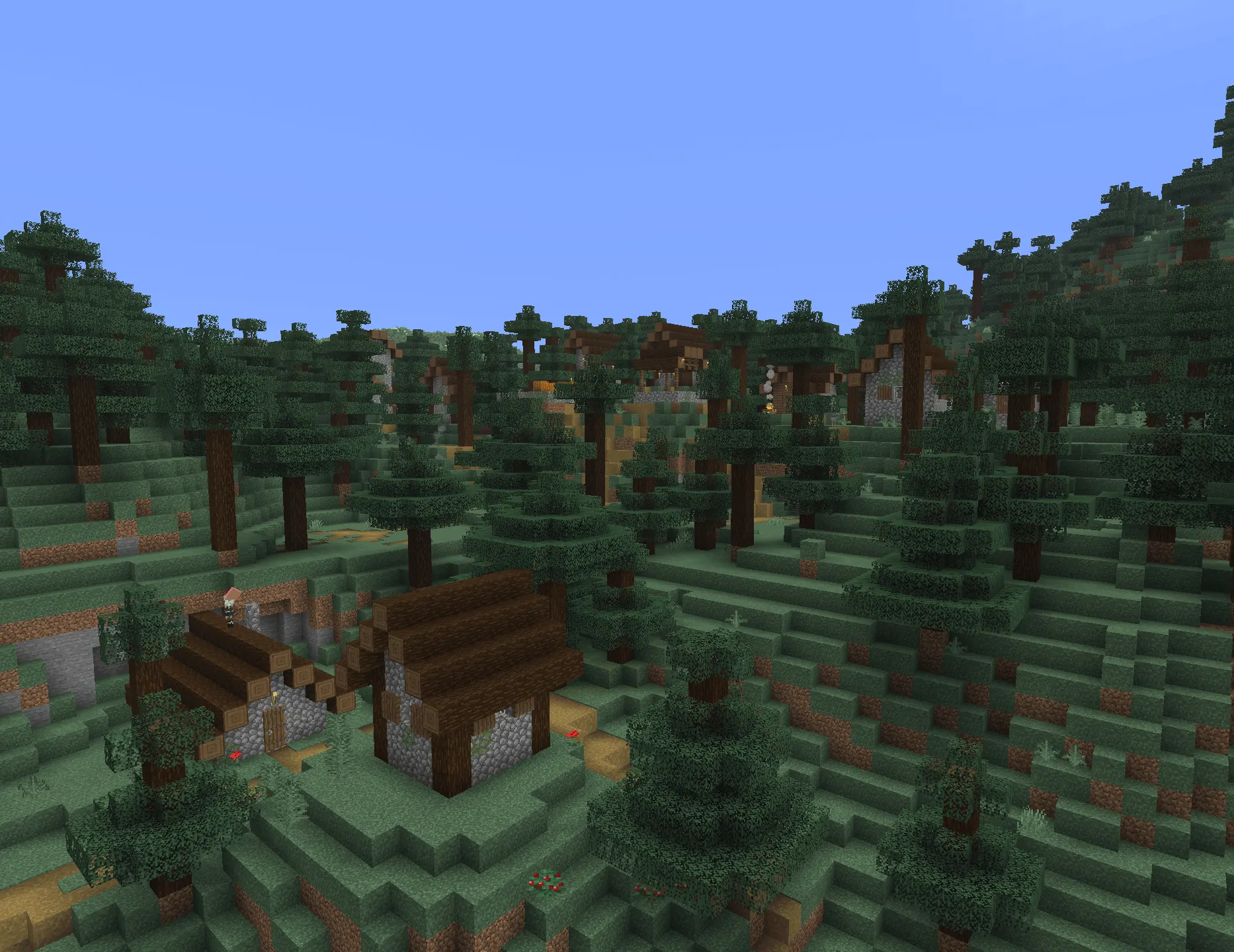
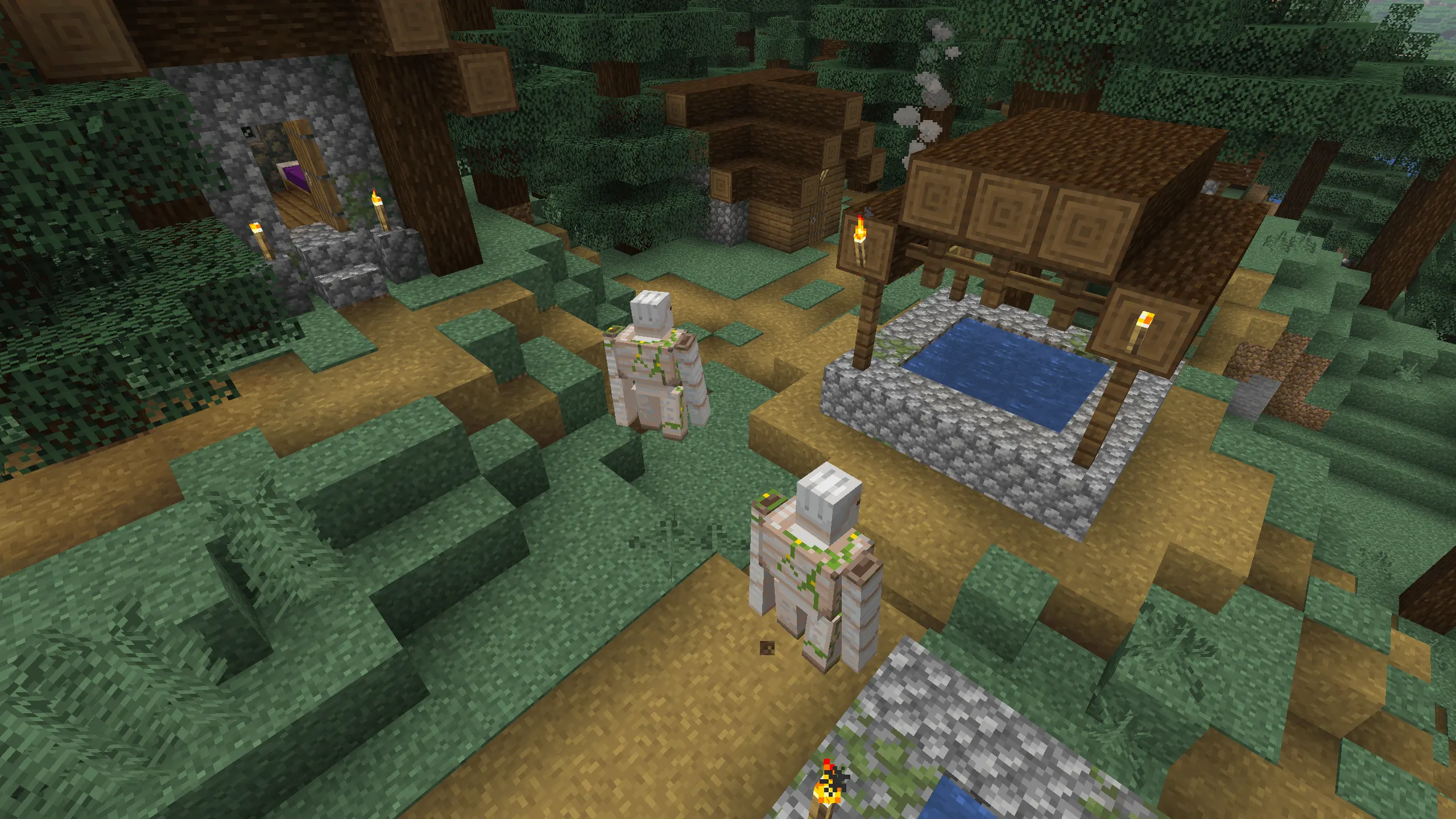
Taiga villages are naturally generated settlements that appear in the Taiga biome. These villages use a distinct architectural style made primarily from spruce wood, cobblestone, and stone variants, giving them a darker and more natural appearance compared to other village types.
Unlike Plains villages, which are open and flat, Taiga villages are typically surrounded by dense spruce forests and often sit on uneven terrain. This affects both gameplay and strategy, especially in terms of movement, visibility, and mob control.
One important gameplay difference is the degree to which these villages feel enclosed. The surrounding trees create tighter spaces, which can help control villagers but also increase the risk of nearby Mobs spawning.
Do Taiga Villages Spawn Naturally?
Yes, Taiga villages in Minecraft spawn naturally, but only in specific biome types.
Biomes Where Taiga Villages Spawn
-
Taiga
-
Snowy Taiga
Biomes Where They Do NOT Spawn
-
Old Growth Pine Taiga
-
Old Growth Spruce Taiga
This distinction is important because many players mistakenly search in Old Growth Taiga biomes and assume villages are rare. In reality, they simply do not generate there.
From experience, standard Taiga biomes tend to produce more visible villages, while Snowy Taiga villages can be harder to detect due to snow layers covering paths and rooftops.
How Common Are Taiga Villages?
Taiga villages are moderately uncommon compared to Plains villages, but they are not rare.
However, they often feel rare due to environmental factors:
-
Dense spruce trees block long-distance visibility
-
Snow layers hide paths and structures
-
Buildings blend into the terrain due to darker materials
-
Villages are more compact and less spread out
In practical gameplay, this means you can walk within 20–30 blocks of a Taiga village and still miss it completely, especially at night or during snowfall.
Taiga Village Structure and Design
Taiga villages have a unique structure that directly impacts gameplay.
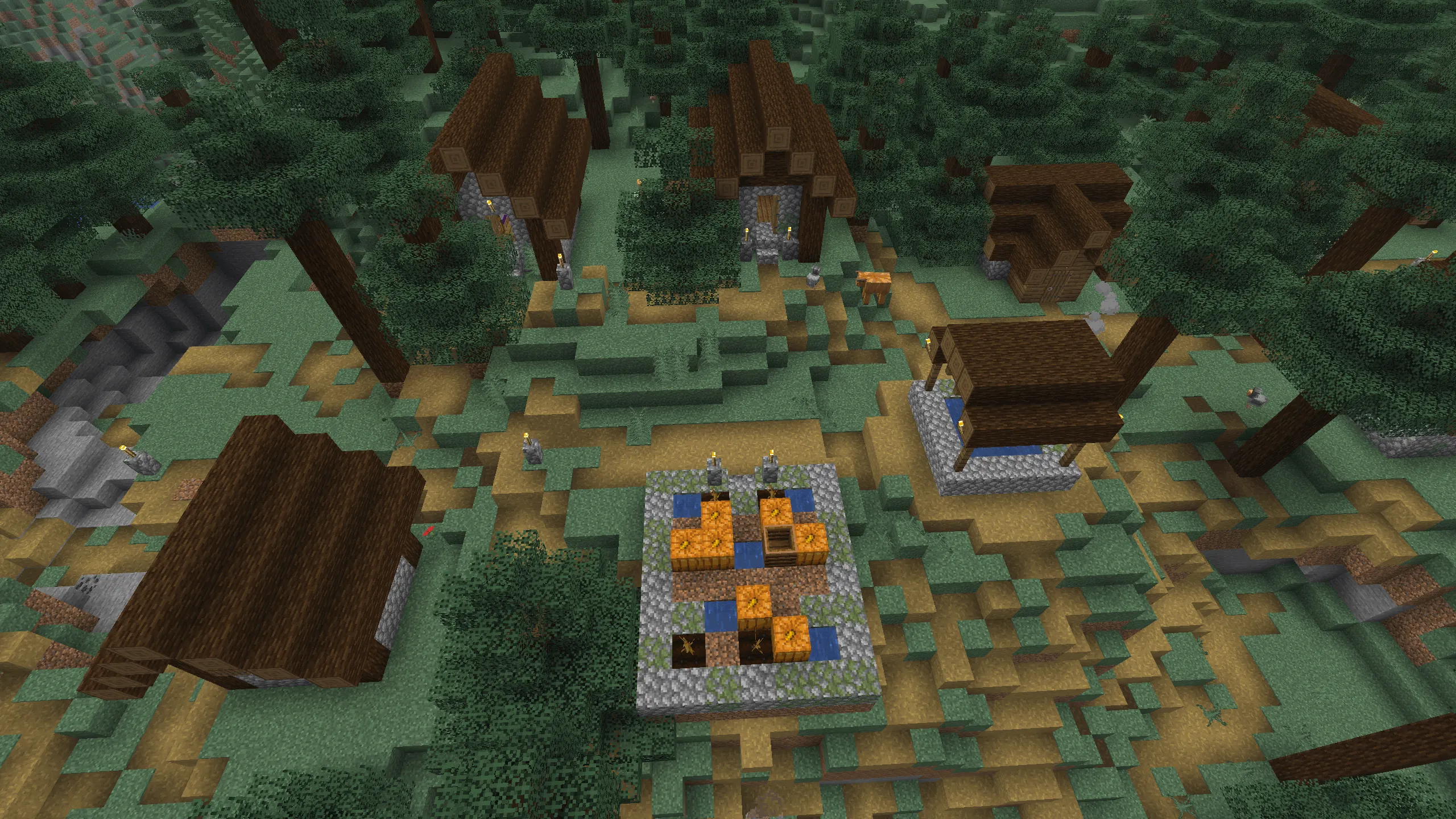
Core Design Elements
-
Spruce wood buildings
-
Cobblestone and stone foundations
-
Gravel or dirt paths
-
Small farms
-
Central wells (often hidden under snow)
Visual Characteristics
-
Darker tones compared to Plains or Desert villages
-
Natural blending with the forest
-
More enclosed layout
Because of this design, Taiga villages feel more like hidden forest settlements rather than open communities. This can be immersive, but it also creates early survival challenges.
Layout: Why Taiga Villages Feel Different
One of the most noticeable differences is the layout.
Typical Layout Features
-
Built on hills or slopes
-
Houses placed very close together
-
Trees growing inside or directly next to structures
-
Limited flat land
Gameplay Impact
-
Movement is slower early-game due to uneven terrain
-
Villagers can struggle with pathfinding on slopes
-
Tight spacing makes it easier to secure villagers later
-
Limited space encourages vertical or underground expansion
In testing, villagers often get stuck on elevation changes, especially near stairs or path blocks. This is something players must fix manually if they plan to build trading systems.
Taiga Village Farms
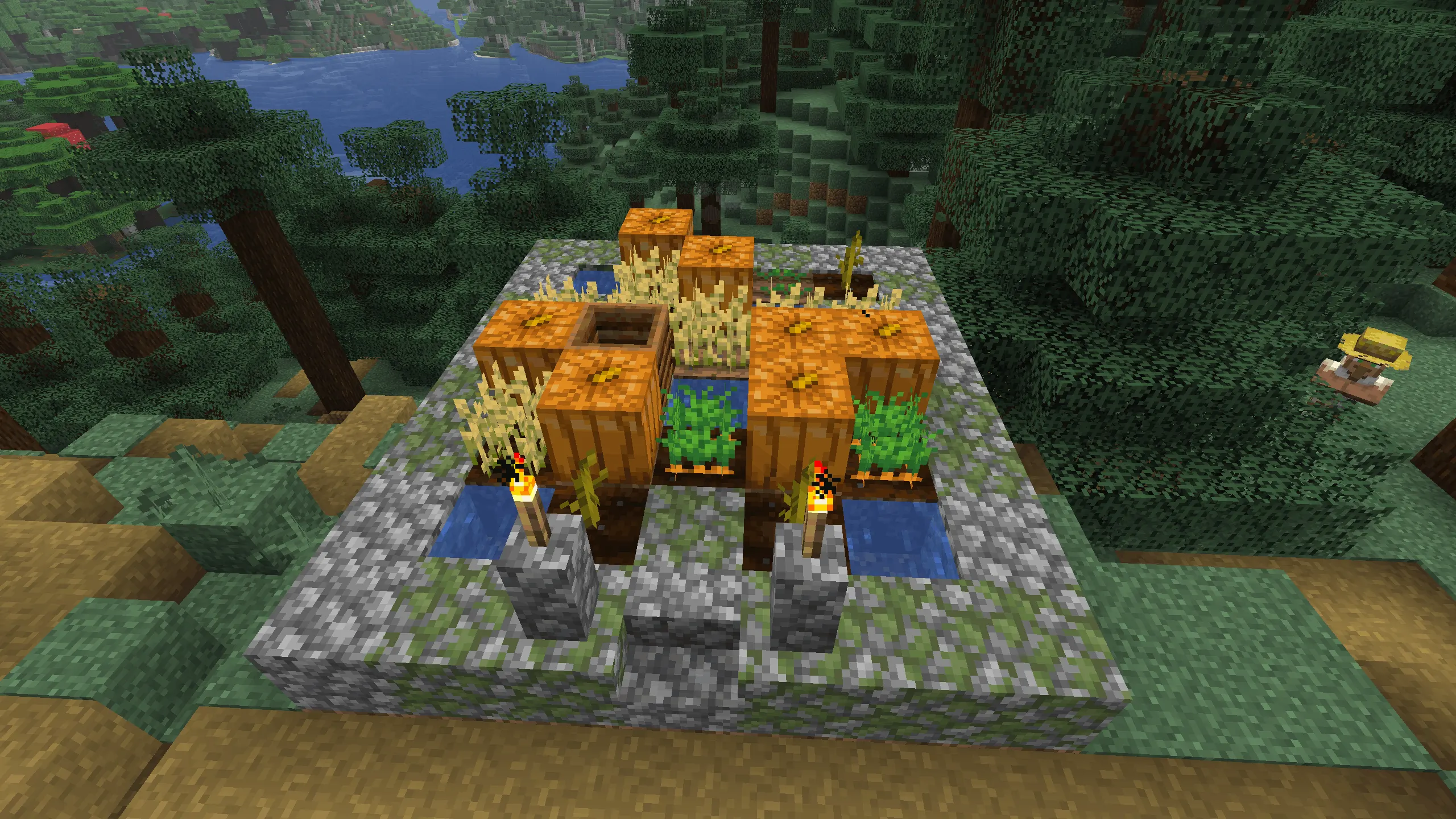
Taiga village farms exist, but they are not very efficient early on.
Common Crops
-
Wheat
-
Carrots
-
Potatoes
Common Problems
-
Snow layers cover farmland, making crops harder to monitor
-
Limited sunlight due to tree cover
-
Small farm sizes
-
Slower perceived growth due to lighting conditions
How to Fix Farms
To improve farm efficiency:
-
Remove all snow layers immediately
-
Place torches or lanterns around the farmland
-
Expand farms into open or cleared areas
-
Ensure water blocks are not frozen (in colder variants)
After optimization, farms can perform just as well as those in other biomes.
Villagers in Taiga Villages
Villagers in Taiga villages behave the same as villagers in other biomes.

What Does Not Change
-
Trading mechanics
-
Professions
-
Breeding requirements
-
AI behavior
Common Professions
-
Farmers
-
Fishermen
-
Librarians
-
Toolsmiths
The advantage of Taiga villages is how close everything is. Workstations are usually within a few blocks of each other, making it easier to reorganize villagers into a trading hall.
Are Taiga Villages Good for Early Survival?
Taiga villages are good for early Survival but not immediately safe.
Early Advantages
-
Free beds for skipping a night
-
Immediate Shelter
-
Access to food
-
Early trading opportunities
Early Challenges
-
Low visibility at night
-
High mob spawn potential under trees
-
Hidden caves and terrain drops
-
Villagers exposed to danger
Players who ignore these risks often lose villagers within the first few nights.
How to Secure a Taiga Village (Step-by-Step)
Securing the village should be your priority.
Essential Setup Checklist
-
Place torches along all paths
-
Add lighting on rooftops and corners
-
Remove trees within at least a 10–15 block radius
-
Block off caves and dark areas
-
Sleep immediately to skip the night
From testing, lighting alone is not enough—tree removal is critical because leaf blocks reduce light spread and create hidden spawn spots.
Mob Spawning Issues in Taiga Villages
Taiga villages are more dangerous than most village types due to environmental conditions.
Why Mobs Spawn More Often
-
Light levels drop under spruce trees
-
Snow layers hide dark blocks
-
Uneven terrain creates multiple spawnable surfaces
Common Threats
-
Zombies (target villagers)
-
Skeletons (long-range attacks in low visibility)
-
Creepers (hard to detect in forest shadows)
Creepers are especially dangerous because their green color blends with grass and foliage, making them difficult to spot until they are very close.
Iron Golems in Taiga Villages
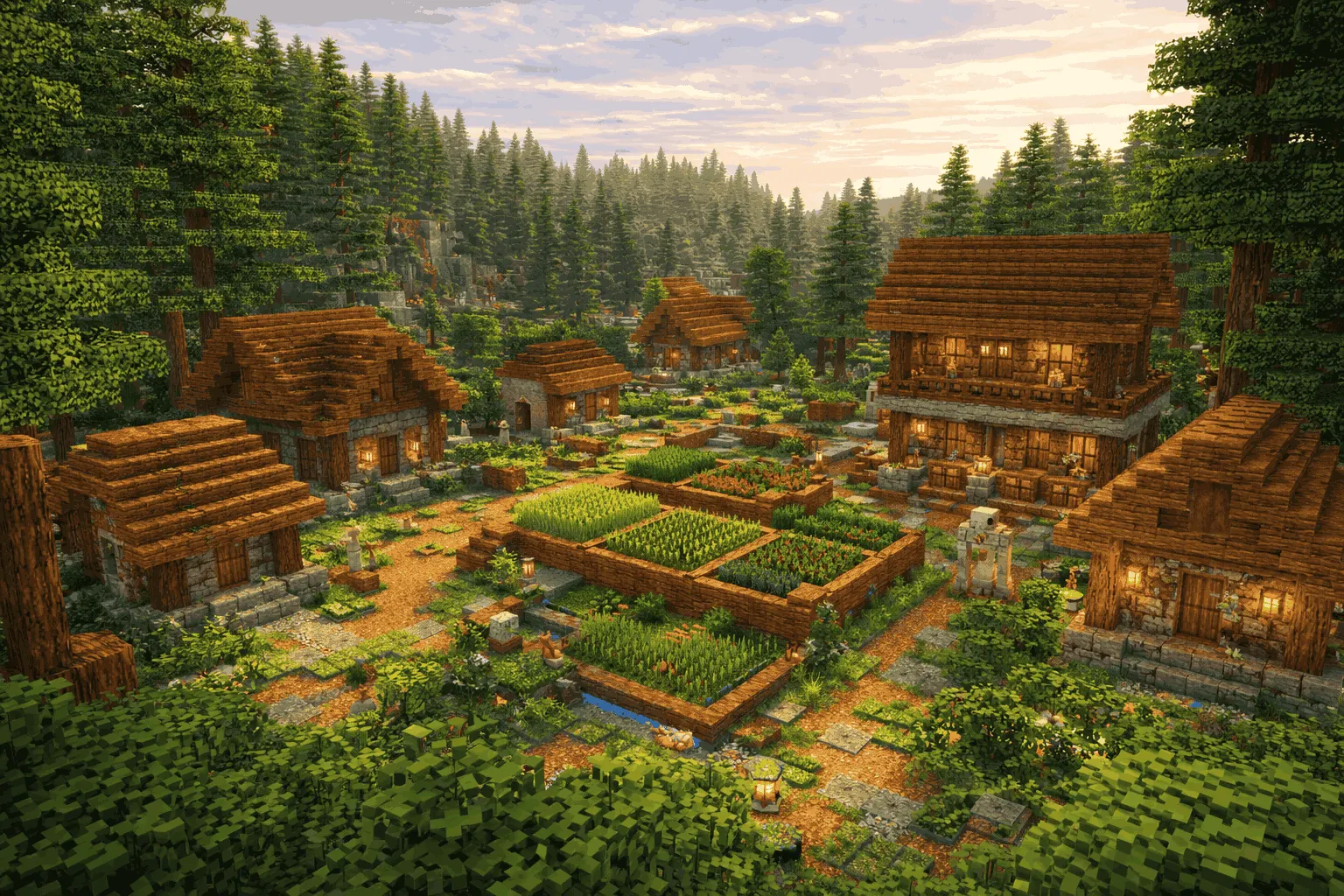
Iron golems spawn naturally and help defend the village.
Limitations in Taiga Villages
-
Trees block their movement
-
They may wander into forests and lose track of threats
-
Line-of-sight is reduced
How to Improve Their Effectiveness
-
Clear trees around central areas
-
Keep villagers grouped together
-
Add lighting to reduce mob spawns
In practice, golems perform much better once the village is partially cleared and organized.
Raids in Taiga Villages
Raids can be significantly harder in Taiga villages.
Why Raids Are Difficult
-
Pillagers can hide behind trees
-
Terrain blocks clear combat lines
-
Visibility is reduced
How to Prepare
-
Clear a perimeter around the village
-
Create open combat zones
-
Build elevated platforms for ranged attacks
Without preparation, raids in Taiga villages can feel chaotic and unpredictable.
Taiga Village vs Plains Village
Key Differences
-
Plains villages are easier to access early due to flat terrain
-
Taiga villages are better for controlled expansion
-
Plains offer visibility, Taiga offers structure
Summary
If you want a quick start, Plains villages are easier.
If you want a strong, long-term base, Taiga villages are better.
Expanding a Taiga Village
Taiga villages are excellent for expansion once secured.
Best Strategies
-
Clear the surrounding forest gradually
-
Expand farms into open land
-
Build defensive walls or fences
-
Use underground or multi-level builds
Because of the compact layout, expansion tends to be more organized compared to scattered village types.
Turning a Taiga Village Into a Trading Hub
Taiga villages are ideal for trading systems.
Why They Work Well
-
Short distances between buildings
-
Easy villager control
-
Compact design
Trading Tips
-
Assign and lock professions early
-
Keep villagers in controlled spaces
-
Build dedicated trading halls
With proper setup, you can create highly efficient trading systems in a small area.
Breeding Villagers in Taiga Villages
Villager breeding works normally but requires preparation.
Requirements
-
Enough beds
-
Accessible space
-
Sufficient lighting
-
Cleared terrain
Once optimized, Taiga villages can support large populations without major issues.
Are Taiga Villages Good for Hardcore Mode?
Yes—but only after proper setup.
Risks
-
Early mob attacks
-
Poor visibility
-
Difficult terrain
Advantages
-
Strong defense once secured
-
Reliable trading system
-
Sustainable long-term base
Players who survive the early phase will find Taiga villages very stable in Hardcore mode.
Common Mistakes to Avoid
-
Not removing trees
-
Ignoring lighting
-
Leaving villagers unprotected
-
Underestimating night danger
-
Not expanding farms
Avoiding these Mistakes dramatically improves survival chances.
When You Should Avoid Taiga Villages
Taiga villages may not suit you if you:
-
Prefer flat terrain
-
Want easy, early farming
-
Dislike managing snow
-
Prefer open visibility
In these cases, Plains villages are a better choice.
Best Strategy: Taiga Village + Custom Base
A highly effective approach is combining a Taiga village with a nearby custom base.
Recommended Setup
-
Use the village for trading
-
Build your Base nearby
-
Expand gradually
-
Separate systems for efficiency
This gives flexibility while maintaining village functionality.
Final Verdict: Are Taiga Villages Worth It?
Taiga villages in Minecraft are absolutely worth using, especially for long-term survival.
Pros
-
Strong long-term potential
-
Excellent for trading
-
Abundant Wood Resources
-
Compact and efficient layout
Cons
-
Harder early game
-
Requires setup and clearing
-
Limited early farming
Conclusion
Taiga villages are not beginner-friendly, but they reward players who invest time into developing them. Once secured and optimized, they become one of the best village types for survival, trading, and expansion.