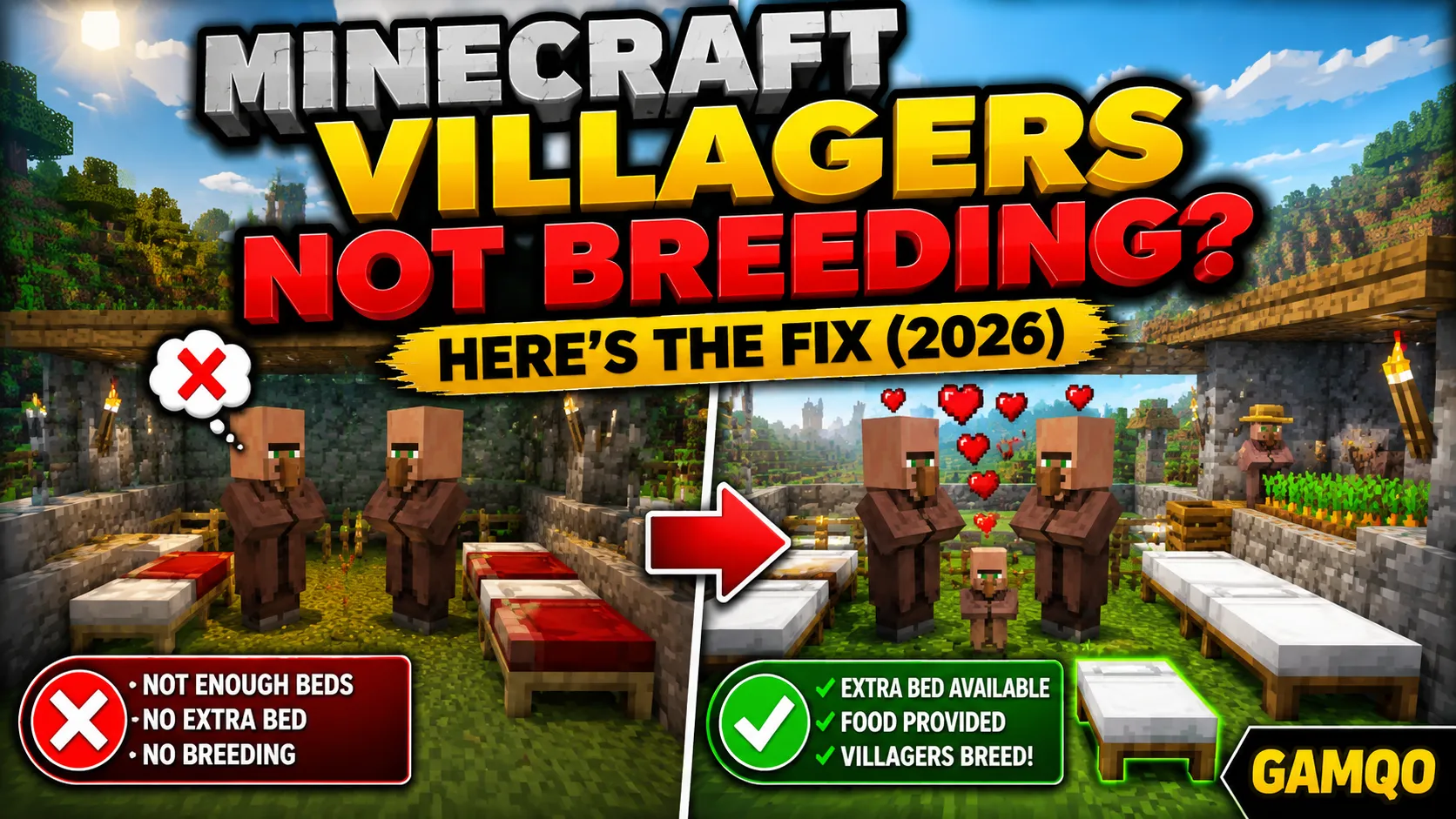
Why Your Minecraft Villagers Won't Breed (And How to Fix It)
Villagers won't breed if they're missing Beds, food, or willingness, and all three have to be present at the same time. Each villager needs a claimed bed; you need at least one extra unclaimed bed for the baby, and you have to throw food to make them willing. Miss any one of these, and nothing happens, no error message, no indication, just villagers standing around doing nothing.
Each condition can fail silently. That's what makes this frustrating. Here's how to check them one by one.
Quick Answer:
Villagers won't breed in Minecraft unless they have enough food, valid beds, and an available extra bed for the baby. Each villager must be linked to a bed, and there must be at least one unclaimed bed accessible to them. Give villagers 3 bread, 12 carrots, 12 potatoes, or 12 beetroot to make them willing to breed. If hearts appear but no baby spawns, the problem is usually an invalid or inaccessible bed.
The Bed Problem (Most Common Cause)
Most broken breeders fail here. Breeding stops completely when the villager count equals or exceeds the number of valid beds. Ten villagers, ten beds, you're at the cap. No breeding, no babies.
The rule: you need more valid beds than you have villagers. For a baby to spawn, at least one unclaimed bed has to be accessible. A standard dedicated breeder keeps extra beds queued up so breeding can run in cycles.
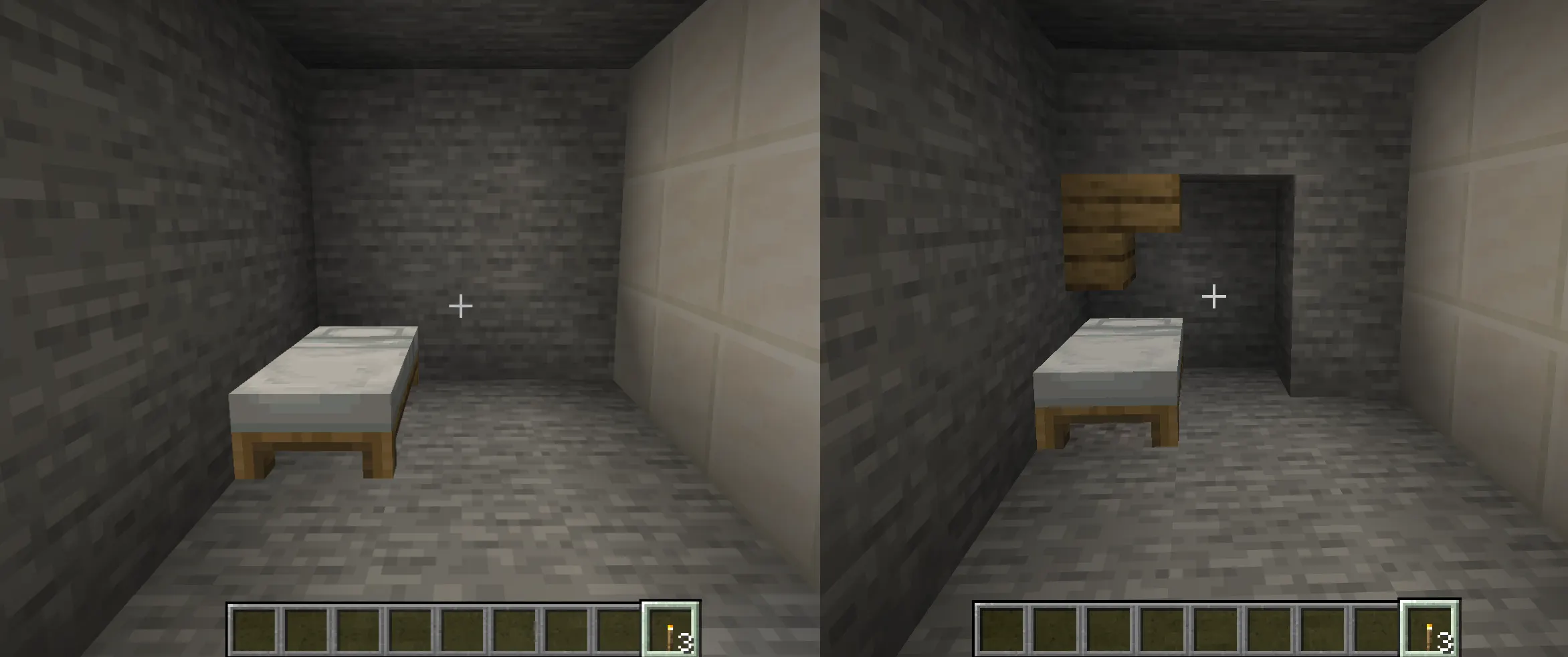
But just having beds isn't enough. Those beds need to actually work. A bed that villagers can't pathfind to won't count. The head of each bed needs two free air blocks above it, a ceiling right on top, a slab, and even a carpet in some cases, which can break it. Built your breeder in a tight space? That's worth checking first.
Villagers claim beds by walking to them and sleeping. If they can't reach a bed, they won't claim it, and unclaimed beds don't help with the population cap. Even if the beds are technically in range, a single blocked doorway or a weird elevation change can stop the whole thing.
Java vs Bedrock: The cap formula works the same on both editions, but Bedrock pathfinding is worse. Compact breeder designs that work fine on Java often fail on Bedrock because villagers struggle to claim beds in tight spaces. If you're on Bedrock and using a design from a Java tutorial, that's likely your problem. Give the beds more room.
The Food Problem
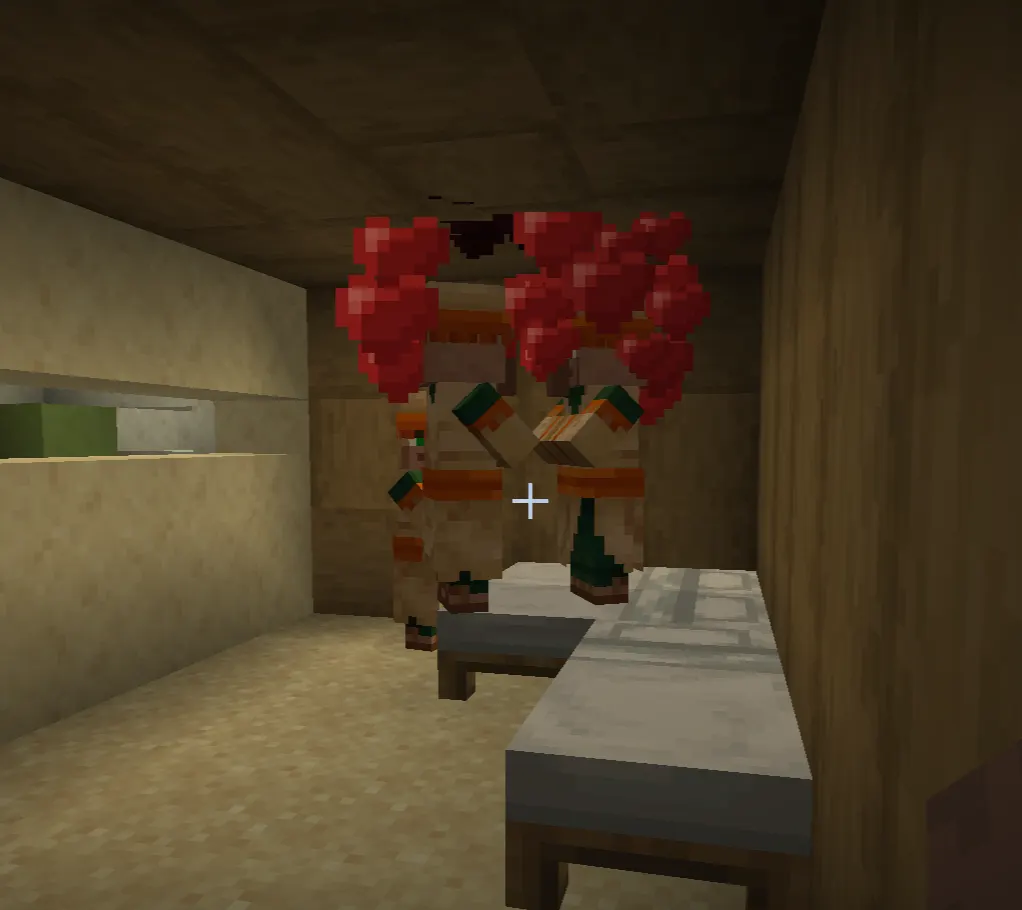
Villagers go willingly when they have enough food in their own inventory. They don't pull food from chests or barrels; you have to throw it directly to them with Q (or drop it on the ground nearby).
The amounts that trigger willingness:
|
Food Item |
Amount Needed |
|
Bread |
3 |
|
Carrots |
12 |
|
Potatoes |
12 |
|
Beetroot |
12 |
Bread is almost always the right call. Three loaves per villager you want to activate, throw it, and you should see hearts within a few seconds, assuming the other conditions are also met.
Willingness resets after breeding. A villager breeds once, the status clears, and they won't go again until they get more food. So, in any breeder that runs more than once, you need a food loop. Usually, that means a farmer villager with access to crops. Farmers harvest, fill up, and then toss excess food to nearby villagers automatically. That's the mechanic that keeps automated breeders running without you hand-feeding every cycle.
If you don't have a farmer in your setup, you're manually throwing food every single time. It works, it's just tedious.
What "Willing" Actually Means
Willingness is a hidden status. When a villager gets it, hearts appear,r and they look for another willing villager to breed with. The baby spawns into a nearby valid bed.
The catch: food alone doesn't make a villager willing if the other conditions aren't met. The game checks everything simultaneously: valid beds, a free bed for the baby, and enough food. You can have a villager stuffed with bread,d and they'll still sit there idle if there's no open bed.
On Java, breeding tends to trigger faster in tighter spaces where villagers are constantly bumping into each other. Not an official mechanic, just how it plays out.
For a detailed breakdown of villager breeding behavior and willingness, see the Official Villager breeding mechanics.
The Population Cap
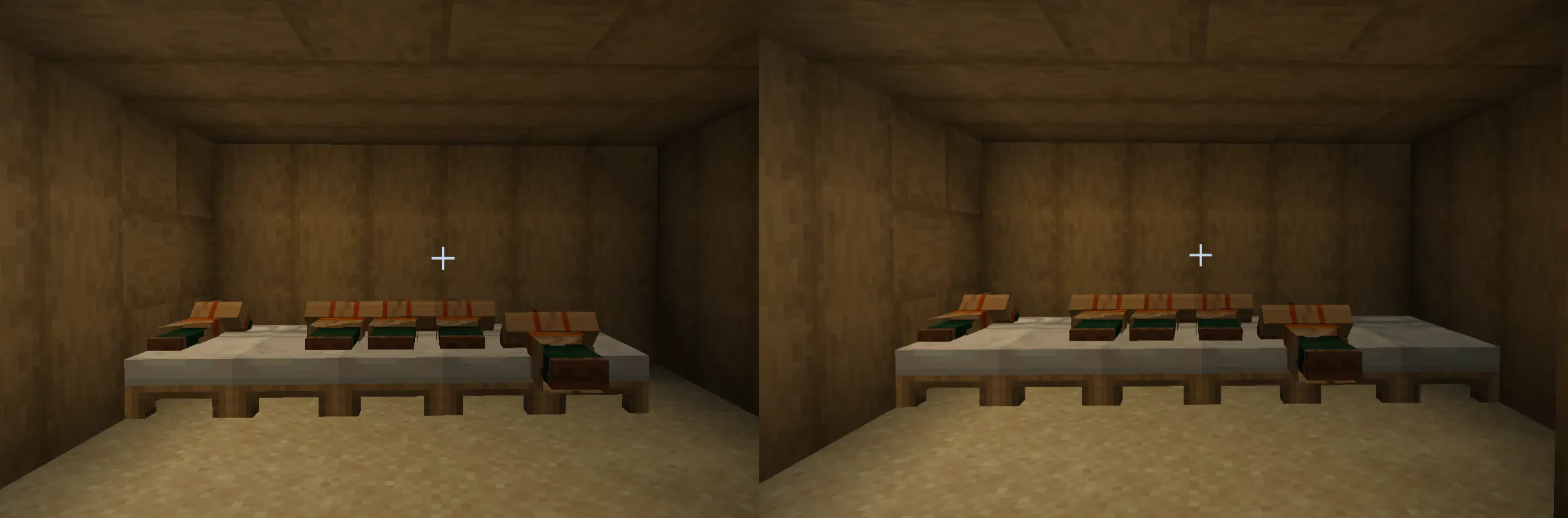
Villager count must be less than the number of valid, accessible beds. That's the whole rule. Once you're at cap, breeding doesn't slow down; it stops entirely.
This catches people off guard when expanding an existing village. Add 20 beds to a village that already has 20 villagers,s and nothing happens. Add 21, you get one baby. The cap is a ratio, not a total.
In a dedicated breeder, this is easy to control. In a natural village, you need to count what's already there. And if Zombies kill some villagers overnight and you don't replace or re-link the beds they were using, your cap quietly drops.
Breeder Not Working Since 1.14?
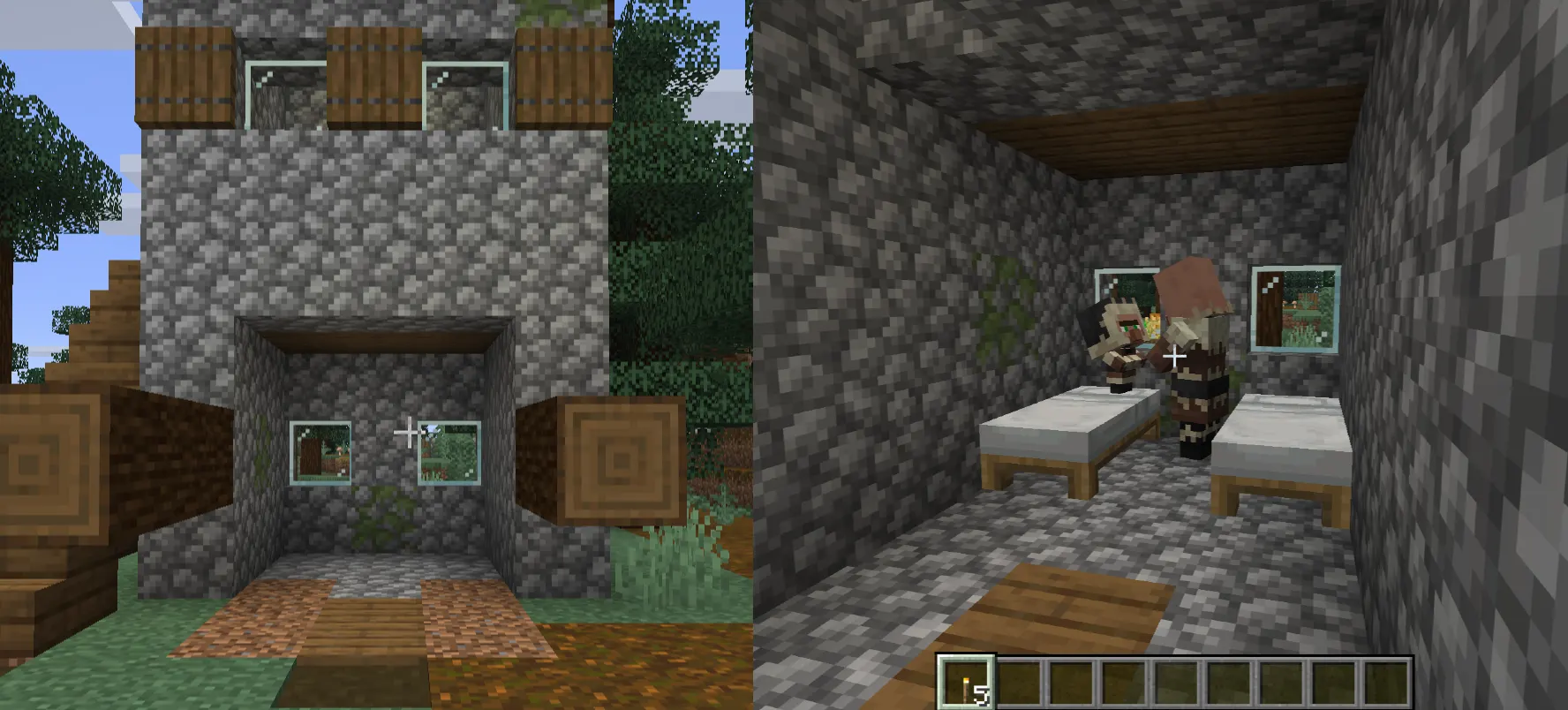
Before the Village and Pillage update (1.14), doors drove villager breeding. That mechanic is gone. Doors do nothing for breeding; no, beds are the entire system.
Any pre-1.14 breeder design is dead. Any guide that mentions doors as part of the breeding conditions is outdated. If your setup has doors and no beds, that's your whole problem.
Common Mistakes and How to Fix Them
Beds too far away. Villagers won't pathfind to beds outside roughly 48 blocks. If your beds are on the other side of the compound, they won't get claimed.
Blocked beds. Check the two air blocks above the pillow end of each bed. A ceiling, slab, or even a carpet above that spot can make the bed invalid.
No farmer. Without a farmer villager handling the food loop, you feed by hand every cycle. That's workable for testing, but not for any long-term setup.
Villagers are not sleeping. If something stops a villager from sleeping in a nearby mob, a bed they can't reach after dark, or insufficient lighting, the bed won't get claimed. Keep your breeder lit and enclosed.
Bedrock-specific: job site clutter. On Bedrock, villagers sometimes spend so much time looking for job sites that they skip sleeping. Stray job site blocks near your breeder without matching workstations can cause this. Keep the area clean.
How to Actually Test If It's Working
Throw three bread to two villagers, make sure there's an unclaimed bed accessible, and watch for hearts. Hearts appear,r but no baby spawns beds are the problem. Either the count is off, or one or more beds aren't valid. No hearts at all, food isn't reaching the willingness threshold, or something is blocking the mechanic entirely.
On Java, F3+B shows hitboxes and can help you spot pathfinding issues. On Bedrock, you're testing by observation.
If you get a baby but then breeding stops: you hit the cap, or willingness isn't being replenished. Add more beds or check the food supply.
Java vs Bedrock Breeding: The Real Differences
The core mechanic is the same across both editions now. Older Bedrock versions had a quirk where villagers needed to perceive a nearby threat to trigger willingness that was patched out. Recent Bedrock versions behave like Java for normal breeding.
Two differences remain. First, Bedrock pathfinding struggles with compact breeders more than Java does. Java is more forgiving when beds are tightly packed. Second, on Bedrock, villagers won't breed if the player is too far away, specifically, outside simulation distance 4. If you're AFK at a breeder on Bedrock, you need to stay close enough to keep the area loaded.
Conclusion
Villager breeding problems in Minecraft usually come down to one of three things: beds, food, or population limits. The frustrating part is that the game rarely tells you what's wrong, so even a small issue like an inaccessible bed or a missing loaf of bread can stop the entire process.
If your villagers aren't breeding, start with the basics. Make sure every villager has a valid bed, leave at least one extra bed available for the baby, and provide enough Food to make them willing. If hearts appear but no baby spawns, focus on checking your bed setup and village population cap. Most breeder issues can be solved in just a few minutes once you know where to look.
Whether you're building a simple village expansion or a fully automated breeder, understanding these mechanics will save you a lot of trial and error. Get the beds right, keep the food flowing, and your village population should start growing again in no time. Happy Crafting!