Few Mobs in Minecraft demand as much respect as the Enderman. You can walk right past one, and nothing happens. But the second you glance at its face, everything changes. It freezes, opens its jaw, lets out that awful scream — and then it's coming for you.
Understanding how Endermen work isn't just useful trivia. It directly affects how well you survive the night, how efficiently you gather Ender Pearls, and whether your End run goes smoothly or falls apart before you ever reach the Dragon. This guide covers everything: behavior, weaknesses, drops, and how to build a farm that makes grinding XP effortless.
What Is an Enderman?
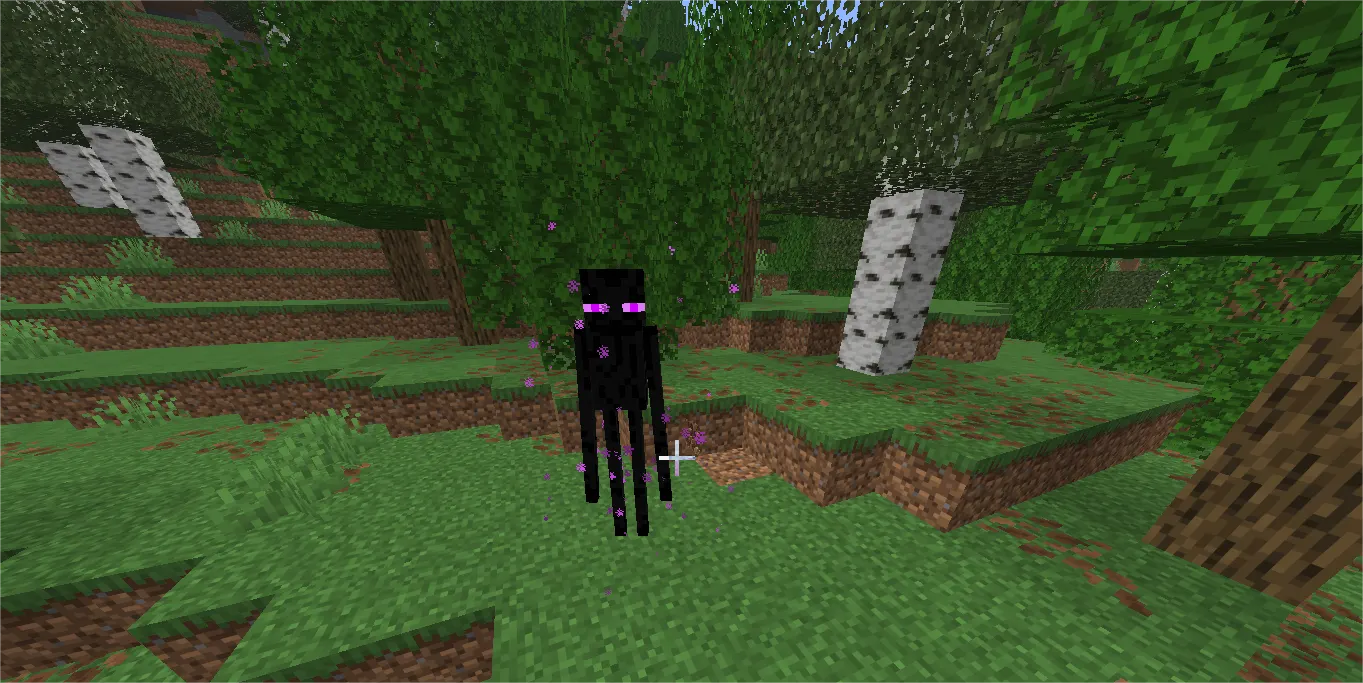
The Enderman is a tall, neutral mob with jet-black skin, long limbs, and glowing purple eyes. It stands about 2.9 blocks tall — the tallest standard mob in the game. Under normal conditions, it wanders slowly, sometimes picking up blocks, and ignores you completely.
That neutrality ends the moment you make direct eye contact.
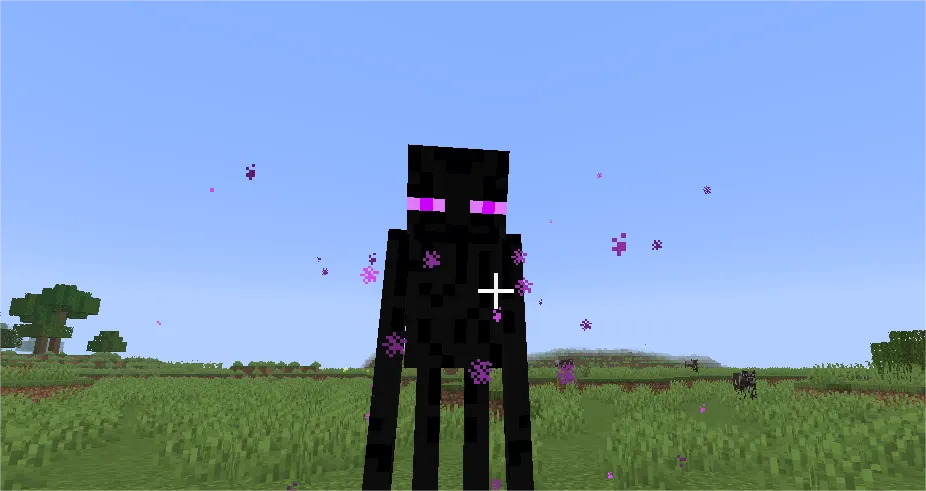
At that point, it becomes one of the more aggressive mobs in the game, teleporting toward you and dealing significant melee damage.
Endermen are one of the only mobs in Minecraft that spawn in all three dimensions: the Overworld, the Nether, and the End. They're also unique in their teleportation ability, which they use both offensively and defensively.
Enderman Spawning: Where and When They Appear
Overworld
Endermen spawn uncommonly across most Overworld Biomes, but they stay away from mushroom fields and the deep dark entirely. In Bedrock Edition, they also won't appear in rivers, frozen rivers, or snowy plains. They need a solid surface with at least three empty blocks above it and a light level of exactly 0 — true darkness.
In Java Edition, they spawn in groups of up to four. In Bedrock Edition, the group size is capped at two.
The Nether
Endermen do spawn in the Nether, but only in specific biomes. They appear rarely in soul sand valleys, uncommonly in nether wastes, and most frequently in warped forests — making warped forests a solid Overworld-adjacent option if you want to farm them without going to the End. Light level requirements are slightly looser here: they'll spawn at level 7 or below.
The End
The End is where Endermen truly dominate. They spawn constantly, in groups of four, across the entire dimension. If you're serious about farming Ender Pearls or XP, the End is where you want to be. The main island has the highest density, but the outer End islands work well too if you're building a dedicated farm.
Enderman Behavior: What You Need to Know
Passive State
When an Enderman isn't provoked, it wanders slowly, occasionally picking up a nearby block and carrying it around. It won't attack you, other mobs, or do anything overtly threatening. The block-picking behavior is purely passive — it just grabs whatever's nearby and strolls.
Provocation: How You Anger an Enderman
There are a few ways to set one off:
-
Looking at its eyes from within 64 blocks for at least 5 game ticks (that's a quarter of a second). This applies even if you're looking at the back of its head or its upper legs at a distance.
-
Attacking it directly with any weapon.
-
Getting hit by splash water near one — not exactly provocation, but water causes damage, which triggers aggression.
One important nuance: in Java Edition, crouching reduces the range at which eye contact triggers aggression. Being invisible (via the Invisibility potion) also shrinks that range based on how much armor you're wearing. Neither completely removes the risk, but both help.
Endermen are also hostile toward Endermites — those small purple mobs that occasionally spawn when you throw an Ender Pearl. Endermen will hunt them down within 64 blocks, which is a mechanic you can exploit when building farms.
Aggressive State
Once provoked, the Enderman opens its jaw, shakes (Java Edition), and charges. It moves fast and teleports to close the gap between you. If you maintain eye contact while it's aggressive, it'll freeze — it stops moving and stares back at you. The moment you break eye contact, it rushes you.
Aggressive Endermen will disengage eventually. In Java Edition, if there's enough sky light, they try to back off roughly every 20–30 seconds. If they don't reacquire their target within 40 seconds, they give up. Rain also causes them to scatter, since it damages them.
Teleportation

This is what makes Endermen genuinely difficult. They teleport when:
-
Hit by a projectile (arrows, tridents, snowballs — all of it)
-
Touched by water or rain
-
Taking any external damage like Poison or Wither
-
Trying to close the distance on a target
Arrows are almost useless against them in a standard fight. They teleport the moment the arrow makes contact, avoiding all damage. If an Enderman can't teleport for some reason — say, it's stuck — arrows in Java Edition bounce off. In Bedrock Edition, they phase right through.
One exception: rocket-propelled crossbow shots still trigger hostility, even though Endermen dodge the damage.
Enderman Weaknesses
Water
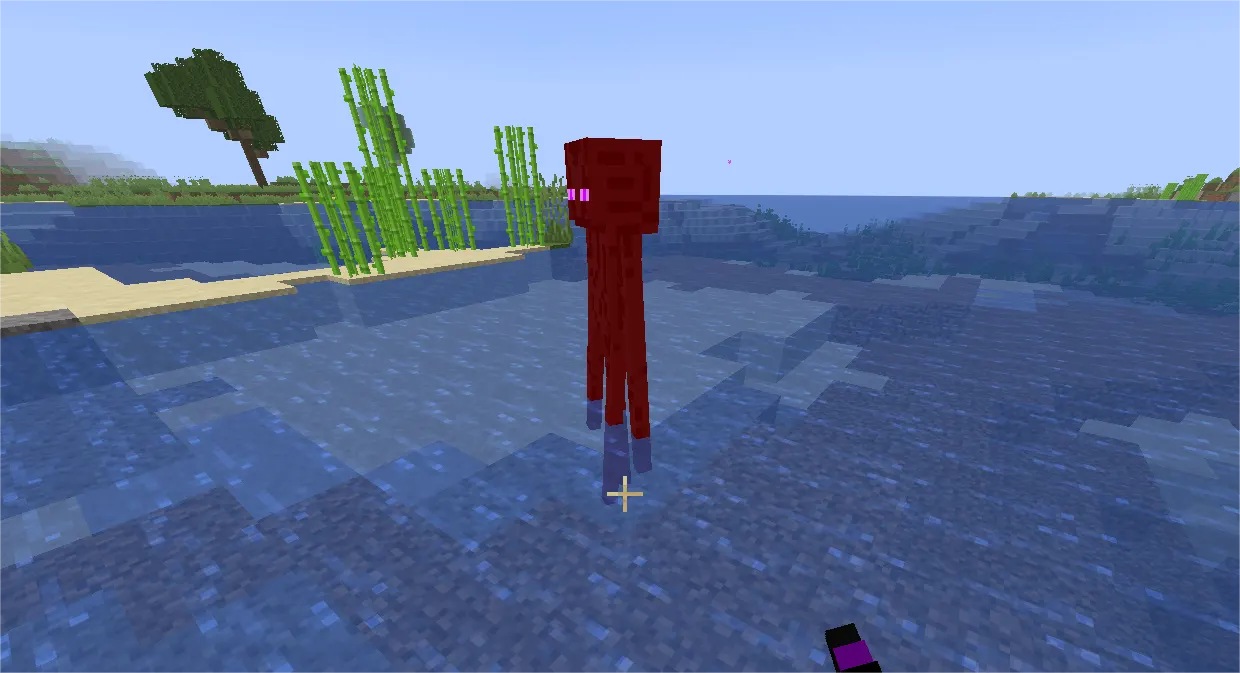
This is their biggest weakness by a wide margin. Endermen take 1 damage per tick from any contact with water — rain, rivers, thrown water bottles, or standing in water. They'll teleport repeatedly trying to escape it, and if they can't find dry ground, they'll die from the damage. Carrying a water bucket in a fight gives you an emergency button you can press whenever things get out of hand.
In Bedrock Edition, water-filled cauldrons also damage Endermen if they walk into one. Java Edition players don't have to worry about that interaction.
Low Ceilings
Endermen are nearly 3 blocks tall. Fighting underneath a 2-block ceiling (like a small overhang or a quickly dug shelter) means they literally cannot reach you. You can swing your sword freely while they pathfind around, unable to hit back. This is one of the most reliable tactics for early-game Enderman encounters and also the basis of many efficient farm designs.
Melee Damage
Endermen can be killed with standard melee attacks. They have 20 hearts (40 HP) of health, which makes them tankier than most common mobs. A diamond sword with Sharpness will make short work of them, but you'll still need two or three hits on greater difficulties without a critical strike.
Fire and Lava
Endermen take damage from fire and lava. However, they'll teleport away almost immediately when in contact, so this isn't a practical way to kill them in the open. It's worth knowing in case you're building a trap that uses lava as part of the kill mechanism.
What Doesn't Work
-
Arrows and tridents — they teleport out
-
Snowballs — absorbed with no damage
-
Sunlight — it doesn't harm them, but at sufficient daylight levels, they begin teleporting randomly, often ending up underground
Combat Tips: Fighting an Enderman
Wear a Carved Pumpkin
Putting a carved pumpkin on your head is the single most underrated Enderman tip in the game. It completely blocks the eye contact mechanic — you can stare directly at an Enderman's face and nothing happens. Your vision gets distorted, but you won't trigger aggression, which is incredibly useful in the End where Endermen are everywhere.
Use a 2-Block Safe Zone
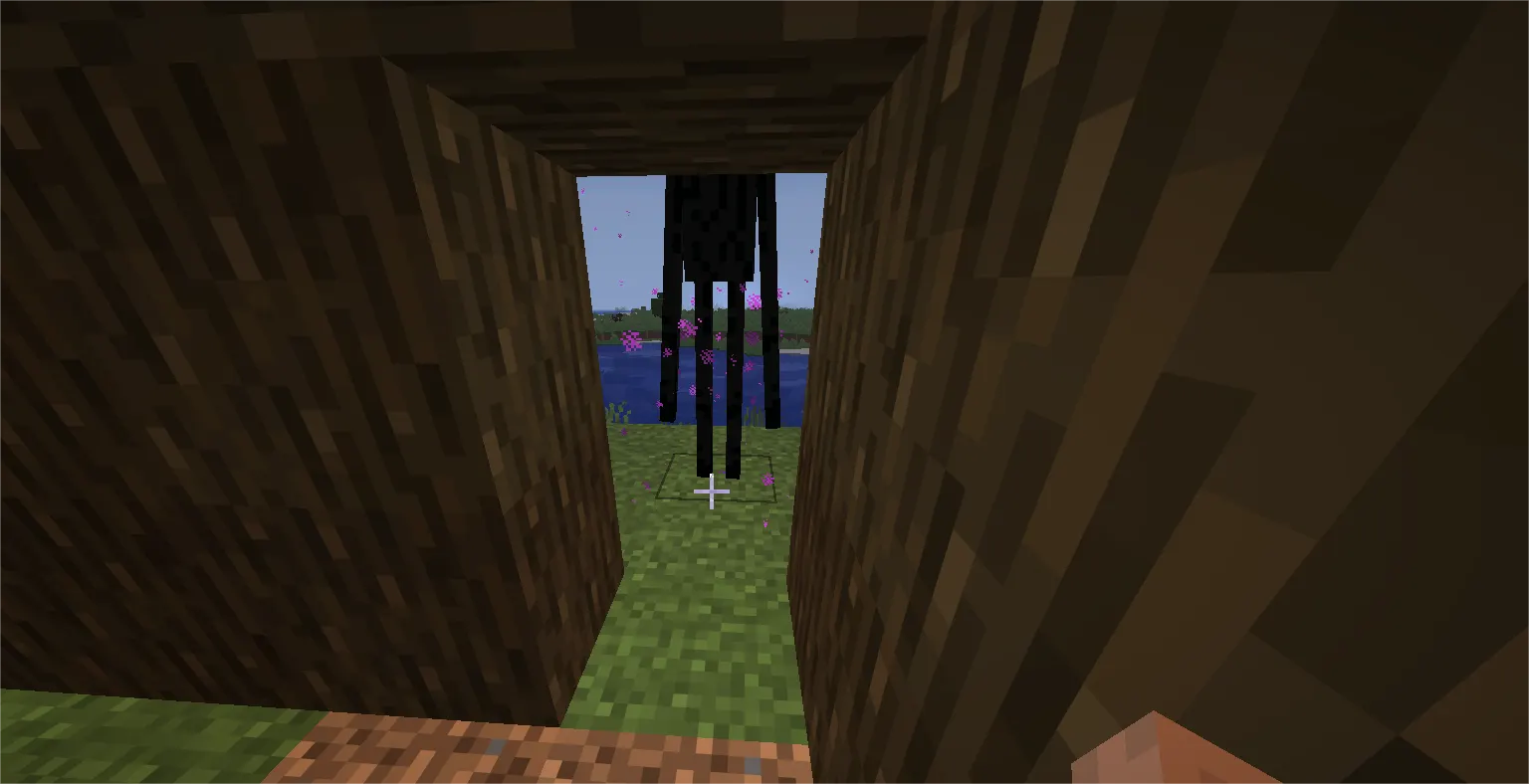
Find or dig an area that's exactly 2 blocks high. Walk backward into it while keeping the Enderman in your sightline. Once you're under the ceiling, it can't reach you. Swing at its legs while it paces outside. This works on literally any surface, so it's a valid fallback whether you're in the Overworld at night or deep in the End.
Sword Enchantments to Prioritize
-
Sharpness — raw damage increase, fastest way to end a fight
-
Looting — increases the Ender Pearl drop rate significantly, especially valuable
-
Knockback — creates distance between you and the mob, buying time
For the enchantments themselves, Looting III is the one that changes the math on farming. Without it, you're getting 0–1 Ender Pearls per kill. With Looting III, that jumps to 0–4.
Don't Use a Bow in Open Combat
It's tempting, especially at range, but arrows do nothing. Every shot triggers a teleport, and you're burning arrows with zero payoff. Save the bow for other mobs. The only ranged tools that affect Endermen are water bottles — use those instead if you need to force a repositioning.
Watch Your Surroundings
Endermen teleport behind you. In a standard outdoor fight, you may land a hit and then spend the next few seconds spinning around trying to find where it went. Pay attention to sounds — the teleport produces a distinct audio cue. If you hear it while fighting, expect an attack from a new angle.
Enderman Drops
Ender Pearls
Ender Pearls are the main reason most players engage Endermen at all. Each kill drops 0–1 pearl by default. With Looting III, that increases to 0–4.
You need Ender Pearls to craft Eyes of Ender, which are required to locate and activate the End Portal. You'll need somewhere between 3 and 12 Eyes of Ender for a typical End run — the exact number depends on how many portal frame blocks are already filled. Building up a stock of 20+ pearls before attempting the End gives you enough margin for travel and any mistakes.
Ender Pearls also let you teleport short distances when thrown, which has legitimate uses for traversal and escaping danger.
Experience Orbs
Endermen drop 5 XP per kill when killed by a player or tamed wolf. This makes them decent for early XP grinding, but the real value comes from farming — automated setups where you're killing dozens per minute.
Held Blocks
If an Enderman was carrying a block when it died, it dropped that block. This isn't consistent or farmable in a useful way, but it can occasionally drop blocks like grass, sand, or gravel. Some players find this useful in specific resource-gathering scenarios. It can also cause terrain damage if you're in an area an Enderman has been rearranging.
Which Blocks Can Endermen Pick Up?
Not every block in the game is a fair game. Endermen can only pick up a specific list of blocks, mostly natural generation blocks. This includes:
-
Grass blocks, dirt, coarse dirt, rooted dirt
-
Sand and red sand
-
Gravel
-
Clay
-
Flowers (all variants)
-
Mushrooms (red and brown)
-
Cactus
-
Pumpkins and melons
-
TNT
-
Netherrack
-
Nylium variants
-
Soul sand and soul soil
They cannot pick up stones, logs, ores, crafted blocks, or anything placed by a player that isn't on the above list. So most of your built structures are safe — but gardens and natural terrain can get rearranged.
Java vs. Bedrock: Key Differences
Some Enderman mechanics aren't consistent between versions. Here's what changes:
|
Feature |
Java Edition |
Bedrock Edition |
|
Spawn group size (Overworld) |
Up to 4 |
Up to 2 |
|
Spawn in rivers / frozen biomes |
Yes |
No |
|
Arrow behavior (non-teleporting) |
Bounce off |
Pass through |
|
Arrow provokes hostility |
No |
No |
|
Stare paralysis (eye contact) |
Yes |
No |
|
Ender Pearl drops with Looting III |
0–4 |
Lower rate |
|
Water cauldron damage |
No |
Yes |
|
Aggression timeout |
~20–30 seconds |
Based on non-interaction |
The stare paralysis difference is particularly significant. In Java Edition, if you maintain eye contact with an aggressive Enderman, it freezes — a useful panic button. In Bedrock, that doesn't apply, so the fight is more chaotic.
Enderman Farming: How to Get Maximum XP and Pearls
Why Farm Endermen?
Killing Endermen one at a time is fine early on, but it doesn't scale. A well-built Enderman farm can get you to level 30 in minutes, and it generates Ender Pearls passively — enough to stock up for multiple End runs, or just to use as a teleportation tool freely without worrying about running out.
Best Location: The End
The End dimension spawns Endermen at the highest rate in the game. The outer islands are the preferred spot for farms because the main island has the Dragon and unpredictable terrain. Head about 128 blocks away from the main island before building to avoid interference.
Warped forests in the Nether are the second-best option, but they're harder to work with due to terrain and other mobs. The Overworld is viable in a pinch but noticeably slower.
Method 1: Endermite Lure Trap (Most Efficient)
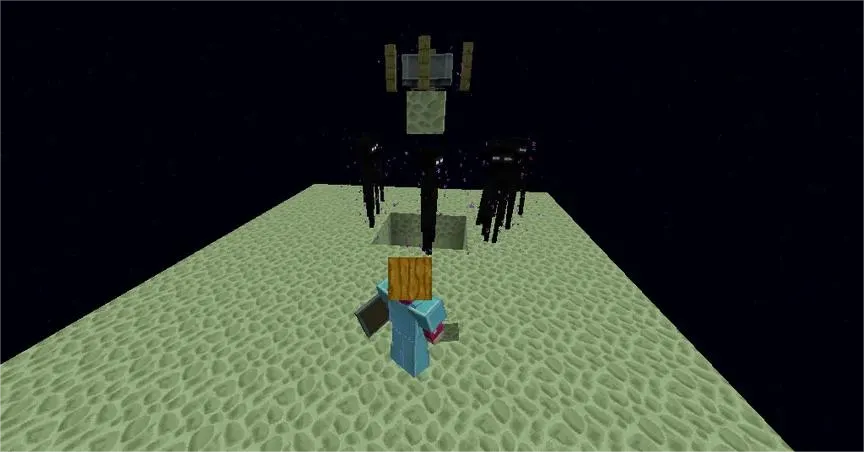
This is the go-to method for automated farming. Endermen are naturally hostile to Endermites and will pathfind toward one from up to 62 blocks away if they have line of sight. Here's the core setup:
-
Throw an Ender Pearl and wait for an Endermite to spawn (roughly 5% chance per throw).
-
Name the Endermite with a Name Tag (named mobs don't despawn).
-
Place the Endermite in a Minecart — this keeps it stationary and prevents it from despawning even without the name tag backup.
-
Build your spawning platform above this lure — Endermen will spawn on it and immediately pathfind toward the Endermite.
-
Route them into a kill chamber. A 43-block drop leaves them at 1 HP, so you can finish them with a single punch and collect the XP credit.
The 43-block drop number matters. Endermen have 40 hearts (80 HP). Fall damage does 0.5 hearts (1 HP) per block beyond the safe fall threshold. A 43-block drop deals 79 HP — leaving them at exactly 1 HP, ready for a one-shot.
Use waterlogged leaf blocks on the spawning platform to prevent Endermen from teleporting onto the surface unexpectedly. Leaf blocks stop teleportation in Java Edition.
Method 2: Eye Contact Trap (Low-Resource, Simpler)
If you don't have a Name Tag or don't want the complexity of the endermite method:
-
Dig a 3×3×3 pit into the ground anywhere in the End.
-
Build a 4-block tower in the center.
-
Stand on top of the tower with a sword.
-
Look at nearby Endermen to provoke them — they'll rush toward you and fall into the pit.
-
Optional: add pistons around the pit's walls to crush them and reduce their HP before you jump in for the kill.
This design is simpler and cheaper, though less efficient than the endermite farm. It works well as a starting point if you're doing your first End run and want quick XP.
Method 3: Y=0 Java Farm (Advanced)
In Java Edition, mob spawning rates increase at lower Y levels. A farm built at Y=0 spawns Endermen faster than one at a typical surface height. DashPum4's design uses this principle — no endermite needed, player looks at Endermen to aggro them, entity cramming in a kill chamber handles most of the damage, and sweeping-edge attacks collect XP from multiple targets at once.
This method requires getting to Y=0 in the End, which takes more setup, but the spawn rates make it worthwhile for serious XP grinding.
Farm Tips
-
Always use a Looting III sword when landing the kill. Looting only applies on the final hit — if the farm's fall damage kills them outright, you lose the pearl bonus.
-
Keep chunk loading in mind. If you move too far from the farm, it stops running. Either stay close or use chunk-loading tools if your server supports them.
-
Hoppers feeding into a chest below the collection point handle pearl collection automatically. You'll still need to be present for the XP.
Enderman Trivia and Lore
A few things worth knowing that your competitors mostly skip:
The Slenderman connection is intentional. Notch confirmed on Twitter in 2011 that Endermen were inspired by the Slenderman internet legend — the tall, faceless figure from creepypasta. The design is deliberate, not a coincidence.
Their sounds are reversed speech. Enderman sounds are rumored to be backward-spoken words like "hi," "hey," and "what's up." Notch has confirmed the sounds were recorded by team members and played in reverse. Whether that constitutes a hidden message is debated, but the recording's origin is real.
They're the only mob in all three dimensions. No other Mob spawns naturally in the Overworld, Nether, and End. That alone makes Endermen unique in terms of game design — they're woven into every major environment.
They prevent sleep. Even a passive Enderman nearby counts as a "Hostile mob present" for sleep purposes. You can't skip the night if one is wandering nearby, even if you haven't angered it.
They can wake you up. If you're already asleep in a Bed and an Enderman teleports onto it, it can knock you off and wake you up mid-night. This is rare but infuriating when it happens.
Common Mistakes to Avoid
These are the errors players keep repeating — especially on their first few encounters:
Shooting arrows at them. It does nothing and wastes ammunition. Use melee.
Fighting in the open at night. No safe zone, nowhere to back up to, and they'll teleport behind you repeatedly. Find cover or create a low-ceiling spot before engaging.
Ignoring Looting. A plain sword gives you maybe 0.5 Ender Pearls on average per kill. Looting III changes that to 2+. The difference adds up fast when you need 12 Eyes of Ender.
Not carrying a water bucket. It's your reset button. If an Enderman fight goes wrong, water ends it quickly. Don't enter the End or wander at night without one.
Building farms at the wrong height. A farm built at surface level in the End will work, but it'll be slower than one built properly above the island with clear spawning pads and no interference from terrain.
Quick Reference: Enderman Stats
|
Stat |
Value |
|
Health |
20 hearts (40 HP) |
|
Attack Damage (Easy) |
4.5 hearts |
|
Attack Damage (Normal) |
7 hearts |
|
Attack Damage (Hard) |
10.5 hearts |
|
XP Dropped |
5 |
|
Ender Pearl Drop |
0–1 (0–4 with Looting III) |
|
Spawn Light Level |
0 (Overworld/End), ≤7 (Nether) |
|
Height |
~2.9 blocks |
|
Detection Range (eye contact) |
64 blocks |
Conclusion
The Enderman is one of those mobs that rewards knowing how it works. Once you understand the eye contact mechanic, the water weakness, and the low-ceiling trick, they go from frightening to manageable. Build a proper farm, and they go from manageable to one of the best passive XP sources in the game.