Nether Biome in Minecraft: Complete Guide, Survival Tips & Secrets
The Nether is not just another place to explore; it's a gear check, a resource bottleneck, and a death trap all rolled into one. You cannot beat Minecraft without going through it. Blaze rods, wither skeleton skulls, netherite, all of it locked behind a dimension that burns, shoots, and suffocates you at every turn.
This guide covers every Nether biome, every mob you'll face, what to bring, where to find the best loot, and the mistakes that kill most players long before they accomplish anything useful.
What Is the Nether Biome in Minecraft?
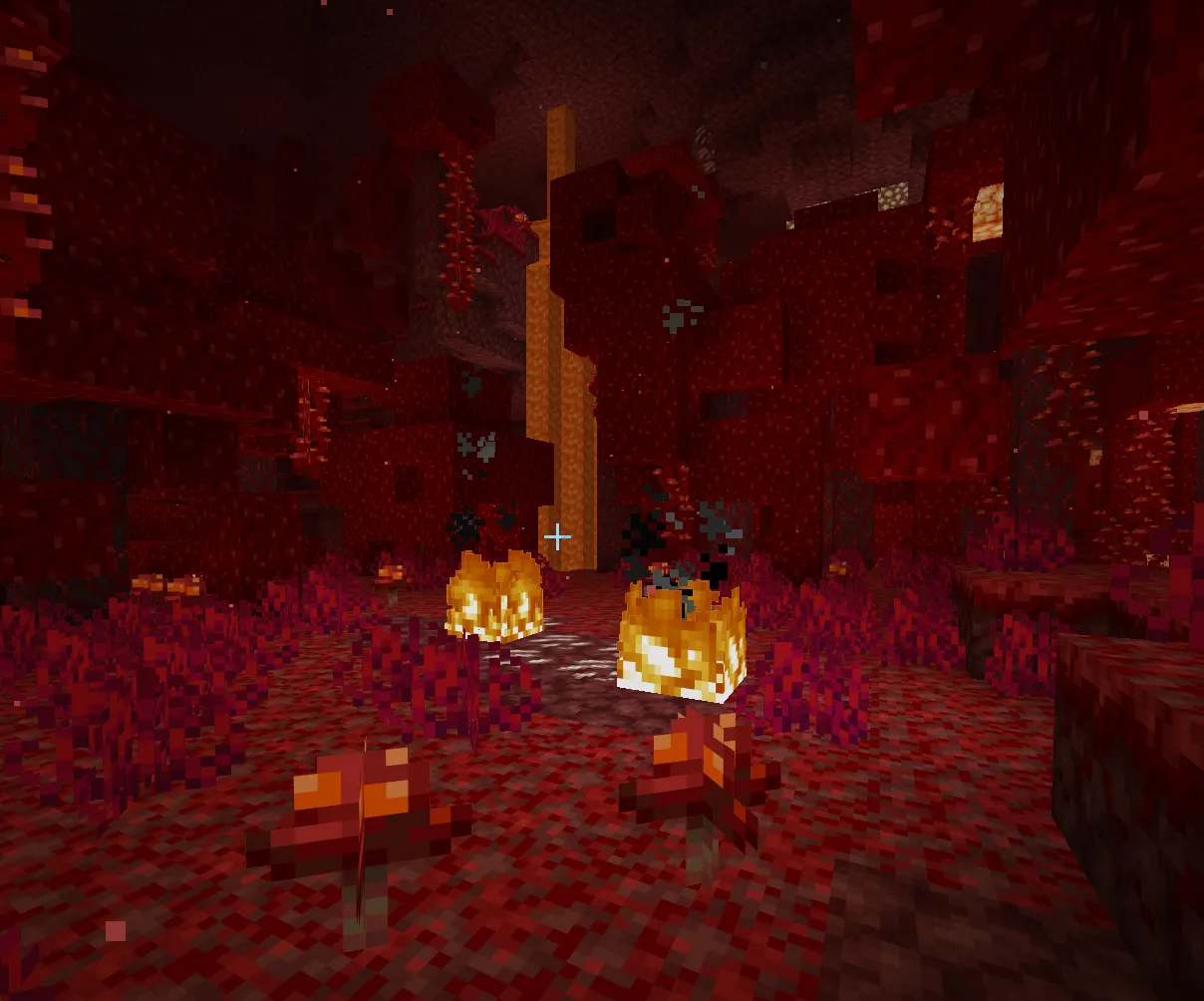
The Nether is one of Minecraft's three dimensions alongside the Overworld and the End. It's a cave-like realm with no sky, no rain, and no natural water. The ceiling is bedrock at Y=128. The floor is a maze of netherrack, lava seas, and terrain that drops without warning.
You access it by building a Nether portal out of obsidian, a minimum 4×5 frame, and lighting it with flint and steel. Step inside and wait four seconds. You're in.
Before the 1.16 Nether Update, the whole dimension was just one bleak, red wasteland. Now there are five distinct biomes, each with unique terrain, mobs, and resources.
One other thing worth knowing: every block you travel in the Nether equals eight blocks in the Overworld. This ratio matters more than most players realize. We'll get into why later.
The 5 Nether Biomes in Minecraft (Explained)
1. Nether Wastes
The default biome. Red netherrack as far as you can see, broken up by gold ore veins, quartz deposits, glowstone clusters on the ceiling, and lava lakes that appear without warning.
This is where most players first spawn when they enter the Nether, so it's where most players also die first.
Key resources: Nether quartz, Nether gold ore, glowstone, netherrack, gravel. Mobs: Zombified piglins (passive unless attacked), ghasts, endermen. Structures that spawn here: Nether fortresses, bastion remnants, ruined portals
It's not the prettiest biome, but it's one of the more navigable ones. The terrain is open enough to spot threats early, and ghasts are your biggest concern rather than ground-level mobs swarming you.
2. Crimson Forest
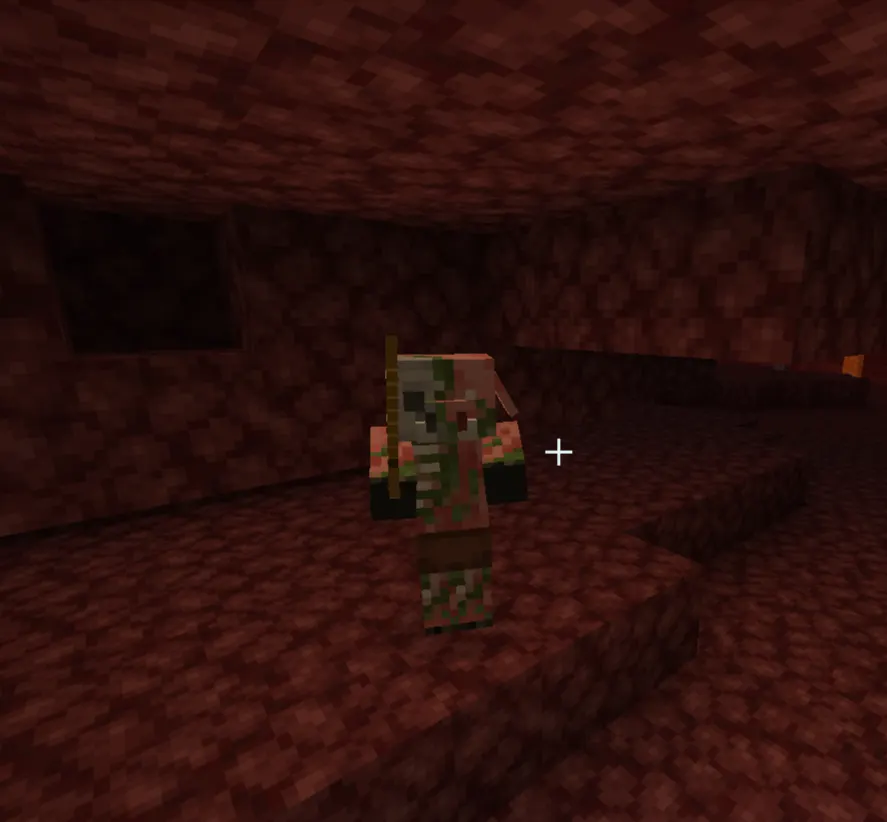
Step into the Crimson Forest and everything goes red: the trees, the ground, the fog. Giant crimson fungi tower overhead. The nylium floor glows. It looks almost alive.
It is also one of the most dangerous biomes in the Nether, for one reason: piglins and hoglins both patrol here.
Key resources: Crimson stems, crimson fungus, crimson nylium, crimson roots, shroomlights, weeping vines. Mobs: Piglins, piglin brutes, hoglins, zombified piglins. Structures: Nether fortresses, bastion remnants
Piglins won't attack you if you're wearing at least one piece of gold armor. Hoglins, on the other hand, don't care what you're wearing; they charge and knock you off ledges. Keep your distance from them unless you're geared up.
One useful trick: hoglins are afraid of warped fungus. Carry a few in your hotbar and place them to stop a hoglin charge cold. It works every time.
3. Warped Forest
The Warped Forest is the one place in the Nether that doesn't feel like it wants to kill you. It's cyan and teal, the giant warped fungi glow, and there's an almost peaceful energy to it, at least compared to everything else down here.
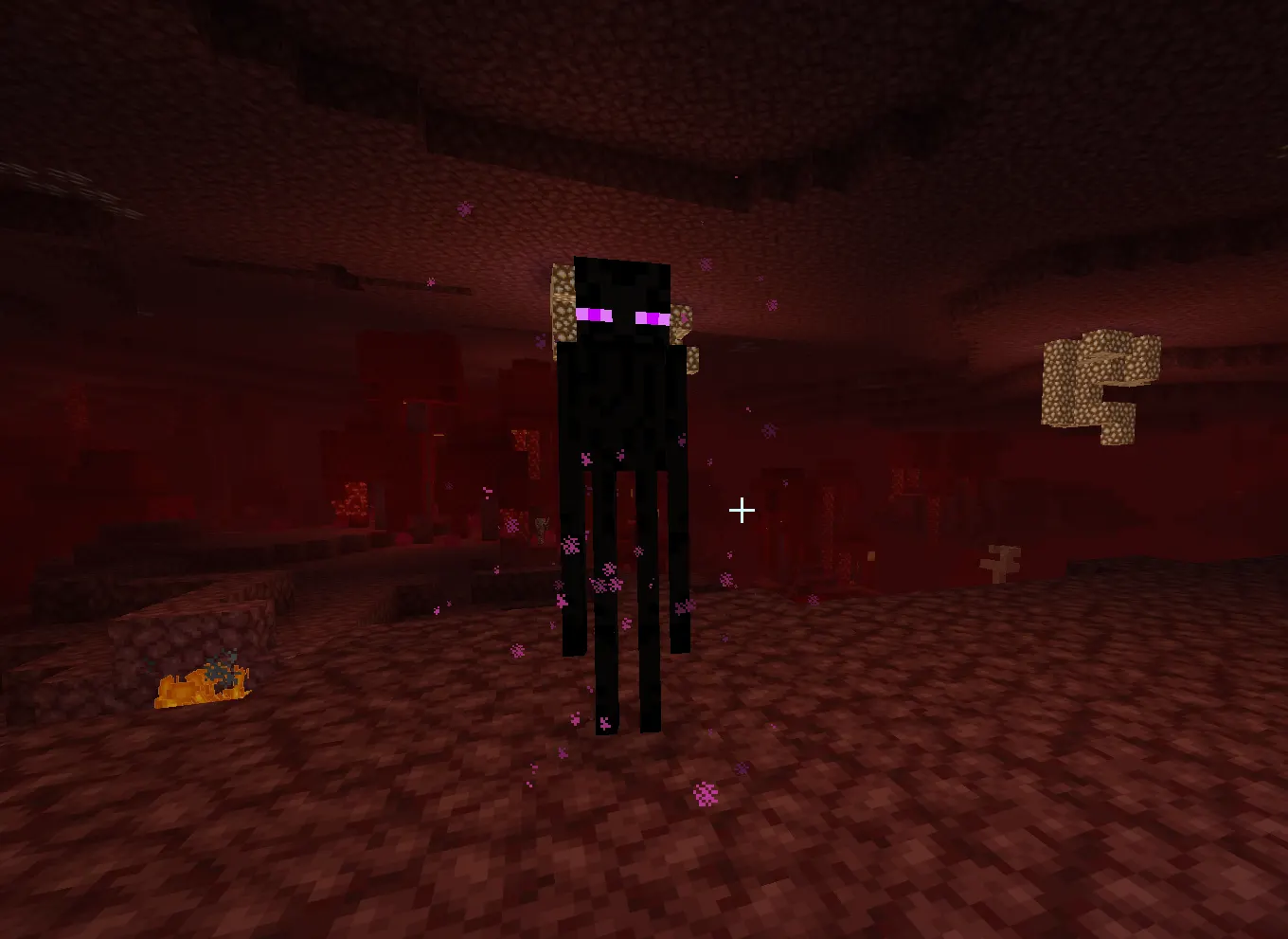
No piglins. No hoglins. The only hostile mob native to this biome is the enderman, and those are easy to avoid as long as you don't look directly at them.
Key resources: Warped stems, warped fungus, warped nylium, warped roots, shroomlights, twisting vines. Mobs: Endermen only (Hostile mobs from other Biomes may wander in). Structures: Nether fortresses, bastion remnants
This is the Safest biome to build a base in. No fire, minimal mob pressure, and crimson/warped wood are all fire-resistant, so you can build without worrying about everything burning down.
If you're planning to set up a Nether base, the Warped Forest is the right place to do it.
4. Soul Sand Valley
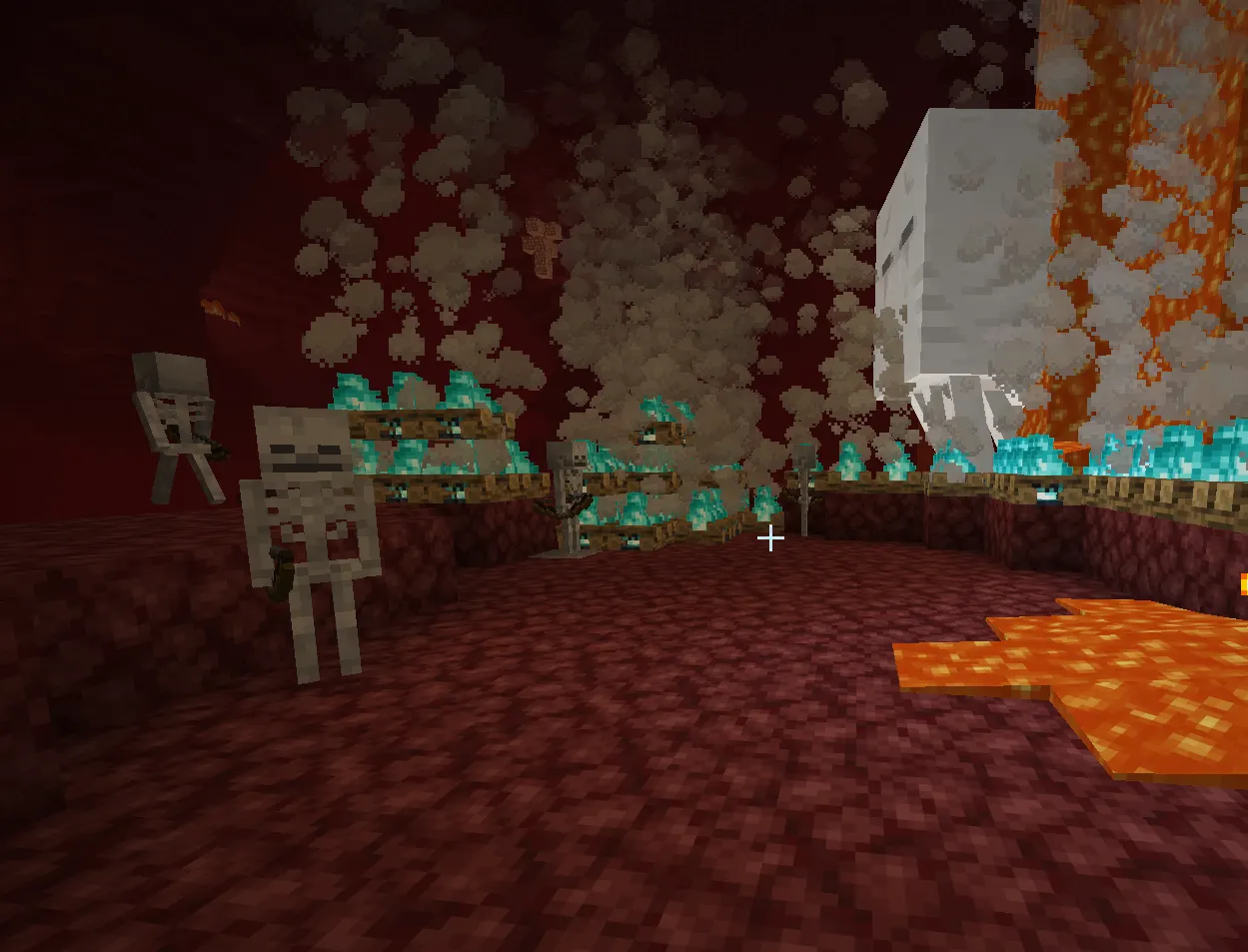
The Soul Sand Valley is unsettling in a way the other biomes aren't. It's quiet. The floor is soul sand and soul soil, both of which slow you down when you walk on them. Fossil structures made of bone blocks jut out of the ground. Blue flames flicker instead of orange. Ash particles drift through the air.
And then a ghast screams somewhere in the fog.
Key resources: Soul sand, soul soil, bone blocks (fossils), basalt, blue ice (occasionally). Mobs: Ghasts (spawn in high numbers), skeletons, endermen, striders (on lava). Structures: Nether fortresses and bastion remnants can spawn here
The biggest threat in this biome is the volume of ghasts that spawn. You will hear them constantly. Combine that with soul sand slowing your movement and basalt columns blocking your sightlines, and this becomes the deadliest biome to get caught in unprepared.
Pro tip: Soul Speed is the only enchantment in Minecraft that specifically increases your speed on soul sand and soul soil. You can get it from piglin bartering. It's worth getting before you spend serious time in this biome.
5. Basalt Deltas
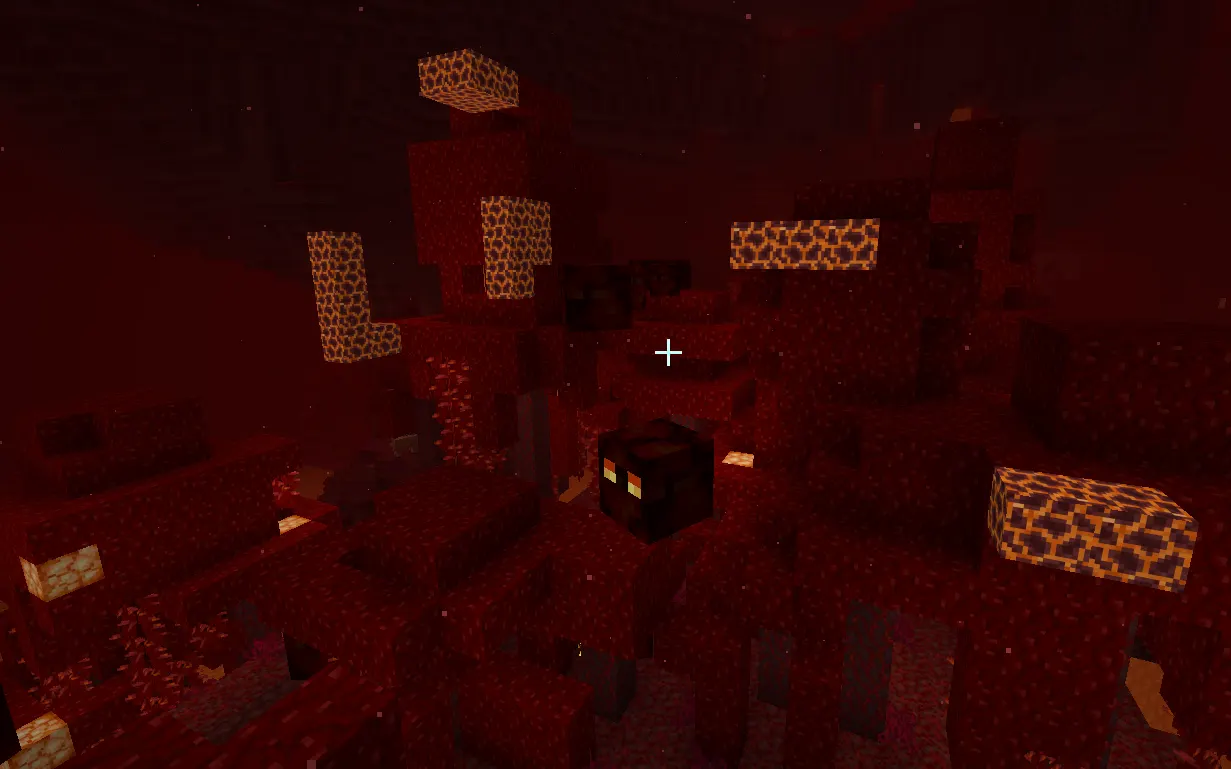
Basalt Deltas look like the aftermath of a volcanic disaster. Jagged columns of basalt. Blackstone everywhere. Lava pools in every gap. Ash particles obscure your vision. The terrain is extremely difficult to navigate; it's chaotic in a way no other biome matches.
Key resources: Basalt, blackstone, polished blackstone, magma blocks, lava. Mobs: Magma cubes (spawn constantly and in large numbers), ghasts, zombified piglins (rare). Structures: No bastions spawn here. This is the only Nether biome with that restriction
Magma cubes are the defining enemy of this biome. They multiply when a large one is killed, splitting into medium ones, and medium ones split into small ones. In a mob-dense biome, this spirals fast.
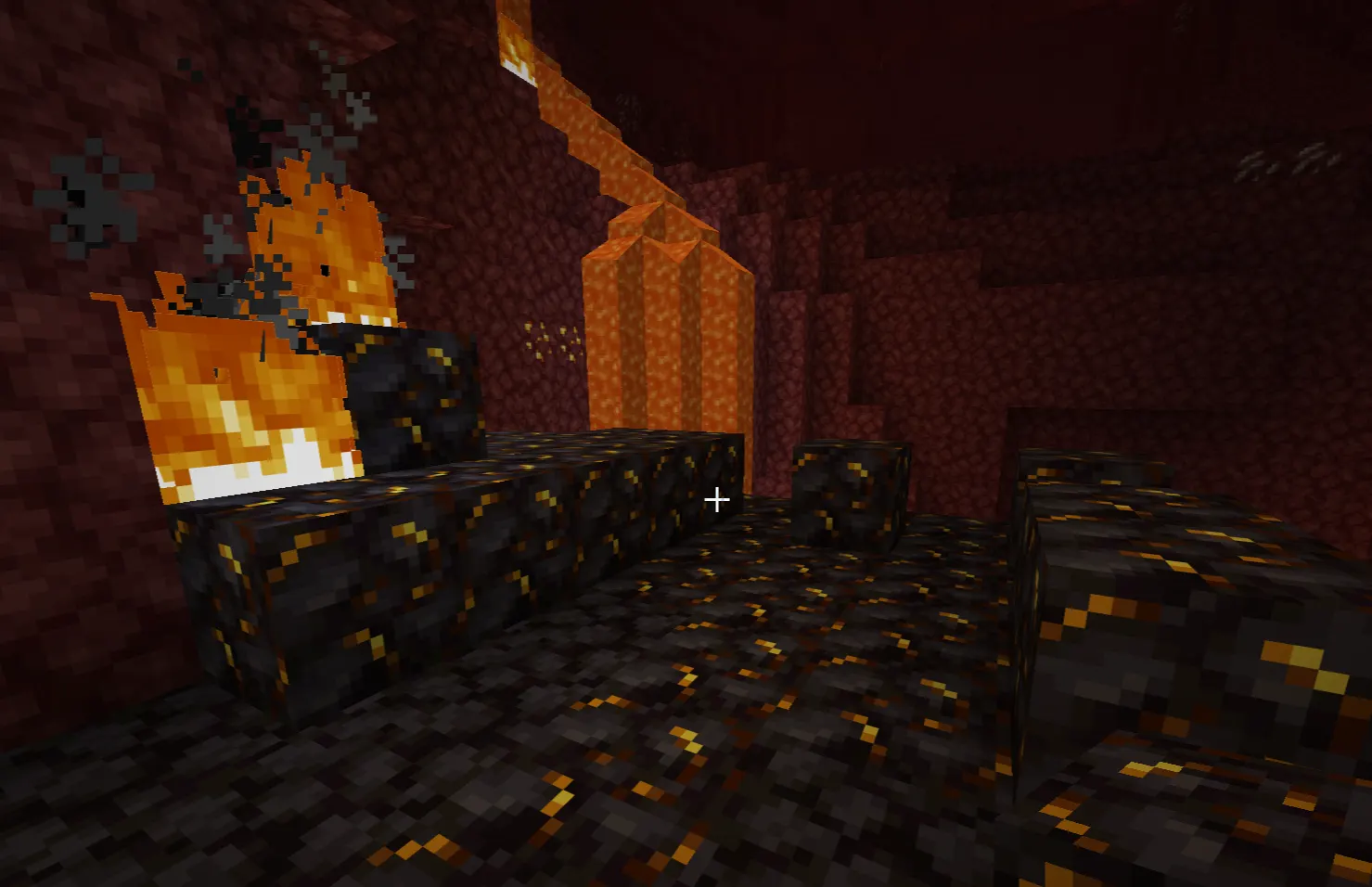
The blackstone here is useful. Blackstone functions like cobblestone for Crafting; you can make tools and stonecutting recipes from it. If you need building materials quickly and you're in the Nether, the Basalt Deltas are your quarry.
Every Mob in the Nether (and How to Deal with Them)
Zombified Piglin
Where: Nether Wastes, Crimson Forest, and anywhere piglins zombify via lightning. Behavior: Passive unless attacked. Hit one and every zombified piglin in range aggros simultaneously. Strategy: Leave them alone unless you have no choice. If they aggro, run, don't fight 15 at once. Wait about 20 seconds, and they'll reset if you stay out of range.
Piglin
Where: Crimson Forest, bastion remnants. Behavior: Hostile unless you're wearing gold. They'll also attack you for opening chests near them. Strategy: Always wear at least one gold armor piece. You can trade with adult piglins by throwing gold ingots at them. This is how you farm ender pearls, fire resistance potions, and Soul Speed books.
Piglin Brute
Where: Bastion remnants only. Behavior: Hostile, no matter what you're wearing. Gold armor does nothing. High health, hits hard. Strategy: These are mini-bosses. Don't rush in. Use a bow, create distance, and don't let them corner you. Killing brutes doesn't aggro other piglins.
Hoglin
Where: Crimson Forest, bastion remnants (bridge and stables variants). Behavior: Charges and launches you into the air. Drops pork chops and leather. Strategy: Place warped fungus nearby to scare them off. Or simply back away, they won't follow through lava. If you're fighting them, use knockback to keep distance.
Ghast
Where: Nether Wastes, Soul Sand Valley (especially), anywhere with large open space. Behavior: Flies, fires explosive fireballs that destroy blocks and can extinguish your portal. Strategy: You can deflect their fireballs back with a sword or arrow for a one-hit kill. Aim for the middle of the fireball. Alternatively, snipe them from cover with a bow. Power V arrows take them down in one or two hits.
Blaze
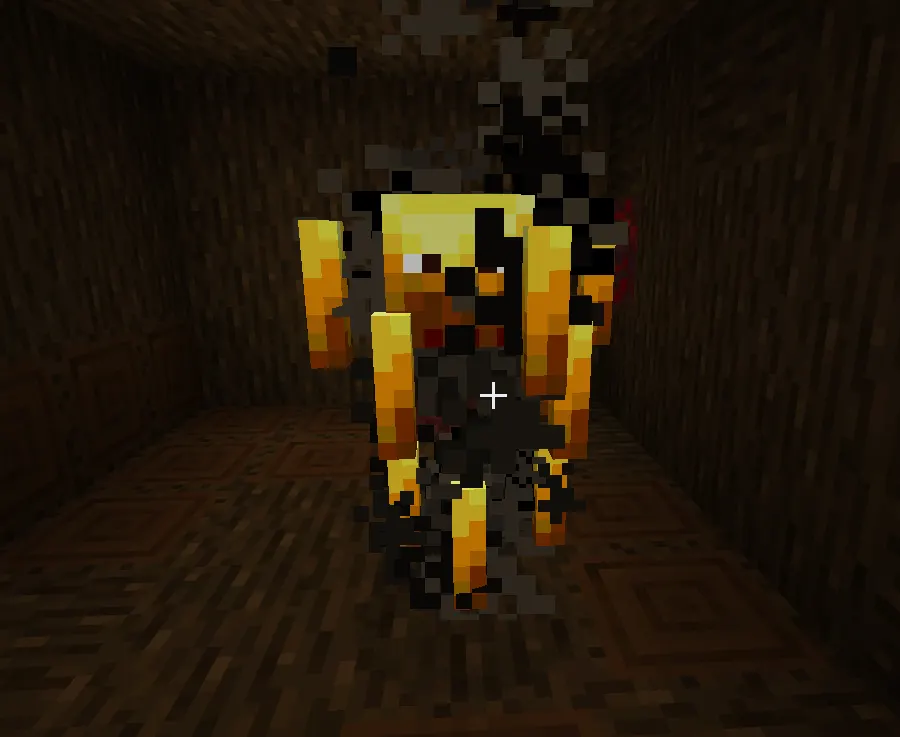
Where: Nether fortresses only (blaze spawners). Behavior: Flies, shoots fireballs in bursts of three. Required kill for Blaze Rods. Strategy: They're weak to snowballs (yes, really, two or three snowballs will kill a blaze). Snowballs don't deal normal damage to anything else in the game, but blazes take significant damage from them. Carry a stack before hitting a fortress.
Wither Skeleton
Where: Nether fortresses. Behavior: Melee attacker that inflicts the Wither status effect (health drain over time). Has a 2.5% skull drop rate. Strategy: Use high ceilings when possible to fight them; they're tall and struggle with low doorways. Milk (a bucket of cow's milk) instantly cures the Wither effect if you get hit.
Strider
Where: Lava lakes and oceans across all biomes. Behavior: Passive. The only rideable mob in the Nether. Strategy: Tame with a saddle + warped fungus on a stick. They walk on lava, making lava-ocean navigation completely safe. Best transport for crossing large lava lakes.
Magma Cube
Where: Basalt Deltas primarily, also bastion remnants (spawners). Behavior: Jumps toward you, splits when killed. Strategy: Kill the large ones with several hits before they split. Small magma cubes barely deal damage. They drop magma cream, used for fire resistance potions.
Enderman
Where: Warped Forest mainly, occasionally other biomes. Behavior: Neutral unless you look directly at them or attack. Strategy: Don't make eye contact. If aggro'd, look at the ground or put a pumpkin on your head (no joke, a carved pumpkin prevents Enderman aggro entirely).
Resources and Loot in the Nether
Key Resources by Location
|
Resource |
Where to Find It |
Use |
|
Blaze Rod |
Blazes in Nether Fortress |
Brewing stand, Eye of Ender |
|
Ancient Debris |
Y=15–22, deep underground |
Craft netherite |
|
Nether Quartz |
Nether Wastes (all over) |
Redstone components, decoration |
|
Glowstone |
Ceiling clusters in Nether Wastes |
Lighting, potion modification |
|
Soul Sand |
Soul Sand Valley |
Bubble columns, whether summoning |
|
Blackstone |
Basalt Deltas, near lava oceans |
Crafting a substitute for cobblestone |
|
Nether Wart |
Nether Fortress staircases |
Potion brewing base ingredient |
|
Wither Skull |
Wither Skeletons (2.5% drop) |
Spawn the Wither boss |
|
Magma Cream |
Magma Cubes |
Fire Resistance potions |
|
Gold Nuggets |
Nether Gold Ore, zombified piglins |
Piglin bartering currency |
Ancient Debris: The Real Prize
Ancient debris is Minecraft's rarest ore. You need it to make netherite, which upgrades diamond gear into the best equipment in the game.
-
It generates between Y=8 and Y=119
-
Best level to mine: Y=15, this is where spawn rates peak
-
It rarely appears next to another ancient debris block
-
Its blast-resistant TNT doesn't destroy it, making TNT-mining a valid strategy
-
Four ancient debris → four netherite scraps + four gold ingots → one netherite ingot
The fastest method for farming ancient debris is bed mining. Beds explode in the Nether (no sleep mechanic exists there). You can use that explosion to clear large amounts of netherrack fast at Y=15 while the ancient debris survives the blast. It's risky but much faster than strip mining.
Nether Fortress Loot
The chests inside Nether fortresses contain:
-
Nether wart (also grows on staircase soul sand)
-
Gold ingots and horse armor
-
Obsidian
-
Diamonds (rare but possible)
-
Iron ingots, flint and steel, saddles
The real value of the fortress isn't just the chests, it's the blaze spawners and the wither skeleton skulls. You need the Wither boss defeated to get the beacon, and that means killing wither skeletons. Plan to spend serious time in fortresses.
Bastion Remnant Loot
Bastions have four variants: Bridge, Hoglin Stables, Housing Unit, and Treasure Room. The Treasure Room variant contains the best loot, including guaranteed netherite upgrade smithing templates, which you need to upgrade any diamond gear piece to netherite.
Loot across all bastion chests includes:
-
Gold blocks and ingots
-
Netherite ingots and scraps
-
Ancient debris
-
Enchanted golden apples
-
Crying obsidian
-
Pigstep music disc (Bastion exclusive)
-
Soul Speed enchanted books
-
Netherite upgrade smithing template (guaranteed only in Treasure Room)
One important structural rule: A Nether fortress and a bastion remnant cannot spawn in the same generation region (432×432 blocks in Java, 480×480 in Bedrock). If you find one, the other is at least that far away in another region, so stop searching in the same area.
What to Bring Before Entering the Nether
Most players die in the Nether because they are underprepared. Here's the minimum packing list before you step through the portal:
Armor and Weapons
-
At least iron armor (diamond preferred). Wear one gold piece to keep piglins neutral.
-
Sword (iron minimum)
-
Bow with at least 64 arrows (or Infinity enchantment)
Tools
-
Iron or diamond pickaxe
-
Flint and steel (your portal can be destroyed and needs relighting)
-
Shovel (for soul sand)
Consumables
-
At least a full stack of cooked food
-
Cobblestone (for emergency shelters, doesn't burn, easy to place fast)
-
Dirt or gravel (for bridging gaps or stopping lava)
-
Fire Resistance potions (optional but strongly recommended) remove all fire/lava damage)
Navigation
-
Obsidian (enough to build an emergency portal, 10 blocks minimum)
-
A second flint and steel or fire charge as backup
Useful Extras
-
Snowballs (30+ if you're hitting a blaze spawner)
-
A carved pumpkin if you're heading to the Warped Forest
-
Warped fungus (if you'll be near hoglins)
-
Milk buckets (for Wither effect from wither skeletons)
Survival Tips for the Nether
Mark your portal. The moment you step out of your portal, place a distinctive block on top of it, something you'd never confuse with the terrain. Netherrack all looks the same. You will lose your portal if you don't mark it.
Don't sleep. You can't. Beds explode in the Nether. This is actually useful for mining (the bed explosion technique), but catastrophic if you forget and right-click one next to your inventory.
Build with non-flammable blocks. Regular wood burns. Use cobblestone, stone, blackstone, or crimson/warped wood for any structure you want to keep.
Fire Resistance is the strongest potion in the Nether. It makes you immune to lava, fire, and blaze fireballs. If you can brew it before entering, do it. The ingredients: a water bottle, nether wart (for awkward potion), and magma cream. That's a fire resistance potion. Brew it to splash if you want group coverage.
Stay out of lava. Obviously. But more specifically: lava flows faster in the Nether than in the Overworld. If lava starts flowing toward you, it moves twice as fast. Pillar up immediately.
Never mine straight down near lava sounds. You'll hear lava before you see it. If you hear it nearby, be very careful with downward mining; a cave beneath you can be a lava lake.
Soul Speed is worth getting. The Soul Sand Valley is unavoidable if you're exploring. Soul Speed enchantment (gotten from piglin bartering) makes you move at near-normal speed on soul sand. Without it, every crossing of that biome is dangerously slow.
The Nether Hub: The Most Powerful Travel Trick
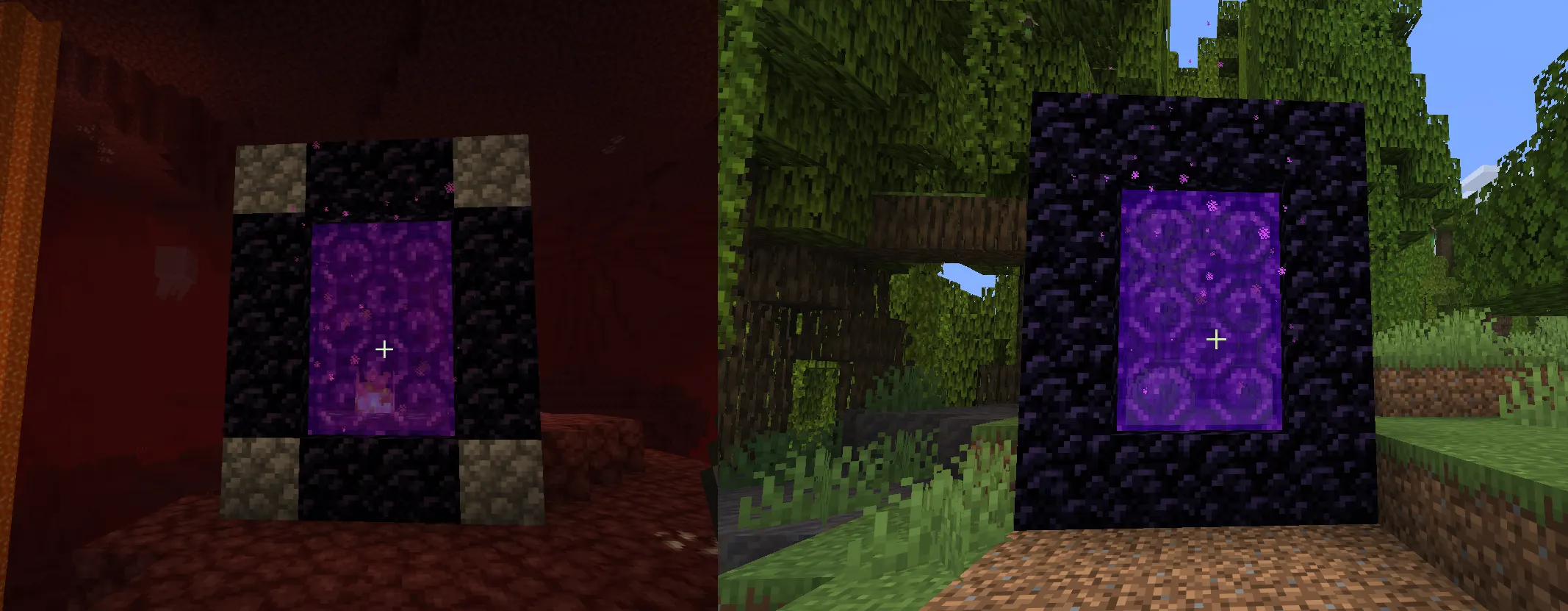
Here's the thing most guides skim over: the Nether is your fast travel system.
Because 1 Nether block = 8 Overworld blocks, you can connect distant Overworld locations through Nether tunnels in a fraction of the distance.
Example: Your base is at X=0, Z=0. Your friend's base is 2,000 blocks away at X=2000, Z=0. In the Nether, that's only 250 blocks (2000 ÷ 8). Build a portal at X=250, Z=0 in the Nether, and it links to X=2000, Z=0 in the Overworld.
A proper Nether hub is a central room with labeled portals leading to every important location in your Overworld. Farms, villages, ocean monuments, your friends' bases — all within 30 seconds of each other through a Nether tunnel network.
This is how experienced players travel. It's one of the most impactful things you can build in any Survival world.
Common Mistakes Players Make in the Nether
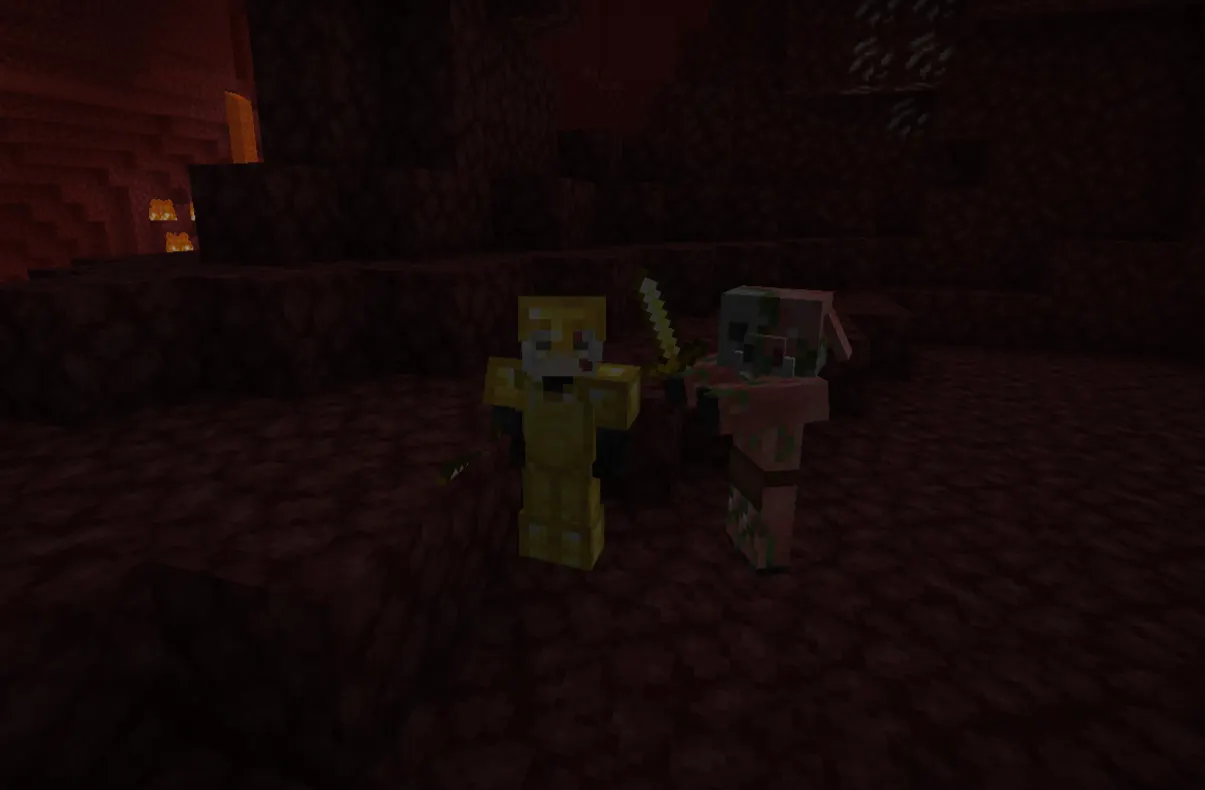
Attacking zombified piglins accidentally. This is the number one cause of death for new Nether players. You bump one, they all aggro, and suddenly you're overwhelmed. If this happens, sprint away and find shelter. They deaggro after roughly 20 seconds if you're out of range.
Not wearing gold armor. One gold helmet. That's all it takes to keep every non-brute piglin neutral. Skipping this costs you your life inside bastions and Crimson Forests.
Building with wood. Overworld wood burns in the Nether. Any fire source nearby will ignite it. Use stone, cobblestone, or Nether wood.
Losing their portal. The Nether all looks the same. If you walk away from your portal without marking it, you may never find it again. Mark it. Every time.
Mining into lava. Lava in the Nether fills more of the terrain than in the Overworld. Any horizontal mining deeper than Y=30 can break into a lava pocket or lava ocean.
Treating bastions like dungeons. Bastions are not dungeon-crawl content for unprepared players. Piglin brutes deal serious damage, hit through gold armor immunity, and do not negotiate. Go in with enchanted diamond gear or better.
Forgetting to bring a second flint and steel. Ghasts can destroy your portal with their fireballs. If you only brought one flint and steel and it breaks, you're stuck.
Advanced Strategies for Experienced Players
Piglin Bartering Farm
Adult piglins will trade for gold ingots; throw one at them, and they'll toss back a random item. The loot table includes:
-
Ender pearls (the most valuable trade for End prep)
-
Fire Resistance potions
-
Soul Speed enchanted books
-
Obsidian
-
Gravel, leather, iron boots, and other filler
An AFK piglin bartering farm uses a hopper-and-chest system with an automatic gold delivery mechanism. You can generate hundreds of ender pearls passively with enough gold. This makes endgame preparation much faster than hunting endermen.
Blaze Farm
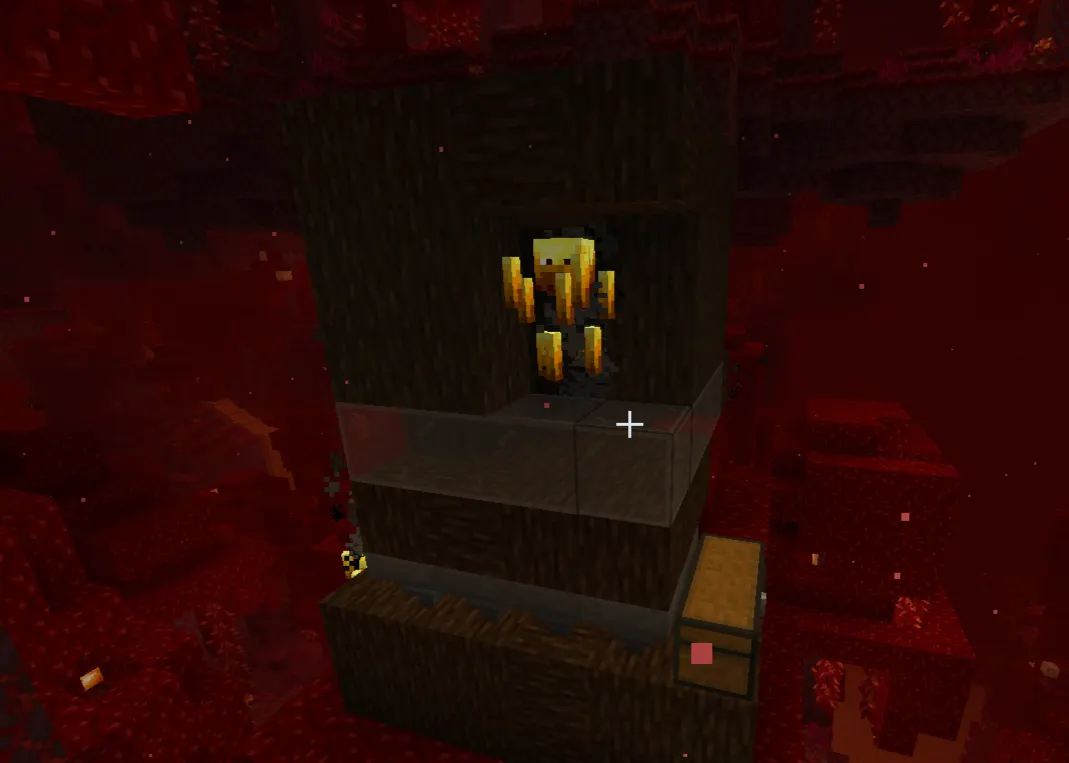
Blaze rods are a permanent resource requirement in Minecraft. You need them for brewing and for crafting Eyes of Ender to reach the End. Building a blaze farm around a fortress spawner is one of the smartest early-midgame investments.
The concept: box in the blaze spawner room, create a kill zone below it, and funnel blazes into it. You can AFK and collect rods passively. The XP is excellent too.
Wither Skeleton Farm
Wither skeleton skulls have a 2.5% base drop rate. That means farming skulls manually is a time sink. A Nether fortress farm that funnels wither skeletons into a kill spot dramatically speeds this up.
With a Looting III sword, the drop rate increases to roughly 5.5%. Add a charged Creeper explosion (which guarantees a skull drop) if you're willing to engineer it.
Nether Roof Exploration
The bedrock ceiling caps at Y=128. But with some tricks (ender pearls through bedrock gaps, trapdoor techniques in certain versions), experienced players can access the top of the bedrock roof.
On the roof: flat bedrock surface, no Mob spawning, completely safe. Many players use it as a super-highway for their Nether hub networks because mobs can't interfere. This is a well-known community technique, though it's an exploit of the terrain generation, not intended design.
Nether Structure Exploration Guide
Finding a Nether Fortress
Nether fortresses spawn along a predictable axis; they generate more often in certain longitude bands. In Java Edition, they tend to appear in north-south strips.
Search method: Pick a direction, east or west, and walk. Don't wander randomly. Fortresses are long structures, but narrow; you can walk right past them in fog if you move north-south and the fortress is oriented east-west.
Once you find a fortress, map it fully before mining it. The blaze spawners and nether wart staircase are the highest-value targets. Wither Skeleton spawning happens throughout, but density improves away from the open bridges.
Finding and Raiding a Bastion Remnant
Bastions are enormous and hard to miss visually; they're the only structure in the Nether made of large amounts of blackstone. Look for dark angular structures rising from the terrain.
The four bastion types and their value:
-
Bridge Bastion — A road-bridge structure. Chests with moderate loot. Hoglins and piglins patrol the bridge.
-
Hoglin Stables — Farm-like structure. Dense hoglin and piglin population. Multiple chests.
-
Housing Unit — Multi-level with many rooms and chests scattered through it. Most complex layout.
-
Treasure Room Bastion — The most valuable. Has a central treasure chest that always contains a netherite upgrade smithing template. Also, the most heavily guarded.
Prep for any bastion: diamond armor minimum, fire resistance potions active, lava bucket in your hotbar (you can pour lava on piglins and brutes — they're not fire-immune the way zombified piglins are).
Quick Reference: Nether Biome Comparison Table
|
Biome |
Danger Level |
Best For |
Key Mob |
Structures |
|
Nether Wastes |
Medium |
Quartz, gold ore |
Ghast |
Fortress, Bastion |
|
Crimson Forest |
High |
Wood, building materials |
Hoglin, Piglin |
Fortress, Bastion |
|
Warped Forest |
Low |
Safe base building |
Enderman |
Fortress, Bastion |
|
Soul Sand Valley |
Very High |
Soul sand, soul soil |
Ghast (many) |
Fortress, Bastion |
|
Basalt Deltas |
High |
Blackstone, basalt |
Magma Cube |
None (no bastion) |