
Night in Minecraft isn't just an aesthetic shift — it's a mechanical trigger. The moment the sun dips below the horizon, the game starts running a very specific set of rules that decide what spawns, where it spawns, and how many you'll have to deal with.
If you don't understand those rules, you're just reacting. If you do, you can predict exactly what's coming, protect your base without wasting torches, and build mob farms that run efficiently while you sleep at the keyboard.
This guide breaks down everything: the core spawning rules, every mob that appears at night, the mistakes most players make, and the tips that actually make a difference.
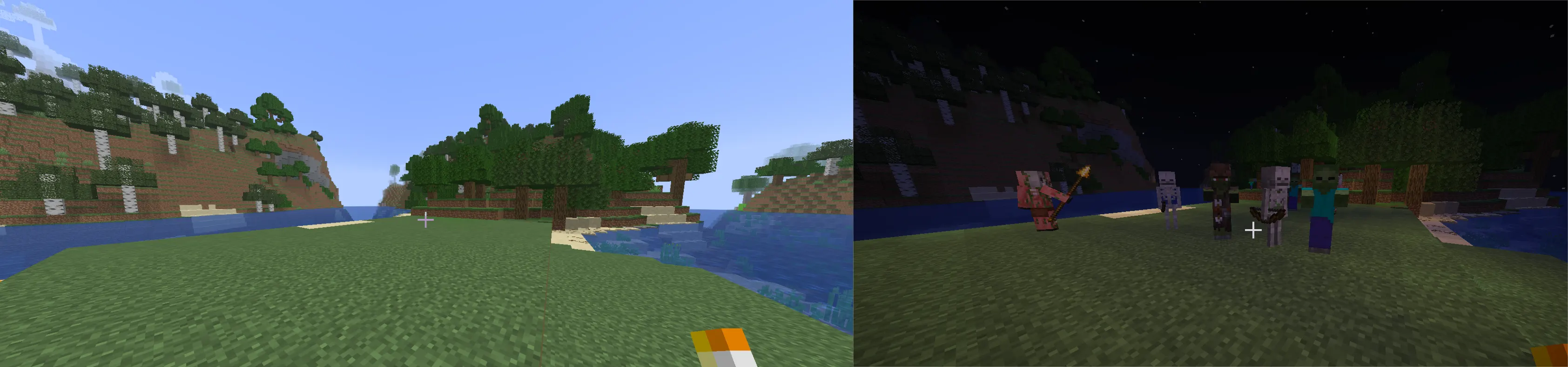
How Long Is Minecraft Night?
Before getting into mob mechanics, you need to understand the time window you're working with.
A full Minecraft day-night cycle runs for 20 real-world minutes. Daytime takes up roughly 10 minutes. The night itself lasts about 7 real-world minutes. The remaining time covers the dusk and dawn transitions — where spawning conditions are actively shifting.
That 7-minute window is when surface spawning goes into full effect. This matters for two reasons:
-
If you're farming mobs above ground, you have a limited window before sunrise starts burning your zombies and skeletons.
-
If you're surviving, you know exactly how long you need to hold out.
One thing most players miss: Hostile mobs don't disappear at dawn — they stop spawning on lit surfaces, but anything that survived the night sticks around. Creepers and spiders don't take sun damage, so they'll still be camped at your base entrance when you open the door in the morning. Always check before walking outside.
The Core Spawning Rule: Light Level 0
This is the rule that everything else builds from — and the one most outdated guides still get wrong.
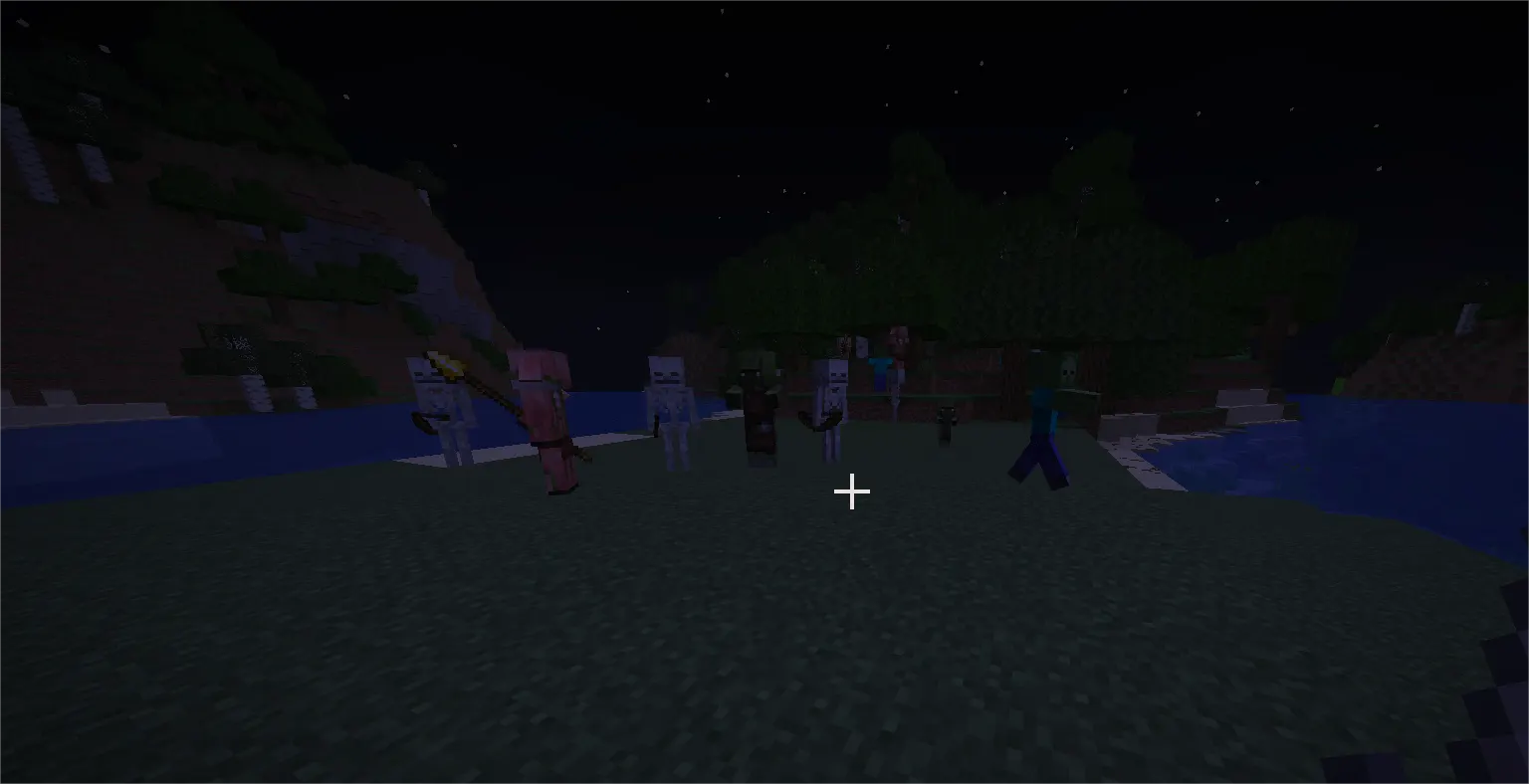
In the current version of Minecraft (post-1.18), hostile mobs can only spawn when the block light level is exactly 0. This was a significant change from earlier versions, where mobs could spawn at light level 7 or below. Mojang tightened this to reduce surprise spawns in player-lit areas while keeping caves and unlit surfaces genuinely dangerous.
At night, the sky light drops dramatically. The Moon is the primary natural light source, but it only provides a light level of 4, meaning most surface blocks are dark enough for hostile mobs to spawn across open terrain.
How Torches Fix This
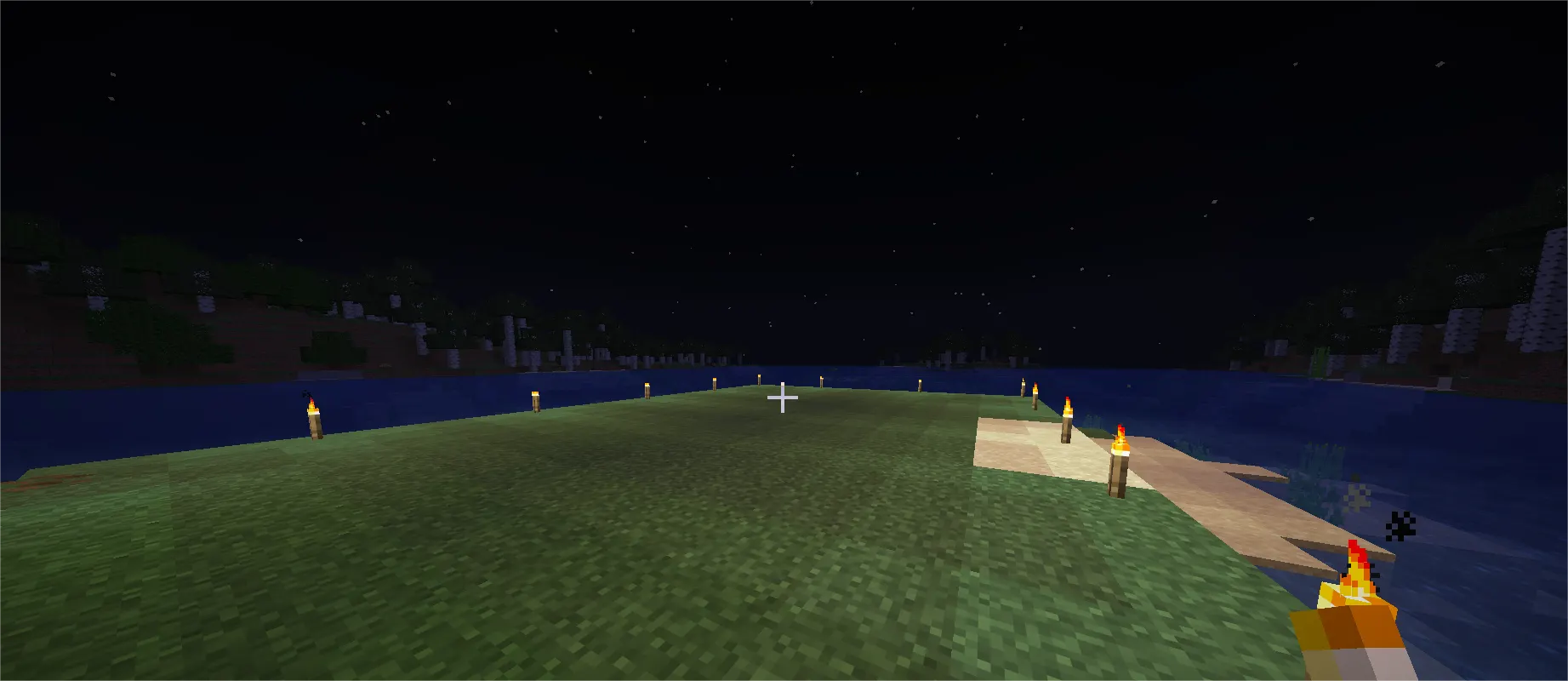
A single torch outputs light level 14 and prevents spawning on any block within several tiles. The old rule of thumb — torch every 7–8 blocks — still works in practice.
Important: The light level 0 rule applies to the spawning block, not the block the mob visually appears on. This trips people up when designing mob farms or debugging why something keeps spawning in a supposedly lit area.
Every Mob That Spawns at Night (With Spawn Rules)
|
Mob |
Spawns At Night |
Burns in Sunlight |
Danger Level |
Special Behavior |
|
Zombie |
Yes |
Yes |
Medium |
Group spawns, knocks on doors |
|
Skeleton |
Yes |
Yes (seeks shade) |
High |
Ranged attack, strafes players |
|
Creeper |
Yes |
No |
Very High |
Lingers after dawn |
|
Spider |
Yes |
No |
Medium |
Neutral during daylight |
|
Enderman |
Yes |
No (fears water) |
High |
Only aggressive if looked at |
|
Phantom |
Yes (airborne) |
Yes |
High |
Targets players who haven't slept |
|
Witch |
Yes |
No |
High |
Natural swamp spawn |
|
Husk |
Yes (deserts) |
No |
Medium |
Inflicts Hunger, desert only |
|
Slime |
Yes (swamps) |
No |
Low–Medium |
Tied to the moon phase |
|
Creaking |
Yes (Pale Garden) |
No |
Extreme |
Only moves when not observed |
Mob-by-Mob Breakdown
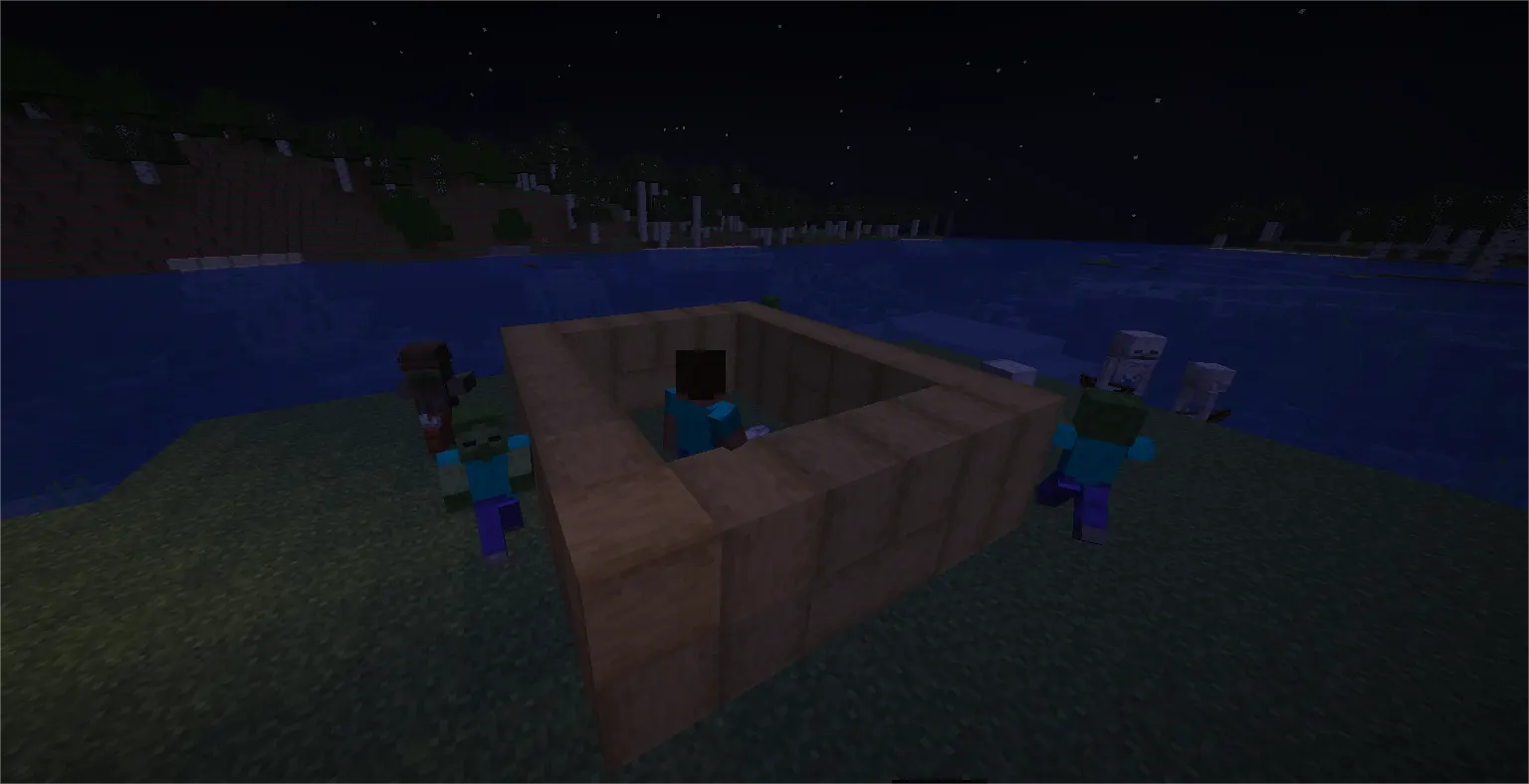
Zombies are the most common surface mob at night. They spawn in groups, track you from up to 40 blocks away on Normal difficulty, and on greater difficulties have a chance to spawn wearing armor and carrying tools. Baby zombie variants exist and are significantly faster and harder to hit. They burn in sunlight — unless they find cover under trees or overhanging blocks, in which case they'll wait out the morning.
Skeletons spawn under identical light conditions and are arguably more dangerous in open terrain. They're accurate, they strafe while shooting, and they actively seek shade to avoid burning at dawn. Any unlit cave entrance near your base is a potential skeleton nest.
Creepers are night spawners that don't take sun damage. This is what makes them the most persistently annoying mob — they'll follow you into daytime if not killed overnight, and there's no audio warning until they're already within explosion range.
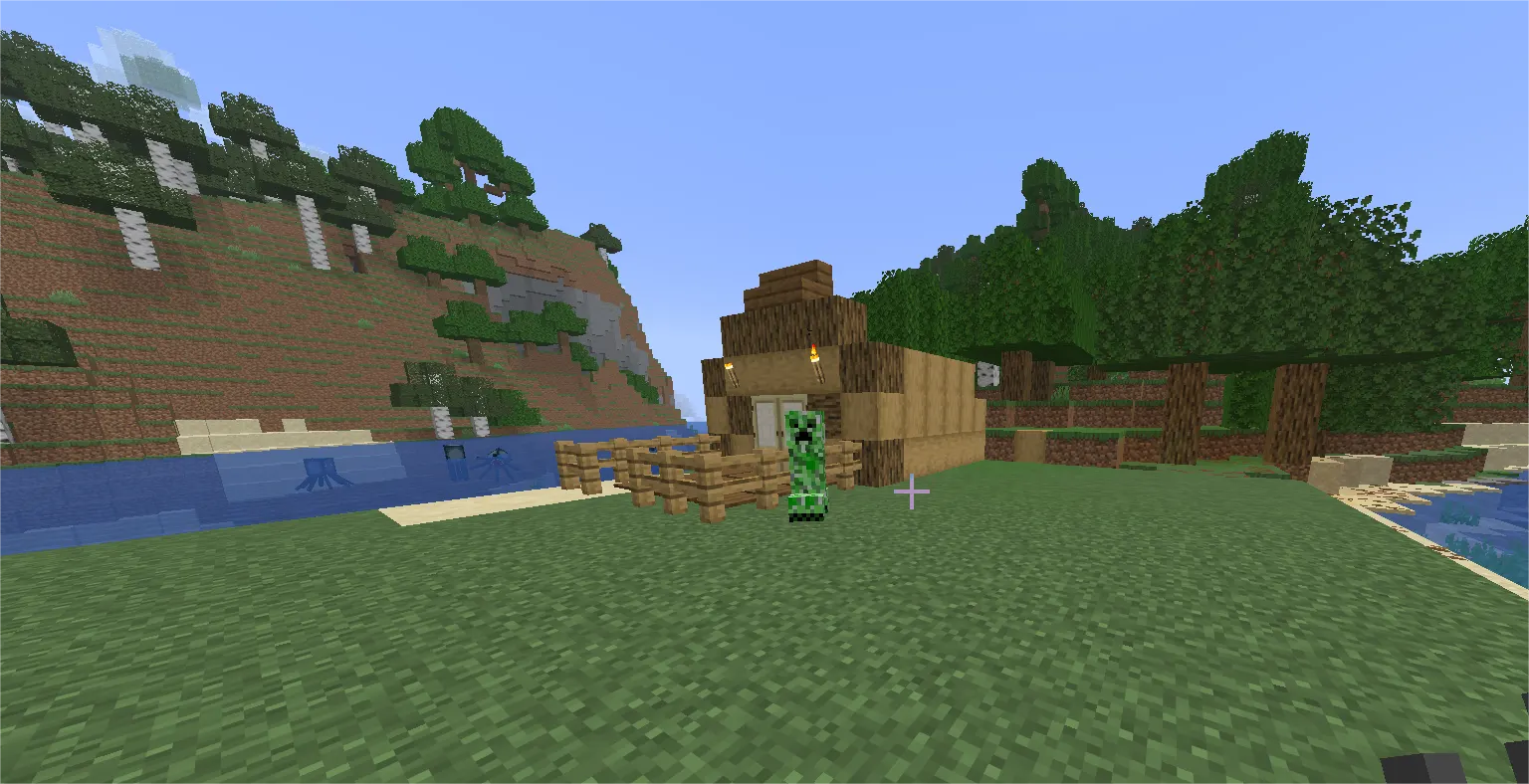
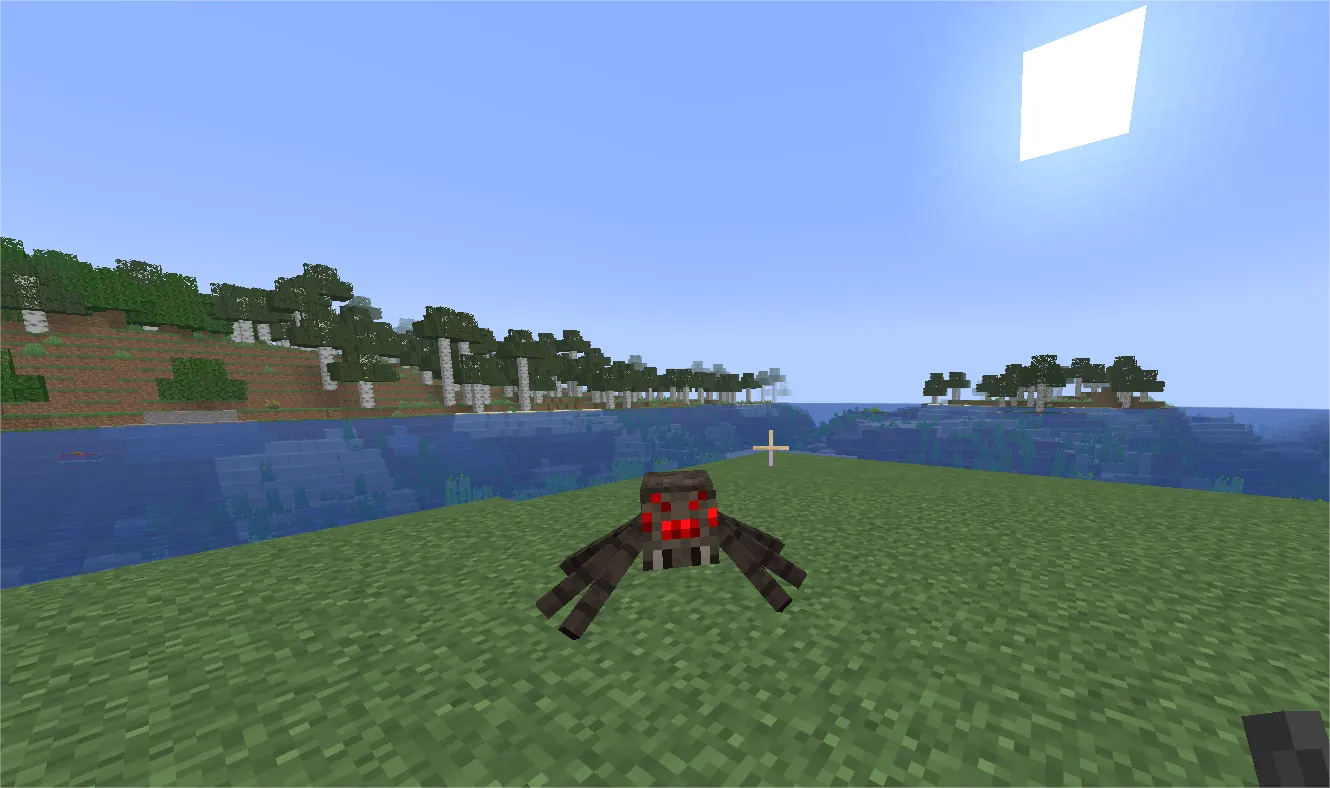
Spiders spawn at night but don't take sun damage either. The key distinction: at higher light levels during daytime, spiders become neutral — they'll only attack if provoked. At night or in dark areas, they're always hostile.
Endermen spawn at night but are passive unless provoked. Look at one directly — any crosshair contact — and you've started a fight. They also take damage from water and rain, which is useful to know before a battle.
Phantoms are a night mob with completely different behavior from everything else. They spawn in the air and target players who haven't slept for three or more in-game days. The longer you avoid a bed, the more of them appear and the more damage they deal. By day five or six of not sleeping, they become a serious problem.
Slimes in swamp biomes have a unique spawning behavior tied directly to the lunar cycle. During a New Moon, no slimes spawn in swamps. During a Full Moon, they spawn in large numbers. If you're building a swamp-based slime farm, the moon phase directly affects your output — most tutorials completely skip this.
The Creaking (introduced in 1.21's Pale Garden biome) is in a category of its own. It only moves when you're not looking at it. It cannot be killed conventionally — you have to destroy the Creaking Heart block embedded in a Pale Oak tree nearby. Night one in a Pale Garden is not a fight you want to take on unprepared.
Spawn Rules at a Glance
|
Rule |
Value |
Notes |
|
Min spawn distance from player |
24 blocks (spherical) |
Mobs will not spawn inside this radius |
|
Max active distance |
128 blocks |
Mobs beyond this despawn immediately |
|
Despawn chance (32–128 blocks) |
1/800 per game tick |
After 30 seconds without a nearby player |
|
Block light level required |
0 |
Changed from ≤7 in version 1.18 |
|
Sky light at night |
~4 (moon) |
Sufficient for surface spawning |
|
Torch light output |
14 |
Prevents spawns in its radius |
|
Mob cap (Java, hostile) |
70 (per 17×17 chunk area) |
Scales with loaded chunks |
The Mob Cap: Why Mobs Stop Spawning
This is the most common reason mob farms underperform — and most players never figure it out.
Minecraft's global mob cap limits how many hostile mobs can be loaded and active at once. The cap is dynamic — it scales based on how many chunks are loaded around active players.
The formula: globalCap = mobCap × chunks ÷ 289
In practical terms, on a multiplayer server where players are spread across different areas, the effective mob cap is higher for everyone because more unique chunks are loaded. The cap doesn't divide between players — it scales up.
What This Means for Mob Farmers
-
If your farm isn't producing at the expected rate, check whether too many Passive mobs are loaded in nearby chunks — they eat into the overall entity count.
-
Killing passive mobs you don't need, or reducing your render distance while AFK farming, can noticeably increase hostile mob output.
-
Mob spawners (dungeons, trial chambers) are exempt from the global mob cap — they always spawn regardless of how full the cap is.
GAMQO Tip: On a single-player world, try keeping your render distance at 8–10 chunks while AFK farming instead of maxing it out. Fewer loaded chunks means a tighter cap area, which often means faster spawns in your specific farm location — counterintuitive but effective.
What Blocks Can and Can't Mobs Spawn On
Getting this right is the difference between players who understand mob mechanics and those who don't.
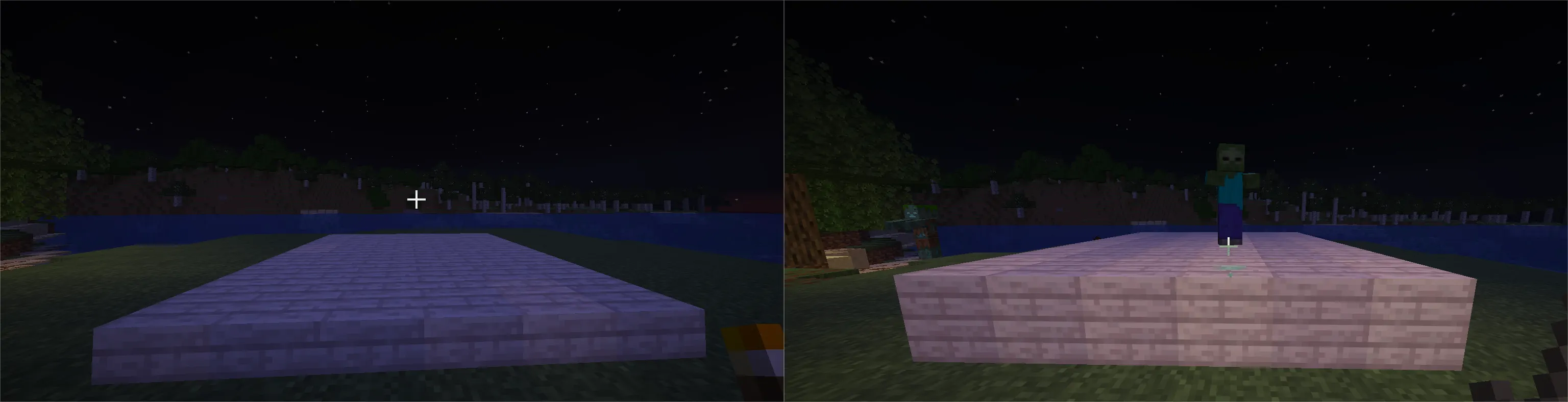
Mobs CANNOT spawn on:
-
Bottom half-slabs (any type)
-
Carpet
-
Glass and other transparent blocks
-
Leaves
-
Buttons, levers, pressure plates, all rail types
-
Water (for non-water mobs)
-
Lava (for non-striders)
-
Snow layers (thickness 2–7)
Mobs CAN spawn on:
-
Top slabs (frequently overlooked)
-
Double slabs
-
Upside-down stairs
-
Any full solid block at light level 0
GAMQO Tip: The most common mob-proofing mistake in Minecraft is using top slabs for a roof or floor, assuming they behave like bottom slabs. They don't — mobs can spawn on top slabs. Always use bottom slabs if you want solid mob-proof surfaces without torches.
Biome-Specific Night Spawning Rules
Not every biome follows the same night spawn pattern. This matters more than most players realize.
Mushroom Fields (Mushroom Island): The one biome in vanilla Minecraft where hostile mobs — including all night spawners — do not spawn on the surface. Applies underground, too. If you want a completely safe permanent base, this is your safest option.
Desert: Husks replace standard zombies. Unlike regular zombies, Husks don't burn in sunlight and inflict the Hunger debuff instead of basic damage. At night in a desert, assume you're fighting Husks, not Zombies.
Swamp: Witches spawn naturally here, in addition to slimes during favorable moon phases. Witch huts guarantee a witch spawn inside the structure.
Pale Garden (1.21+): The Creaking spawns at night here. It's tied to Creaking Heart blocks in Pale Oak trees. Avoid this biome on early game nights — there's no reliable way to fight it without preparation.
Nether: Operates under completely separate rules. There's no sky light variable in the Nether since it's a fully enclosed dimension — only block light level matters, and the threshold is ≤7 instead of 0. Torches are the only reliable barrier.
Common Mistakes Players Make at Night
These are the errors that consistently get players killed or break their mob farms — and they're rarely discussed in basic survival guides.
1. Leaving unlit cave entrances near the base. Caves that open near your shelter are active spawn points during the night. Any cave mouth within 24–128 blocks of your position will be sending mobs toward you all night. Seal or light them before building your base nearby.
2. Using top slabs and thinking they're mob-proof. As covered above, top slabs, double slabs, and upside-down stairs are all valid spawn surfaces. Only bottom half-slabs prevent spawning regardless of light level.
3. Standing too close to a mob farm while AFK. Mobs cannot spawn within 24 blocks of you. If you're standing directly above your farm expecting spawns, nothing will happen. Position yourself 24–32 blocks away.
4. Not accounting for the lunar cycle in swamp farms. If your slime farm in a swamp produces nothing some nights and floods with slimes on others — it's the moon phase, not a broken farm. Plan output averages around the full cycle.
5. Sleeping every single night when you need to. Sleeping skips the spawn window entirely. If you need bones, rotten flesh, string, or gunpowder, you need to let the night actually happen. Strategic bed usage is part of efficient survival.
6. Ignoring phantom timers on long sessions. Three missed sleep cycles trigger phantoms. By day four or five, they spawn in large numbers and deal significant damage. If you're doing marathon survival sessions without a bed strategy, factor this in.
Why Mobs Spawn Even in Lit Areas
If you've ever placed torches everywhere and still found a creeper somehow inside your base, one of these reasons is responsible:
Block light ≠ , Sky light. Both are tracked separately. During thunderstorms, sky light drops to 0 even at noon — which means hostile mobs can spawn on your lit surfaces outdoors if the storm drops sky light fast enough. This is why thunderstorms are dangerous even in daylight.
Unlit upper surfaces. Mob spawning doesn't care what's below a surface — only the top of the spawning block. A roof that looks lit from below may have dark patches on top that you've never seen. Mobs spawn up there, then drop or pathfind down.
Light level decay. Torches decay in light output over distance. A single torch at the center of a large room may leave the corners at light level 0. Always test corners and edges with a debug overlay (F3 + B in Java Edition shows hitboxes, and the light level overlay can be enabled with mods or shader packs).
Pocket darkness. Any 2-block gap, alcove, or enclosed corner that you haven't specifically lit is a valid spawn point. Hostile mobs can appear in spaces as small as 1×1×2 blocks tall if the block conditions are met.
GAMQO Tip: The fastest way to audit your base for spawn holes is to play on Peaceful difficulty, then switch back to Normal or Hard after fully lighting every surface. If a mob appeared while you were on Normal, you had a dark spot. This lets you diagnose spawn locations without dying in the process.
Best Ways to Completely Stop Mob Spawns
If you want zero hostile mob presence in your base area, here are the methods that actually work — ranked by effectiveness and practicality:
1. Bottom slab flooring/roofing (most efficient) Cover every spawnable surface in bottom half-slabs. Mobs cannot spawn on them regardless of light level. No maintenance, no fuel cost, works permanently.
2. Full lighting your base (most common) Place torches, lanterns, glowstone, or shroomlights throughout the area. Target every block at light level 0 — use the in-game debug screen or a lighting overlay mod to find them. Requires coverage, but is the easiest to implement in existing builds.
3. Carpet layering (aesthetic-friendly) Carpet prevents mob spawning and can be placed over any full block. Great for builds where you want a clean floor without torch spam or visible slabs.
4. Water flooding (mob farms and outdoor areas) A thin layer of water (even a single block deep) prevents hostile mob spawning on the floor beneath it. Used in outdoor plazas, mob farm floors, and large open areas where lighting alone is impractical.
5. Move to a Mushroom Island biome. The only biome in vanilla Minecraft with a built-in no-hostile-spawn rule. Best long-term solution if you're building a permanent base and never want to deal with night spawning again.
Practical Tips for Surviving the Night
Light your immediate area first, not everything. On a new world, focus torches on your entrance, the roof of your shelter, and within visual range of your doors. You don't need to light the entire biome — just prevent spawns close enough to matter.
Sleep when you're not farming. Beds skip the 7-minute spawn window entirely. If you don't need mob drops, sleeping is almost always the correct call. It also resets your phantom timer.
Build raised entrances. A door at ground level gives zombies direct access to knock on it, and other mobs direct pathfinding to your position. A door two blocks above ground, with a ladder or stair approach, significantly reduces mob pressure on your base.
Know your biome before nightfall. Desert = Husks. Swamp = Witches and Slimes. Pale Garden = avoid entirely on early nights. Biome-appropriate preparation makes a greater difference than generic survival advice.
Seal cave entrances near your base. Any cave within 128 blocks of your position that opens to the surface is an active spawning zone at night. Close them off or light them fully — especially if they're within 24–50 blocks of where you sleep.
Tips for Exploiting Night Spawns (Mob Farming)
If your goal is farming rather than surviving, the rules above become your design blueprint.
-
Position your AFK spot 24–32 blocks above your kill chamber — inside the minimum spawn radius is the most common farm-breaking mistake.
-
Use bottom slabs on any platform you don't want mobs to spawn on.
-
Keep the farm spawn zone at light level 0 across the entire floor.
-
Make sure no loaded passive mobs nearby are unnecessarily filling the mob cap.
-
Use trapdoors or water channels to funnel mobs — they pathfind toward open trapdoors, thinking they can walk through, which sends them into your kill zone.
-
For kill mechanisms: campfires, magma blocks, fall damage, or lava positioned correctly are your main options. Fall damage is the most efficient for XP farming since it leaves mobs at low health for a one-hit kill.
GAMQO Tip: For Enderman XP farms — which technically operate at night in the Overworld but are vastly more efficient built in The End — the mob cap and light rules apply identically. The End island design that high-efficiency farms use is just the spawning ruleset applied at maximum scale with zero competing spawn surfaces.
Quick Recap
-
Night lasts ~7 real-world minutes — the active surface spawn window
-
Hostile mobs need block light level 0 to spawn (changed from ≤7 in 1.18)
-
Core night mobs: Zombies, Skeletons, Creepers, Spiders, Endermen, Phantoms
-
Biome matters: Husks in deserts, Witches/Slimes in swamps, Creaking in Pale Garden
-
Mobs don't spawn within 24 blocks of you, or beyond 128 blocks from you
-
Mob cap is dynamic — too many loaded mobs anywhere kills spawn rates everywhere
-
Top slabs are NOT mob-proof — only bottom half-slabs prevent spawning
-
Thunderstorms can trigger hostile spawns even in daytime by dropping the sky light to 0
-
Sleeping skips the spawn window — strategic bed use is part of efficient survival
-
Mushroom Island is the only biome with zero hostile surface spawning
Final Thoughts
Night in Minecraft isn't something that just happens to you — it's a fully documented system you can understand, predict, and control. The light level rules, mob cap logic, spawn distances, and biome-specific behavior all fit together into one consistent framework.
Once you know why mobs spawn where they do, you stop getting surprised and start making deliberate decisions — about base placement, lighting design, and how you use your nights.
Apply the rules in this guide once, and you'll carry them into every world you ever play. That's what separates players who constantly fight the night from those who make it work for them.