Sword vs Axe in Minecraft: Which Is Better for Combat?
Short answer: the sword wins on paper, and the axe wins in your gut. Swords hit faster, deal more damage per second in almost every matchup, and carry the best combat enchantments in the game. Axes hit harder per swing, crack shields open, and feel genuinely satisfying to use. Neither answer is wrong. It depends on whether you're farming a mob spawner, dueling another player, or trying to one-shot a zombified piglin before it notices you.
I've gone back and forth on this one myself. For years I defaulted to a sword because that's what everyone told me to carry, then I spent a week using nothing but a netherite axe in survival and came away with a completely different opinion. The truth sits somewhere in the math, so that's where we're starting.
This guide breaks down every number that matters: base damage by material, attack speed, actual DPS, how Java and Bedrock handle this completely differently, which enchantments are worth your anvil uses, and which weapon you should be holding in specific situations, from your First night to fighting the Ender Dragon.
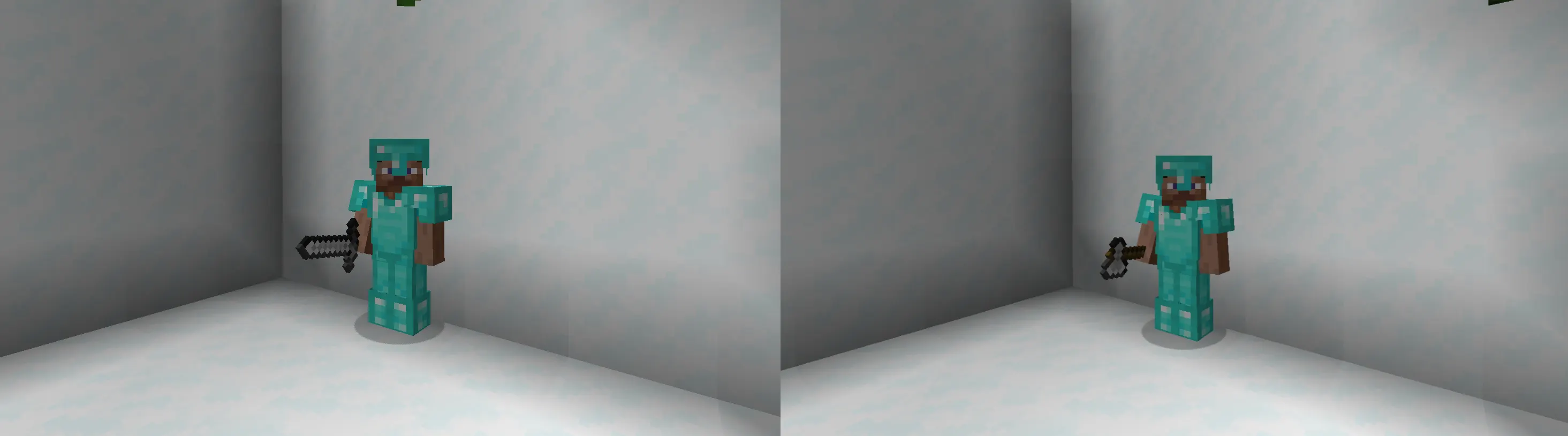
Sword vs Axe at a Glance
|
Category |
Sword |
Axe |
|
Base damage (diamond) |
7 (Java) / 8 (Bedrock) |
9 (Java) / 7 (Bedrock) |
|
Attack speed (Java) |
1.6 (fixed for all tiers) |
0.8 to 1.0 (varies by material) |
|
DPS (diamond, Java) |
11.7 |
9.0 |
|
Sweep attack |
Yes (Java only) |
No |
|
Shield disabling |
No |
Yes (crushing blow, 5 seconds) |
|
Best for PvP |
Yes, in most matchups |
Situational, strong against shield users |
|
Best for PvE |
Yes, especially groups |
Yes, for single tough targets |
|
Durability use |
1 point per hit |
2 points per hit |
|
Combat enchantments |
Sharpness, Smite, Bane of Arthropods, Sweeping Edge, Fire Aspect, Knockback |
Sharpness, Smite, Bane of Arthropods |
|
Best use case |
All-around combat, PvP, mob farms |
Shield-breaking, tool/weapon hybrid, big single hits |
|
Java compatibility |
Full weapon status since 1.9 |
Full weapon status, higher raw damage |
|
Bedrock compatibility |
Higher damage than axe, no cooldown |
Lower damage than sword, still disables shields |
How Swords Work
A sword's whole identity is built around speed. Every tier, wood through netherite, swings at the same attack speed value of 1.6 in Java Edition. That works out to a full cooldown of 0.625 seconds, though the game rounds it to 12 ticks (0.6 seconds) internally.
That cooldown matters because Java's combat system punishes you for hitting too early. Attack before your weapon has fully recharged and you deal reduced damage, scaled down by how much of the cooldown you skipped. Wait for the little crosshair indicator to fill back up (or just count the rhythm once you've played long enough), and you land full damage every time.
Swords also get the sweep attack, exclusive to Java Edition. Land a hit while standing still or moving slower than sprint speed, with your cooldown at least 90% charged, and nearby enemies take a small chunk of sweep damage too. It's the reason a sword still wins when three zombies corner you in a hole. One decent swing and you've hurt all of them, not just the one you targeted.
Advantages:
-
Fastest weapon in the game besides bare fists and the fist-tier Tools
-
Sweep attack handles groups without extra effort
-
Access to every combat enchantment that exists
-
Cheapest to craft (two materials plus a stick)
-
Lower durability cost per hit
Limitations:
-
Lowest damage per hit compared to an axe of the same material
-
No way to disable a shield
-
Loses straight trades against high-armor targets if you're not landing critical hits
How Axes Work
Axes hit like a truck and recover like one too. In Java, wooden, stone, and copper axes swing at 0.8 attack speed (1.25 second cooldown). Iron bumps up to 0.9 (about 1.11 seconds). Gold, diamond, and netherite all sit at 1.0 (a flat one-second cooldown). Compare that to a sword's 0.625 seconds and you can see the gap. You're basically getting one axe swing for every one and a half to two sword swings.
What you get in exchange is damage. A diamond axe deals 9 in Java compared to a diamond sword's 7. A netherite axe hits for 10 against the sword's 8. Even a wooden axe matches a diamond sword's raw hit value at 7 damage, which is the kind of stat that made axes genuinely useful the moment the 1.9 Combat Update dropped.
The other reason people carry an axe: crushing blows. Hit a player who's actively blocking with a shield and the axe disables that shield for 5 seconds, which the wiki currently documents as happening on every hit against a raised shield rather than the originally intended chance-based trigger. Sprint into the hit and the odds (or guarantee, as it currently works) go up further. A shield-less opponent for five full seconds is an opening most fights don't survive.
Advantages:
-
Most serious per-hit damage of any craftable melee weapon in Java
-
Breaks shields open, which swords simply cannot do
-
Doubles as your wood-chopping tool, saving an inventory slot
-
Great burst damage against tough single targets
Weaknesses:
-
Slow recovery leaves you exposed against multiple attackers
-
No sweep attack, so groups punish you hard
-
Fewer combat-specific enchantments available
-
Costs one more unit of material to craft than a sword
-
Burns durability twice as fast when swung at a living target
Damage Comparison by Material
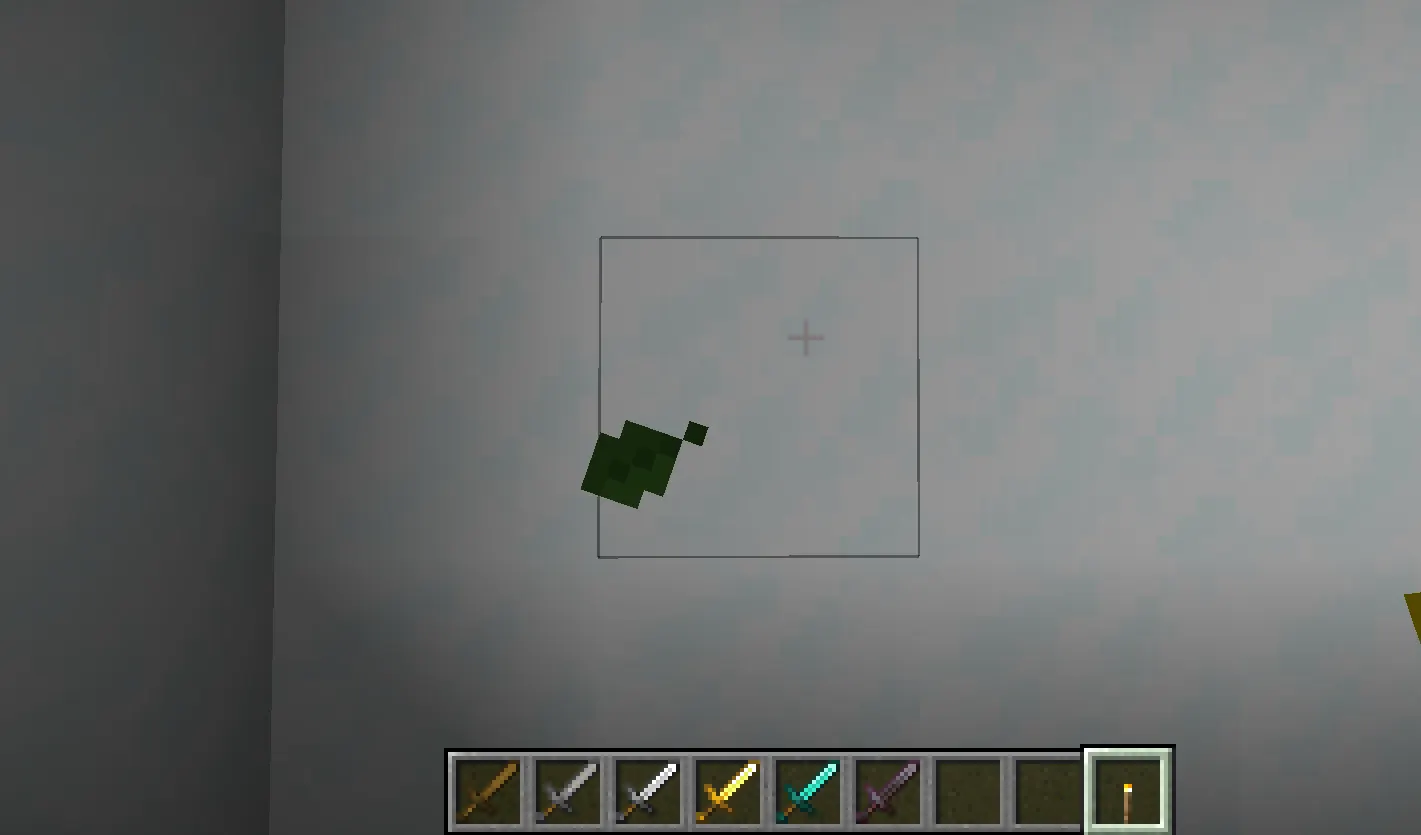
Here's every tier side by side. Java numbers first, since that's where the real gap shows up.
|
Material |
Sword Damage (Java) |
Axe Damage (Java) |
Sword Damage (Bedrock) |
Axe Damage (Bedrock) |
|
Wood |
4 |
7 |
5 |
4 |
|
Stone |
5 |
9 |
6 |
5 |
|
Iron |
6 |
9 |
7 |
6 |
|
Gold |
4 |
7 |
5 |
4 |
|
Diamond |
7 |
9 |
8 |
7 |
|
Netherite |
8 |
10 |
9 |
8 |
Notice the jump from stone to iron on axes is nearly nothing (9 to 9), while diamond barely edges past iron by staying flat at 9. Netherite is the only real damage upgrade past stone for an axe. Swords, on the other hand, climb steadily at every single tier, which makes upgrading your sword feel more rewarding hit by hit even though the axe still wins the raw number.
Bedrock flips the relationship entirely. Sword damage is always exactly one point higher than the axe of the same material, because Bedrock's axe damage formula is built as "bare-hand damage plus material bonus" without the combat-focused boost Java gave axes back in 1.9. If you're playing Bedrock and picked an axe because you heard it hits harder, that advice was written for Java and doesn't apply to you.
Attack Speed Comparison
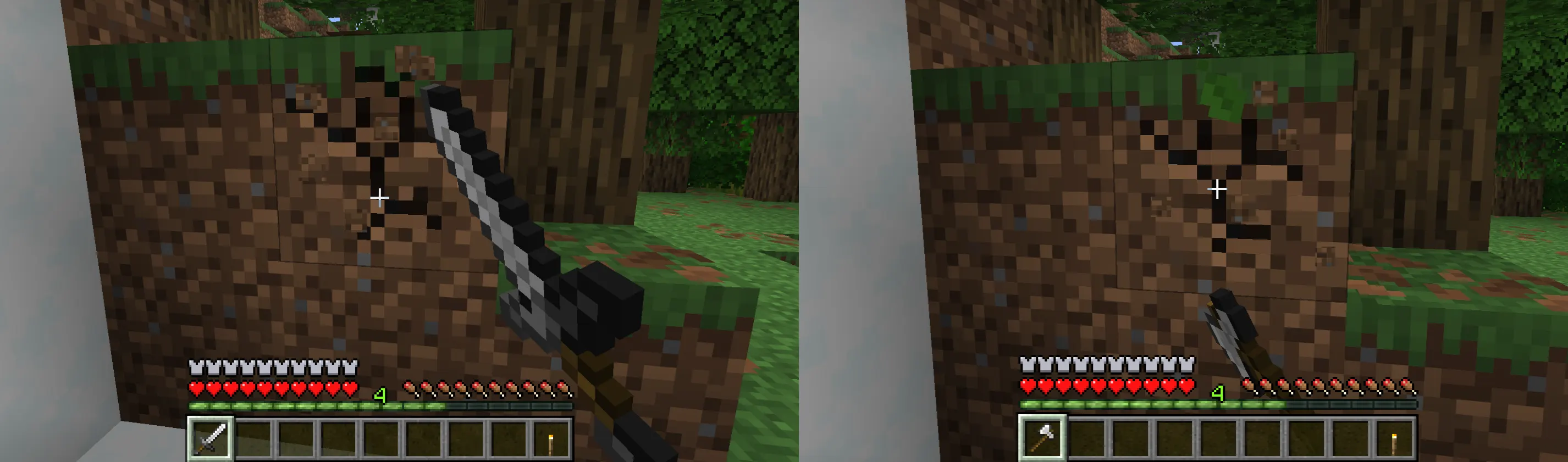
Attack speed decides your rhythm in a fight, and rhythm is what separates a clean kill from a panicked one.
In Java, every sword swings at 1.6, meaning you can land a fully-charged hit roughly every 0.6 seconds. Axes range from 0.8 up to 1.0 depending on material, meaning your cooldown stretches from 1 second (top-tier axes) up to 1.25 seconds (wood and stone). That's not a small difference in a live fight. Against a skeleton kiting you with arrows, or a player circle-strafing in a duel, those extra fractions of a second are exactly when you eat damage you didn't need to.
Missed timing hurts axes more too. Since the axe cooldown is longer, attacking early costs you a bigger chunk of your total damage output relative to a sword doing the same thing. Spam-clicking with an axe is close to the worst thing you can do in Java combat.
Bedrock removes this entire conversation. There's no attack cooldown system at all, so both weapons can be clicked as fast as your mouse or controller allows. This is a long-running point of frustration in the Bedrock community, and Mojang has openly discussed bringing cooldown parity over via the ongoing Combat Test snapshots, but as of mid-2026 nothing has shipped to the live game. If you're on Bedrock, attack speed simply isn't part of this decision.
How it plays out by context:
-
PvP: Faster weapons let you punish missed shield timings and follow up combos. This favors swords hard.
-
Mob fights: Sword speed shines against groups; axe power shines against single tough mobs like a zombified piglin or a stray.
-
Boss battles: Long fights reward whichever weapon gives more total damage over time, which usually still comes back to DPS math (below), not raw swing speed alone.
DPS Comparison
DPS just means damage per second, and it's the number that actually tells you which weapon wins a straight fight, not the per-hit damage that gets quoted everywhere.
The formula is simple: damage per hit divided by cooldown time in seconds. Here's Java DPS across every tier:
|
Material |
Sword DPS |
Axe DPS |
|
Wood |
6.7 |
5.6 |
|
Stone |
8.3 |
7.2 |
|
Iron |
10.0 |
8.1 |
|
Gold |
6.7 |
7.0 |
|
Diamond |
11.7 |
9.0 |
|
Netherite |
13.3 |
10.0 |
Swords win at every single tier except one: gold. A gold axe actually edges out a gold sword in theoretical DPS, 7.0 to 6.7, because gold gets the same fast 1.0 attack speed as diamond and netherite axes while gold swords stay stuck at the standard 1.6. It's a genuinely weird quirk of Minecraft's balancing that almost nobody brings up, and it's basically the only scenario where "just grab the axe" is mathematically correct rather than a vibe.
Outside of that one exception, a diamond sword outdamages a diamond axe by close to 30% over time despite hitting for less per swing. This is why speedrunners and PvP players default to swords once they've got a good weapon. Steady pressure beats occasional big hits when both players are landing every strike.
Where axes claw the advantage back: single unarmored hits, especially critical hits. A critical hit multiplies base damage by 1.5, so a diamond axe critical lands 13.5 compared to a sword's 10.5. If you can guarantee that first hit, whether that's an ambush, a fall-damage critical, or catching someone off guard in PvP, the axe's burst can end a fight before DPS math even gets to matter.
PvP Comparison
In a straight, no-shield Java duel between two players in full gear, the sword usually wins. Faster attacks mean more opportunities to land a hit while your opponent recovers, and access to Sweeping Edge means brushing past a second target (or hitting through a group in team fights) without losing tempo. Critical hits, landed by jumping and hitting on the way down, work identically for both weapons, but you get to attempt more of them per second with a sword.
Shields change everything. A player turtling behind a shield can block indefinitely against a sword, since a sword has no way to punish that behavior directly. An axe cracks that shield open in one hit, and once it's disabled, five full seconds of undefended combat usually decides the match. This is why a lot of competitive Java PvP players actually carry both: a sword for the open exchange, and a quick swap to axe the moment an opponent raises their shield.
Bedrock PvP plays completely differently because there's no cooldown to manage. Fights become about raw clicking speed and reaction time rather than rhythm, and since swords deal more damage per hit than axes on Bedrock with no speed penalty to offset it, swords are the clear, uncomplicated winner in nearly every Bedrock PvP scenario.
Practical recommendation by scenario:
-
Open duels, no shields: Sword
-
Opponent using a shield: Axe, or a sword-axe swap
-
Team fights / multiple targets: Sword, for the sweep
-
Bedrock servers: Sword, essentially always
PvE Comparison
Different mobs punish different weaknesses, so here's how the choice actually plays out against what you'll fight most.
Zombies, husks, Drowned: Groups are common, so sword sweep attacks clear a horde faster than an axe ever will.
Skeletons and strays: These kite you with arrows, so the faster you close distance and land hits, the less chip damage you take. Sword.
Creepers: One clean critical hit from either weapon usually does it before the fuse matters, but the sword's speed gives you a better shot at that first hit before it detonates.
Spiders: Fast, erratic movement plus frequent group spawns in caves. Sword again, for the same reasons as zombies.
Endermen: High health pool (40 HP), and they teleport away from ranged and sometimes melee hits, so raw single-hit power matters more here. This is a genuine axe strength.
Piglins and piglin brutes: Brutes hit hard and have a large health pool, making the axe's burst useful, though a sword still keeps you safer against the regular piglins that tend to swarm alongside them.
Vindicators: They're aggressive melee attackers with real damage output, and they carry axes themselves, so trading fast hits with a sword generally keeps you safer than slugging it out at axe speed.
The Warden: Its enormous health pool and one-shot-capable attacks mean you want maximum uptime and safe positioning far more than raw damage per hit. Most experienced players avoid melee with a Warden entirely, but if you must, a sword's speed and mobility beat standing still to land bigger axe swings.
The Wither: A prolonged fight against a huge health pool rewards total damage output over time, which is DPS, which is the sword's category to win in Java.
The Ender Dragon: You're mostly hitting it during perch phases at the exit portal, where a handful of clean, fast hits before it flies off again matter more than one big swing. Sword.
The pattern across almost every entry: swords win when speed, mobility, or crowd control matters, and axes win specifically when you can guarantee a clean, uninterrupted hit on a single tough target, like an Enderman or a Piglin Brute you've isolated.
Java vs Bedrock Differences
This is the single biggest factor in the whole sword-vs-axe debate, and a lot of older guides gloss over it or just don't mention it at all.
Combat mechanics: Java has the full 1.9 Combat Update system: attack cooldowns, charge-based damage scaling, and sweep attacks. Bedrock never received this overhaul. Attacks land instantly and repeatedly with no recovery penalty.
Axe damage direction: Java axes deal more damage than swords of the same tier. Bedrock axes deal exactly one point less than swords of the same tier. This is a complete reversal between editions, and it's the single most important fact in this entire article if you only remember one thing.
Shield behavior: Both editions let axes disable shields for 5 seconds, following a parity update that brought this mechanic to Bedrock. The difference is context: without an attack cooldown system, Bedrock fights move faster overall, so that 5-second window matters relatively less than it does in Java's slower rhythm.
Sweep attacks: Java-only, full stop. Bedrock swords cannot hit multiple targets in one swing, which removes one of the sword's biggest crowd-control advantages on that edition.
Overall PvP balance: Java rewards timing, positioning, and weapon choice as a genuine strategic decision. Bedrock rewards click speed and raw stats, and since swords out-damage axes there with nothing to offset it, the choice is far less interesting on that edition.
Mojang has acknowledged for years that Bedrock's lack of cooldown creates an uneven experience compared to Java, and design discussions around bringing further parity have continued through 2025 and into 2026 alongside the ongoing Combat Test snapshots. Nothing has landed in the live game as of this writing, so treat any claims of Bedrock cooldowns as unconfirmed until Mojang actually ships it.
Enchantments

Best Sword Enchantments
-
Sharpness: Adds 0.5 damage per level in Java (1.25 in Bedrock), stacking up to level V. The default choice for almost any sword build.
-
Smite: Massively boosts damage against undead mobs specifically (zombies, skeletons, withers, zombified piglins). Worth a dedicated sword if you're farming an undead-heavy area.
-
Bane of Arthropods: Same idea but for spiders, cave spiders, silverfish, and endermites, plus a slowness effect on hit.
-
Looting: Increases mob drop quantities and rare drop chances. Essential for farming.
-
Fire Aspect: Sets targets on fire, dealing damage over time. Great for finishing off fleeing mobs.
-
Sweeping Edge (Java only): Boosts sweep attack damage to 50/67/75% of your base hit at levels I/II/III. Turns crowd control into genuine crowd damage.
-
Knockback: Pushes enemies back on hit, useful for keeping distance from anything dangerous up close.
-
Unbreaking and Mending: Durability staples on any weapon you plan to keep long-term.
Best Axe Enchantments
-
Sharpness: Same scaling as swords, and still the biggest raw damage boost available.
-
Efficiency: Doesn't help combat at all, but worth remembering if your axe is doing double duty as a wood-cutting tool.
-
Unbreaking and Mending: Same value as on a sword, arguably more important given axes burn durability twice as fast per hit.
Axes miss out on Smite, Bane of Arthropods, Looting, Fire Aspect, Knockback, and Sweeping Edge entirely, since those are sword-exclusive in both editions. That gap is a big part of why a fully optimized combat sword still outclasses even a Sharpness-maxed axe in most long-term builds. If your goal is efficient mob farming rather than raw single-hit power, the sword's enchantment ceiling makes the decision for you.
Durability Comparison
Same-tier swords and axes actually share identical maximum durability values (a diamond sword and diamond axe both max out at 1,561 uses, for instance). The catch is how that durability gets spent. A sword uses 1 point per hit landed on a mob or player. An axe uses 2 points per combat hit, which means an axe wears out roughly twice as fast in a straight fight even though its total durability pool is the same size.
Repairing works identically for both: combine two of the same item on an anvil, or feed in raw material (each unit restores 25% of max durability, rounded down). Mending is the long-term answer for either weapon, converting XP orbs into durability instead of experience levels, which effectively makes durability a non-issue once you've got a Mending enchanted book.
For long survival worlds without easy Mending access, the sword's lower durability cost per hit adds up meaningfully over hundreds of mob kills.
Resource Efficiency
Early game, a sword costs one less unit of material than an axe of the same tier (2 versus 3), which matters when you've only got a handful of cobblestone or iron to work with on day one. That single extra unit doesn't sound like much until you're deciding between Crafting an axe or a pickaxe with your last three iron ingots.
Mid-game, once you've got a steady iron or diamond supply, the crafting cost gap stops mattering much. What starts mattering is that an axe is doing two jobs (tool and weapon) while a sword does one, so carrying an axe can genuinely save an inventory slot if you're not also carrying a dedicated wood-cutting tool.
Late-game, with Mending in play and unlimited access to netherite, resource efficiency becomes almost irrelevant for either weapon. At that point the decision comes down entirely to combat performance, which brings you right back to DPS and enchantment access, where the sword generally leads.
Boss Fight Comparison
Ender Dragon: Fights are short bursts at the exit portal between long flight phases. You want speed to land hits during your limited windows, not raw power. Sword.
Wither: A drawn-out fight against high health and dangerous wither skull projectiles rewards consistent DPS over time far more than big single hits. Sword, with Smite if you've got a dedicated build for it.
Warden: Ideally you never melee this thing at all, using sneaking, distraction items, and distance instead. If forced into melee, mobility matters more than damage, which favors the sword.
Raids (Pillager Outposts / Village Raids): Groups of vindicators, pillagers, and ravagers hit you from multiple directions constantly. Sword sweep attacks and speed keep you alive far better than axe power against a crowd like this.
Across every major boss and structure fight, the sword's speed and sustained damage output wins out. Axes shine in one-on-one burst scenarios, and most boss fights simply aren't that.
Beginner Recommendations
-
First day: Wooden or stone sword. Cheap, fast, and the sweep attack helps against the first zombie horde you'll inevitably run into.
-
Early survival: Stone or iron sword as your main weapon, with a spare stone axe for wood-chopping duty. Don't combine the two roles yet; you need the speed more than you need to save an inventory slot.
-
Mining trips: A sword for cave mobs (creepers and spiders especially reward the speed), pickaxe for blocks. Keep them separate.
-
Nether exploration: An axe becomes genuinely appealing here since piglins and piglin brutes are tanky, and the shield-disable matters against piglin brutes carrying their own axes.
-
Ancient City: Bring a sword for mobility and stealth-friendly speed, not an axe. You're avoiding fights with the Warden, not winning them.
-
End dimension: Sword, both for the Ender Dragon fight and for endermen, since a startled Enderman teleporting mid-swing punishes slow weapons hard.
-
Hardcore worlds: Sword, without much debate. One life means you want the weapon that keeps you moving and hitting consistently, not the one that leaves you standing still and vulnerable for an extra half second between swings.
Common Mistakes
-
Spam-clicking in Java. Attacking before your weapon's cooldown finishes deals reduced damage. It feels aggressive but it's actually the slower way to kill something.
-
Ignoring the attack cooldown indicator entirely. Most players never even notice the mechanic exists, then wonder why their "fast" weapon feels inconsistent.
-
Using an axe against groups. The lack of sweep attack plus slower recovery is a genuinely bad combination against three or four mobs at once.
-
Forgetting axes disable shields, or forgetting they don't work the other way around. A sword against a shield-turtling opponent in Java can stall out indefinitely with no way to force an opening.
-
Choosing a weapon based on vibes instead of context. "Axes hit harder" is true in Java and false in Bedrock. Know which edition you're actually playing before you commit.
Pro Combat Tips
-
Time your critical hits. Jump, then hit on the way down, right before you land. That's a 50% damage bonus on either weapon for free.
-
Respect the cooldown. Watch the small indicator next to your crosshair (or just internalize the rhythm) and hit right as it fills, not before.
-
Weapon-switch mid-fight. Keep both a sword and an axe on your hotbar in serious PvP. Open with the sword, swap to axe the instant a shield goes up, swap back once it's disabled.
-
Use your hotbar deliberately. Keep your weapon in slot 1, food nearby, and blocks or a shield accessible without fumbling.
-
Shield up between swings. In Java, you can hold a shield in your offhand and still swing your mainhand weapon normally. There's rarely a reason not to carry one.
-
Sprint-reset for critical hits. Sprinting disables critical hits, so tap sneak or stop briefly right before your swing lands if you need that bonus damage.
-
Positioning beats power. Fighting with your back to open space, not a wall or corner, gives you room to circle-strafe and avoid getting cornered by anything faster than you expected.
Which Weapon Should You Choose?
|
Situation |
Best Weapon |
Why |
|
Early Game |
Sword |
Cheaper, faster, better against early mob groups |
|
PvP |
Sword (axe as a shield-breaking backup) |
Faster hits win open exchanges; axe forces shield openings |
|
PvE |
Sword |
Sweep attacks and speed handle most common mobs better |
|
Boss Fights |
Sword |
Sustained DPS beats burst damage in long fights |
|
Hardcore |
Sword |
Consistency and mobility matter more than raw power when you have one life |
|
Speedrunning |
Sword (with axe as backup tool) |
Speed and reliability over utility |
|
Exploration |
Axe |
Doubles as a wood-cutting tool, saving inventory space |
|
Raids |
Sword |
Crowd control against multiple aggressive mobs |
Conclusion
The sword wins the overall argument. It's faster, it clears groups, it carries every combat enchantment worth having, and in Java it still edges out the axe on total damage over time despite hitting for less per swing. If you can only carry one weapon for general survival, make it a sword.
The axe earns its spot for very specific jobs: breaking a turtling opponent's shield open, dropping a tanky single target fast, or pulling double duty as your wood-cutting tool when inventory space is tight. Nether exploration, PvP against shield users, and situations where you can guarantee a clean opening hit are where an axe genuinely outperforms a sword.
Pick based on what you're actually doing, not on which weapon looks cooler in your hand (though I get it, the axe does look cooler). Beginners and hardcore players should default to a sword without much hesitation. Experienced PvP players and anyone dealing with shields regularly should keep both on their hotbar. And if you're on Bedrock, this whole debate simplifies itself: grab the sword and don't look back.