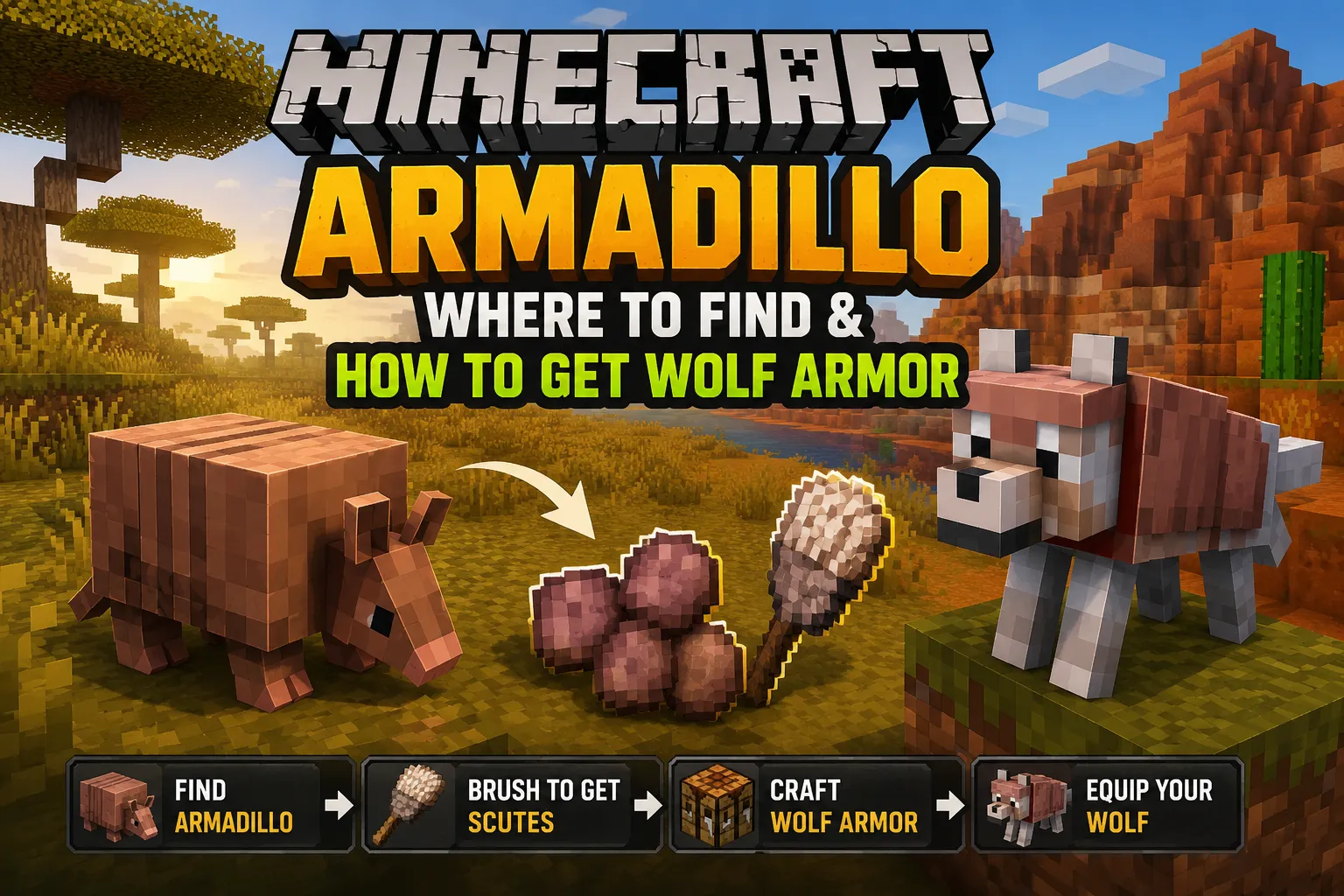
Armadillo in Minecraft: Where to Find & How to Get Wolf Armor
Your wolf tanks a Creeper explosion for you, and it dies. It happens to almost everyone eventually, and it's the entire reason Wolf Armor exists. The only thing standing between your wolf and that armor is one small, shy mob: the Armadillo.
Armadillos live in Savanna and Badlands biomes, and they hand over Armadillo Scutes without a fight, literally, since you never kill one to get anything. Brush a live Armadillo and it drops a Scute. Collect six, craft them into Wolf Armor at a Crafting table, and equip your tamed adult wolf. That's the entire journey from "empty-handed" to "my dog can survive a Nether trip."
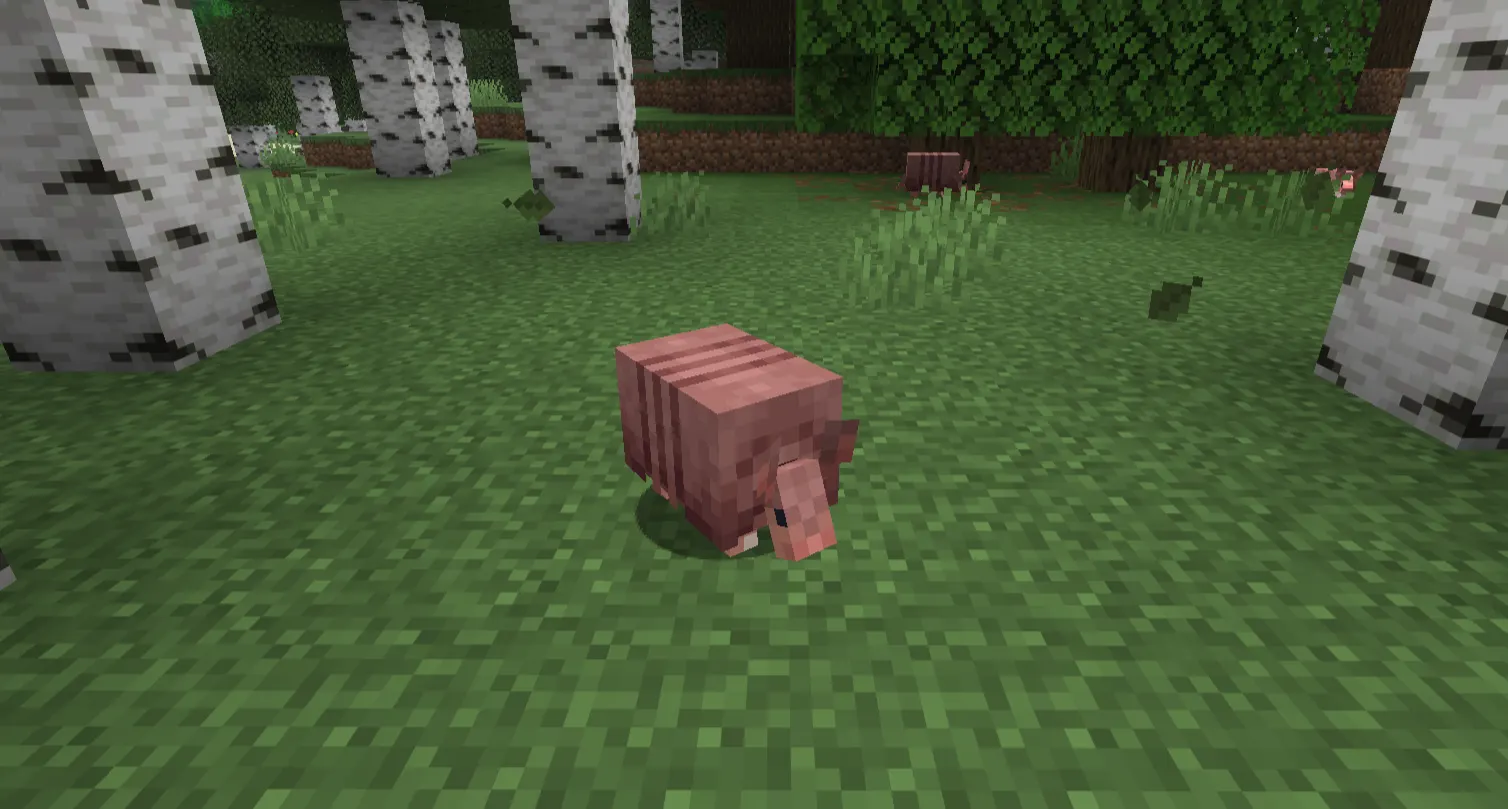
Everything below covers the parts people get wrong: sprinting up and watching an Armadillo roll into a defensive ball, assuming killing one drops something, or not knowing Wolf Armor has its own durability that quietly runs out mid-adventure.
Fastest Way to Get Wolf Armor
-
Travel to a Savanna or Badlands biome.
-
Craft a Brush (1 Feather + 1 Copper Ingot + 1 Stick).
-
Walk up to an Armadillo slowly and use the Brush on it to collect a Scute.
-
Repeat until you have 6 Scutes (an unenchanted Brush can do this 4 times in Java, 5 in Bedrock, before it breaks).
-
Craft the Scutes into Wolf Armor at a crafting table and equip it on a tamed adult wolf.
No fighting, no rare drops, no RNG loot tables. Just a Brush and a few minutes in the right biome.
Quick Answer
|
Question |
Answer |
|
Where do Armadillos spawn? |
Savanna, Savanna Plateau, Windswept Savanna, and Badlands biomes (regular, Eroded, and Wooded Badlands) |
|
What do Armadillos provide? |
Armadillo Scutes, dropped by brushing or occasionally on their own |
|
How do you get Scutes? |
Use a Brush on a live, unrolled Armadillo |
|
How many Scutes are needed? |
6, for one full set of Wolf Armor |
|
How do you craft Wolf Armor? |
Arrange 6 Scutes on a crafting table (pattern below) |
|
Which wolves can wear it? |
Tamed, adult wolves only |
|
How do you repair it? |
Right-click an equipped wolf with a Scute, or repair in an anvil |
|
Can it be dyed? |
Yes — crafting table in Java, cauldron with dyed water in Bedrock |
What Is the Armadillo in Minecraft?
The Armadillo is a passive mob added in the Armored Paws update (Java 1.20.5, Bedrock 1.20.80), after winning the 2023 Mob Vote. It doesn't fight back, doesn't flee especially fast, and drops nothing meaningful if you kill it beyond a small amount of experience. Its entire role in the game is supplying Armadillo Scutes, and Scutes exist for exactly one crafted item: Wolf Armor.
Before this update, tamed wolves had no equipment at all. A wolf that followed you into a raid or a Nether fortress was relying purely on its health pool, and once that ran out, that was the end of it. The Armadillo fixed that by attaching a single-purpose resource to a single-purpose recipe, which makes the whole system easy to plan around once you know where to look.
Where to Find Armadillos in Minecraft
Armadillos spawn in dry, warm biomes: Savanna, Savanna Plateau, Windswept Savanna, and the Badlands family (regular, Eroded, and Wooded Badlands). They don't spawn in deserts despite the similar climate, and they're absent from cold or temperate biomes entirely.
A few things make the search faster:
-
They're easy to overlook in Badlands terrain. The reddish terracotta blocks camouflage a small brown Armadillo well. Scan the flatter mesa tops rather than the canyon floors.
-
They're persistent once found. Like most passive animals, an Armadillo you fence in will stay in that pen indefinitely rather than wandering off or vanishing, as long as you don't leave the area unloaded for extended periods.
-
Bring a Lead. If you find one out in open terrain, leashing it back to a base is far more reliable than herding it on foot, especially since sprinting near it will trigger the roll-up response.
-
You don't need to fight your way there. Armadillos themselves pose zero threat, so the real obstacle is just travel time to the right biome.
There's no meaningful difference between Java and Bedrock here. Both editions use the same spawn biomes.
Armadillo Behavior Explained
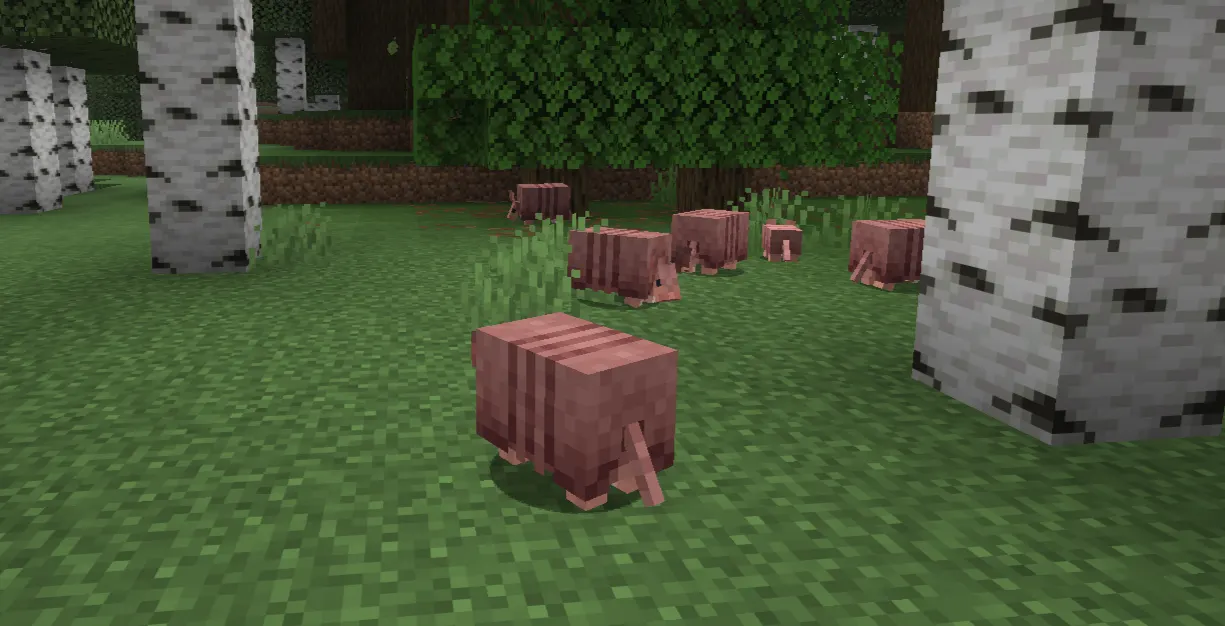
Everything about collecting Scutes comes down to understanding one mechanic: the roll-up.
An Armadillo curls into a defensive ball when it takes damage, when an undead mob (Zombies, Skeletons, and similar) gets close, or when a nearby player sprints or rides a mount. While rolled up, it takes reduced damage, stops moving, and won't accept food or interact with a Brush.
It doesn't stay curled forever. It periodically peeks out to check for danger, and if the area is clear, it unrolls itself. It also unrolls instantly if it touches water or gets clipped onto a Lead.
Do this:
-
Approach at a normal walking pace.
-
Clear nearby hostile mobs before you get close.
-
Wait it out if it does roll up — it will check again shortly and unroll on its own once it feels safe.
Avoid this:
-
Sprinting toward an Armadillo, even out of habit.
-
Trying to brush it while it's still curled up. It won't respond until it unrolls.
-
Bringing a mount right up next to it. Riding near an Armadillo triggers the same fright response as sprinting.
How to Get Armadillo Scutes
This is the section most guides get slightly wrong, so here's the accurate version, step by step.
-
Find an Armadillo in a Savanna or Badlands biome.
-
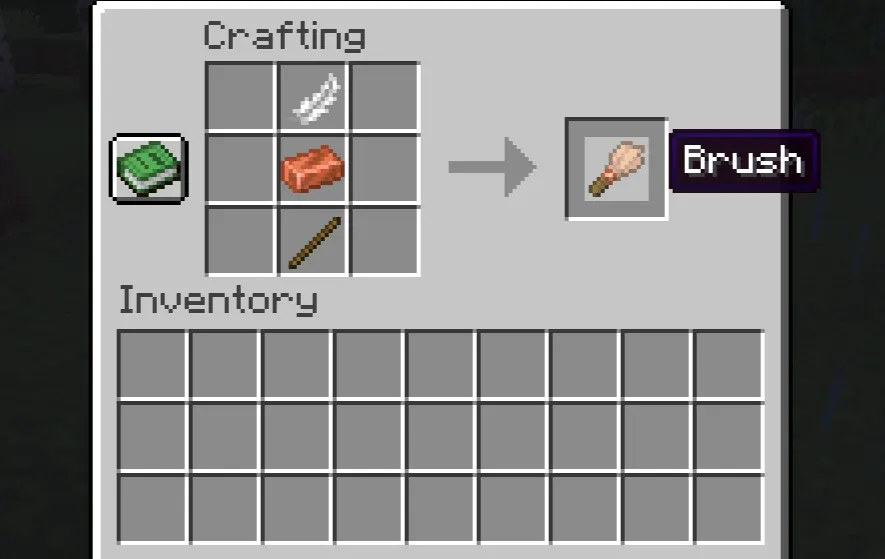
Craft a Brush — 1 Feather, 1 Copper Ingot, and 1 Stick on a crafting table.
-
Approach slowly, staying calm so it doesn't roll up before you're close.
-
Use the Brush on the Armadillo. It plays a brushing animation and drops a single Scute.
-
Repeat. There's no cooldown between brushes and no cap on how many Scutes one Armadillo can give you over time — the only real limit is your Brush's durability.
Armadillos also drop a Scute on their own periodically, without any interaction at all, but the timing is inconsistent enough that it's not something to plan around if you need Scutes soon. Brushing is the reliable method.
Killing an Armadillo does not give you a Scute. This is the single most common wrong assumption people carry into this guide, probably because most Minecraft resources come from killing something. Armadillos work the opposite way: the Scute only comes from a live, brushed Armadillo, and killing one just wastes a resource you could've farmed for free.
One practical detail worth planning around: an unenchanted Brush breaks after 4 uses on an Armadillo in Java Edition, or 5 in Bedrock Edition. If you're brushing several Armadillos in one trip, bring a spare Brush or two, or enchant one with Unbreaking so it lasts significantly longer.
Scute Farming Advice by Game Stage
Early game: You only need six Scutes for one piece of armor. A single Armadillo will get you there in a couple of minutes of brushing, well within the durability of one unenchanted Brush.
Mid game: Fence in two or three Armadillos near your base instead of making a special trip every time you need more Scutes. Keep the pen free of hostile mobs, since even one zombie wandering close will send every Armadillo inside into a defensive curl and stall your brushing.
Late game: If you're gearing up a full pack of wolves, breeding (below) turns a couple of wild Armadillos into a small, self-sustaining herd, which is a lot less tedious than repeat trips to the Badlands. You don't need an elaborate automated farm; a simple fenced pen next to your wolf kennel covers almost every use case.
How to Breed Armadillos
Armadillos breed on Spider Eyes, not the wheat, seeds, or carrots you'd expect from most other passive animals.
-
Get Spider Eyes — they drop from spiders and cave spiders (your tamed wolves can farm these for you), or come from witches and desert pyramid chests.
-
Feed a Spider Eye to each of two adult Armadillos. They'll enter love mode.
-
Wait. A baby Armadillo spawns shortly after, along with a small amount of experience.
-
Let the baby grow up. Feeding it extra Spider Eyes speeds up growth, though it still takes a real chunk of playtime to reach adulthood.
A couple of things worth knowing before you try this:
-
If an Armadillo rolls up after being fed but before it reaches its partner, the breeding attempt is canceled, and it loses its "willing to breed" state until fed again.
-
Bred Armadillos need a short cooldown before they're willing to breed again.
-
Baby Armadillos don't drop Scutes. You'll need to wait for them to grow up first.
A small fenced enclosure near a spider spawner, if you happen to have one, turns this into a nearly hands-off Scute pipeline: spiders feed the breeding, and breeding grows your Scute-producing herd over time.
How to Craft Wolf Armor in Minecraft
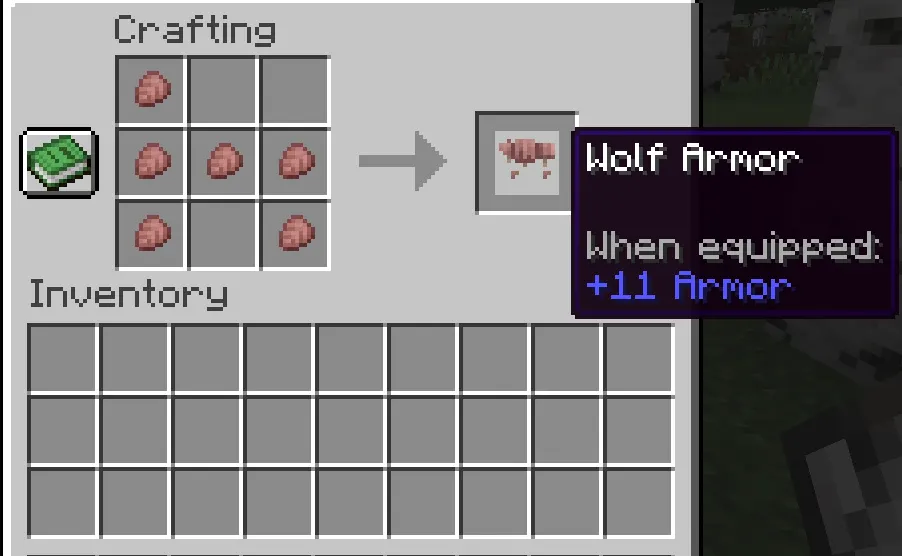
You need exactly 6 Armadillo Scutes and a crafting table. Nothing else goes into the recipe, no leather, no iron, no dye required at the crafting stage.
Crafting pattern:
|
Scute |
Scute |
Scute |
|
Scute |
— |
Scute |
|
— |
— |
— |
To be precise: one Scute in the top-left slot, the entire middle row filled with three Scutes, and one Scute each in the bottom-left and bottom-right slots. The remaining three slots stay empty. This produces one complete piece of Wolf Armor. Unlike player armor, there's no separate helmet, chestplate, and boots; it's a single item that covers the whole wolf.
If you're on Java 1.21 or later, a Crafter block can automate this recipe, which is worth setting up if you're arming an entire pack at once.
How to Put Wolf Armor on a Tamed Wolf
-
Tame a wolf first, if you haven't already, by feeding a wild wolf bones until hearts appear.
-
Craft or obtain Wolf Armor.
-
Hold the armor in your hand.
-
Right-click the tamed wolf (or the equivalent interact button on console and Bedrock).
-
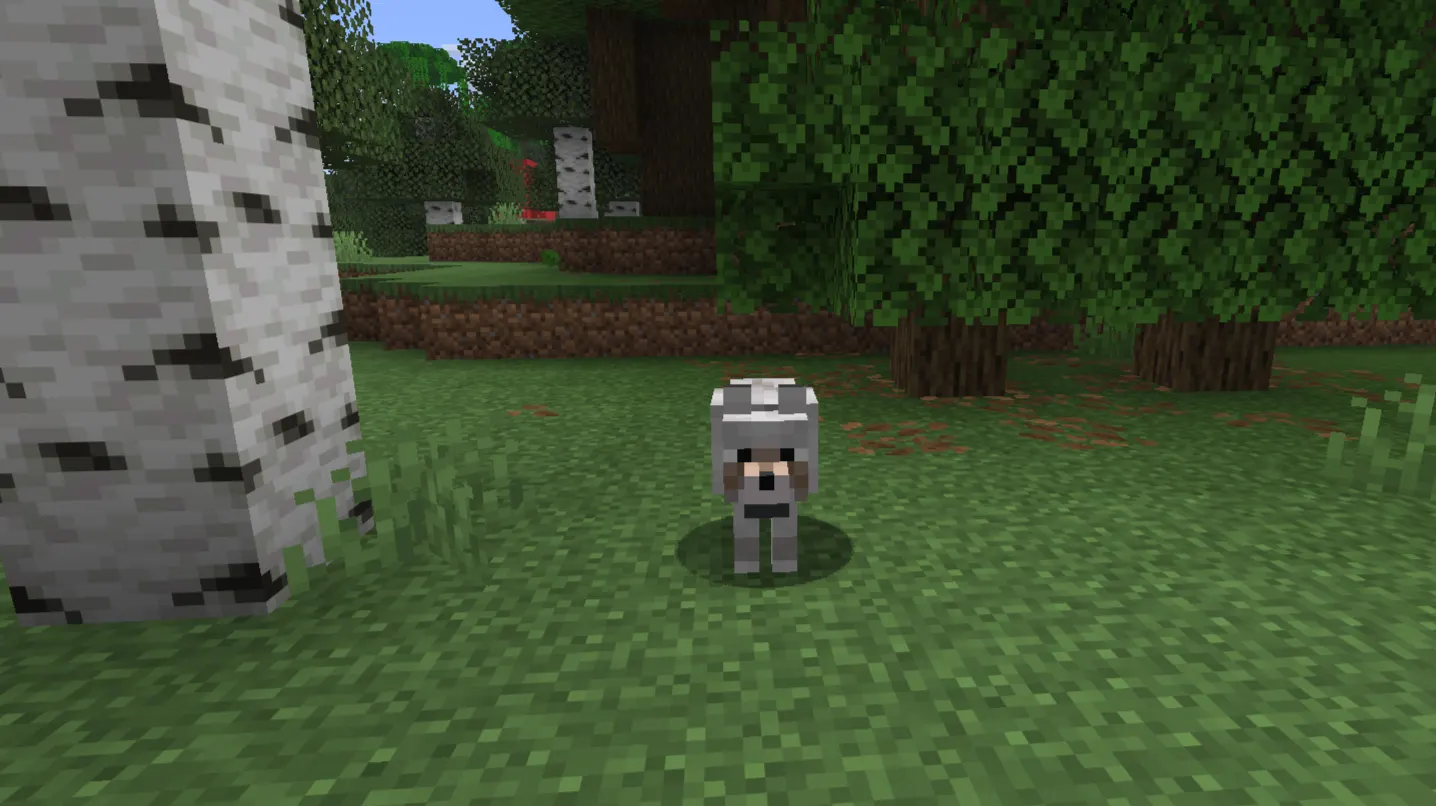
The wolf visually shows the armor immediately. There's no menu or confirmation step.
Only tamed, fully grown wolves can wear it. Wild wolves and puppies can't be equipped, so if you've got a baby wolf, you'll need to wait for it to grow up. This works identically on Java and Bedrock; there's no interaction difference between the editions here.
What Does Wolf Armor Do?
Wolf Armor gives a tamed wolf 11 armor points, the same numeric value as Diamond Horse Armor. In practice, Diamond Horse Armor is still slightly better on a horse because it also grants armor toughness, a stat Wolf Armor doesn't have, but 11 points is still a serious upgrade over an unarmored wolf's zero.
Here's the part that actually surprises experienced players: Wolf Armor protects against a couple of damage types that ordinary player and mob armor normally ignores entirely, specifically fall damage and ongoing burning. That's unusual. Most armor in the game does nothing for those two.
It's not a Shield against everything, though. Damage from the void completely bypasses it, and so does the /kill command. Magic damage, drowning, and starvation generally bypass armor absorption in Minecraft regardless of what's worn, and there's no indication Wolf Armor is an exception there. Treat it as serious, broad protection, not a guarantee your wolf survives anything you throw it into.
The armor also tracks its own durability, separate from the wolf's health bar. Every point of damage it absorbs costs one point of durability. You'll get a visual and audio warning as it wears down: it visibly cracks and makes a breaking sound at roughly 60, 44, and 20 durability points remaining out of 64 total, so you get three separate heads-up moments before it fully breaks.
How to Repair Wolf Armor
Wolf Armor has 64 durability points total, and there are two ways to restore it.
-
Direct repair: Right-click your wolf, while it's still wearing the armor, with an Armadillo Scute. This restores 8 durability points instantly, no crafting table needed.
-
Anvil repair: Take the armor off with Shears, then combine it with a Scute in an anvil. This restores 16 points, a quarter of its max durability, per Scute used. You can also combine two damaged Wolf Armors in an anvil, which adds a smaller durability bonus.
There's no Mending or Unbreaking option available through normal survival play. Wolf Armor can't be enchanted at an enchanting table or anvil in survival mode on either edition, so Scutes are the only repair path most players will ever use. Keeping a small stash of spares before a long trip is cheap insurance.
How to Dye Wolf Armor
Wolf Armor starts out plain brown with gray patches, and it can be recolored, but the method depends on your edition.
Java Edition: Combine the Wolf Armor with one or more dyes in a crafting grid, the same way you'd dye leather armor. Mixing multiple dyes together produces a blended color.
Bedrock Edition: Fill a cauldron with dyed water, then use the Wolf Armor on the cauldron to apply the color. Using dyed armor on a cauldron of plain water strips the color back off.
Either way, combining dyes opens up an enormous range of shades, so color-coding multiple wolves or matching one to your own gear is entirely realistic.
How to Remove Wolf Armor
Equip Shears and right-click your armored wolf. The armor pops off as a physical item, keeping whatever durability and dye it had. Doing this for the first time unlocks the "Shear Brilliance" advancement in Java Edition (the equivalent achievement on Bedrock).
If your wolf dies while wearing its armor, the armor drops on the ground as a normal item, the same as any other death drop. It isn't destroyed along with the wolf, so you can pick it up and reuse it on another tamed wolf.
Best Ways to Protect Your Wolf in Minecraft
Wolf Armor is genuinely strong, but it works best as one layer of a bigger plan, not the whole plan.
-
Lava and the void still end a wolf's run instantly. Neither is stopped by armor points, so keep wolves away from both regardless of how well-equipped they are.
-
Watch tight-space explosions. Armor reduces creeper and TNT damage significantly, but a wolf standing directly on top of the blast can still take a serious hit, possibly enough to break the armor outright in one go.
-
Leave wolves sitting during builds and redstone work. There's no upside to a wolf wandering into your own contraption or a lava-based farm.
-
Think twice before bringing an unarmored wolf anywhere you'd only bring an armored one. If a fight looks risky enough that you're relieved your wolf has armor, it was probably risky enough to reconsider bringing the wolf at all.
-
Check durability after big fights, not just when the armor visibly looks cracked. By the time you notice damage particles, you've already burned through more than half its durability.
-
The Nether and the End are still dangerous with armor on. Ghast fireballs, lava seas, and Endermen teleport-attacks all chip away at durability fast. Bring spare Scutes if you're taking a wolf along.
Armor buys your wolf a much longer leash for how much danger it can survive, but it doesn't remove the need to actually manage where you're taking it.
Armadillo vs Wolf Armor: The Complete Progression
The whole system, start to finish:
Find an Armadillo → Brush it for Scutes → Collect 6 total → Craft Wolf Armor at a crafting table → Tame a wolf with bones → Equip the armor → Repair with Scutes and monitor durability going forward
Every step uses materials you can get without fighting anything beyond the occasional spider for Spider Eyes. It's one of the more accessible gear upgrades in the game once you know the recipe.
Common Mistakes Players Make
-
Searching deserts instead of Savanna and Badlands. The similar dry look throws people off, but Armadillos don't spawn there. Solution: head to Savanna or any Badlands variant specifically.
-
Sprinting up to an Armadillo and watching it roll up immediately. Walk instead, and it usually won't trigger at all.
-
Assuming killing an Armadillo drops a Scute. It doesn't. Only brushing a live one works, so killing one just wastes it.
-
Trying to brush a rolled-up Armadillo. Nothing happens until it unrolls on its own; wait it out.
-
Burning through a Brush without a backup. An unenchanted Brush only survives 4–5 uses on Armadillos, so bring a spare or an Unbreaking-enchanted one before a long farming trip.
-
Trying to equip armor on an untamed or baby wolf. Only tamed adults can wear it.
-
Treating Wolf Armor as invincibility. It's strong protection, not immunity to lava, the void, or a bad decision about where to bring your wolf.
-
Ignoring durability until the armor breaks mid-fight. Check it after major encounters and top it off with a spare Scute before your next trip.
Java vs Bedrock Edition Comparison
|
Feature |
Java Edition |
Bedrock Edition |
|
Armadillo spawning |
Same biomes |
Same biomes |
|
Scute collection |
Brush breaks after 4 uses on an Armadillo |
Brush breaks after 5 uses on an Armadillo |
|
Wolf Armor crafting |
Same mechanic in both editions |
Same mechanic in both editions |
|
Equipping armor |
Same mechanic in both editions |
Same mechanic in both editions |
|
Repairing armor |
Same mechanic in both editions |
Same mechanic in both editions |
|
Dyeing armor |
Crafting table + dye(s) |
Cauldron with dyed water |
|
Removing armor |
Same mechanic in both editions |
Same mechanic in both editions |
The two editions are close to identical here. Brush durability and the dyeing method are really the only places where you're doing something meaningfully different depending on which version you're playing.
Once your wolf's armored up, the rest is just playing it smart: sitting it during risky builds, keeping it out of lava, and topping off durability with a spare Scute or two before you head somewhere dangerous. Six Scutes and a few minutes of brushing is a small price for not losing a wolf you've had since the early game.