Minecraft Shield Guide: How to Use, Craft, and Master Shields
If you've ever been caught off guard by a skeleton volley in a dark cave, or blown back by a creeper you didn't notice, you already know why shields matter. A shield in Minecraft is one of the best defensive tools you can get early in survival mode, and yet a lot of players never fully learn how to use one properly.
This guide covers everything: how to craft a shield, how to use one correctly, what it blocks, what it doesn't, enchantments worth adding, and advanced combat tactics for both PvE and PvP. Whether you're playing on Java Edition or Bedrock, this is the only shield guide you need.
What Does a Shield Do in Minecraft?
A shield blocks incoming damage from most attacks when you're actively holding it up. It reduces or completely negates damage from arrows, melee hits, explosions, and several other attack types, depending on the direction the attack is coming from.
Shields were added to Java Edition in version 1.9 (the Combat Update) and were brought to Bedrock Edition in version 1.10. They replaced the old blocking mechanic that was tied to right-clicking with a sword.
The key thing to understand: a shield only protects you from the front. Attacks from behind, from above, or from your sides can still hit you normally. Positioning matters a lot.
How to Craft a Shield in Minecraft
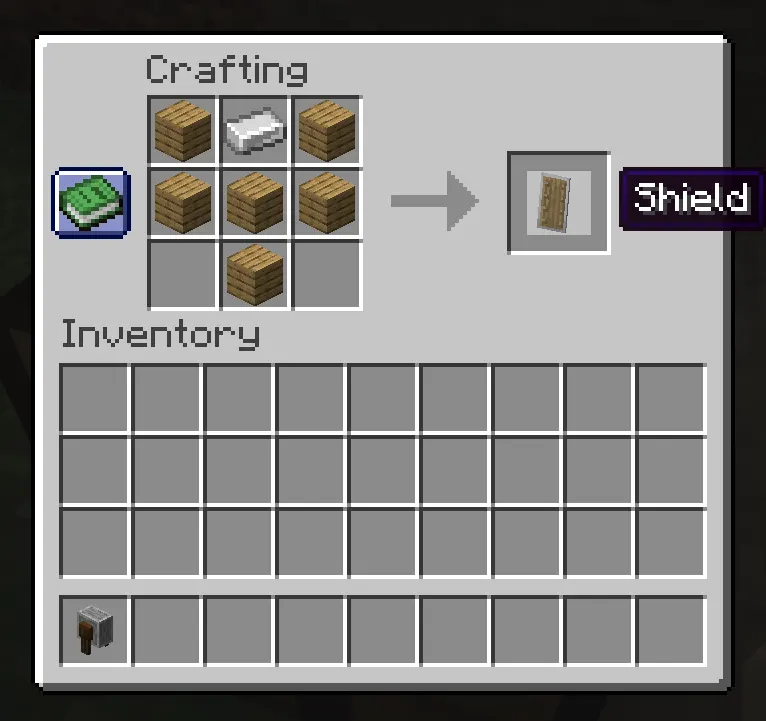
Crafting a Shield is straightforward, and you can do it relatively early in a survival playthrough. All you need is wood and one iron ingot.
Crafting Recipe:
|
Row |
Slot 1 |
Slot 2 |
Slot 3 |
|
Top |
Plank |
Iron Ingot |
Plank |
|
Middle |
Plank |
Plank |
Plank |
|
Bottom |
— |
Plank |
— |
Place one iron ingot in the top-centre slot and fill the remaining six slots (forming a Y-shape) with any wooden planks. You can mix plank types: oak, spruce, birch, jungle, acacia, dark oak, and mangrove. It doesn't matter.
Materials needed:
-
6 wooden planks (any type)
-
1 iron ingot
That's it. You can have a shield before you even fully gear up in iron armour, which makes it one of the most efficient early-game defensive items you can craft.
Beginner tip: Since you only need one iron ingot, there's no reason to wait. Grab your first iron from any early cave and make the shield immediately. It's worth more than a full set of iron tools in terms of survival value.
How to Equip and Use a Shield
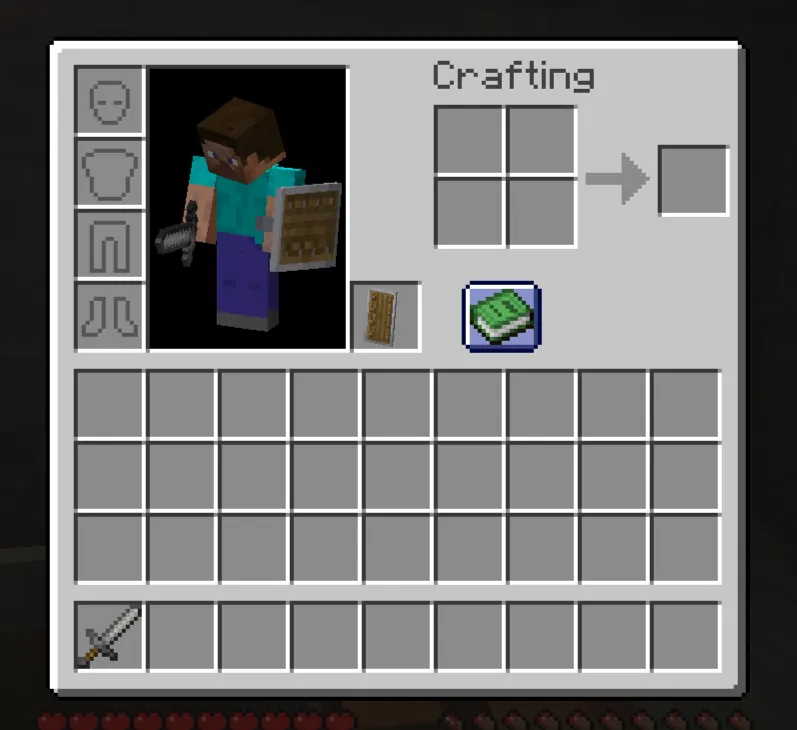
Shields go in your off-hand slot, the dedicated slot in your inventory that lets you hold a second item alongside your main hand.
To equip:
-
Open your inventory
-
Place the shield in the off-hand slot (the shield-shaped slot to the left of your character)
Once equipped, your shield will appear in your left hand while your main weapon stays in your right.
To activate blocking:
|
Platform |
Input |
|
Java Edition (PC) |
Right-click and hold |
|
Bedrock (PC) |
Right-click and hold |
|
Console (Bedrock) |
Left trigger / L2 |
|
Mobile (Bedrock) |
Crouch button or dedicated shield button |
When blocking, your character raises the shield, and your movement slows slightly. The shield is active as long as you hold the button down.
There's a 0.25-second activation delay (5 game ticks) before the shield actually starts blocking. This is important; you can't just click the moment an arrow flies at you. You need to be holding it a fraction of a second before the hit lands. Get used to pre-raising your shield when you expect incoming damage.
What Attacks Do Shields Block?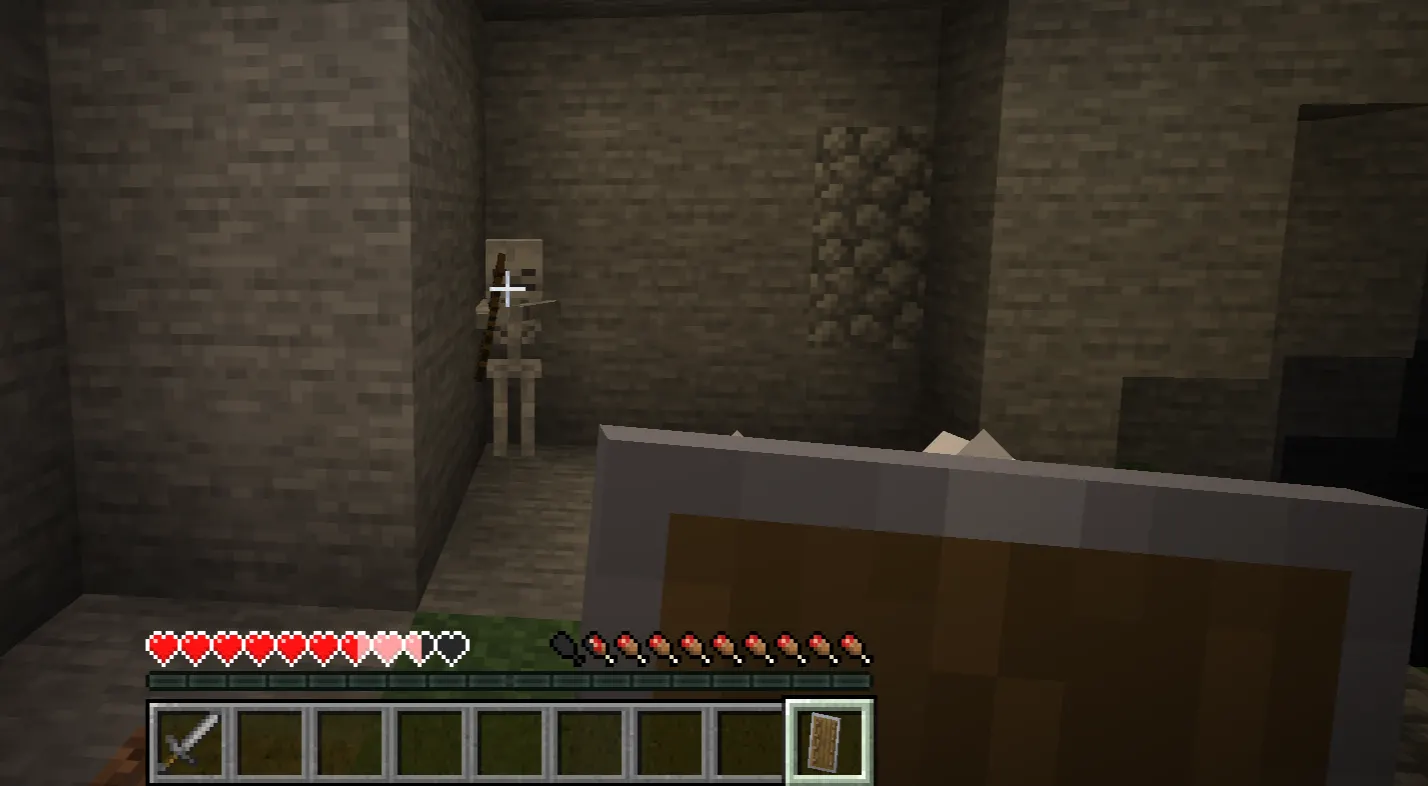
This is where shields really shine. A properly timed shield block stops a wide range of attacks that would otherwise drain your health fast.
Attacks shields block:
-
Arrows — Skeletons, strays, pillagers, and player-fired arrows are completely negated when blocked
-
Melee attacks — Swords, axes, zombie punches, and most mob hits are reduced or fully blocked
-
Creeper explosions — The explosion damage is reduced significantly when you face the creeper with your shield raised
-
Blaze fireballs — Blocked fireballs still push you back slightly, but the fire damage is negated
-
Ghast fireballs — You can block these and even deflect them back at the ghast
-
Ravager attacks — Ravagers can stun shield users (more on this below), but their direct attack damage is blocked
-
Crossbow bolts — Pillager crossbow shots are blocked the same way arrows are
-
Snowballs, eggs, and fishing rod knockback are blocked during PvP situations
Partially blocked attacks:
-
Explosions at range — If you're far enough from an explosion, the shield reduces damage. Close-range direct explosions (like a charged creeper) will still hurt badly.
-
Tridents — Blocked similarly to arrows, but Riptide-enchanted tridents, when thrown by players,s are fully blocked.
Blocking arrows from skeletons is probably the single most useful thing shields do in normal survival. When you're mining in caves and four skeletons line up shooting at you, holding up a shield and slowly backing away beats panicking every time.
What Shields Cannot Block?
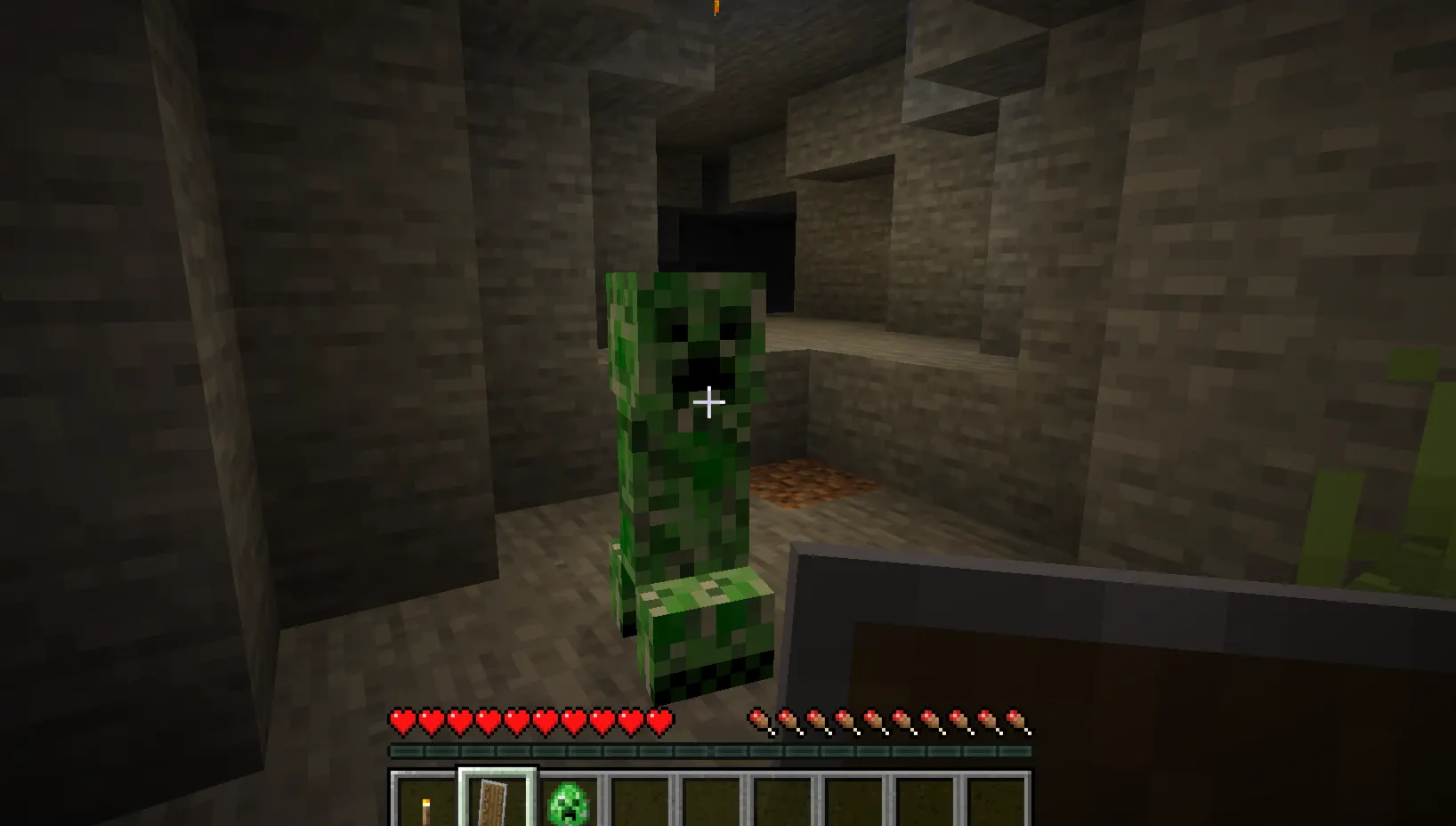
Shields aren't invincible, and knowing their limits prevents overconfidence, especially in Hardcore mode.
Attacks and effects shields do NOT block:
-
Status effects — Poison from cave Spiders, wither from wither Skeletons, and slowness from strays still apply even when blocking
-
Fall damage — Raising your shield does absolutely nothing for fall damage
-
Drowning damage — Same deal
-
Fire and lava damage — You can block a blaze fireball's impact damage, but standing in lava still burns you
-
Thorns enchantment damage — If a mob is wearing armour with Thorns, you'll still take that reflected damage while blocking
-
Fishing rod pulls — The knockback effect from a rod isn't fully stopped in all versions.s
-
Explosions from directly behind — Shields only protect the front
-
Magic/indirect damage — Some projectiles that deal magic damage or indirect effects can bypass shield protection
-
Warden's sonic boom attack — This is one of the few attacks specifically designed to bypass shields entirely. The Warden's sonic shriek ignores your shield completely, which makes the Ancient City one of the most dangerous biomes regardless of gear.
Shield Durability: How Long Does It Last?
A shield starts with 337 durability points in Java Edition. Bedrock Edition uses the same number. Each blocked hit reduces durability by the damage amount that was blocked, so blocking a 7-damage hit removes 7 durability.
If you let your shield break, you'll need to replace or repair it. A broken shield disappears completely from your off-hand.
Repairing shields:
You have a few options:
-
Combine two damaged shields in a Crafting table — they merge durability, plus a small bonus
-
Use an anvil with wooden planks — Shields can be repaired with any wooden plank type on an anvil, which costs XP levels
-
Mending enchantment — The best long-term solution; experience orbs automatically repair the shield while it's in your off-hand
Practical note: If you're using a Mending shield in caves, every mob you kill while holding it up repairs durability passively. Over time, a Mending shield rarely needs any other maintenance.
Shield Enchantments
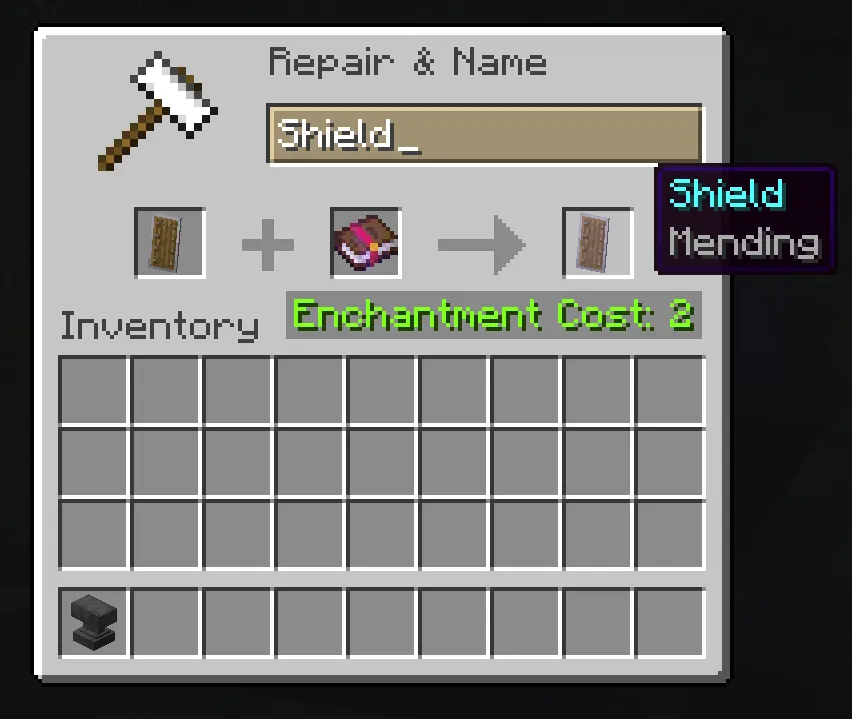
Shields don't have a long enchantment list, but the ones available are genuinely useful.
Unbreaking (I, II, III)
Reduces the chance that each block causes durability loss. At Unbreaking III, each blocked hit only reduces durability roughly 25% of the time. This dramatically extends shield life in heavy-combat situations like raids or Nether fortresses.
Mending
Repairs the shield using experience orbs. This is the most valuable enchantment for a long-term survival shield. Pair it with Unbreaking III, and your shield essentially lasts forever as long as you're killing mobs.
Curse of Vanishing
This cursed enchantment makes the shield disappear on death instead of dropping. It's rarely worth applying intentionally, but you might find it on a shield in dungeon loot. Be careful, losing your good shield on death is painful.
Best enchantment combination:
Unbreaking III + Mending — This is the endgame shield setup. It's low-maintenance, highly durable, and you never need to worry about running out of shields again.
Getting Mending requires a librarian villager trade or fishing. Once you have it, enchanting your shield at an anvil locks in the combination.
Customising Shields with Banners
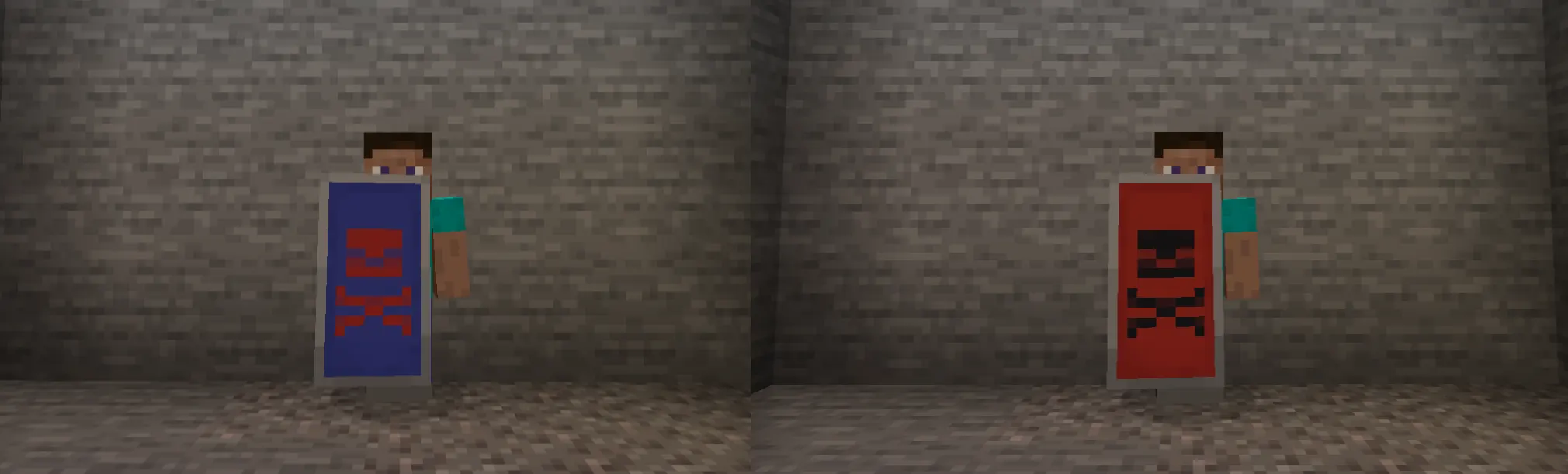
One of the underrated features of shields is banner customisation. You can apply any banner design directly to your shield for a purely cosmetic but genuinely cool effect.
How to apply a banner to a shield:
-
Craft or find a banner with the pattern you want
-
Open a crafting table
-
Place the shield and the banner in adjacent crafting grid slots (no specific positioning needed)
-
The banner pattern transfers to the shield.
This works in Java Edition. Bedrock Edition supports banner shields as well, but the specific pattern compatibility can vary slightly between versions.
The customisation doesn't affect stats, just appearance. In multiplayer servers or PvP scenarios, a distinctive shield design helps you stand out. In Hardcore mode, some players make it a tradition to craft a unique shield for their most important run.
How to Use Shields in Combat
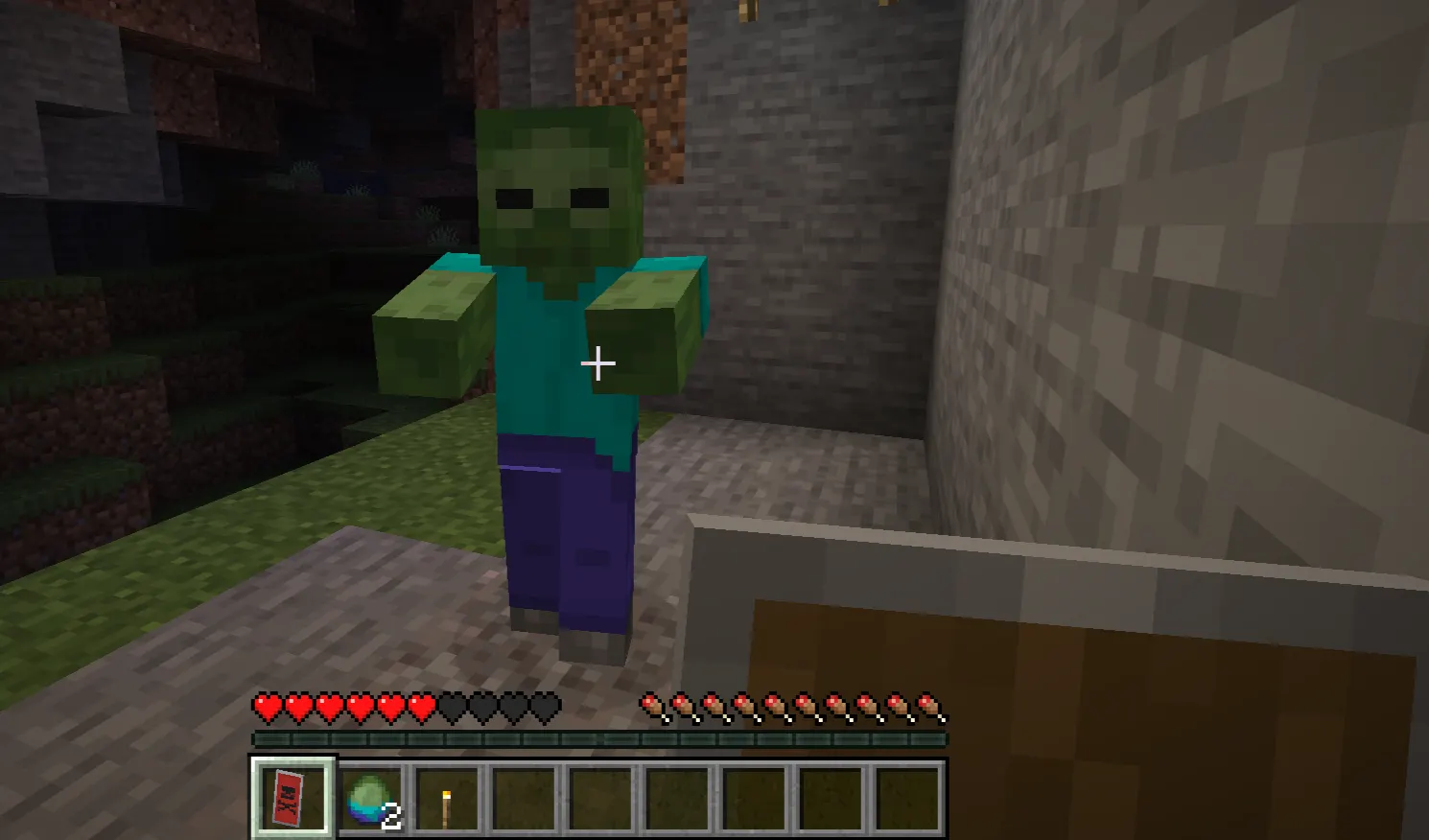
Fighting Skeletons
Skeletons are one of the biggest threats in early-to-mid game Minecraft, especially in caves where multiple can stack together. Raise your shield before they get a shot off, advance slowly while blocking, then switch to melee as you close the gap. You can take zero damage from a skeleton's arrows if you're patient about it.
When fighting multiple skeletons in a narrow cave, the shield essentially turns a dangerous situation into a controlled one. Block the arrows, close distance on one, kill it, repeat.
Fighting Creepers
Creepers are the most universally feared mob, especially for new players. In Hardcore mode, shields can save you from surprise creeper damage, but the timing matters. If a creeper is already blinking (primed to explode), raise your shield and back away quickly. The shield reduces the explosion damage significantly when you're facing it directly, giving you a survivable hit instead of a lethal one.
Don't rely on the shield for charged creepers at close range. Get distance instead.
Nether Survival
The Nether throws a lot of projectile-based threats at you: blaze fireballs, ghast fireballs, and sometimes skeleton arrows. Your shield handles all of these.
The most useful Nether shield tactic is against ghasts. When a ghast fires at you, block the fireball. It bounces off your shield and flies back. If it hits the ghast, that's a one-hit kill. You need timing, but it's satisfying and resource-efficient.
Blazes are more dangerous because they can shoot three rapid fireballs. Block the first, keep blocking the second and third, then counter-attack. Don't try to dodge blaze fireballs when you have a shield, just block them.
Raids
During a village raid, you're dealing with pillagers, vindicators, ravagers, and evokers all at once. Shields become essential.
Pillager crossbows deal solid damage, especially at range. Hold your shield up while approaching pillagers to soak their shots. Vindicators swing axes fast — which leads into one of the most important shield mechanics to understand.
The Axe Disable Mechanic
This is critical for PvP and PvE alike. Axes can disable your shield.
When a player or vindicator hits your raised shield with an axe, the shield is temporarily disabled for 5 seconds in Java Edition (this mechanic doesn't exist the same way in Bedrock). During those 5 seconds, you can't block your exposure.
In PvP, skilled axe fighters deliberately use this to open you up. The counter-strategy is to not hold your shield permanently, lower it, bait the axe swing, then raise it again. This is called "shield surfing" in PvP communities.
Against vindicators in raids, the axe disable is a real problem. Try to deal with vindicators quickly or keep them at range.
Ravager Stun
Ravagers have a special mechanic where they can stun players who are shield-blocking their attacks. If a ravager hits your raised shield, you'll experience a brief knockback and stun effect that drops your guard momentarily. This is intentional game design to make ravagers threatening even to prepared players.
The best way to fight ravagers is to dodge their charges rather than block them, reserving the shield for the pillager crossbows around it.
Advanced Shield Strategies
Pre-raise Your Shield
Don't react, anticipate. Most experienced players raise their shield before entering a dangerous situation rather than after seeing an attack. Walking around a corner in a dungeon? Shield up. Entering a Nether fortress corridor? Shield up. Opening a chest with a mob nearby? Shield up.
The 0.25-second activation delay means reactive blocking often fails. Proactive blocking always works.
Shield + Sword Rhythm (Java PvP)
In Java PvP, the shield-sword rhythm is a skill. You block to absorb an incoming hit, drop the shield to swing (since you can't deal melee damage while blocking), then raise it again. The goal is to never be both exposed and unattacking at the same time.
This rhythm takes practice but becomes muscle memory quickly. It's the core of post-1.9 Java Edition combat.
Carrying a Backup Shield
In survival and especially Hardcore mode, always carry a second shield in your inventory. If your main shield breaks mid-fight, you can hot-swap to the backup without dying. This is especially useful in boss fights, Nether fortresses, and any situation where you're far from your base.
Ancient Cities and the Warden
When exploring Ancient Cities, remember that the Warden's sonic boom attack bypasses shields entirely. This means shields provide zero protection against the game's most dangerous mob. Your strategy there needs to focus entirely on stealth and avoidance rather than blocking. Don't let a false sense of security from your equipped shield get you killed in the Deep Dark.
Best Situations to Use Shields
|
Situation |
Shield Effectiveness |
|
Cave mining |
Excellent — blocks skeleton arrows and zombie hits |
|
Raids |
Excellent — blocks pillager crossbows, vindicator axes (partially) |
|
Nether fortress |
Very good — blocks blaze fireballs, wither skeleton hits |
|
Skeleton dungeon |
Excellent — nullifies all arrow damage |
|
Overworld PvP |
Very good — requires timing against axe users |
|
End fight |
Good — blocks enderman teleport + hit combos |
|
Ancient City |
Limited — Warden's sonic boom ignores shields |
|
Ocean Monument |
Good — blocks the guardian laser's partial damage |
Common Shield Mistakes
Holding the shield constantly in PvP. Experienced players watch for this and immediately swing an axe to disable it. In PvP, pulse your blocking rather than holding permanently.
Ignoring durability. If you're using a shield without Mending and not repairing it, it will break at the worst possible moment. Check your shield durability regularly.
Forgetting about the activation delay. Raising your shield the moment you see an arrow means you're probably already getting hit. Get comfortable pre-blocking.
Not putting the shield in the off-hand. This sounds obvious, but new players sometimes try to hold it in their main hand, which prevents melee attacks. The shield always goes in the off-hand.
Blocking the Warden. Many players who know shields well forget that the Warden ignores them. Always treat the Warden as if you have no shield at all.
Using a shield against status-effect mobs. If you're blocking a stray (the cold variant of skeleton), you block the arrow but still get the Slowness effect. Be aware of what's actually being stopped and what isn't.
Java vs Bedrock Edition Differences
|
Feature |
Java Edition |
Bedrock Edition |
|
Shield equip slot |
Off-hand |
Off-hand |
|
Activation delay |
0.25 seconds (5 ticks) |
Similar, slight differences |
|
Axe disable mechanic |
Yes — 5-second disable |
No axe disabled |
|
Banner customization |
Full support |
Supported, some differences |
|
Crouch to block |
No — dedicated right-click |
Crouch activates shield on mobile |
|
Shield in crafting |
Same recipe |
Same recipe |
|
Mending/Unbreaking |
Yes |
Yes |
The axe disable mechanic is the biggest practical difference. In Bedrock PvP, axes don't strip shields, making shields significantly stronger in that version's combat meta. Java players need to be much more aware of axe threats.