Snowy Tundra Biome in Minecraft: The Definitive Survival and Exploration Guide
Picture this. You're three days into a Survival world, you've got iron armour, a full stack of bread, and a solid plan. Then the world generator quietly drops a Snowy Tundra Biome between you and the mesa you wanted to build in. No trees. No animals. Just a flat white, nothing stretching far enough to make you question every decision that brought you here.
That moment is where most players start panicking and running. It's also where experienced players start thinking.
The Snowy Tundra Biome in Minecraft is not a punishment. It's an environment with its own logic, its own resource loop, and its own reward system. Once you understand how it operates, it goes from a biome you flee to a biome you actively seek out. This guide covers everything from first-night survival to advanced building, mob mechanics, hidden loot, and strategic analysis that most Minecraft guides skip entirely.
What the Snowy Tundra Biome Actually Is
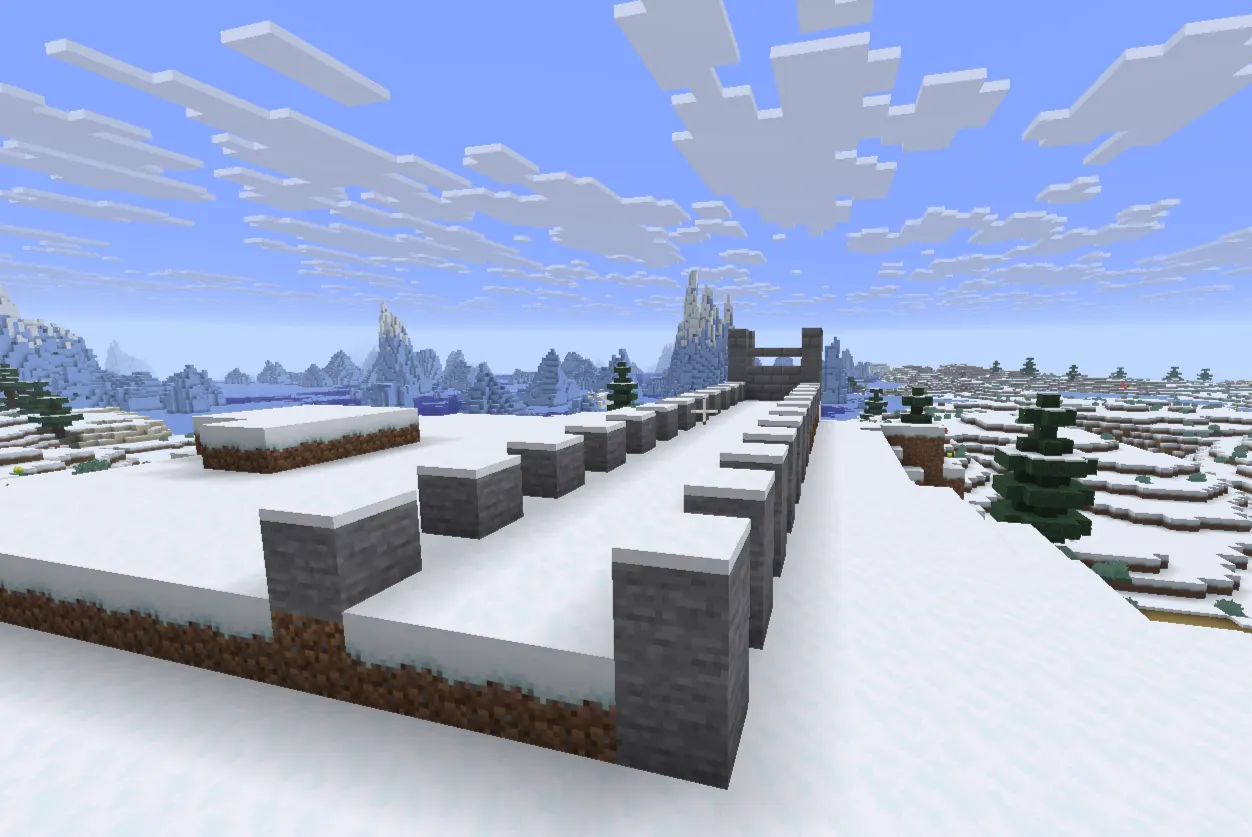
Known as the "Ice Plains" in older Minecraft versions, the Snowy Tundra is a cold, flat, treeless biome with consistent snowfall and surface temperatures that freeze exposed water. It generates across large continuous stretches, often neighbouring Snowy Taigas, Frozen Oceans, and occasionally Ice Spike Biomes at the edges.
The terrain elevation barely changes. You'll find gentle rolls but no significant hills, no cliffs, and almost no natural cover. That flatness is the defining survival challenge. In a forest, trees give you both resources and a visual buffer. In the tundra, you can see mobs from far away, but they can see you just as clearly, and there is nothing between you and them.
Snowfall here is permanent, not weather-dependent. Rain doesn't happen. Snow does, constantly, and it builds up on exposed surfaces. The sky stays a pale grey-blue that,t at certain times of day,y actually looks incredible, especially around dawn, but it also makes depth perception tricky. White ground plus grey sky flattens the visual field in a way that genuinely messes with distance judgement.
Water freezes. Any exposed water source block without a light source nearby converts to ice overnight. This matters more than new players realise, and we'll come back to it in the survival section.
Key Features of the Snowy Tundra
Snow Layers and How They Accumulate
Snow here isn't just a texture. It's a physical block that stacks in layers, from one to eight deep, and it regenerates during snowfall on any opaque surface open to the sky. Slabs, glass, and transparent blocks won't catch snow accumulation, which is a detail you'll want to use when designing outdoor spaces.
Snow layers affect movement very slightly at deeper stacks, and they cover crops visually without killing them, though they do slow growth in certain conditions. Mining snow layers with a shovel gives you snowballs, four of which craft into a snow block. Snow blocks don't melt; they're a renewable building material you can produce indefinitely with a shovel and a few minutes.
Ice, Packed Ice, and Why It Matters
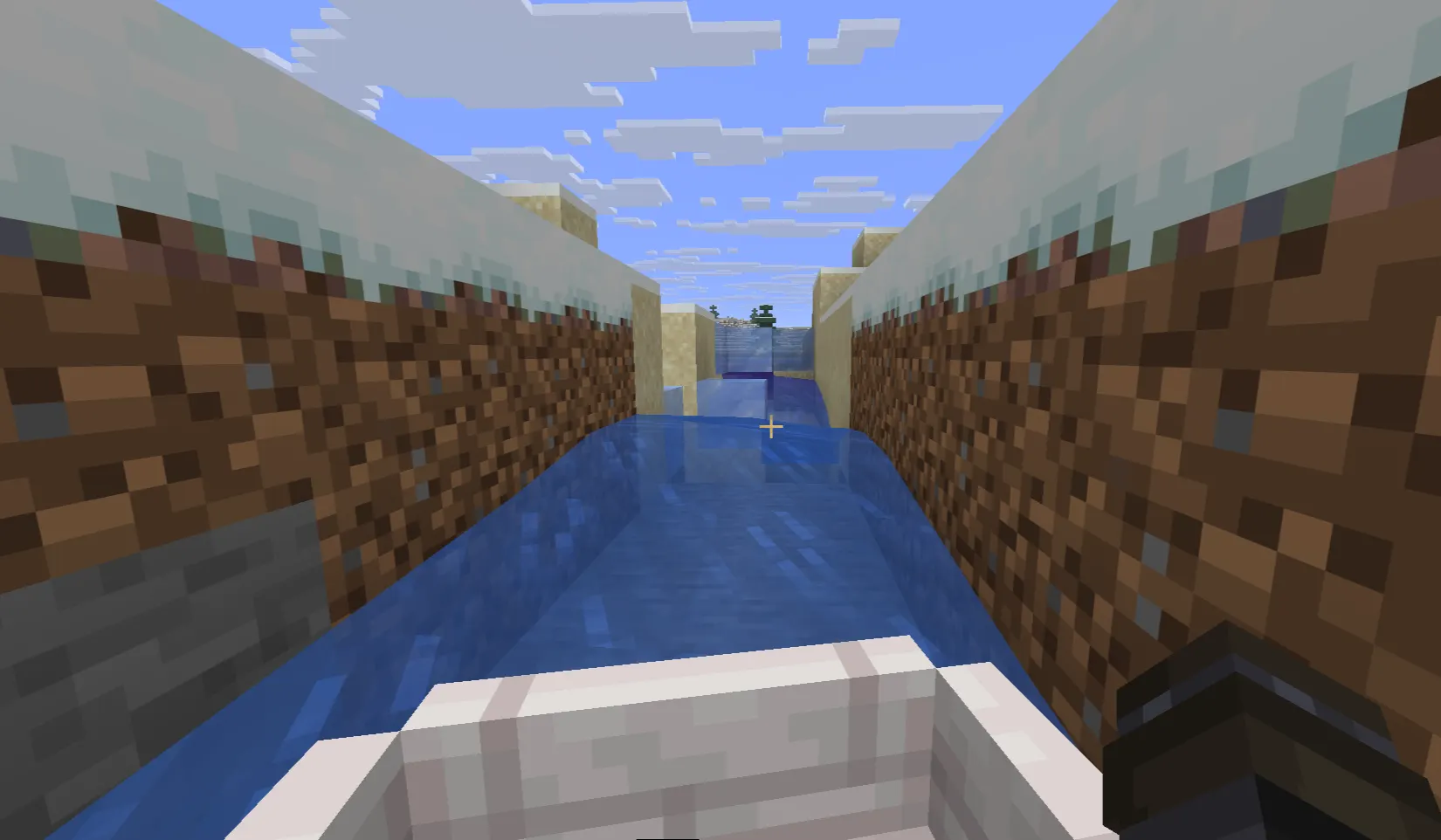
Regular ice spawns across lakes and rivers in the tundra. It's slippery, it melts if a light source gets too close, and it drops nothing when broken without a Silk Touch tool.
Packed Ice is found in nearby Frozen Ocean biomes and Ice Spike variants. It doesn't melt, ever, under any light source. Blue Ice, rarer still, offers the lowest friction surface in the game. Boats on Blue Ice travel at speeds that rival Nether highways without using the Nether. Players who know about Blue Ice use it for inter-biome transportation routes that are faster than almost anything else available in vanilla Minecraft.
Snowy Villages
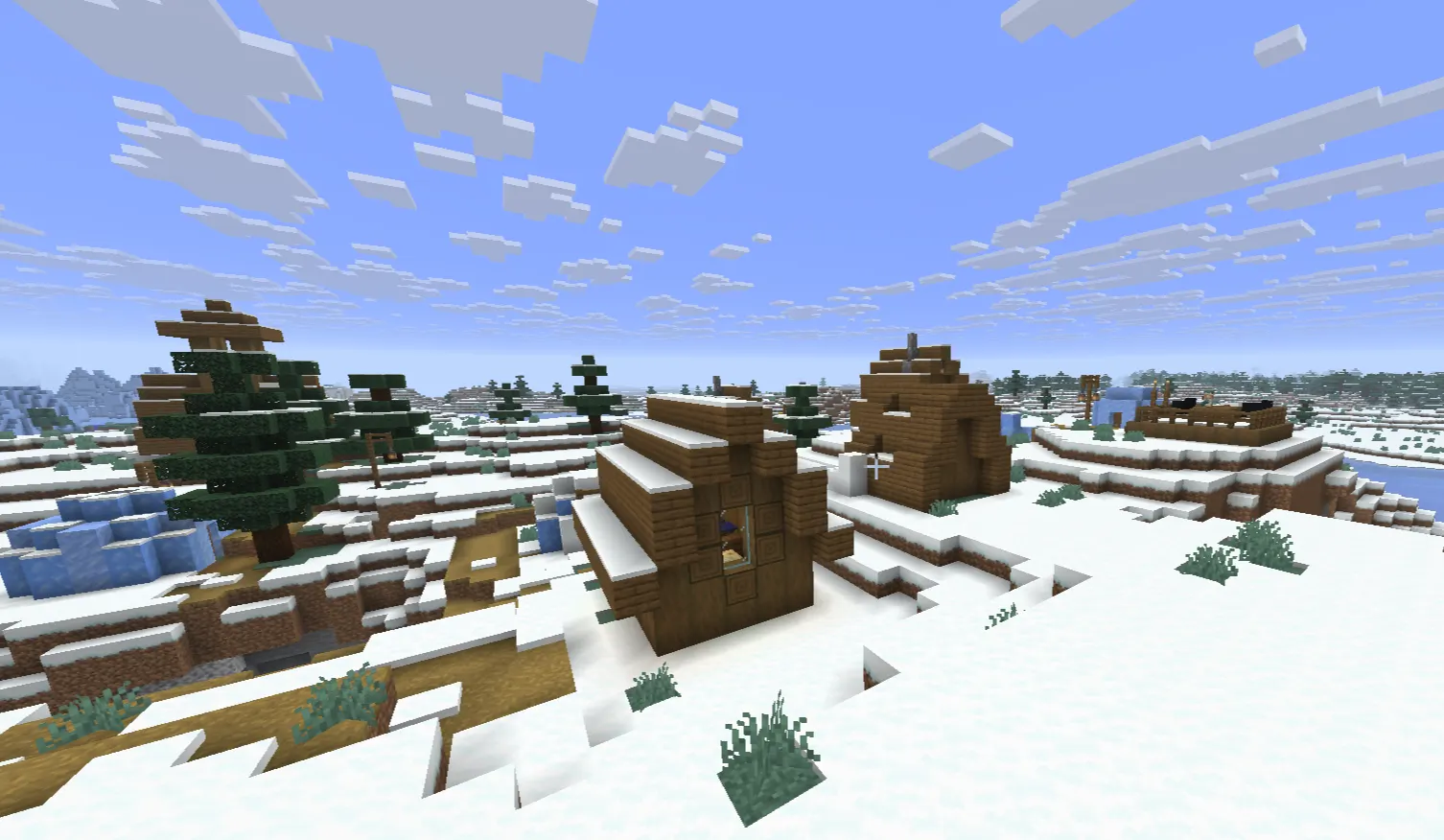
Villages generate in the Snowy Tundra, and they're architecturally distinct. Spruce wood structures, snow rooftops, and villagers in thick blue robes. They're easy to miss during a snowstorm because the colour palette blends into the environment, but they contain beds, workstations, and occasionally a weaponsmith or butcher with useful early-game trades.
The food you find in village chests matters a lot here because the biome itself produces almost nothing edible on the surface.
Igloos and the Basement Most Players Never Find
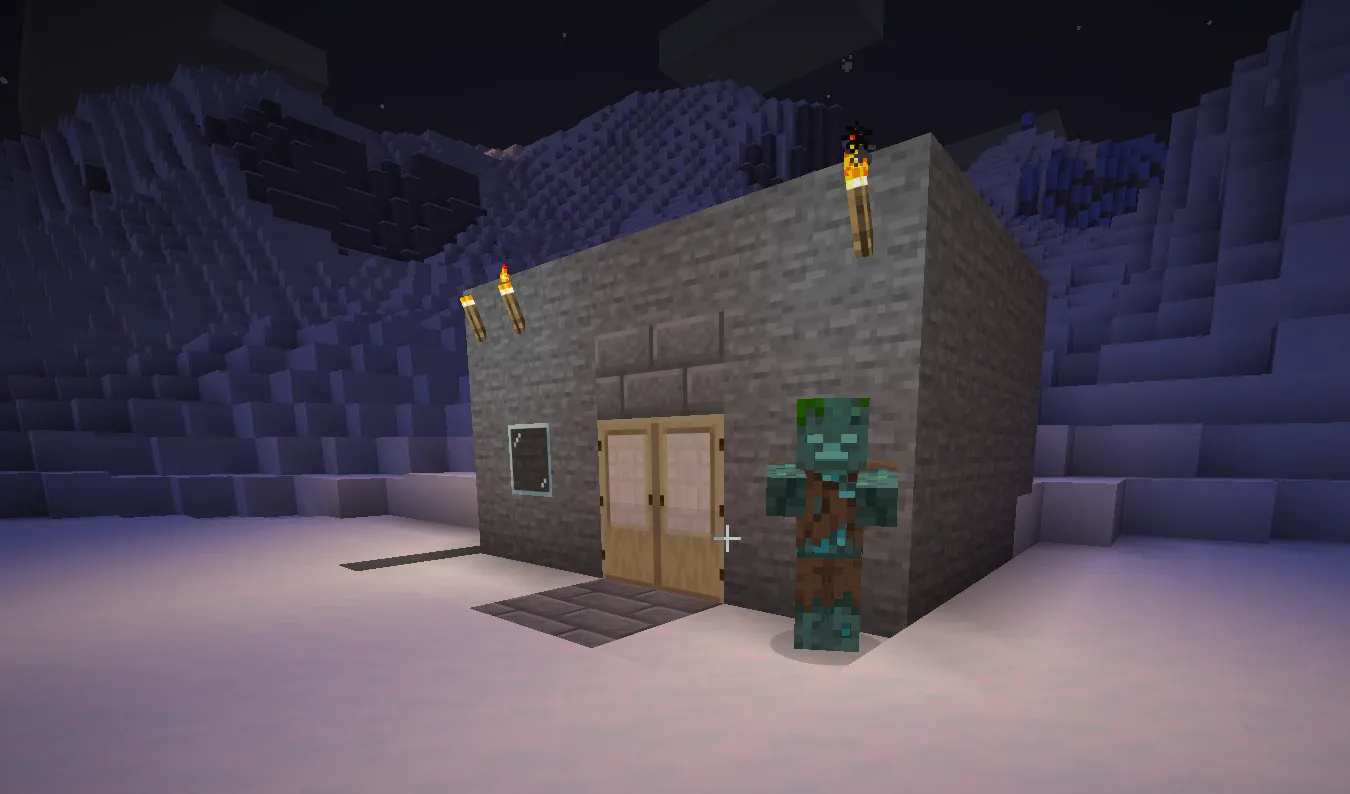
Igloos are small, domed snow structures that appear scattered across the tundra. On the surface, they have a Bed, a Furnace, and a Crafting table. Underwhelming at first glance.
Roughly half of all igloos contain a trapdoor under a carpet tile on the floor. Below that trapdoor is a ladder leading to a hidden stone lab. The lab has a brewing stand, a cauldron, a chest with a golden apple and a Splash Potion of Weakness, and two villagers: one normal, one a zombie villager.
This setup exists specifically for zombie villager curing. Use the weakness potion, feed the golden apple, and the Zombie villager converts back to a normal villager over a couple of minutes. Cured villagers permanently discount their trades. In a biome with limited access to resources, an early cured villager can completely change your resource trajectory.
Cold Biome Mobs and How to Handle Them
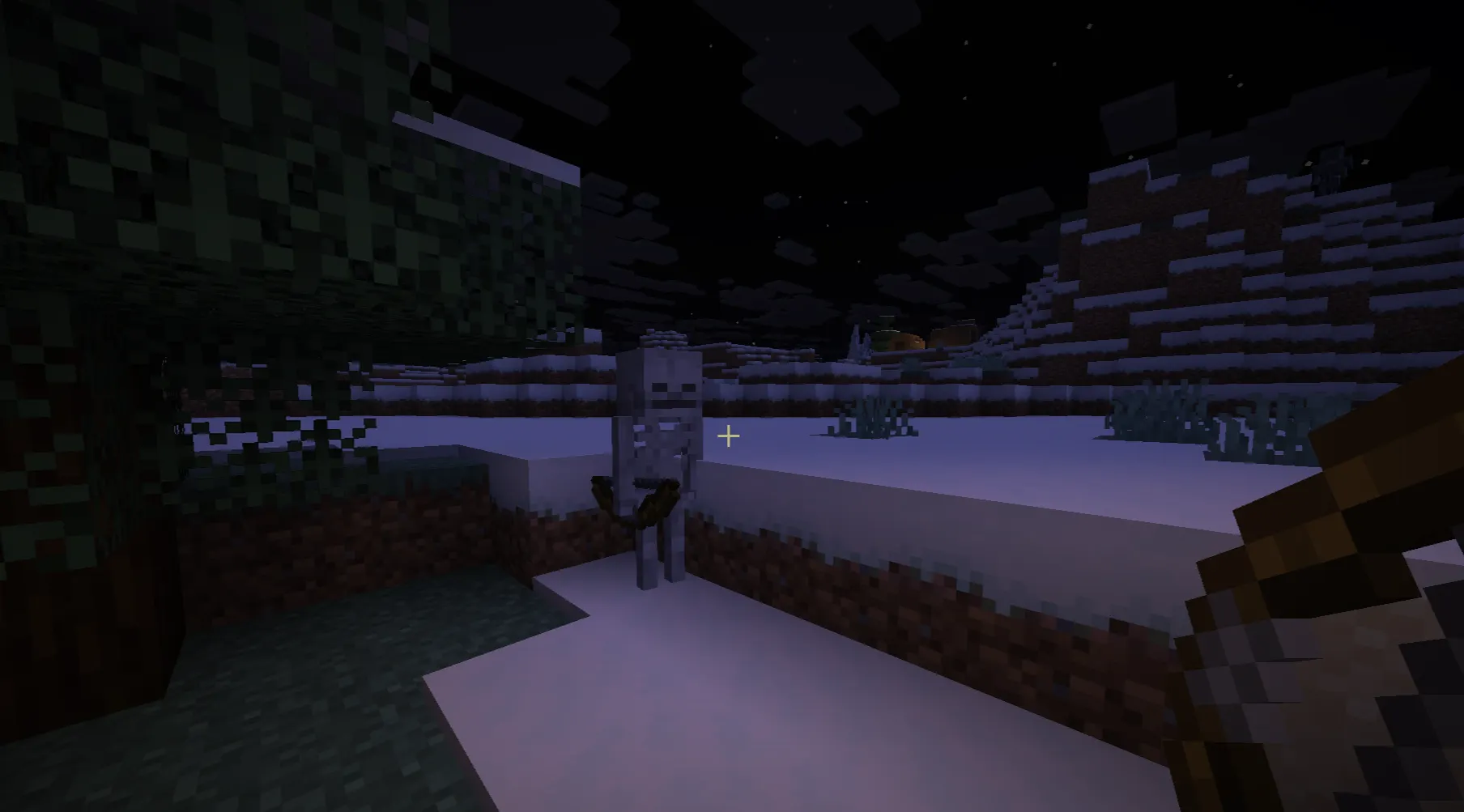
Strays: The Real Danger
Strays are skeleton variants exclusive to Minecraft's snow biomes. They look like skeletons wrapped in torn fabric, and they function almost identically to regular skeletons except for one significant difference: their arrows apply Slowness.
Slowness in an open, coverless biome is more dangerous than it sounds. You slow down, you can't close the gap fast enough to switch to melee, and the stray just keeps shooting. The counterplay is a non-linear movement. Approach at an angle rather than head-on, and sprint. A stray's aim at a zigzagging target degrades noticeably. Get inside melee range fast, and the fight is manageable.
Worth knowing: Strays spawn on the surface and in the uppermost exposed cave layers in cold biomes, but standard skeletons still spawn underground in those same biomes. So your cave mining stays skeleton-normal, but your surface night is stray territory.
Polar Bears: Context-Dependent Aggression
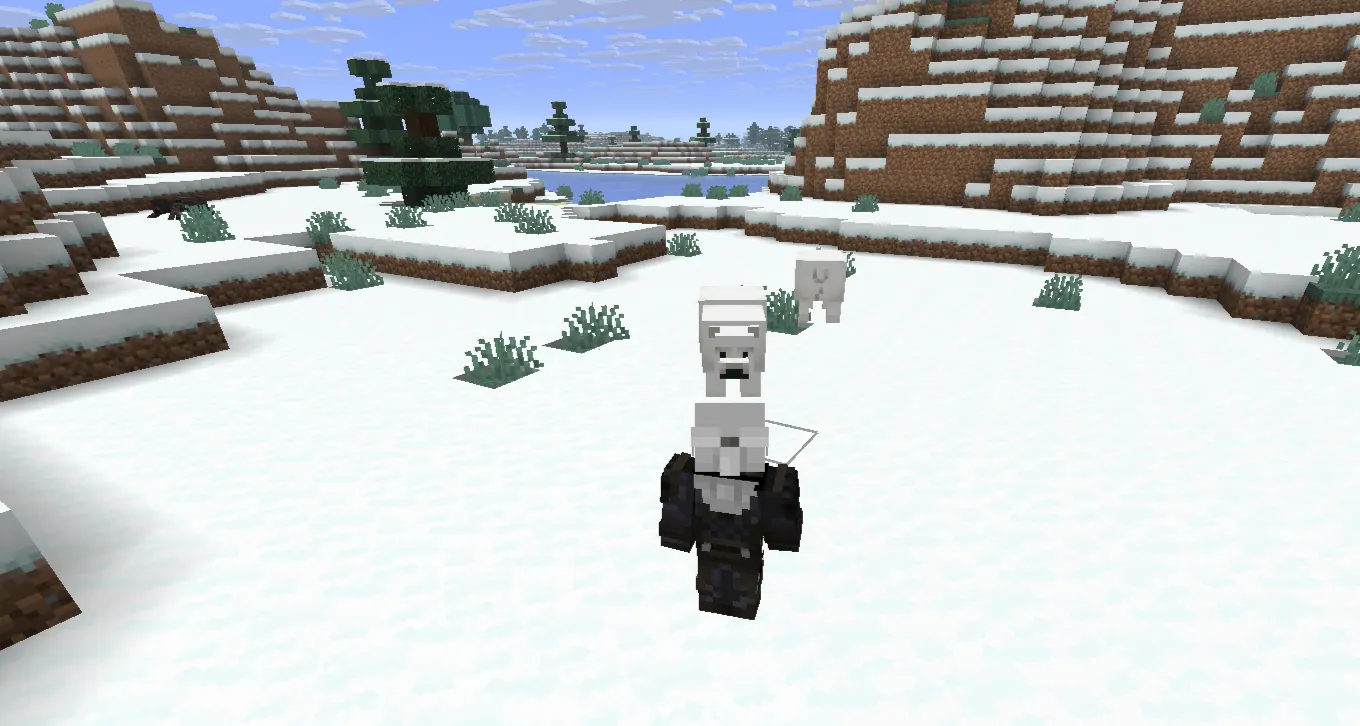
A lone polar bear ignores you completely. An adult near a cub attacks if you get too close, roughly 16 blocks or less. Cubs blend into snow visually, especially in low-light conditions, which makes the "I didn't see the cub" encounter extremely common for newer players.
Polar bears don't stagger easily. They deal solid damage,e and they're not interested in backing off once aggroed. Fighting one in the open without high ground or ice to use as a buffer is harder than it should be for what looks like a passive mob.
They occasionally drop raw fish when killed. Not worth the fight most of the time, but in a food-scarce biome, it's nothing.
Rabbits: Your Most Reliable Early Protein
White-coated rabbits spawn in the Snowy Tundra, and they're the only passive food animal that generates here natively. They're small, fast, and easily spooked. Hunting them with a bow is more food-efficient than chasing on foot. Raw rabbit restores hunger, but cooked rabbit is worth the furnace time for a proper saturation boost when you're trying to stretch your food supply.
Snowy Tundra Survival Strategy Guide
Night One Without a Village
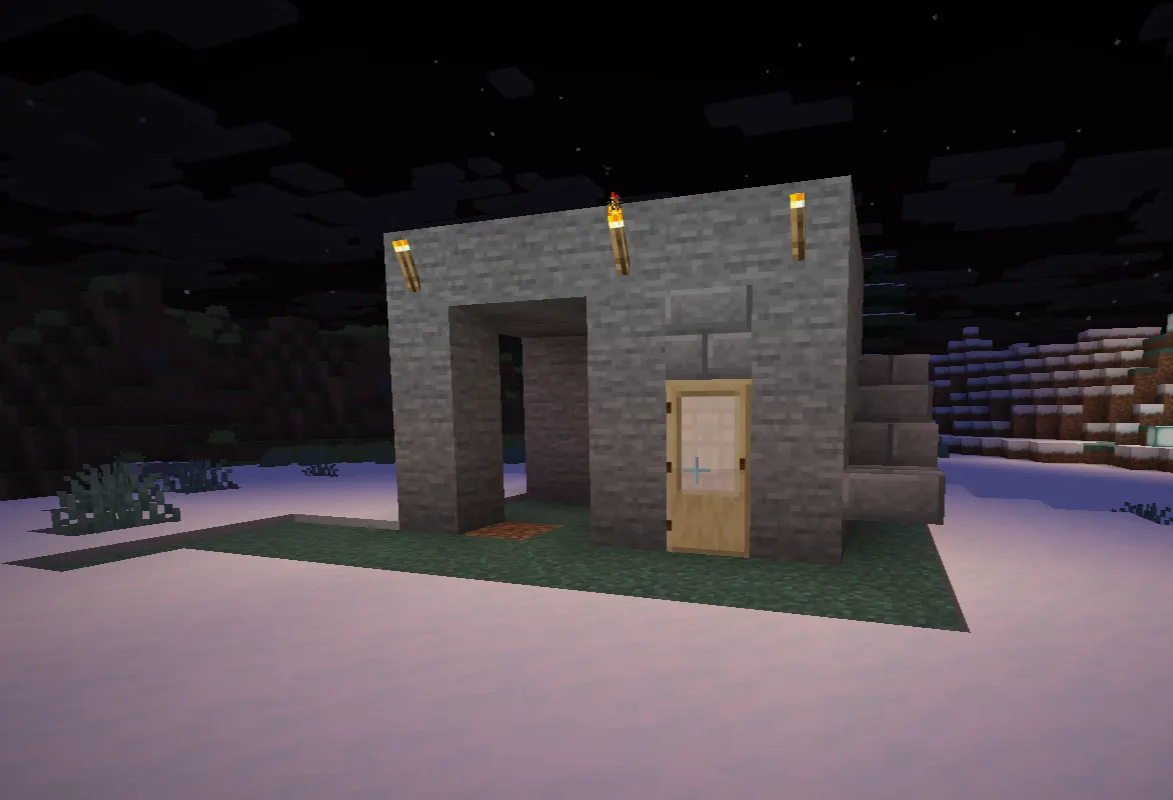
If you spawn without a village nearby, the fastest shelter is a carved snow mound. Gather snow blocks with a shovel (any shovel), build a two-block-high enclosure, cap the top, and place a torch inside. Done in under three minutes. It's ugly and cramped, but it stops Mob spawning inside and gives you a safe night to take inventory.
Do not stand outside to fight mobs on your First night in the tundra. The open terrain means you can draw multiple strays at once, and there's no natural cover to break the line of sight.
The Food Problem and How to Solve It
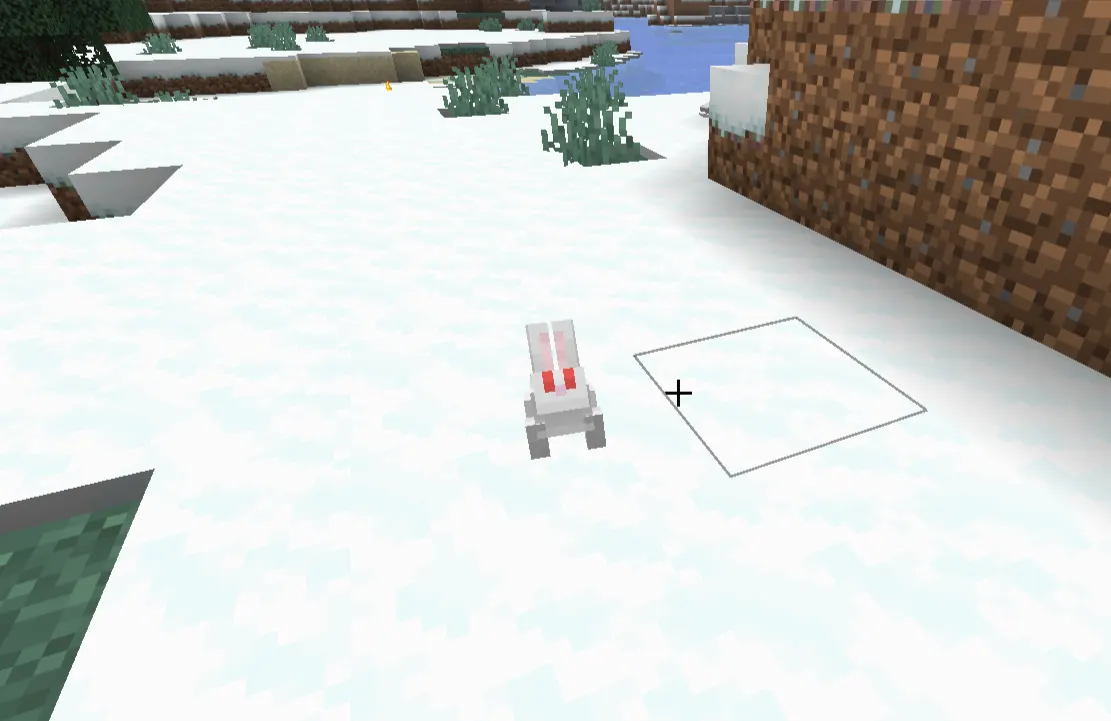
Cows, pigs, and sheep don't spawn in the base Snowy Tundra. That's the hard part. Your early protein comes from rabbits and fish, which means a bow or a fishing rod matters more here than in most biomes.
If you find a village, prioritise it over everything else. Hay bales in villages break into wheat, carrots and potatoes appear in farm plots, and bread from wheat is the most food-per-stack efficient early crop. Get a hoe, grab seeds from the village, and build an indoor farm as soon as you have a permanent shelter.
Keep your water source indoors with torches nearby to prevent freezing. A single bucket of water placed in a lit room will stay liquid indefinitely and can irrigate up to a 4-by-4 patch of farmland.
Combat Against Strays: Specific Tactics
Strays at range are a priority target over regular skeletons because of the slowness arrows. If you're carrying a shield, learn the timing of their arrow releases and block accordingly. If you're going in without a shield, always approach at an angle and never stop moving during the approach.
On ice surfaces, your movement changes, but a stray's arrow tracking still functions normally. Fighting on ice is, therefore, a disadvantage for you unless you've practised ice movement and can use it for quick lateral dodges.
Hidden Mechanics Most Guides Don't Cover
Water source freezing at the block level. It's not about the air temperature in the biome globally. It's about whether the specific water block has sky access and insufficient nearby light. A torch placed one block above or beside a water source keeps it liquid indefinitely. Lanterns work even better because their light radius is larger.
Snow golems are permanent here. Craft a snow golem (two snow blocks stacked, pumpkin on top) in the snowy tundra, and it won't melt. In warm biomes, snow golems die from heat. In cold biomes, they survive indefinitely and leave a snow trail behind them as they walk. They can't deal meaningful damage to most mobs, but they do distract them, and the snow trail they leave can be harvested for snowballs passively.
Ice block lighting difference. Regular ice has a slight transparency that allows some light to pass through. Packed ice does not. Building a floor of regular ice and placing torches beneath it creates a naturally lit room that looks clean from above, a building trick that works well in tundra construction.
Stray conversion from skeletons. In snowy biomes, Skeletons that spawn during thunderstorms outdoors and have been in the snow long enough can convert into strays. This is different from direct stray spawning and happens rarely, but it explains why you might encounter a stray further from the tundra than expected if you've been in a long storm.
Loot and Exploration Targets
The igloo basement is the headline find. Golden apple plus Weakness Potion plus zombie villager equals a permanently discounted trading partner. If you find an igloo with a basement early in a run, consider building your base nearby specifically to use that cured villager.
Snowy villages offer more than food. Toolsmiths and armourers can appear with useful early and mid-game trades. The blast furnace in a tundra blacksmith processes ores at double speed, which matters when iron is your main resource.
If you're near a Frozen Ocean border, buried treasure chests appear in the beach sand of those adjacent shores. They carry a Heart of the Sea (needed for conduits), some iron and gold, food, and occasionally an enchanted item. Treasure maps from shipwrecks in Frozen Ocean waters point to these chests.
Best Building Ideas for the Snowy Tundra
Underground Compounds. Dig down three to four blocks, build outward horizontally, and cap the surface with a flat roof flush with the terrain. From the outside, your base is invisible. From the inside, you have as much space as you're willing to excavate. Add a single marker on the surface, a coloured block or a lantern post, so you can find your entrance after long mining sessions.
Ice Castles Using Packed Ice and Blue Ice. These materials don't melt under torches and lanterns, which solves the lighting problem of building with regular ice. A packed ice exterior with a stone or dark oak interior keeps the aesthetic clean and the build structurally logical.
Snow Fort Grid System. Build a network of connected snow-block rooms on the surface with covered walkways between them. Efficient, renewable, and expandable without any external resource requirement. It also blends into the biome visually, which has a camouflage benefit against other players in multiplayer.
Pro Tips From Players Who Actually Live Here
If you want to prevent snow layers from building up on your outdoor paths, place slabs instead of full blocks. Snow won't accumulate on slabs. Your walkways stay clear without you shovelling them every morning.
Bring a Silk Touch tool specifically for ice collection. Regular ice drops nothing without Silk Touch. With it, every frozen lake is a quarry for a fast transportation system using boats and ice lanes.
Use a compass if you're exploring without coordinates. It points to your spawn point, which isn't your base necessarily, but gives you a consistent reference direction so you don't loop back on yourself across identical-looking terrain.
Trade with a fletcher villager for arrows. In stray-heavy territory, running out of arrows hurts. Fletchers sell arrows cheaply,y and trade sticks for emeralds, and sticks come from wood planks, which you're already gathering.
Build your Nether portal indoors. Not for any mechanical reason. Just so you don't lose it under a snowfall accumulation during a long session.
Closing Thoughts
The Snowy Tundra Biome in Minecraft asks you to change how you think about resources. You're not going to punch a tree and have dinner. You're going to problem-solve, look for the village, find the igloo, build underground, manage your water, and deal with an enemy whose arrows slow you down in the worst possible environment for being slowed down.
That friction is the point. Minecraft biomes aren't just scenery. There are problems to solve, and the snowy tundra has solutions that almost no other biome offers: a permanently discounted trader in a basement, a permanent snow golem army, a flat canvas for building anything you can imagine, and a quiet, hostile beauty that most players never stick around long enough to appreciate.
The ones who do tend to never want to leave.