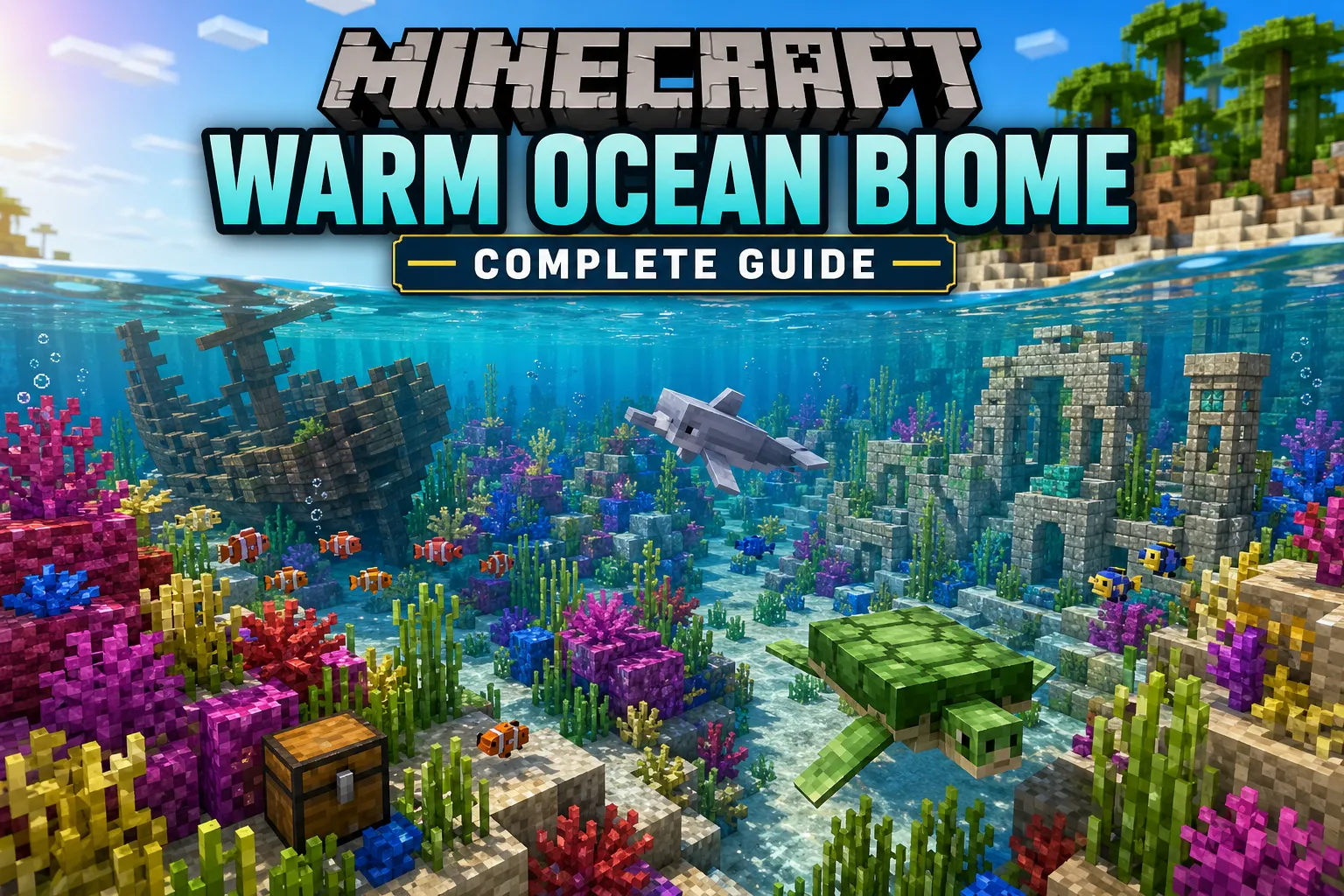
Warm Ocean Biome in Minecraft: The Complete Survival & Exploration Guide
Quick Answer:
The Warm Ocean Biome in Minecraft is a shallow, vibrant ocean biome filled with coral reefs, tropical fish, dolphins, and sea turtles. It spawns in tropical areas near deserts and jungles, offers rich underwater loot, and is one of the Best biomes for underwater base building.
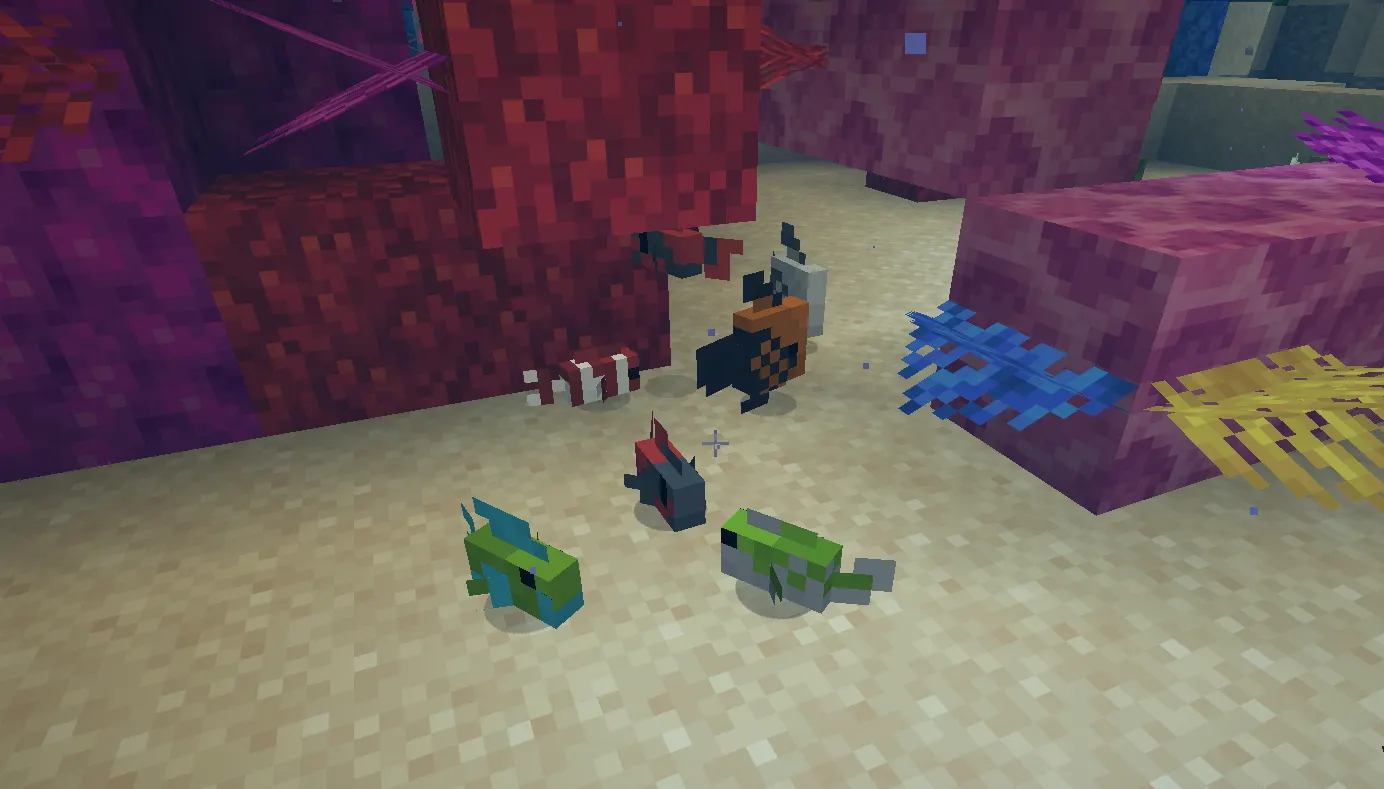
You spawn in a jungle. Walk south for two minutes. Then the ground drops away, the water turns a rich, almost turquoise blue, and suddenly you're floating above a reef that looks like it was stolen from a nature documentary. Coral fans wave in the current. A dolphin cuts through the water ahead of you. A school of clownfish scatters when you swim too close.
That's the Warm Ocean Biome in Minecraft, and most players fly over it on their elytra without ever stopping.
That's a mistake. There's a shipwreck buried in the sand 20 blocks below you. There's a drowned lurking behind that coral block. And if you know what you're doing, this biome is one of the best places in the game to set up a permanent underwater base.
This guide covers everything, from mobs, coral mechanics, survival strategy, loot, and building ideas that go way beyond "put glass around everything."
What Is the Warm Ocean Biome?
The Warm Ocean is one of five ocean biome variants in Minecraft, and the only one that generates coral reefs naturally. It's a shallow biome, usually 15 to 25 blocks deep, which makes it different from the Lukewarm, Cold, Frozen, and Deep Ocean variants that can drop to 60 blocks or more.
In terms of world generation, Warm Oceans appear near hot, dry biomes. If you're next to a desert or a Badlands, there's a solid chance the ocean on the other side is a Warm Ocean. They also generate near jungles and the Savanna biome. If you find a Lukewarm Ocean and keep swimming, you'll often hit Warm Ocean territory before long.
The biome has a temperature rating of 0.5, which matters for a couple of reasons: ice doesn't form here, and the seagrass grows more densely than in colder ocean variants. The water itself has a noticeably different color, a brighter, cleaner blue compared to the grey-green tones of cold ocean biomes.
Unique Features of the Warm Ocean Biome
Water Color and Visibility
The water in a Warm Ocean has better visual clarity than colder biomes, which matters more than people realize during gameplay. You can spot shipwrecks and ocean ruins from further away. You'll also notice the seafloor more easily, which helps when you're scouting for drowned spawns or trying to find buried treasure.
On Java Edition, the exact water color varies slightly based on biome tinting. On Bedrock, it's a consistent bright blue. Either way, it's the most visually appealing of all the ocean biomes.
Coral Reefs
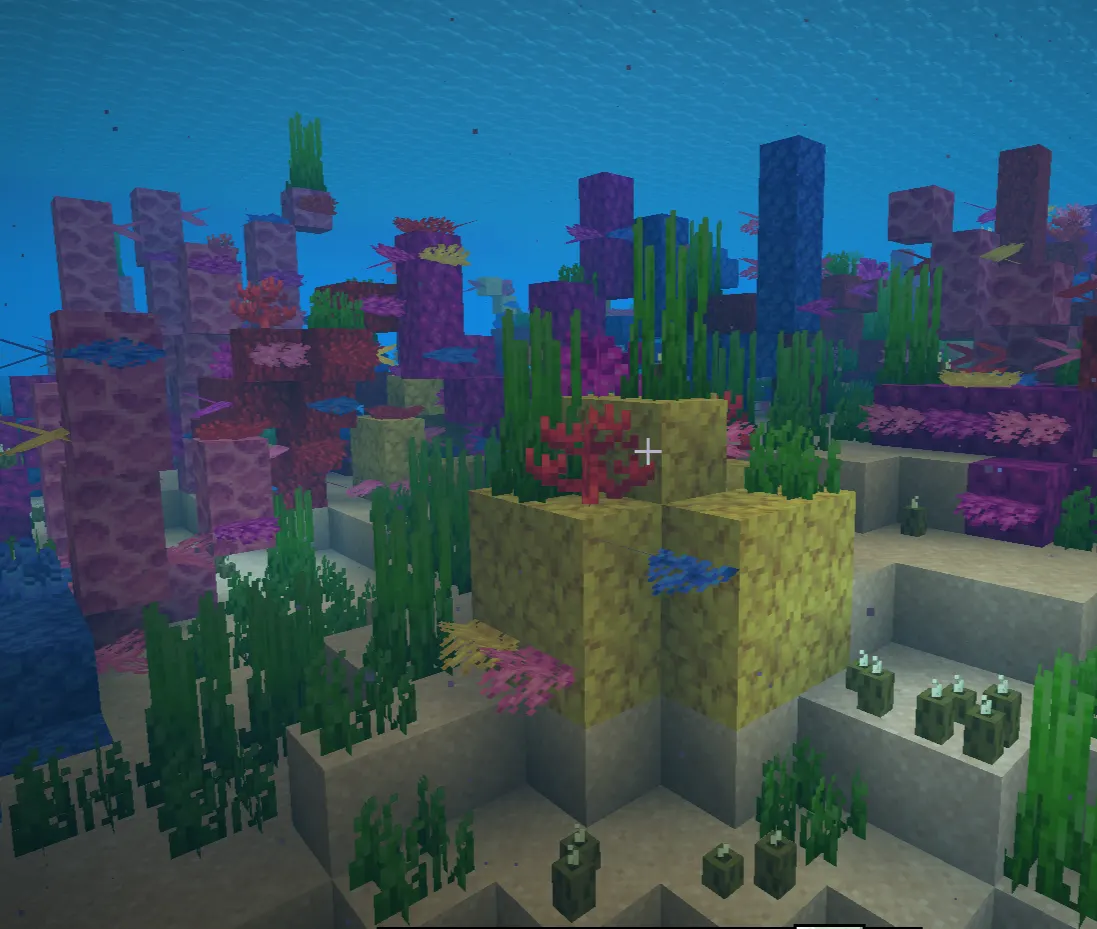
This is the main event. Coral reefs only generate in Warm Oceans; you won't find them anywhere else. They're made of six types of coral blocks, six types of coral fans, and the corresponding dead versions of each.
The six coral types are: tube coral (blue), brain coral (pink), bubble coral (purple), fire coral (red), and horn coral (yellow). Each comes in block form, fan form, and wall fan form.
Reefs generate in dense clusters and can stretch for dozens of blocks. They're visually stunning and genuinely useful. More on the mechanics in the coral section below.
Sea Grass and Kelp
Warm Oceans generate seagrass but not kelp. This is worth knowing because kelp is a useful food source and fuel, so if you want kelp, you'll need to swim to a Lukewarm or Cold Ocean nearby. Sea grass itself isn't particularly useful, but it's a sign you're in the right biome.
Shallow Depth
The shallowness is one of the best things about Warm Oceans for survival purposes. You're never far from the surface when you need air. Compared to Deep Ocean biomes, where drowning is a real danger even for experienced players, the Warm Ocean is forgiving.
Mobs in the Warm Ocean Biome
Passive Mobs
Tropical Fish are the signature mob of this biome. They spawn in schools, come in 2,700+ color and pattern combinations (seriously, this is not an exaggeration), and can be caught with a water bucket. They're a food source, though a weak one; raw tropical fish restores only one hunger point. They're more useful as decorative aquarium fish or as food for axolotls.
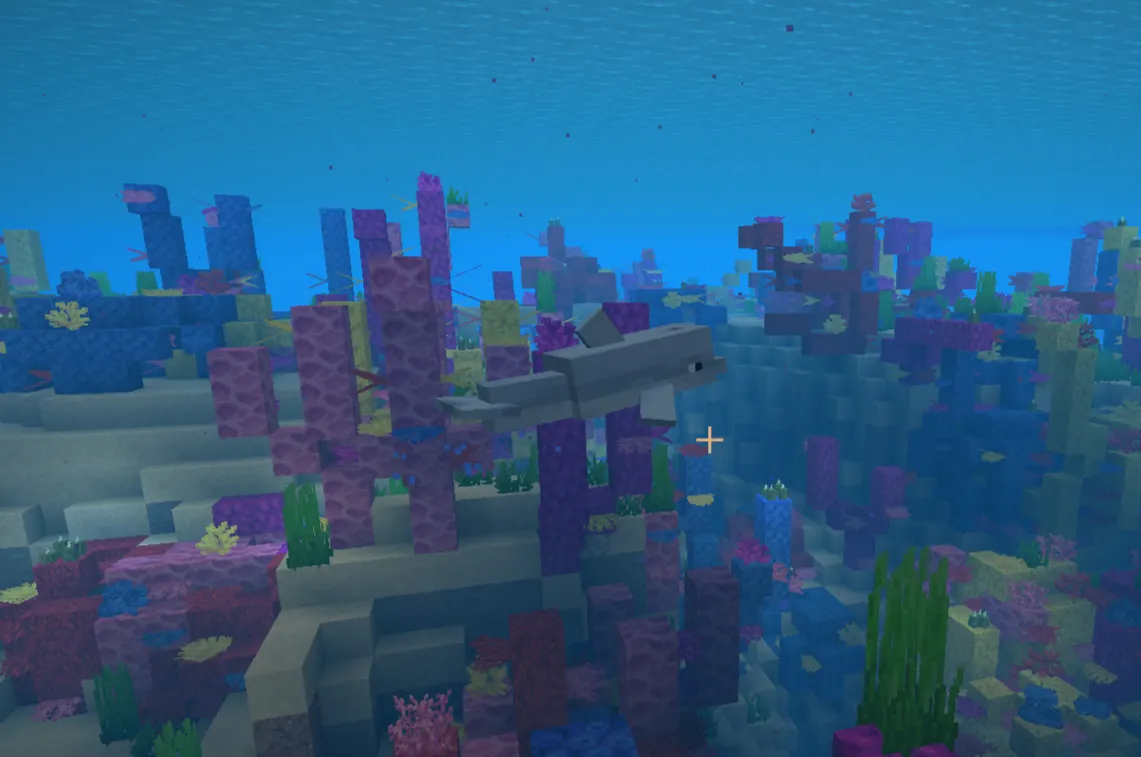
Dolphins are the most useful mob in this biome by a wide margin. They swim fast, they're neutral (won't attack unless provoked), and they have a mechanic most players don't fully use: if you feed a dolphin a raw cod or salmon, it will lead you toward the nearest underwater structure, shipwreck, buried treasure, or ocean ruins. That's not a rumor. That's in the game.
Sea Turtles spawn on the sandy beaches bordering the biome. They don't interact with the ocean much, but killing baby turtles drops Scute, which you need to craft a Turtle Shell helm, essential for underwater survival.
Pufferfish also spawn here and are worth knowing about because they're passive until approached. Get too close, and they inflate, inflicting Poison III and Nausea. Leave them alone. They're useful for Potions of Water Breathing if you can catch them with a bucket.
Squid and Glow Squid both spawn in Warm Oceans. Glow Squid drop Glow Ink Sacs, which are genuinely useful for Crafting, Glow Item Frames, and Glow Signs, handy for base building underwater, where lighting is tricky.
Hostile Mobs
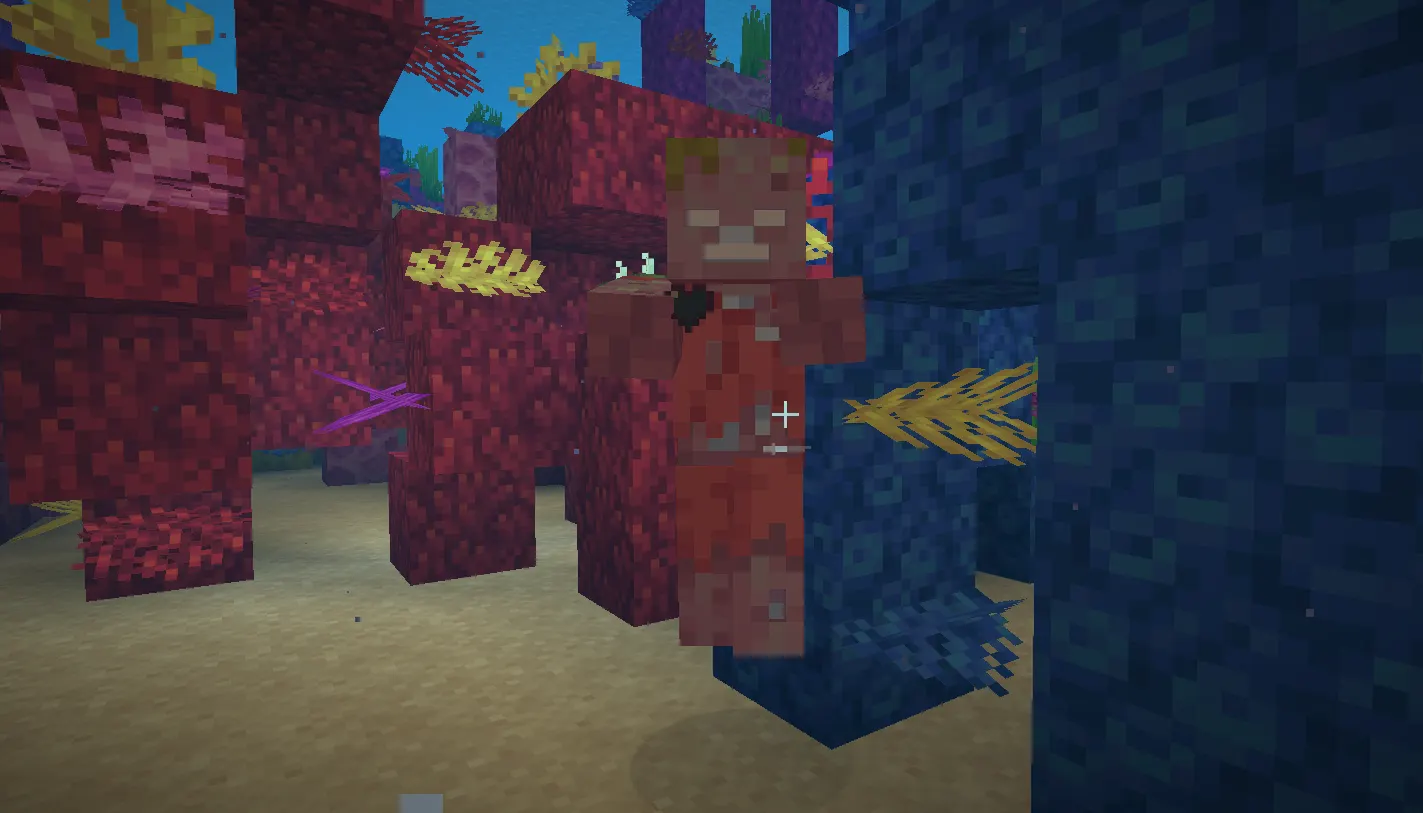
Drowned are the main threat here. They spawn in the water at night (and in unlit areas during the day), and they hit hard. Some of them carry Tridents, which are both a threat and an opportunity, since Tridents are rare drops. Drowned with Tridents can throw them at range, so fighting them in open water is risky. Corner them near the seafloor or use a shield.
One thing players get wrong: Drowned that spawn with Tridents have roughly an 8.5% chance to drop it on Java, and 25% on Bedrock. Not common, but worth farming if you need one.
Coral & Blocks Guide
How Coral Actually Works
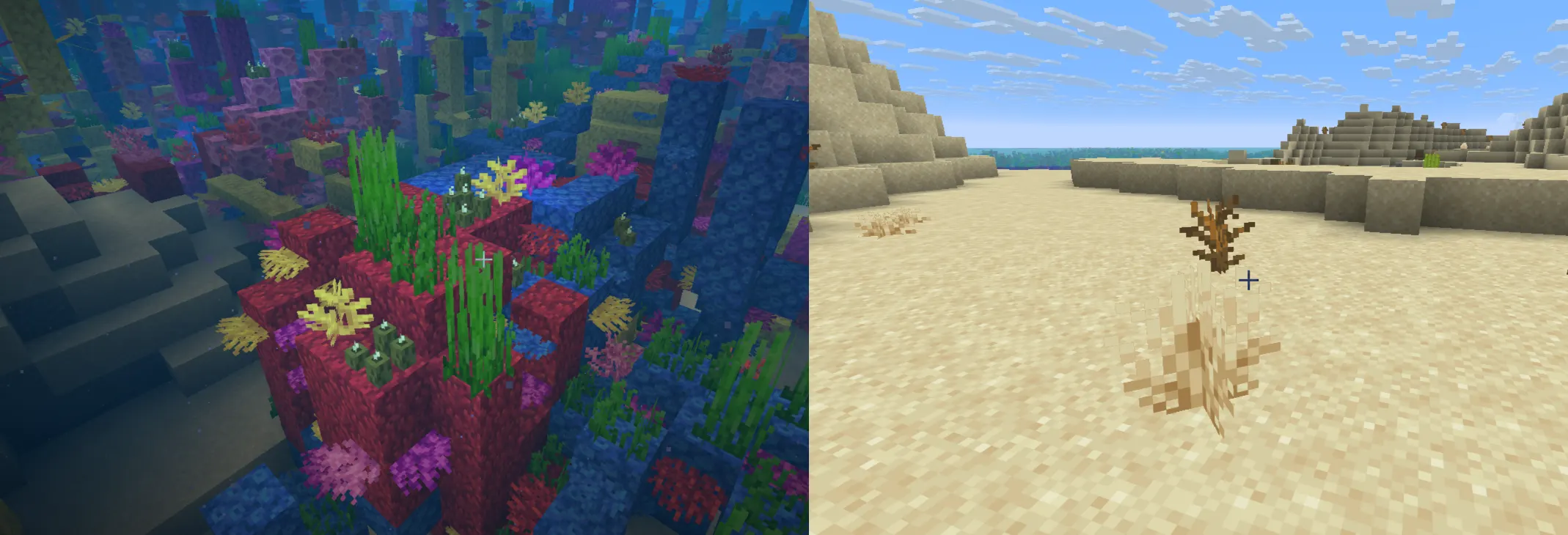
Coral blocks in Minecraft have one critical mechanic that most players learn the hard way: coral dies when placed out of water.
If a coral block, coral fan, or coral wall fan is not directly adjacent to water (including waterlogged blocks), it turns into its dead variant within a few seconds. Dead coral is grey, provides no texture variety, and is permanent; you can't revive dead coral.
This applies to every placement situation: building, farming, decorating. Always waterlog the adjacent blocks or ensure the oral is fully submerged before placing it.
Getting Coral The Right Way
You cannot break coral with a regular pickaxe and keep it alive. You need Silk Touch. With Silk Touch, you can mine coral blocks and carry them in your inventory indefinitely without them dying. They only check for water when placed, not while in your hand.
Without Silk Touch, coral crumbles into nothing. Not even a dead variant just gone.
For cCoralfans, the same rule applies. Use Silk Touch, or they disappear on harvest.
Coral as a Building Material
Dead coral is actually a useful building block, and it's free once the living coral dies. It has a worn, textured look that works well for ruins-themed builds, ocean floor decoration, and structures that need visual interest without being too colorful.
Live coral, by contrast, is one of the most vibrant building materials in the game. It's genuinely difficult to make an ugly structure if you're mixing coral types intelligently.
Survival Guide: Staying Alive Underwater
Managing Oxygen
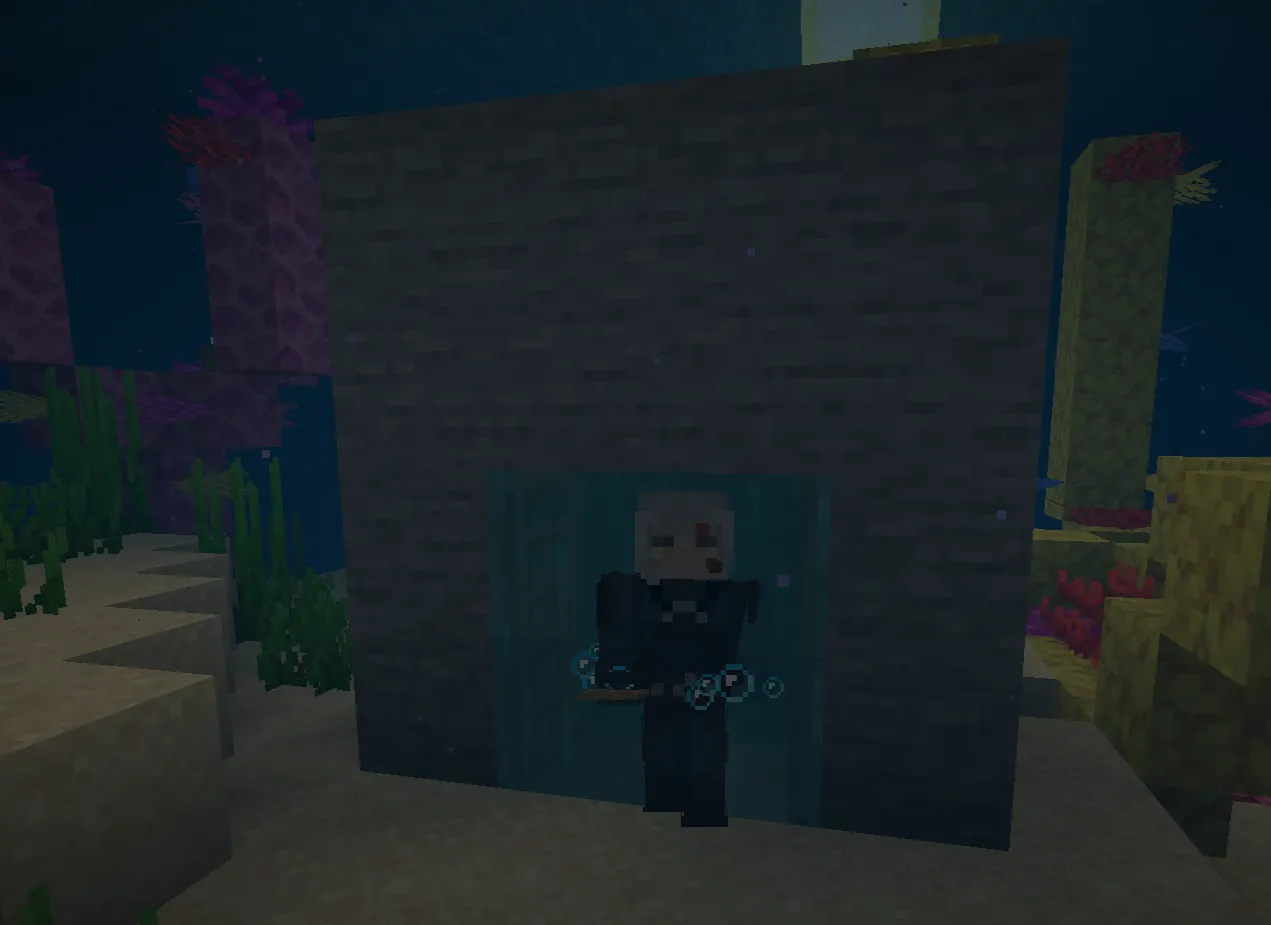
Oxygen is the central challenge of underwater survival in Minecraft. Your air meter depletes in about 15 seconds without any gear, and once it hits zero, you take damage every second. Here's how to manage it properly:
Short-term solutions:
-
Place a door on the seafloor. Doors create an air pocket when placed on the ocean floor. Step inside the door hitbox, and your air bar refills. Old trick, still works.
-
Place any non-full block (like a stair or slab) and waterlog it, then stand inside the block. This also creates an air pocket in some cases.
-
Sea Lanterns or any solid block placed to create a 1x1 air gap works too.
Proper long-term solutions:
-
Turtle Shell Helmet: Gives Water Breathing for 10 extra seconds each time you resurface. Not infinite breathing, but enough of a buffer to be consistently useful. Requires 5 Scutes, which means killing baby turtles or just waiting and letting turtles hatch naturally.
-
Potion of Water Breathing (3:00 or 8:00): Made from a Pufferfish and a Water Bottle, extended with Redstone. An eight-minute duration is enough for a full exploration run of a shipwreck or ocean monument.
-
Respiration III Helmet: A helmet enchantment that extends breath-hold time significantly up to 45 seconds at level III. Stack it with Aqua Affinity for faster mining speed underwater.
-
Conduit Power: If you're setting up a base, this is the permanent solution. A Conduit gives permanent Water Breathing (and night vision) in a large radius, requires 42 Prismarine blocks to activate fully, and lets you breathe indefinitely. This is what a proper underwater base runs on.
Food Sources in the Warm Ocean
The warm ocean is not a great place to find food, honestly. Options:
-
Cod and Salmon don't spawn in Warm Oceans; those are Cold and Lukewarm biome fish. You'll need to fish manually or bring food from land.
-
Tropical fish can be eaten, but barely restore hunger. Don't rely on them.
-
Fishing with a rod still works here and can pull up regular fish, even in a Warm Ocean. Luck of the Sea enchantment improves loot table pulls.
-
Kelp farming doesn't apply here since kelp doesn't grow in Warm Oceans.
Practical advice: bring a large supply of bread, cooked meat, or golden carrots before going on a long underwater exploration run. Don't rely on the biome to feed you.
Combat Underwater
Fighting underwater applies a significant movement penalty and reduces melee swing speed unless you have the Depth Strider boot enchantment. At level III, you move through water at near-normal walking speed.
For weapons, axes technically do more damage per hit but have a slower attack rate. Swords with Sharpness are the better choice for rapid Drowned encounters. Smite on a sword is particularly useful in ocean biomes since Drowned are undead mobs. Smite V deals about 20.5 damage per hit, which kills most Drowned in two hits.
Crossbows and bows don't work in water. Tridents do, and with the Riptide enchantment, a Trident lets you rocket through the water at high speed. It's one of the most underused travel methods in the game.
Exploration & Loot in the Warm Ocean Biome
Shipwrecks
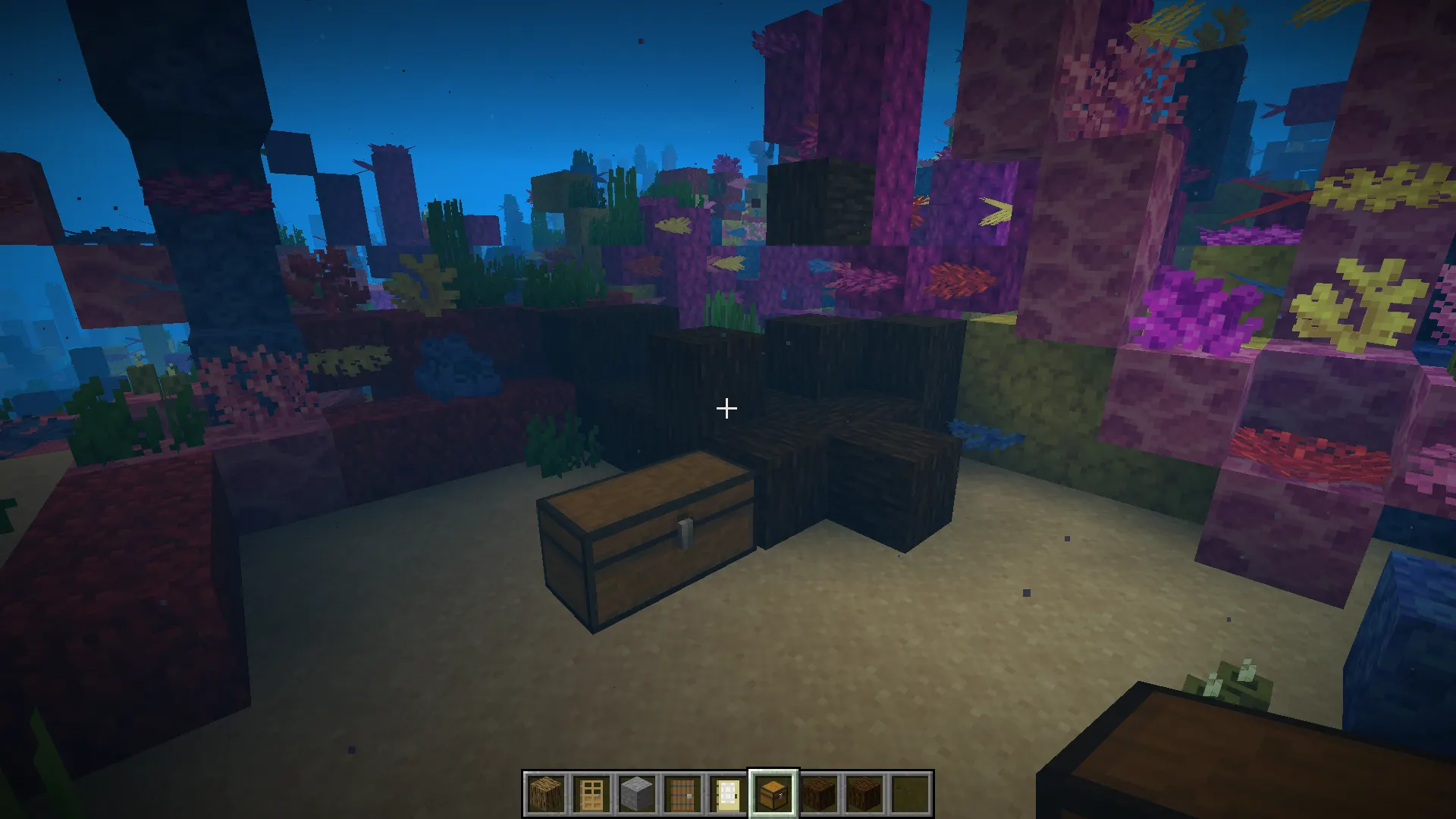
Shipwrecks generate in all ocean biomes, including Warm Oceans. They appear whole, partially buried, or completely upside-down. Each shipwreck contains up to three chests based on its size:
-
Supply Chest: Food, TNT, Torches, leather armor, potion ingredients.
-
Map Chest: A Buried Treasure Map (this is the critical one). Always grab this.
-
Treasure Chest: Gold ingots, emeralds, iron, possibly diamonds, and potentially a Heart of the Sea.
The Heart of the Sea is the ingredient for a Conduit. You need Buried Treasure Maps to find them. And the easiest way to find a shipwreck to start that chain? Feed a dolphin.
Ocean Ruins
Ocean ruins are stone structures that generate on the seafloor. In Warm Oceans, they're made of sandstone rather than the stone bricks found in colder variants. They come in small and large variants, and the large ones can have multiple connected structures.
Each ruin has a Suspicious Sand block that contains artifacts when brushed with a Brush part of the archaeology mechanic added in 1.20. Items include pottery shards, emeralds, iron tools, and wheat.
Suspicious Sand is easy to miss because it looks nearly identical to regular sand. The visual difference is subtle, with a slightly different texture. Worth checking every sand block in a ruin cluster.
Ruins also contain a buried chest nearby, not always inside the structure itself. Drowned spawn inside and around ruins, so clear them before you start looting.
Buried Treasure
Buried Treasure always generates on beaches near Warm Oceans and always contains a Heart of the Sea, plus gold, iron, diamonds, and occasionally a Potion of Water Breathing. The X marks on a Buried Treasure Map are exactly where the chest is; dig straight down on the X, usually 3-5 blocks deep.
Building Ideas in the Warm Ocean Biome
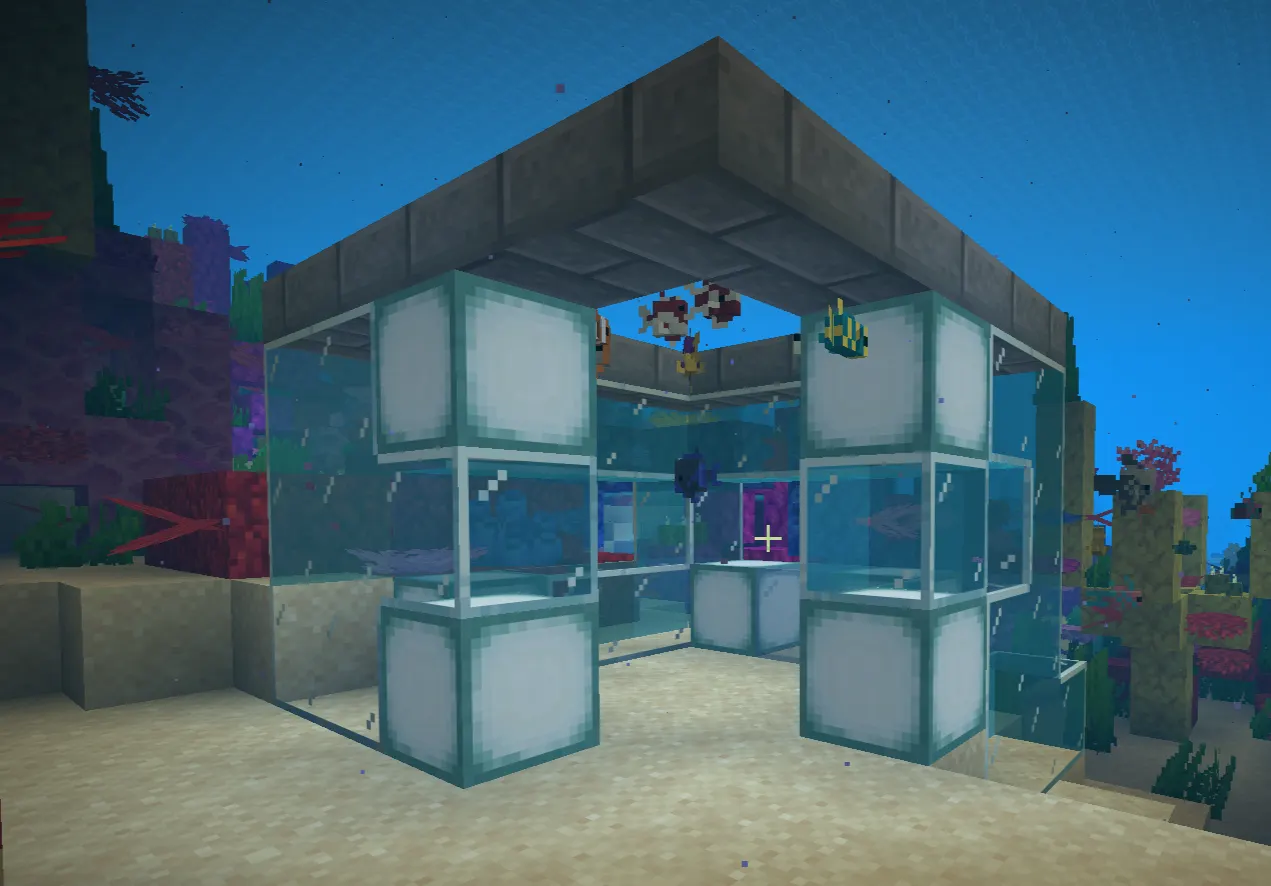
Underwater Glass Dome Base
The classic choice, and for good reason. A glass dome gives you a panoramic view of the reef while maintaining a dry interior. Tips for making it look less like a beginner build:
-
Use Tinted Glass for one or two panels to create color variation.
-
Add Sea Lanterns as your primary light source — they fit the aesthetic and emit 15 light level, same as Glowstone.
-
Use Prismarine, Dark Prismarine, and Prismarine Bricks for the structural elements. Mixing all three avoids the monotone look.
-
Include a Moon Pool — a 2x2 hole in the floor that opens to the ocean. Functionally, it's just a way to enter the base from below, but it looks extremely cool and is useful if you have Depth Strider boots.
Coral City District
If you want a larger build, treat the reef itself as your neighborhood and build around it. Construct several connected small domes linked by glass tunnels. Each dome can serve a function: one for farming, one for storage, one for sleeping, and one for an enchanting setup. The coral reef acts as your exterior decoration naturally.
Sunken Ruins Build
This is the aesthetic approach to building a structure that looks like it's been underwater for centuries. Use cracked stone bricks, mossy cobblestone, dead coral, and irregular shapes. Place sea lanterns in broken sections to simulate bioluminescent growths. Let sea grass generate naturally inside. The effect is genuinely impressive and fits the warm ocean environment better than anything shiny.
Aquarium Room
Inside a larger surface-level base or mega-build, dedicate one room to a floor-to-ceiling aquarium that overlooks a section of the Warm Ocean below. Use a glass floor, Sea Lanterns overhead, and let the reef below do the work visually. Add a Glow Item Frame label. This is one of the best rooms you can build for aesthetics.
Pro Tips & Hidden Mechanics
Dolphins boost your swim speed. When you swim near a dolphin, it gives you the Dolphin's Grace status effect, which significantly increases your swimming speed for several seconds. You don't need to do anything special, just swim alongside them.
Coral fans can be waterlogged. This means you can place a coral fan inside a block that's been filled with water, and it will stay alive. Useful for decoration in builds where you want the fan to exist in a wall rather than sticking out.
Conduit range scales with shell count. A Conduit with 16 shells has a range of 32 blocks. With 42 shells (the maximum), the range reaches 96 blocks. Plan your base footprint around this before you start building.
Drowned can convert Zombies. If a Zombie is in water for 30 seconds or more, it converts into a drowned. This is the easiest way to farm Drowned in a controlled setting — build a zombie spawner-based farm near water and let them fall in. Drowned farms are one of the best ways to get Tridents without luck-based drops.
Suspicious Sand regenerates slowly in regenerated chunks (only in some circumstances). In general, treat each ruin as a one-time source.
Tropical fish have a biome-specific spawn table. In Warm Oceans, specific patterns are more common. The "Clownfish" variant (Anemone pattern) specifically spawns here more often than anywhere else. If you're trying to collect a full aquarium set, the Warm Ocean is your best starting point.
The shipwreck map always points to the nearest Buried Treasure, not a random one. If you find multiple maps from different shipwrecks and they point to different locations, each is the closest one from that shipwreck's generation point. They can lead you to the same chest or to different ones, depending on proximity.
Warm Ocean vs. Other Ocean Biomes
|
Feature |
Warm Ocean |
Lukewarm Ocean |
Cold Ocean |
Frozen Ocean |
Deep Ocean |
|
Coral Reefs |
✅ Yes |
❌ No |
❌ No |
❌ No |
❌ No |
|
Kelp |
❌ No |
✅ Yes |
✅ Yes |
❌ No |
✅ Yes |
|
Depth |
Shallow |
Medium |
Medium |
Shallow |
Very Deep |
|
Tropical Fish |
✅ Yes |
✅ Yes |
❌ No |
❌ No |
❌ No |
|
Ice Surface |
❌ No |
❌ No |
❌ No |
✅ Yes |
❌ No |
|
Ocean Monument |
❌ No |
❌ No |
❌ No |
❌ No |
✅ Yes |
|
Shipwrecks |
✅ Yes |
✅ Yes |
✅ Yes |
✅ Yes |
✅ Yes |
|
Best for Building |
✅ Yes |
Decent |
Decent |
Difficult |
Hard |
The main trade-off with the Warm Ocean is depth. If you want to find an Ocean Monument and farm Prismarine, you need a Deep Ocean. If you want kelp for food or fuel, go Lukewarm. But for aesthetics, loot accessibility, and base building, the Warm Ocean is the strongest choice.
Conclusion
The Warm Ocean Biome is genuinely one of the most underused biomes in Minecraft for experienced players. Everyone visits it once to grab coral and then moves on, but there's real depth here if you spend time with it.
The dolphin loot mechanic alone makes it worth exploring properly. The building potential with coral, prismarine, and sea lanterns is hard to beat. And once you set up a Conduit, you have a permanent underwater base that almost no hostile mob can reach you in without swimming directly at you.
Most players treat the Warm Ocean as a pretty backdrop. The ones who set up shop there end up with some of the best-looking, most defensible bases in the game.
Grab your Silk Touch pickaxe, brew a stack of Water Breathing potions, and spend an afternoon actually exploring the reef. You'll find a shipwreck within 10 minutes. What happens after that is up to you.