The Moment Iron Actually Clicks
You've been swinging a stone pickaxe for twenty minutes. It's slow. Enemies absorb way more hits than you'd like. You're burning through Tools faster than you're making progress.
Then you smelt your first iron ingots.
That first iron pickaxe feels genuinely different. Faster block breaking. More durability. Combat that doesn't feel like you're slapping mobs with a stick. Iron tools don't just make the game easier; they change what you can realistically accomplish in a session.
A lot of players waste this moment, though. They burn iron on the wrong tools. They craft things in a bad order. They craft the hoe before the sword. They don't realize the iron pickaxe is non-negotiable,e but the iron hoe is rarely worth making early. Then they run dry right before finding diamonds and have to go back to stone.
This guide is about avoiding that. It covers every iron tool recipe, which ones actually matter, what order to craft them, and how to squeeze maximum value out of iron before you reach the diamond tier.
Quick Answer: Iron Tools at a Glance
How to craft iron tools: Place iron ingots in the same pattern as stone tools on a Crafting table, just swap cobblestone for iron ingots.
Which iron tool to craft first: Iron pickaxe. No contest.
Iron tool durability: 250 uses each (compared to 131 for stone).
Why iron beats stone: Nearly twice the durability, faster mining speed on most blocks, and the pickaxe can mine diamonds (stone cannot).
Crafting table required? Yes, for all tools.
Why Iron Tools Matter More Than Most Players Realize
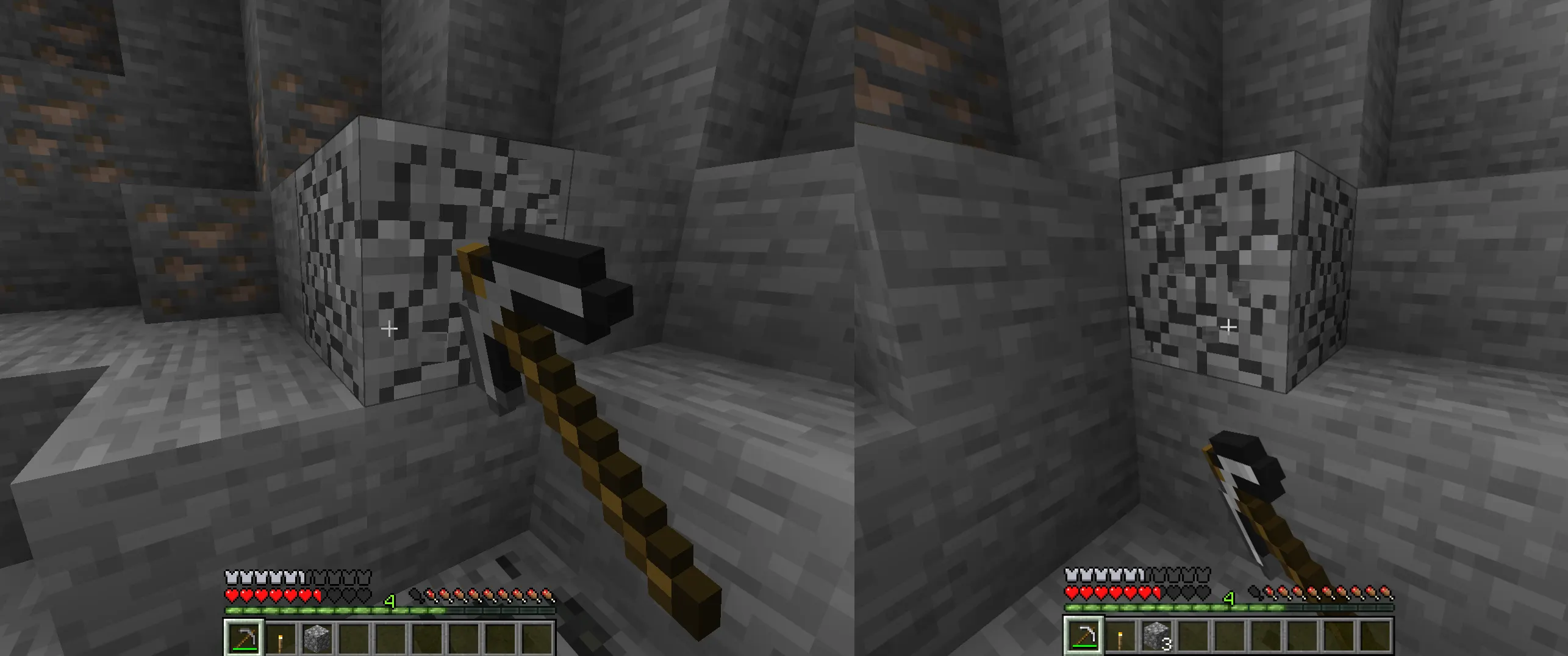
Stone tools feel fine when you don't have anything better. But "fine" isn't really fine, you just don't know what you're missing yet.
Here's the actual difference:
Stone pickaxes mine stone in about 1.5 seconds. Iron pickaxes do it in about 0.75 seconds. That's twice as fast. Over an hour of mining, that difference stacks up into a huge amount of time saved and ore collected.
Iron swords deal 6 damage per hit. Stone swords deal 5. One extra heart per swing sounds minor until you're fighting a zombie horde or a cave Spider nest. That extra damage frequently means one fewer hit to kill something, which adds up in longer fights.
And durability? Stone tools have 131 uses. Iron tools have 250. You get almost double the lifespan before needing to replace them.
The biggest advantage, though, is gate-keeping. A stone pickaxe cannot mine diamonds. An iron pickaxe can. The moment you have iron tools, you can start hunting the best gear in the game. That's the real reason iron matters.
All Iron Tool Crafting Recipes
Every iron tool uses the same Crafting layout as its stone version — just iron ingots instead of cobblestone. You need a crafting table (3x3 grid) for all of them.
Iron Pickaxe
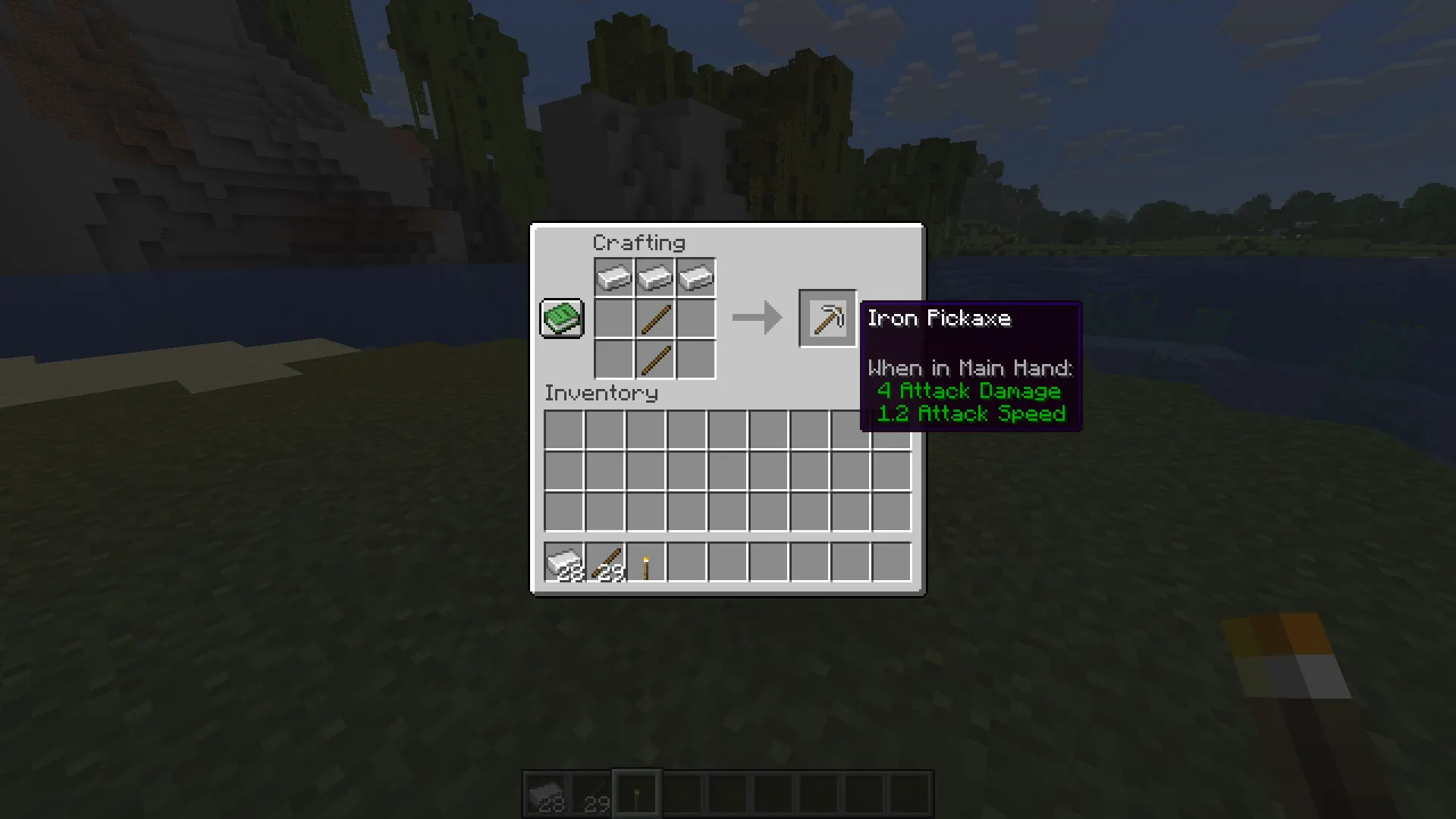
Three iron ingots across the top row, two sticks down the center. This is the most important tool you'll craft for a while.
Iron Sword
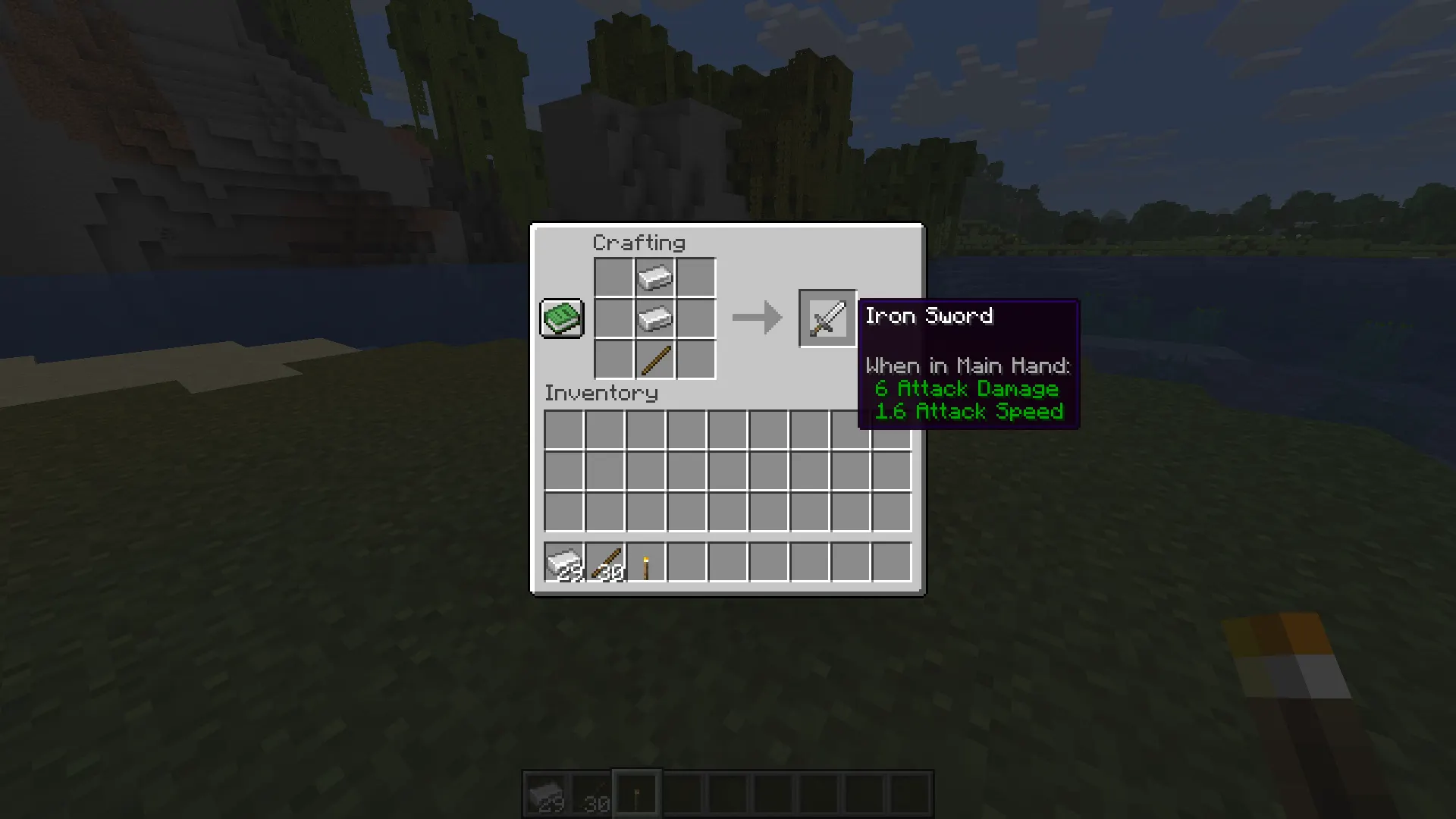
Two iron ingots stacked vertically in the center, one stick below. Straightforward.
Iron Axe
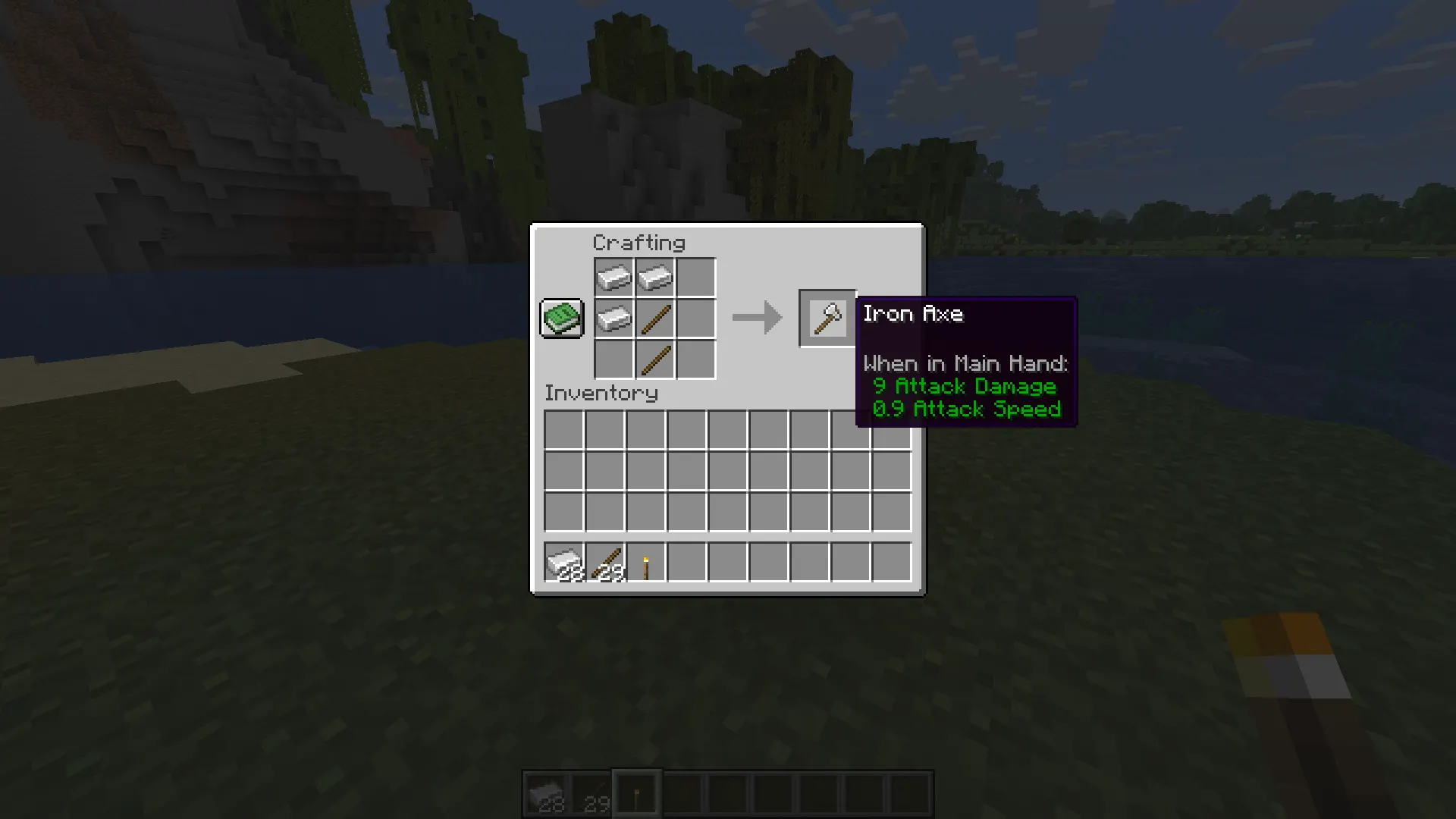
Three ingots form an L in the top-left, two sticks down the right side of the center.
Iron Shovel
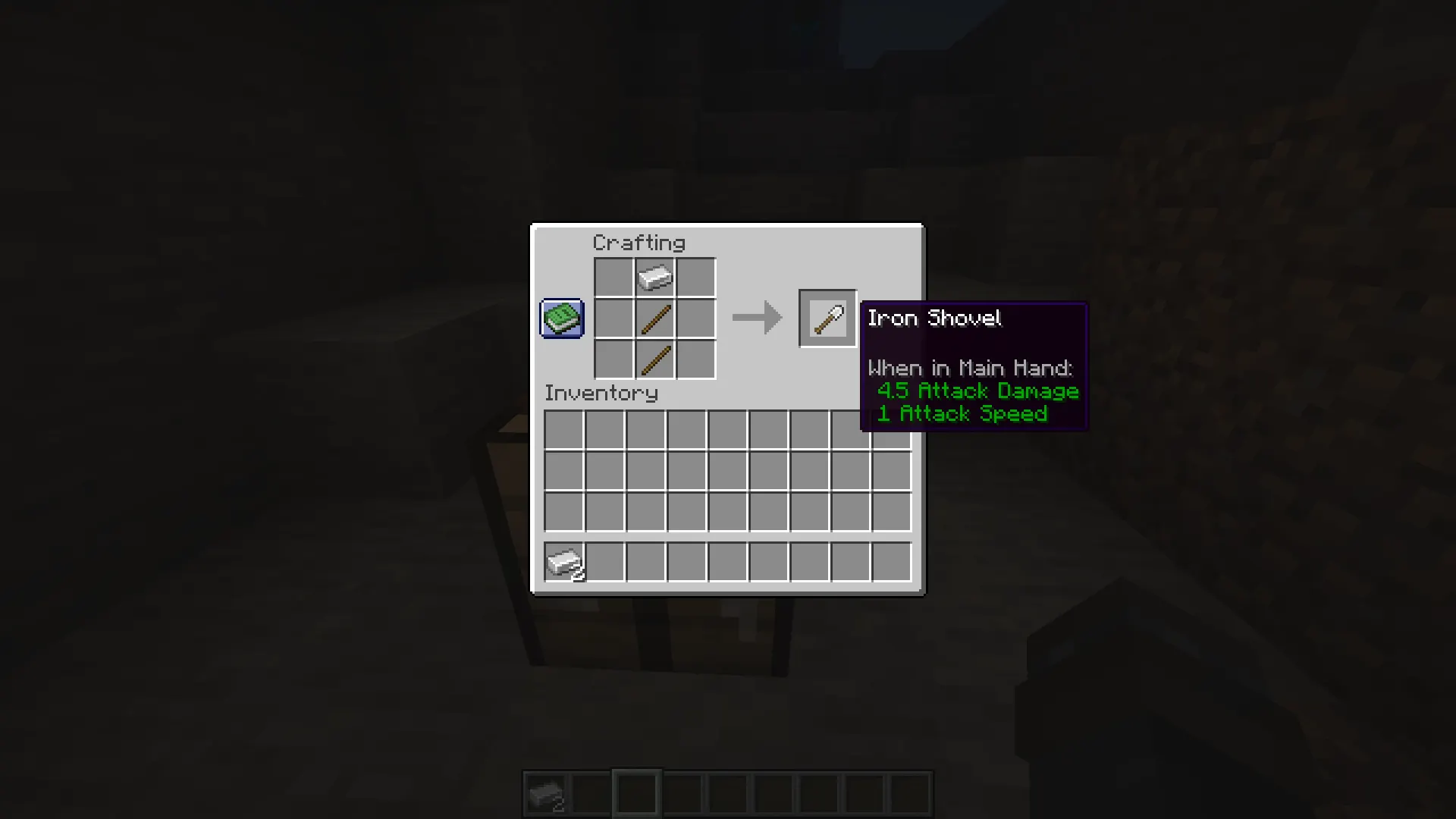
One ingot on top, two sticks beneath it.
Iron Hoe
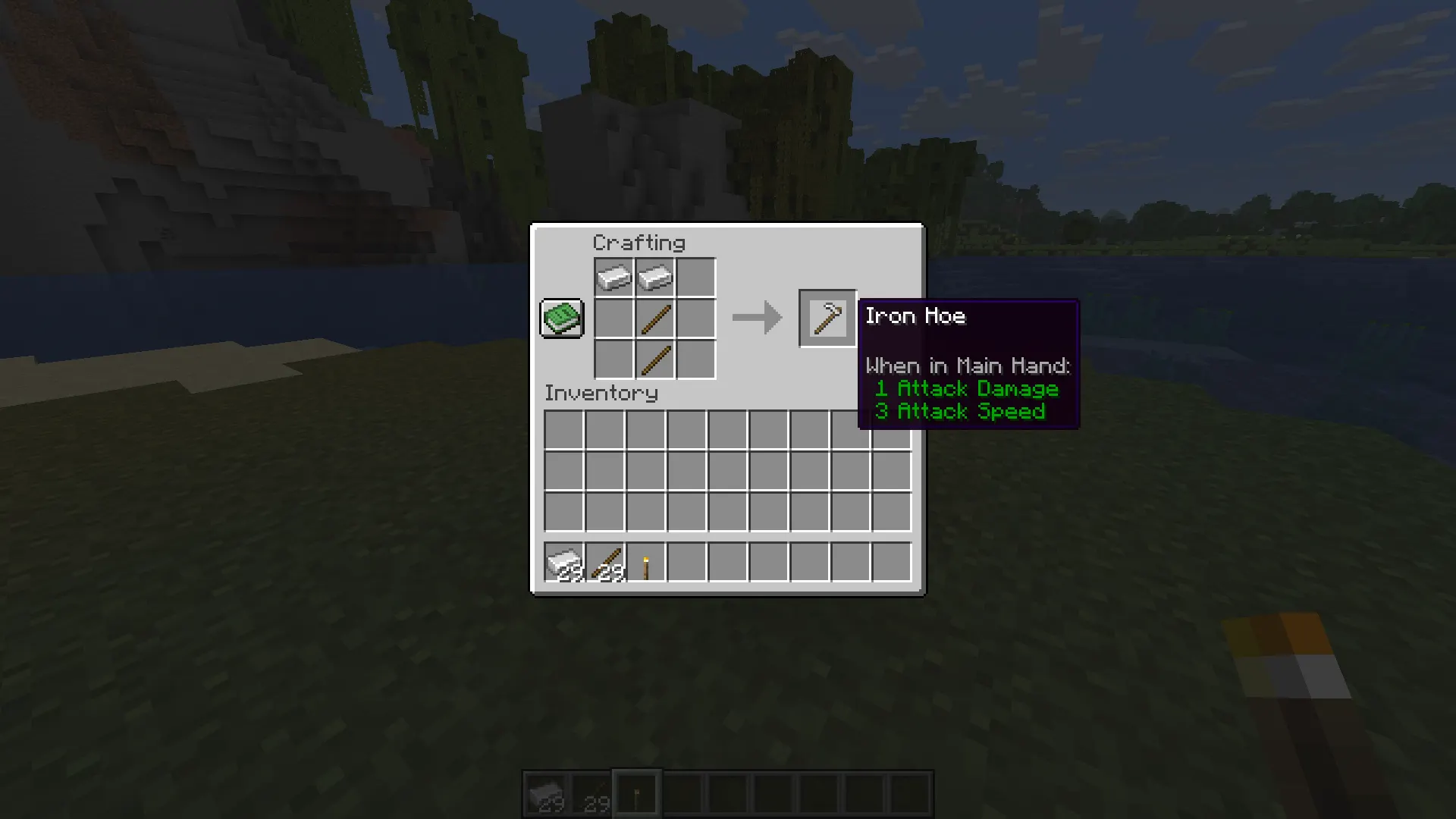
Two ingots across the top-left, sticks down the center.
All five tools. All follow the same basic logic. The only thing to remember is the orientation.
Iron Pickaxe: Non-Negotiable
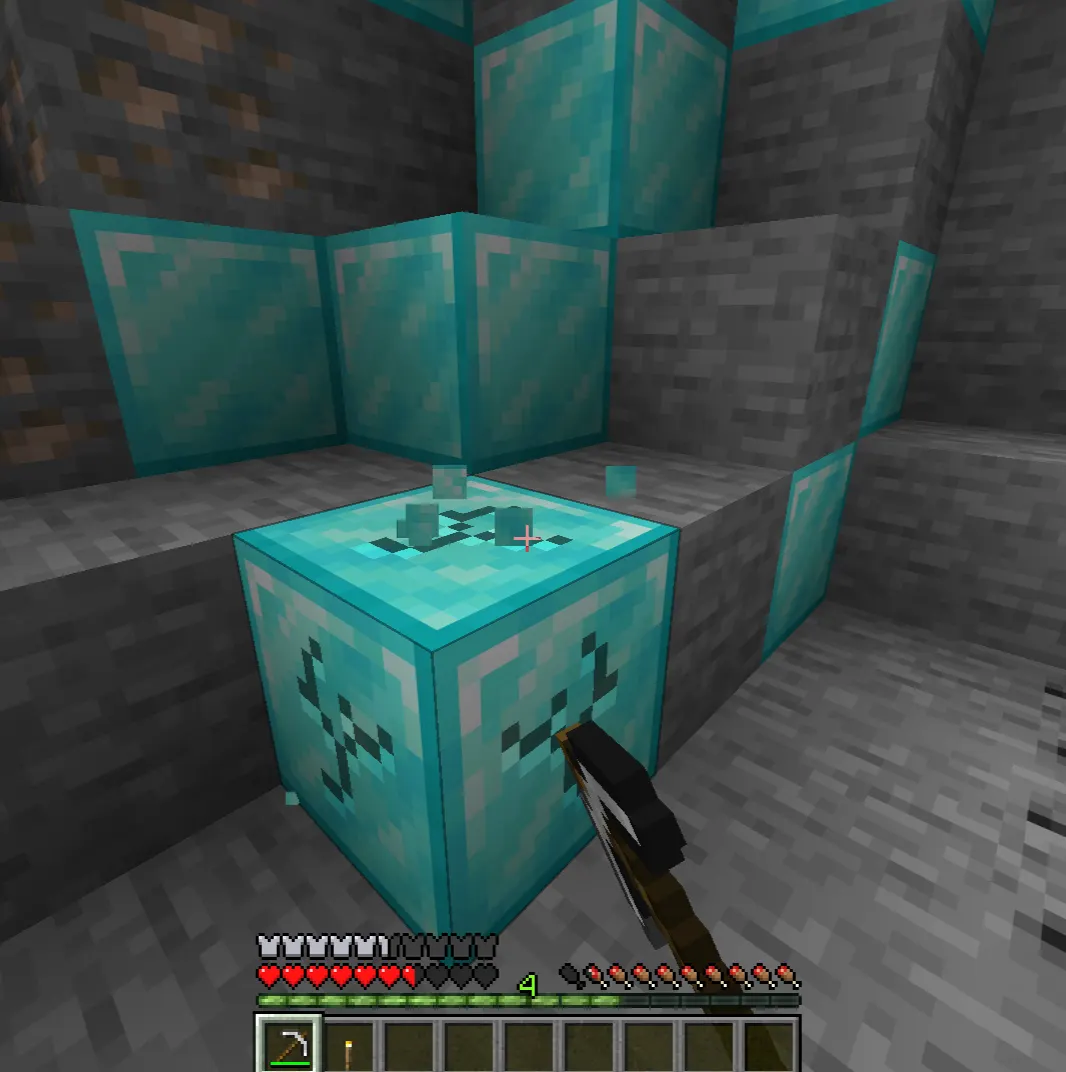
If you only make one iron tool, make the pickaxe.
It breaks stone and ores significantly faster than stone. It mines gold, redstone, lapis, and — critically — diamond ore. A stone pickaxe cannot mine diamonds. That single fact makes the iron pickaxe mandatory the moment you have three ingots to spare.
Mining speed matters more than most beginners realize. Faster ore collection means faster progression. You're spending less time digging and more time processing what you find. It compounds quickly.
The durability boost is also just practical. 250 uses versus 131 means you're not replacing it every twenty minutes.
Make this first. Always.
Iron Sword: Make It Second
The iron sword jumps from 5 damage (stone) to 6 damage per hit. That extra point per swing sounds trivial on paper. In practice, it changes how fights go.
Against a zombie: a stone sword needs 4 hits, an iron sword needs 3. That's 25% fewer hits to kill something that's constantly walking toward you.
Against a skeleton: same story. Fewer arrows you have to eat before the mob dies.
Combat in early survival is constant. You're not choosing whether to fight — you're choosing how badly it hurts you. The iron sword reduces damage taken in most fights by getting kills faster.
Second priority. Right after the pickaxe.
Iron Axe: Situationally Good, Not Always Worth It
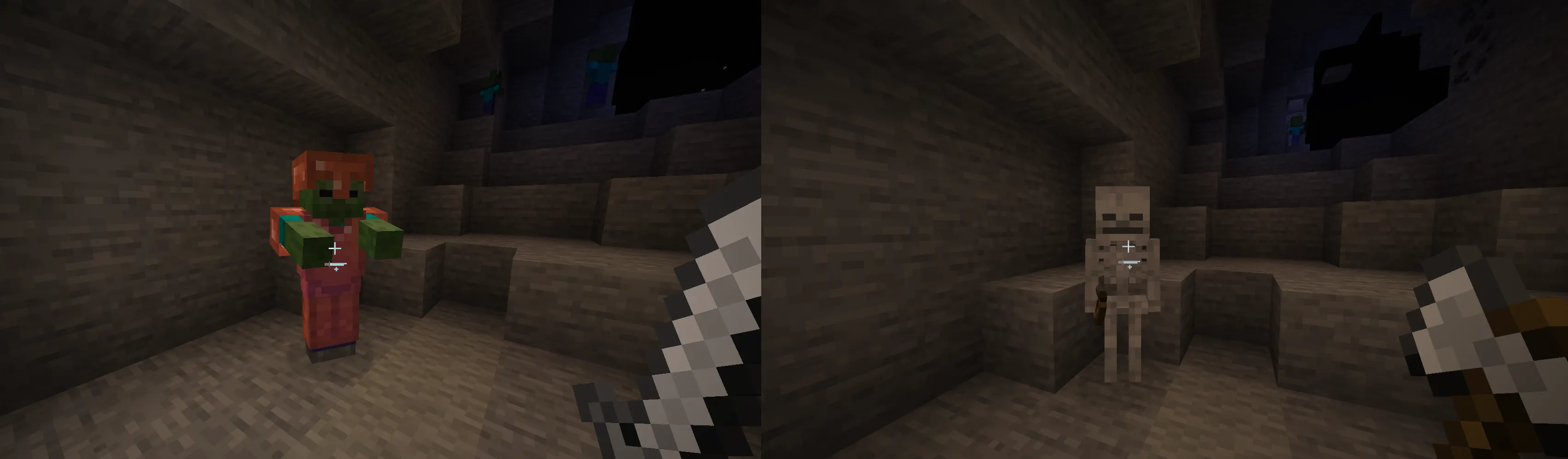
The iron axe does more damage than the sword in Java Edition — 9 damage versus 6, with a slower attack speed. In Bedrock Edition, swords are better for combat because the attack speed cooldown works differently.
Where the axe shines is chopping wood. If you're building anything big, switching to an iron axe cuts wood noticeably faster than an iron pickaxe or stone axe.
The reason experienced players skip the iron axe early is that it costs three ingots you might need elsewhere. If you're iron-poor and still building out your base, those three ingots might be better saved for your next pickaxe replacement or armor.
Once you have a comfortable iron supply, make the axe. Before that, it's optional.
Iron Shovel and Hoe: Honest Takes
Iron Shovel: Worth making if you're doing a lot of digging through dirt, gravel, or sand. It clears those materials in a fraction of a second. For tunnel clearing or landscaping, the speed difference is real. For pure survival with no big building projects, it's a lower priority than the pickaxe and sword.
Iron Hoe: Honestly, skip it early. Farming is important in survival, but you don't need an iron hoe to till soil. A wooden hoe tills dirt exactly as fast as an iron hoe — the material only affects durability, not tilling speed. Save those ingots for gear that actually fights or mines.
There's a case for the iron hoe in newer updates since 1.16+, where hoes got faster harvesting speeds for certain blocks. But if you're focused on early-game survival, this is the last iron tool you need.
Durability and Mining Speed: By the Numbers
|
Tool |
Durability |
Mining Speed |
Damage |
|
Wood |
59 |
2.0 |
4 |
|
Stone |
131 |
4.0 |
5 |
|
Iron |
250 |
6.0 |
6 |
|
Gold |
32 |
12.0 |
4 |
|
Diamond |
1,561 |
8.0 |
7 |
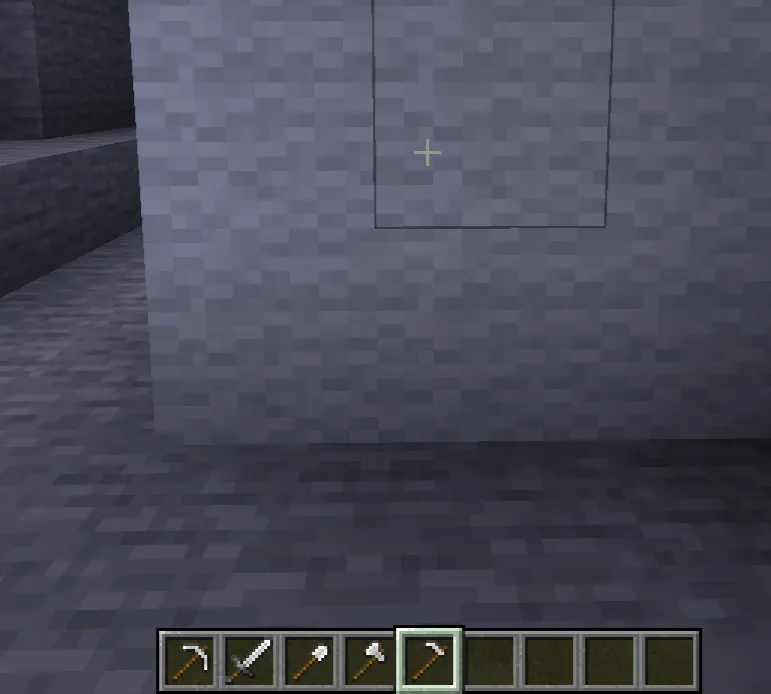
Gold is the weird one. Fastest mining speed of all the basic materials, but with 32 durability. It breaks after a couple of minutes of serious use. Gold tools are rarely worth crafting unless you have an enchanting table and happen to have gold to spare. They get better enchantments on average, so some players use enchanted gold pickaxes for very specific situations.
Diamond is the obvious end goal: 1,561 uses and 8.0 mining speed.
Iron sits in a comfortable middle ground. Not as fast as diamond, but nowhere near as fragile as anything below it. 250 uses are genuinely usable for a full play session without constant replacement.
Iron vs Stone, Gold, and Diamond: The Real Comparison
Iron vs Stone: Iron wins on basically every metric. More durability, faster mining, better damage, and it can mine blocks that stone cannot. There's no reason to use stone tools after you have iron.
Iron vs Gold: Gold tools have a higher mining speed but are nearly disposable. In almost every survival scenario, iron is more practical. Gold tools make sense only with enchantments, and even then, it's a niche strategy.
Iron vs Diamond: Diamond tools last six times longer and mine faster. But they need diamonds, which means you need iron tools to get them. Iron is a stepping stone, not a permanent home — but it's a perfectly solid stepping stone.
For early to mid-game survival, iron is the best tool material you can comfortably sustain.
Best Order to Craft Iron Tools
Most experienced players follow something like this:
-
Iron Pickaxe — immediately
-
Iron Sword — right after
-
Iron Shovel — when you need serious digging
-
Iron Axe — when the iron supply is comfortable
-
Iron Hoe — last, or skip entirely early on
This order is based on what actually impacts your survival. The pickaxe gets you diamonds. The sword keeps you alive. The rest fill in as your iron reserves grow.
Common Iron Tool Mistakes
Crafting armor before tools. A full set of iron armor costs 24 ingots. That's a lot. Tools cost 3 ingots each. The iron pickaxe and sword together cost 5 ingots and give you mining access to diamonds and better combat immediately. Don't skip tools to rush armor tools; enable armor, because better tools get you diamonds faster.
Using iron tools for basic dirt work. Don't use your iron pickaxe to dig dirt. Use a stone shovel or your bare hands. Save iron tool durability for what it's designed for.
Forgetting to repair before it's too late. An iron pickaxe at 5% durability that breaks mid-mine is 5 wasted ingots. Keep an eye on the durability bar.
Making stone tools after you have iron. Some players keep using stone swords or stone axes out of habit, even when they have iron. Stop doing this. Iron is better, and the upgrade is cheap.
Burning through iron on rails or buckets before tooling up. Iron has a lot of uses. Early game, tools, and armor take priority over decoration and infrastructure.
How Long Iron Tools Actually Last
250 uses means different things depending on what you're doing.
Mining a cave system — maybe 30 to 45 minutes of play before you start seeing the durability drop to warning levels.
Building a house — much longer, since you're mostly placing blocks, not breaking them.
Combat — depends on how many mobs you're fighting. A zombie grinder session can chew through a sword faster than you'd expect.
The main thing to know: 250 uses is enough to get through a solid play session without constantly making replacements. It's not diamond longevity, but it's not a burn rate that should stress you out either.
Repairing Iron Tools
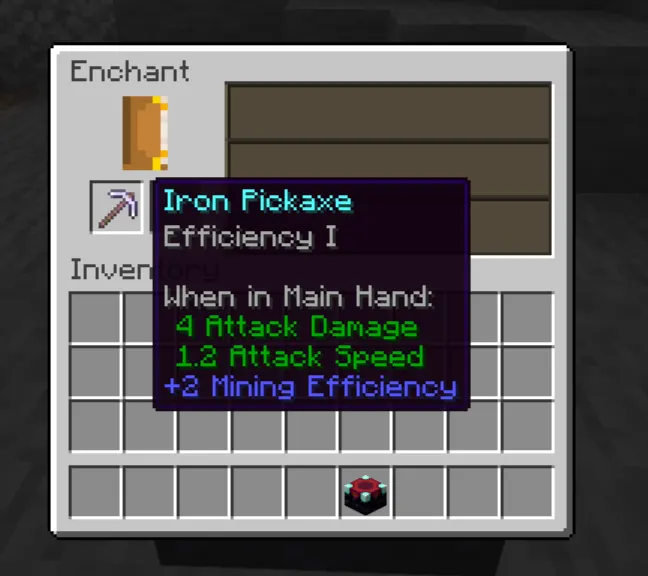
Two ways to repair iron tools:
Crafting table method: Combine two damaged iron tools of the same type in the crafting grid. You get one tool with their combined durability, plus 5% bonus. No levels required. Downside: you lose any enchantments on both tools.
Anvil method: Combine a damaged tool with iron ingots in the anvil, or combine two tools of the same type. This costs experience levels but preserves enchantments. One iron ingot repairs roughly 25% of an iron tool's durability.
For unenchanted tools, the crafting table method is almost always better since it costs no levels. Only use the anvil once you're adding enchantments you care about.
Should You Enchant Iron Tools?
Yes, if the enchants are good. No, if you're close to diamonds.
Iron tools can hold most enchantments the same as diamond. Fortune III on an iron pickaxe works exactly as well as Fortune III on a diamond pickaxe — more drops per ore block. Efficiency enchantments apply fine.
The question is whether it's worth spending experience on a tool you'll probably replace in an hour. If you've got a great enchant from a table roll, go for it. If you're grinding levels specifically to enchant iron tools, wait until you have diamond.
One honest exception: if diamonds are scarce and you're having trouble finding them, an Efficiency-enchanted iron pickaxe makes strip mining significantly faster and helps get you there.
Best Early-Game Uses for Iron (Beyond Tools)
If you have iron to spare after your tools, here's the priority list for the rest of it:
-
Iron armor — especially the helmet and chestplate first, for the most protection per ingot
-
Bucket — one iron bucket opens up lava management, water placement, and milk for clearing negative effects
-
Flint and Steel — cheap, opens up Nether access
-
Shield — two logs and six iron ingots, blocks most melee and ranged attacks completely
A shield is often undervalued. It blocks Creeper blasts, Skeleton arrows, and Zombie hits. For purely survival purposes, an iron shield is sometimes more valuable than iron boots.
When to Stop Using Iron Tools
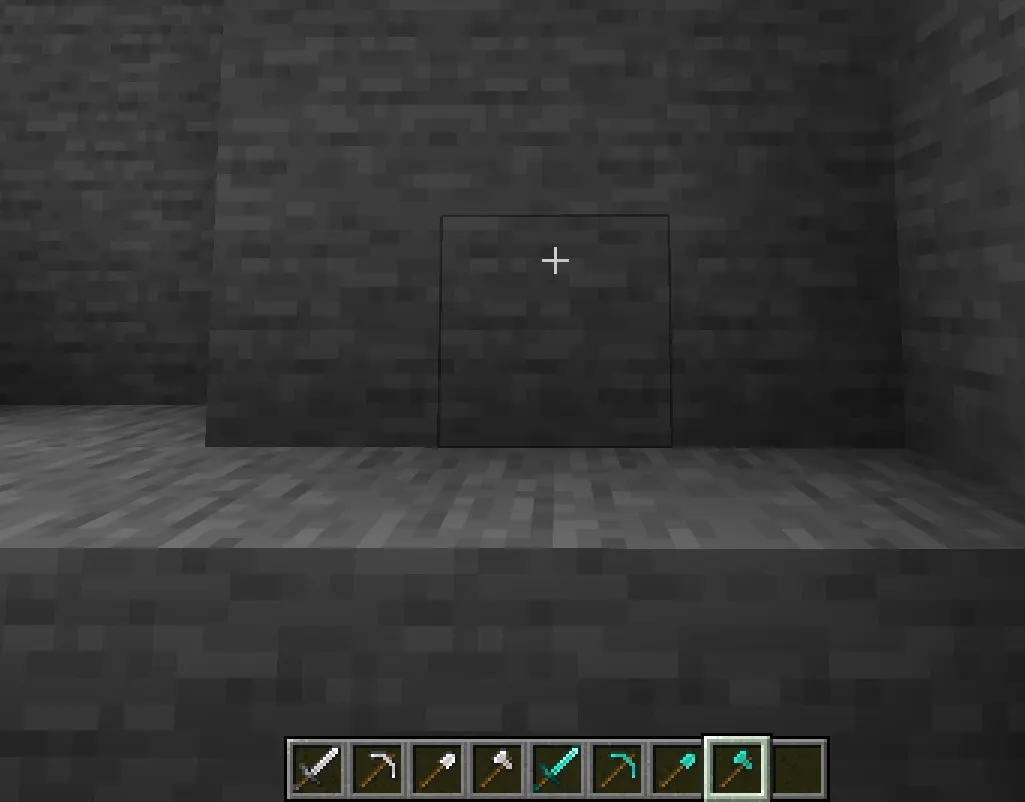
The obvious answer is diamonds. Once you have enough diamonds for a pickaxe and sword, make them. Don't sit on diamonds trying to build a full diamond set. First, a diamond pickaxe alone will find you more diamonds faster, which funds the rest of your gear.
There's also netherite now. If you're in a 1.16+ world and heading into the Nether, you'll eventually want to upgrade your diamond tools to netherite. Iron becomes irrelevant at that point except for very specific crafting recipes.
But here's the thing: plenty of experienced players keep a couple of iron pickaxes in their inventory even with diamond tools. Why? For building. You don't need a diamond pickaxe to break dirt or stone for a house. Burning diamond durability on mundane mining is wasteful. Iron handles that work fine.
Why Experienced Players Still Carry Iron Tools
It's not nostalgia. It's resource management.
Diamond tools are expensive to replace. Iron tools cost a handful of common ore. If you're clearing out a big area for a build, doing basic landscaping, or exploring underwater, and don't want to risk your enchanted gear, iron tools are the sensible choice.
Some players keep a dedicated iron shovel for dirt work. Others carry an iron pickaxe for quarrying stone. It's not that diamond tools can't handle this; it's that they shouldn't have to.
Once you're established in a world, iron becomes an abundant resource. At that point, keeping iron tools around for grunt work is just efficient play.
Closing Thoughts
Iron tools are where Minecraft survival actually starts. Everything before Iron Wood, stone — is Survival mode on hard mode. Iron is where you start playing properly.
The pickaxe first. Always the pickaxe first. Then the sword. Then fill in the rest as your iron supply allows. Don't overcomplicate it.
What trips most players up isn't the crafting; the recipes are simple. It's knowing what to spend iron on and in what order. Five ingots for a pickaxe and sword will do more for your survival than 24 ingots spent on armor before you can mine efficiently.
Get the tools. Mine faster. Fight better. Get to diamonds. That's the loop. Iron is just the part of the loop that actually works.