Introduction: You Spawned in a Mangrove Swamp. Now What?
Picture this. You generate a new world, punch some trees, and start exploring. Twenty minutes in, the terrain shifts. The ground turns muddy and soft. Trees grow sideways out of shallow water, their roots sticking up like fingers reaching for the surface. Something croaks nearby. You try to move fast, and you sink.
You've hit the Mangrove Swamp biome, and if you don't know what you're doing, it'll slow you down hard.
But here's the thing: this biome is genuinely one of the most interesting ones in the game. It has materials you can't farm anywhere else (or at least not this easily), a mob mechanic that most players barely touch, and a visual identity that makes builds look absolutely stunning when you lean into it.
This guide covers everything that makes the biome tick, how to survive in it early, what to gather, how to build, and the lesser-known mechanics that most walkthroughs skip entirely.
What Is the Mangrove Swamp Biome in Minecraft?
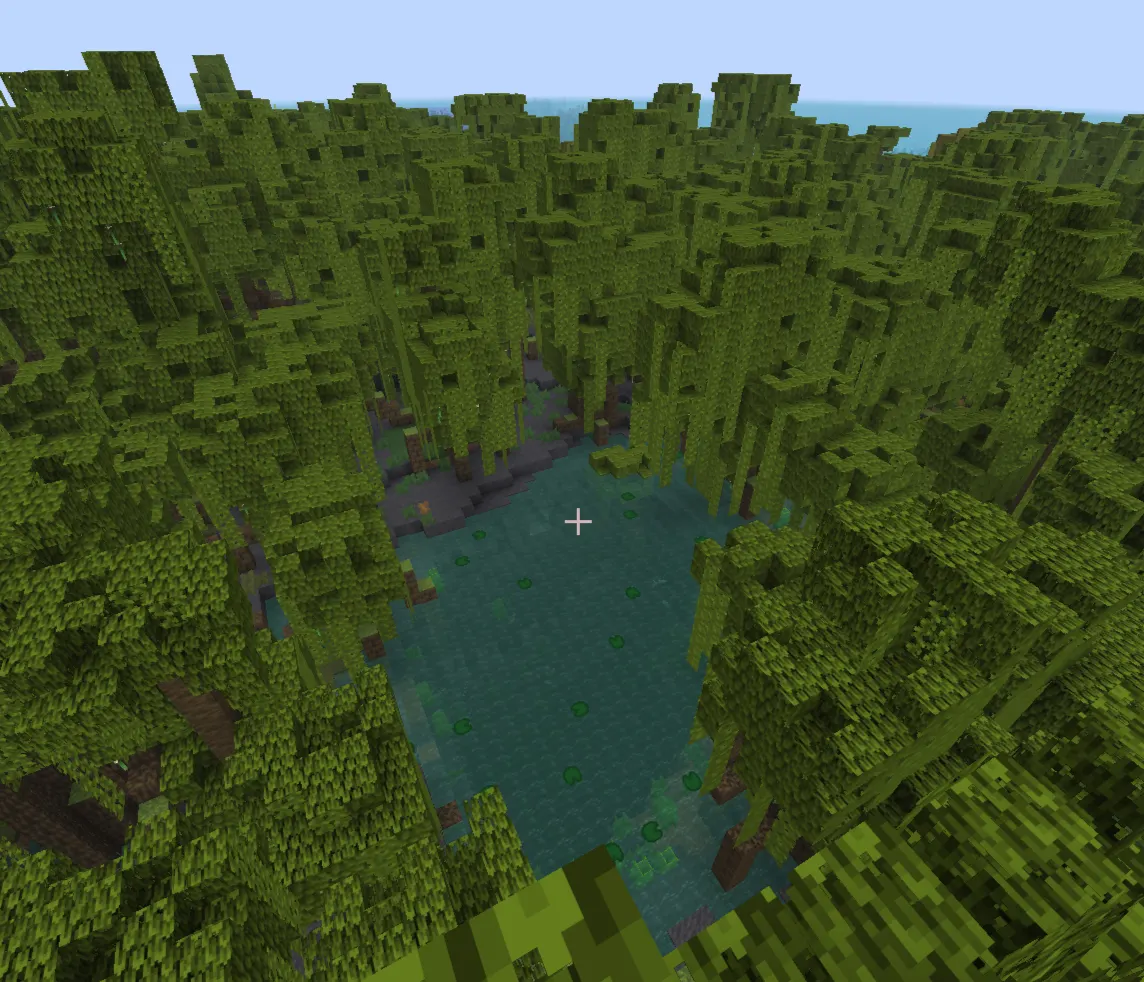
The Mangrove Swamp is a variant of the classic swamp biome, introduced in Java Edition 1.19 and Bedrock Edition 1.19.0 as part of the Wild Update (June 2022). It's not just a reskin. It brought three brand-new blocks, a new wood type, and the first real frog mechanics the game has ever had.
Before 1.19, swamps felt like they existed mainly to give witches somewhere to live and slimes somewhere to spawn at night. The mangrove variant completely changed the energy of that biome family.
You'll typically find it in warm, humid regions, where it generates near jungles and other warm biomes rather than in colder climates. Seed hunting for one isn't always quick, but when you find it, you'll know immediately—the color of the water shifts. The leaves look denser. The roots come up from below the waterline.
Unique Features of the Mangrove Swamp
Mangrove Trees (and Why They're Weird in the Best Way)
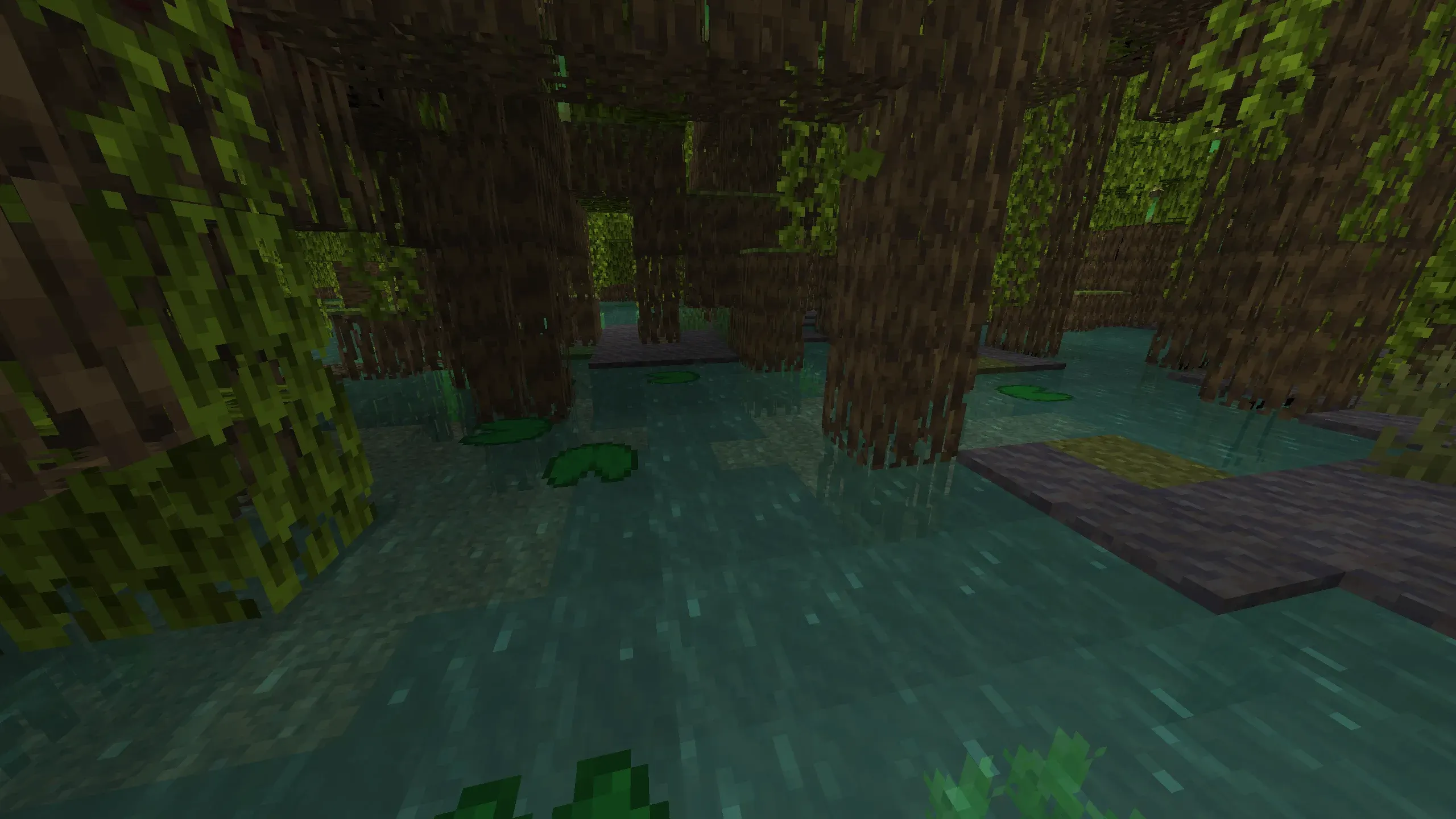
Mangrove trees don't grow like anything else in vanilla Minecraft. They start from mangrove propagules, small hanging pods that grow on the undersides of leaves, like little green teardrops. You can snap them off and plant them, even directly in water, which no other sapling handles.
The trees grow with prop roots, those tangled, exposed root blocks that jut above the waterline and give the biome its whole look. These aren't just decorative. Prop roots are their own block type, and they're one of the more useful ones added in 1.19.
Mangrove wood is a reddish-orange color closer to acacia than anything else, but warmer and more saturated. It's distinct enough that builders who work with it tend to become pretty attached to it. The full set is there: logs, stripped logs, planks, slabs, stairs, fences, doors, trapdoors, signs, and boats. The boat with a chest variant works with it, too.
One mechanic worth knowing: mangrove leaves decay like normal leaves,s but also drop propagules when they break. So if you're clearing trees for wood, you'll naturally stock up on propagules without thinking about it.
Mud Blocks Are More Useful Than They Look
Mud is one of those blocks that looks like a joke at first. You're walking through the biome, it slows you down slightly, and your first instinct is to replace it with something better.
Don't do that yet. Mud is genuinely useful.
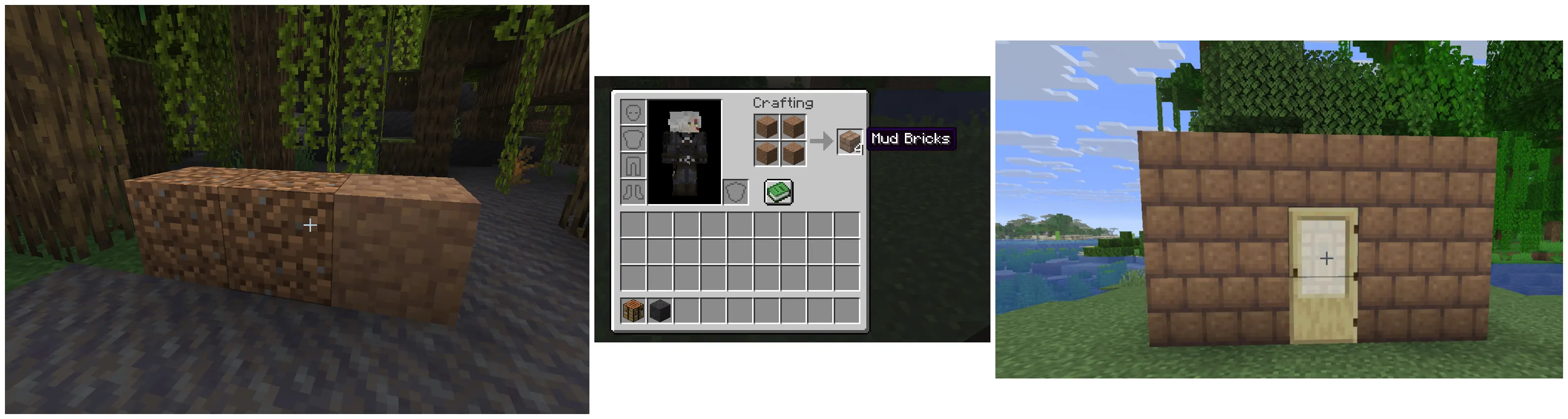
You can craft mud yourself by using a water bottle on dirt. This means you can produce it in bulk anywhere, not just inside the biome. Inside the biome, you'll find it naturally covering large sections of the ground.
The main crafting use for mud is packed mud. Put mud and wheat together in a Crafting grid, and you get packed mud, which you then craft into mud bricks. Mud bricks are one of the best-looking building materials added to the game in years, a warm, earthy terracotta-adjacent block that suits everything from fantasy villages to desert ruins to Mediterranean-style builds. Full stair, slab, and wall variants exist.
There's also a clay-farming angle. Place mud over a block with a dripstone stalactite beneath it, the water slowly drains out, and the mud converts to clay. This is the closest thing in vanilla to renewable clay farming, and it's not obvious from just exploring the biome.
Water, Terrain, and Movement
Mangrove swamps are shallow. Most of the water is only one or two blocks deep, which sounds convenient until you realize the root systems make swimming awkward. You can get caught on prop roots pretty easily while trying to push through underwater.
The terrain itself sits low. Mud and grass alternate at roughly sea level, with small raised spots of coarse dirt or regular grass scattered through. There's no real high ground to build on without importing materials.
At night, the atmosphere gets genuinely strange. The murky water, the low fog, and the sounds it creates a kind of tension that the original swamp biome was always going for but never quite nailed.
Visual Atmosphere
This is one of the few Biomes where the light and color work together on purpose. The leaf canopy filters the sky, the water sits in deep greens and grays, and the orange-red of the mangrove wood contrasts sharply with all of it.
For screenshot hunters and content creators, this biome looks great at golden hour (Minecraft's equivalent: around tick 13,000 heading into night). Fog turned on in Java makes it look almost cinematic.
Mobs Found in Mangrove Swamps
Frogs — The Main Event
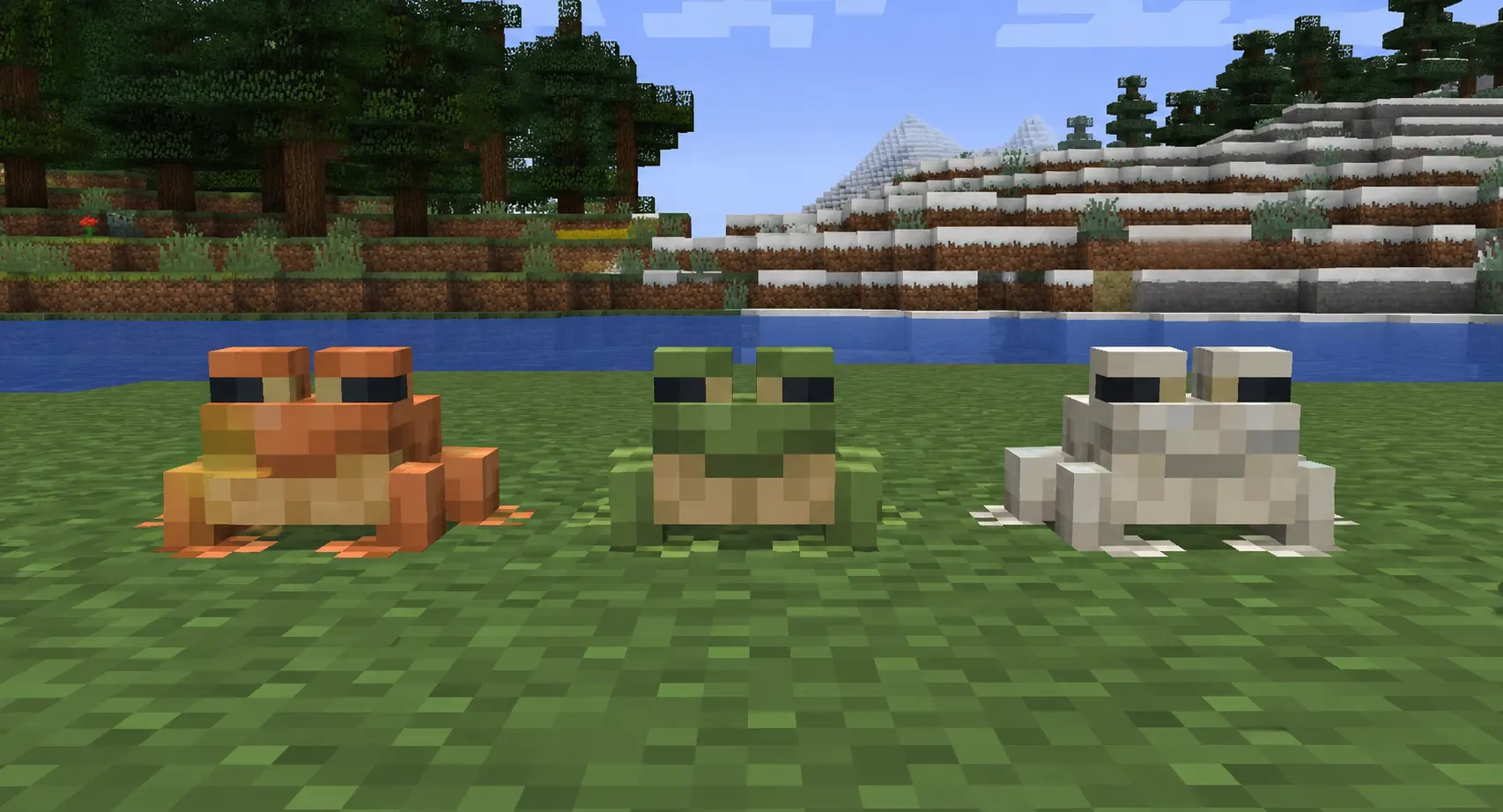
Frogs are the signature mob of this biome update. They spawn naturally in swamps and mangrove swamps, and they come in three variants based on temperature:
-
Temperate (orange) spawns in regular swamps and temperate biomes
-
Cold (green) spawns in cold biomes
-
Warm (white/cream) spawns in the mangrove swamp specifically
The variant is determined by the biome temperature where a tadpole grows up, ot where the frog spawns. This matters if you're trying to breed specific frog types. To get a warm (white) frog, you need to raise tadpoles in a warm biome, like the mangrove swamp itself.
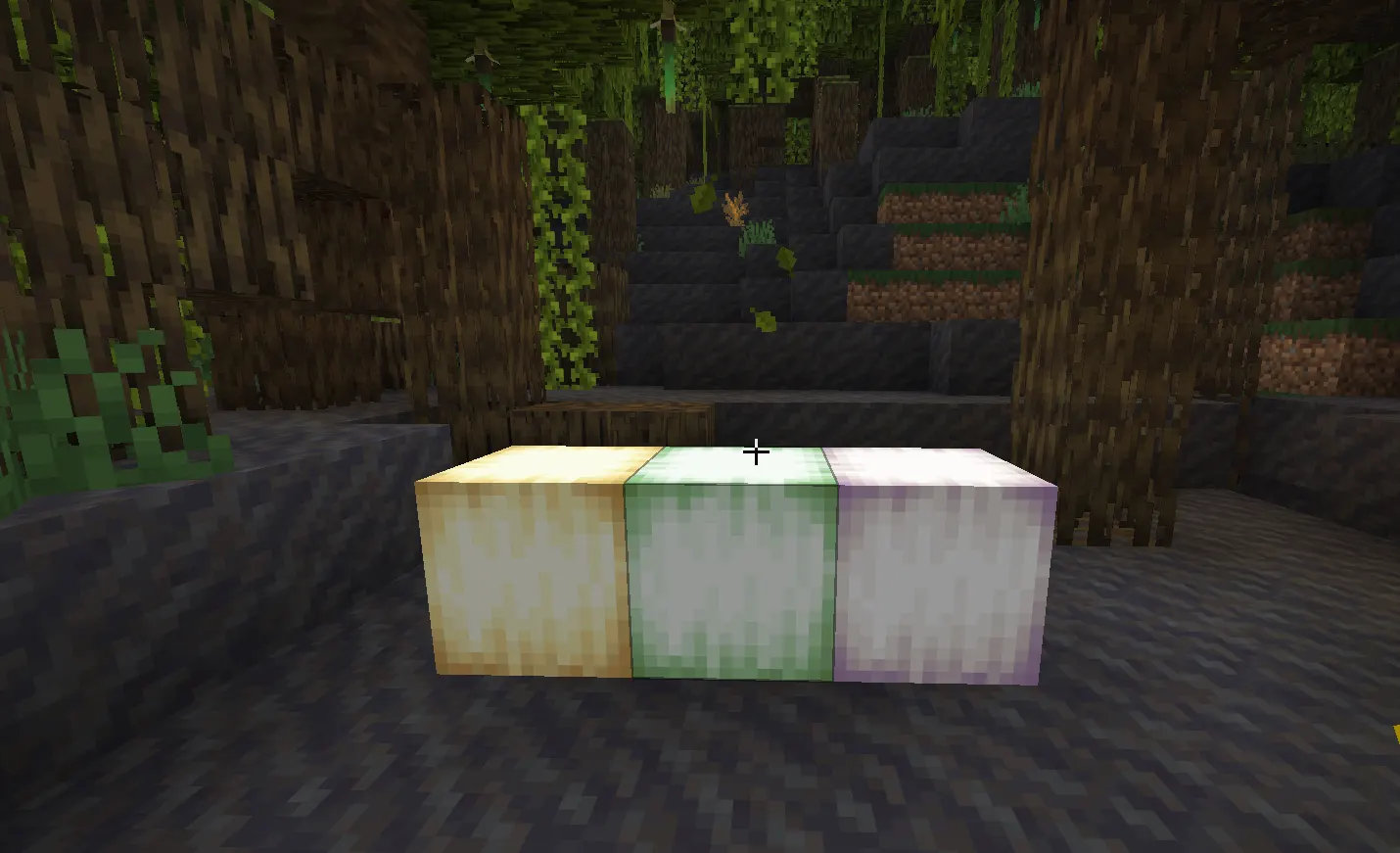
Frogs eat small slimes and small magma cubes. When they eat a magma cube, they drop a froglight block, and the color of the froglight depends on which frog variant ate the magma cube. Ochre froglight comes from temperate frogs, verdant from cold frogs, and pearlescent (the pale pink-white one) from warm frogs. These are the only sources of froglights in the game.
Frogs are passive, move in a sort of lazy hop pattern, and occasionally jump into water for no obvious reason. They're not a combat mob. They're ambient.
Tadpoles
You can breed frogs using slimeballs. Two frogs in love mode will produce a frogspawn block attached to a water surface. After a couple of minutes, the eggs hatch into tadpoles, tiny swimming fish-adjacent mobs that grow into frogs.
Tadpoles can be scooped up in a bucket, just like fish. This is how you transport frog types to different biomes for breeding programs.
Other Mobs
The mangrove swamp still spawns everything the normal swamp does: slimes at night (in swamp-eligible chunks), witches, and standard hostile mobs like Zombies, Spiders, and Skeletons after dark. Bats appear in caves beneath the biome.
Parrots, bats, and other jungle-adjacent mobs don't generate here despite the tropical feel. It's still fundamentally a swamp in terms of the spawn list.
Resources You Can Gather
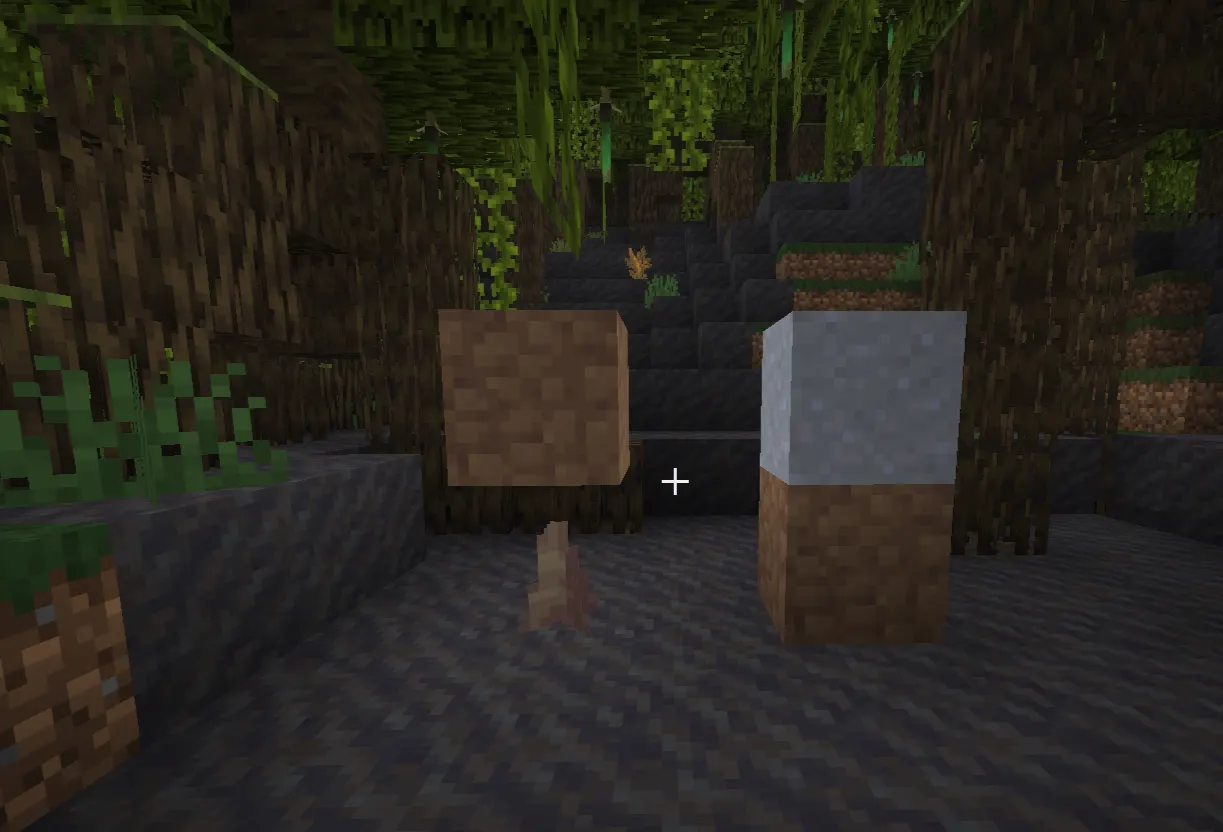
Here's a practical list of what's worth farming in or near a Mangrove Swamp:
Mangrove wood one of the game's most distinctive color palettes. Good for building, boat crafting, and all standard wood uses. Renewable via propagule planting.
Mangrove propagules useful if you want to transplant the tree type to another location or build an artificial mangrove forest elsewhere. They'll grow in water, which is the key advantage.
Mud is farmable anywhere with dirt + water bottles, but naturally abundant here. Converts to packed mud (with wheat), then mud bricks.
Cla is not explicitly on the surface, but the dripstone-mud trick makes this biome a clay farming hub if you set it up underground beneath the area.
Slimeballs spawn at night. With a looting sword and patience, slimeball farming here is solid.
Lily pads are still present, like in regular swamps. They're not high value, but they're good for bridging shallow water gaps.
XP and loo witch spawning make mangrove swamps reasonable for passive witch farm setups, though dedicated witch farms use spawning platforms above swamp water rather than mangrove swamp terrain.
Mangrove Swamp Survival Guide
Early Game
Your first problem is movement. Mud slows you slightly, roots block paths, and shallow water everywhere means you're not swimming, you're half-walking through it. Get boots with Depth Strider as fast as you can. Even Depth Strider I changes how the biome feels to navigate.
Food is the second issue. The biome doesn't have animals grazing on the banks. You'll find frogs (passive, you'd feel bad), slimes (which drop balls, not food), and the occasional mob drop. Either bring food from outside the biome or plan around it. Fishing in the shallow water works — the biome counts as water regardless of depth.
For your first shelter: use what's around. The raised prop roots and the canopy can form three walls of a basic lean-to. Fill gaps with mud bricks or packed mud if you've done the basic crafting. It won't be pretty, but it'll be functional.
Food and Mobility
After the First night: prioritize a boat. Boats work better than walking for the majority of the biome's shallow water. You can right-click onto Depth Strider boots-level terrain on a boat without actually needing the enchantment early on.
Set up a small wheat farm somewhere relatively flat. You'll need wheat for packed mud anyway, so the farm is doing double duty.
Base-Building Advice
Pick your spot carefully. You want:
-
A slightly elevated patch (reduces flooding risk for Redstone and ground-level builds)
-
Access to a flat water surface for boat transit
-
Proximity to mangrove tree clusters for replanting
Build vertically if you're planning anything permanent. The biome's flat terrain means you're better off going up than out, both for views and for avoiding the mud floor in your builds.
Common Mistakes
Trying to sprint through the biome without Depth Strider. You'll be annoyed constantly. Just enchant the boots early.
Clearing all the mangrove trees immediately. You want some left for propagule collection and aesthetics. Replant as you go.
Ignoring mud. Players who treat mud as an obstacle rather than a resource miss one of the main Crafting loops the biome offers.
Building at ground level without thinking about roots. Placing floors directly on the mud works, but you'll get roots poking through if the terrain isn't cleared first. Either clear it or raise your floor above it.
Building Ideas in the Mangrove Swamp
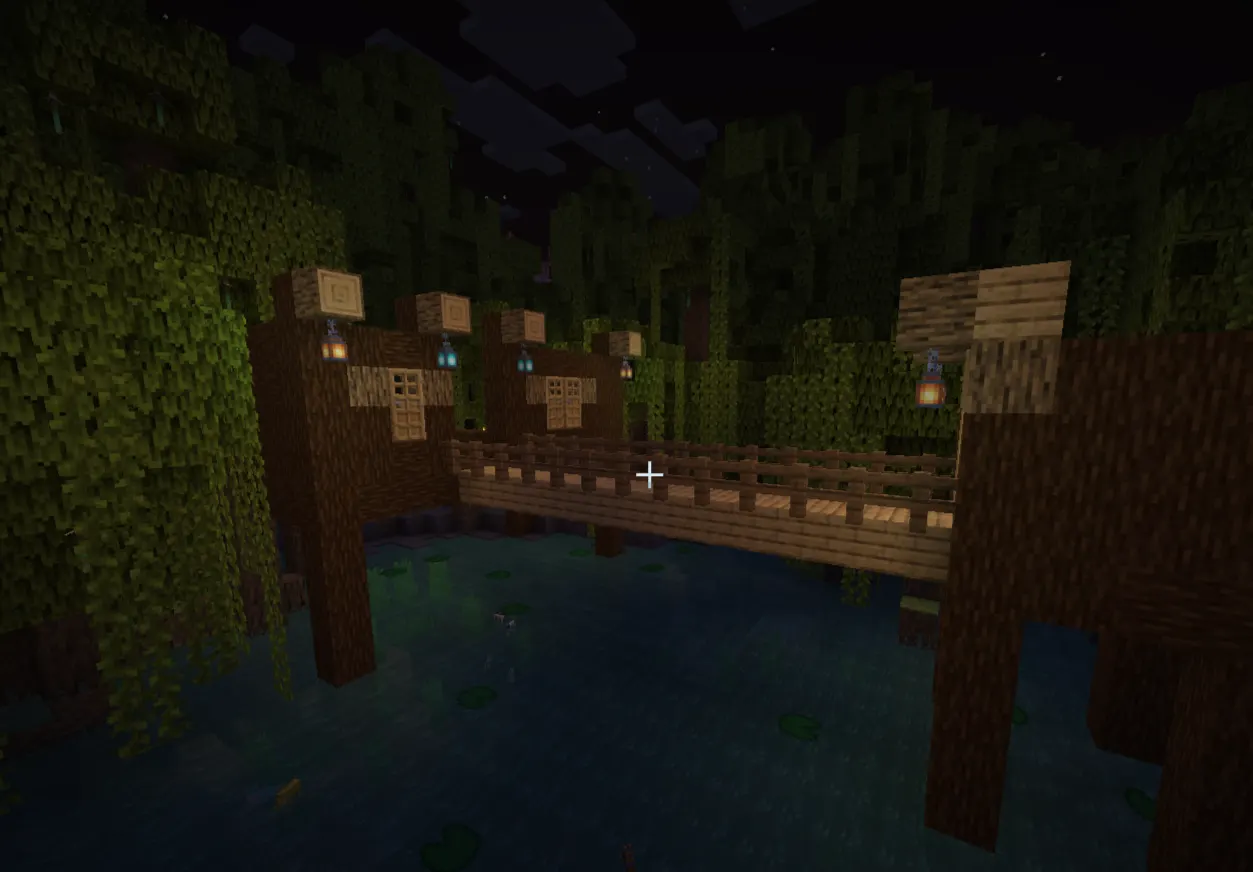
This biome has one of the strongest visual identities for builders in the game. A few directions that actually work:
Stilt village. Build a series of small platforms on props or wooden pillars above the waterline. Connect them with rope bridges (fences + slabs). The mangrove wood with stripped log pillars going into the water looks exactly like a real mangrove fishing village. Add lanterns and campfires underneath for atmosphere at night.
Swamp witch lair. Lean into the dark side of the biome. Build a low, crooked structure with mossy stone bricks for the base, mangrove wood for the upper structure, and cauldrons everywhere. The color palette works better for this aesthetic than regular oak swamp builds do.
Raised treehouse. Mangrove trees have wide, horizontal canopies. Building inside or above the canopy gives you a naturally sheltered base with filtered light. It's the closest thing to a rainforest platform base in vanilla.
Overwater market. Use the shallow water as a feature rather than working around it. A series of dock stalls connected by boat-accessible channels, all built with mangrove planks, mud brick walls, and bamboo accents (if you've got some from nearby jungles), looks genuinely unique.
Pros and Cons of the Mangrove Swamp (Real Gameplay)
Pros:
-
Unique blocks not easily found elsewhere (propagules, mud, mangrove wood)
-
Strong visual identity for building
-
Froglights are the only light source with that color range
-
Renewable clay through the dripstone method
-
Quiet, low-hostile mob density in daylight
Cons:
-
Mobility is rough without Depth Strider
-
No natural high ground for easy base placement
-
Limited food sources within the biome
-
Navigation is genuinely confusing before you learn the terrain
-
Slime spawning at night can disrupt early camps
Advanced Tips and Hidden Mechanics
Propagules don't need soil. You can plant them directly in water on a clay or gravel bottom. This means you can build artificial floating mangrove islands with roots growing out of ponds you designed.
Frog pathfinding breaks near deep water. Frogs will sometimes refuse to hop toward a destination if they detect deep water between them and it. If you're building a frog enclosure for froglight farming, keep water depth at one block max and add lily pads as "safe zones."
Mud doesn't fall like sand. It's affected by gravity in some versions' tooltip text (early 1.19 bug descriptions confused), but mud is actually a gravity-independent block. You can hang it mid-air, use it in structures without support, or build overhangs with it. Builders who know this use it more freely.
Packed mud converts at the same rate regardless of crafting speed. It's a 1:1 recipe with wheat. If you're scaling a mud brick operation, wheat is your actual bottleneck — not mud production.
Boats are faster than Depth Strider through roots in some movement calculations. If you're doing a long traversal across a mangrove swamp, hopping in and out of boats actually beats running for covering distance quickly, even with full enchanted boots.
Mangrove logs strip to a lighter orange. If you're doing color grading in a build, alternating stripped and unstripped mangrove logs gives a natural two-tone effect that looks less flat than a single color block.
Wrapping Up
The Mangrove Swamp biome gets underestimated. Players who land in it for the first time usually just want to get out. The movement is awkward, the terrain is confusing, and nothing feels immediately useful.
But once you spend real time there, it clicks. The mud brick crafting loop is one of the cleanest in 1.19+. The mangrove wood fills a color gap that acacia doesn't quite cover. Froglight farming gives you a reason to actually interact with the frog system beyond finding them cute. And the building potential if you work with the biome's aesthetic instead of against it is hard to match.
It's not the easiest biome to set up in, but it rewards players who put in the time to figure it out. If you've been avoiding it because it looks inconvenient, go back in with Depth Strider and a boat. It's a different experience entirely.