You just punched your first tree. You made a Crafting table. You banged out a wooden pickaxe and mined a little cobblestone. And now you're standing there with a stack of cobblestone, wondering what to do next.
Here's what you do: craft stone tools immediately.
Most beginners waste the first 5–10 minutes of a Survival world swinging wooden tools at everything. That's a mistake, not because wood tools are useless, but because stone tools are so much better and cost almost nothing. A single exposed rock face or a shallow cave gives you everything you need to make the full stone tool set. And once you have those tools, your survival speed doubles.
This guide covers everything: every stone tool in the game, how to craft each one, when to use it, when to skip it, and how stone tools fit into the bigger picture of Minecraft's progression system. Whether you just started your first survival world or you want to tighten up your early-game efficiency, this is worth reading.
What Are Stone Tools in Minecraft?
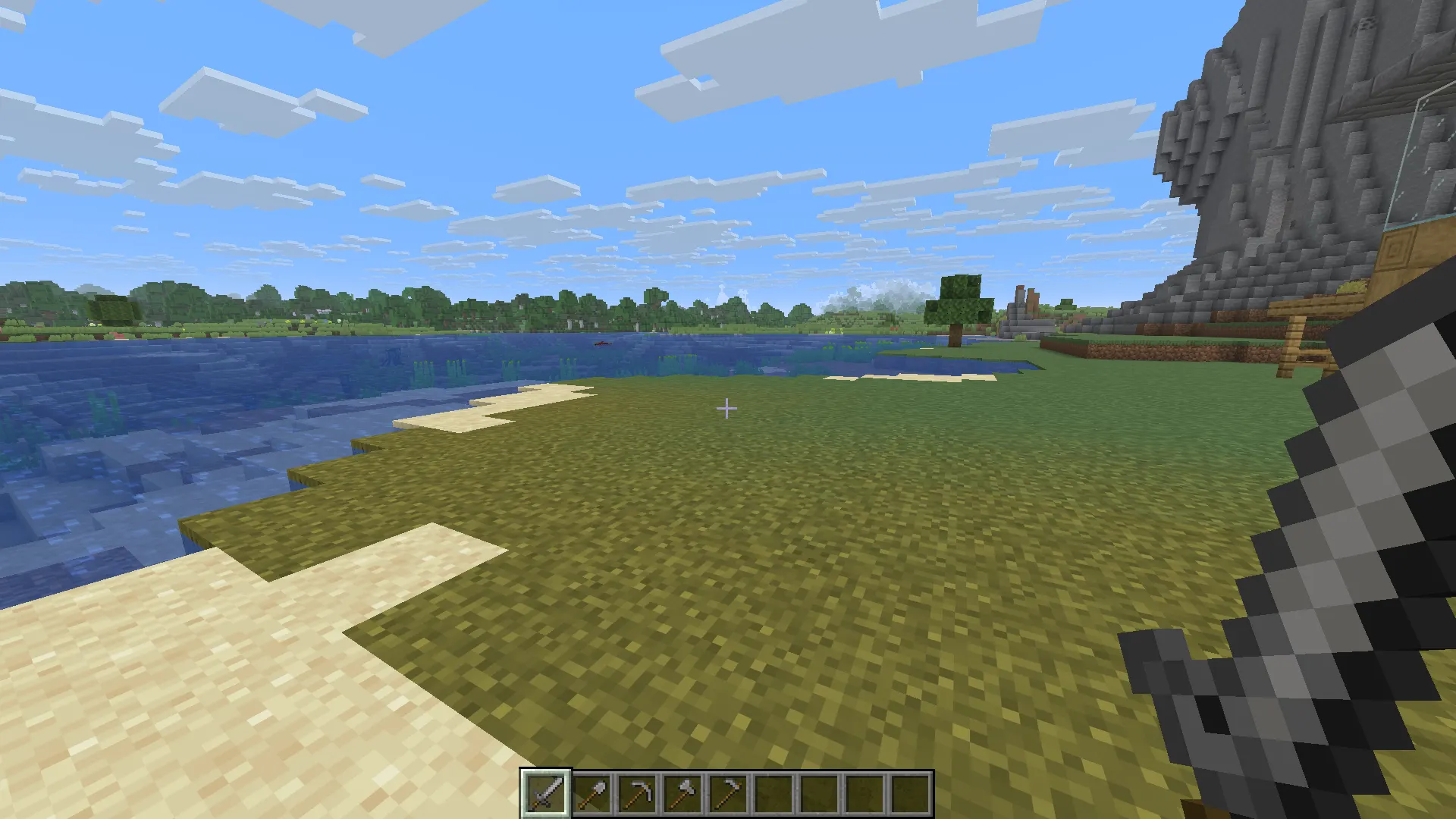
Stone tools are the second tier in Minecraft's tool progression, sitting between wooden tools and iron tools. You craft them using cobblestone, the grey stone blocks you get when you mine regular stone without a Silk Touch pickaxe.
The full stone tool set includes:
-
Stone Pickaxe — mines stone-tier blocks and below
-
Stone Axe — chops wood faster, doubles as a melee weapon
-
Stone Sword — your primary early-game combat weapon
-
Stone Shovel — clears dirt, sand, and gravel quickly
-
Stone Hoe — tills farmland for crops
All five use the same material: cobblestone. There's no second resource to gather. That's what makes stone tools so accessible. You mine stone to get cobblestone, you craft cobblestone into tools, and you go back to mining with tools that are objectively better than what you started with.
The tool progression in Minecraft goes: Wood → Stone → Iron → Gold → Diamond → Netherite
Stone is step two. You don't stay on step two forever. You need to pass through it efficiently rather than jumping straight to iron, which most new players can't do without stone tools to mine the iron ore in the first place.
How to Craft Stone Tools
All stone tools use cobblestone as the material and sticks for handles. Sticks come from planks. Two planks stacked vertically in a crafting grid give you four sticks more than enough.
Here's each tool broken down:
Stone Pickaxe
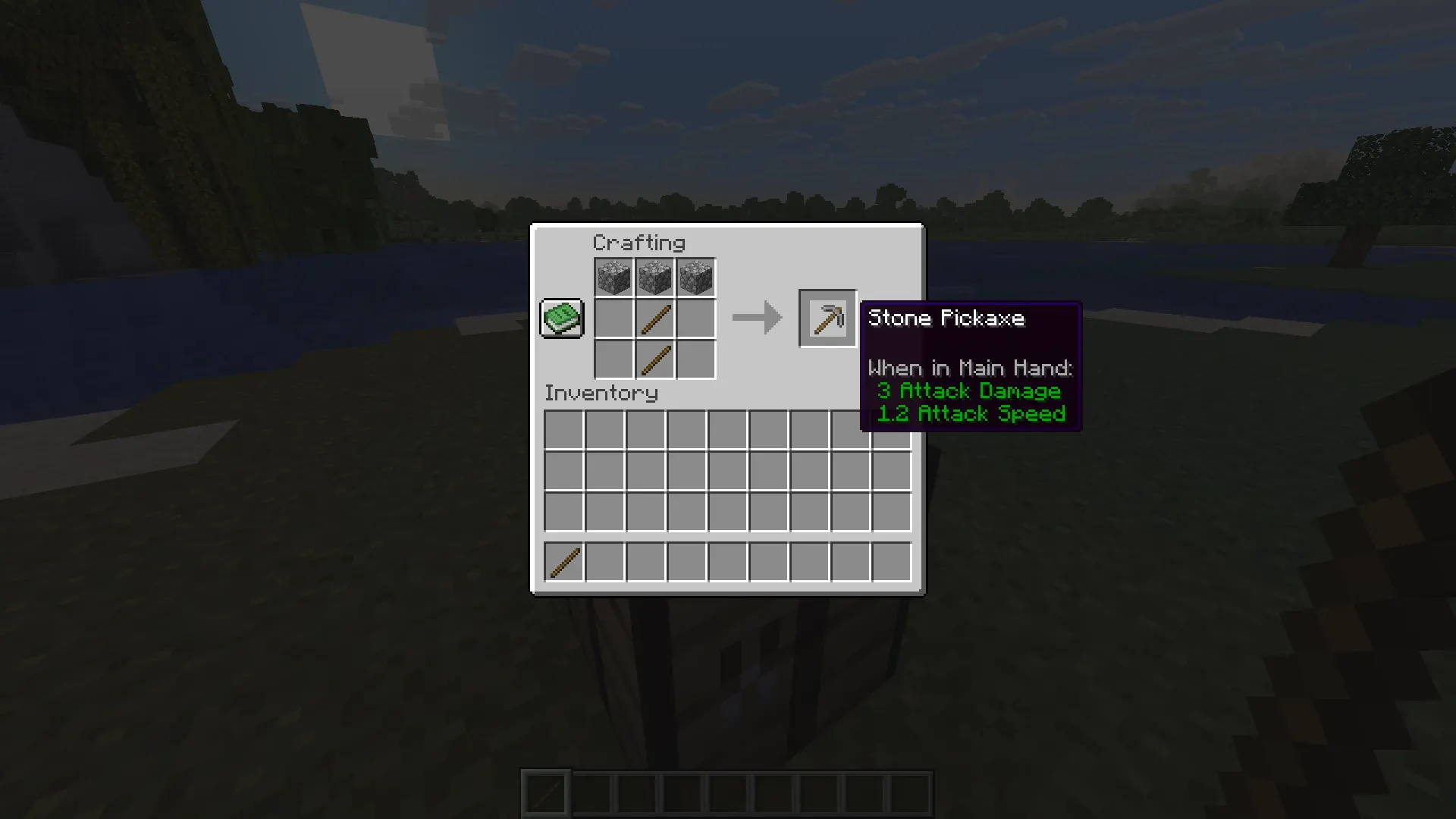
Recipe: 3 cobblestones across the top row, 1 stick in the center, 1 stick below it.
The stone pickaxe is the single most important tool you'll craft in early survival. Full stop. You need it to mine iron ore, and you need iron ore to do basically everything else. A wooden pickaxe can only mine stone, coal, and below. It cannot mine iron. So every second you spend with a wooden pickaxe is a second you're stuck at the bottom of the tech tree.
Durability: 131 uses. That sounds like a lot until you realize you'll burn through one digging out a decent cave. Carry at least two.
Mining speed: 4x faster than by hand. Compared to wooden pickaxes (2x), that's a real difference when you're clearing a lot of stone.
Worth crafting immediately? Yes. This is the first thing you should make once you have cobblestone.
Stone Axe
Recipe: 3 cobblestones in an L-shape on the top-left, 1 stick below, 1 stick below that.
Stone axes chop wood faster than stone pickaxes and deal more damage per hit than stone swords. Wait, more damage than the sword? Yes, and this trips up a lot of players.
A stone axe deals 9 damage (4.5 hearts) per hit. A stone sword deals 5 damage (2.5 hearts). The axe hits harder. The catch is that attack speed axes swing slower (0.8 hits/second vs. 1.6 for swords). So in a prolonged fight, swords win on DPS. But for burst damage on a single hit, the axe is the stronger choice.
Durability: 131 uses.
Worth crafting immediately? Depends on your situation. If you spawned near trees, a stone axe saves you cobblestone for more important tools. If wood isn't an issue, skip it for now and just use your axe slot for a second pickaxe.
Stone Sword
Recipe: 2 cobblestones stacked vertically on top, 1 stick at the bottom.
The stone sword deals 5 damage, double what your bare fist does (1 damage). Against mobs like Zombies and Skeletons, the difference between wood and stone swords is noticeable in how many hits it takes to kill something.
A zombie has 20 HP. With a wooden sword (4 damage), that's 5 hits. With a stone sword (5 damage), that's 4 hits. Against a group? That one fewer hit adds up fast.
Durability: 131 uses.
Combat value: High for early survival. Mobs start showing up after your First night, and a stone sword handles most of them without burning through your health.
Worth crafting immediately? Yes, especially if you're not digging underground in a lit mine. Any time you're outside near dusk, you want this in your hotbar.
Stone Shovel
Recipe: 1 cobblestone on top, 1 stick below, 1 stick below that—single column.
Stone shovels clear dirt, gravel, sand, and clay faster than any other stone tool. If you're clearing ground for a base, filling in ravines, or digging down to bedrock, a stone shovel saves real time.
Durability: 131 uses.
Mining speed: Clears soft blocks faster than a pickaxe or axe would, and doesn't waste durability on the wrong tool.
Worth crafting immediately? Only if you're doing a lot of earthmoving right away. Most players don't need a stone shovel in the first 20 minutes. If your base plan involves a lot of terrain work, craft one. Otherwise, wait.
Stone Hoe
Recipe: 2 cobblestone across the top-left, 1 stick in the center, 1 stick below.
Honest take: the stone hoe isn't urgent. It tills dirt into farmland for growing crops, but farming isn't something you typically set up in the first hour of survival. You're focused on tools, shelter, and staying alive.
Durability: 131 uses.
Mining speed: Hoes actually mine certain blocks quickly, like leaves, hay bales, sponge, but that's rarely the reason you're making one early on.
Worth crafting immediately? No. Make it when you're ready to set up a farm. That cobblestone is better spent on a second pickaxe.
Why Stone Tools Matter in the Early Game
This section sounds obvious: better tools are better. But the reason stone tools matter goes deeper than just numbers.
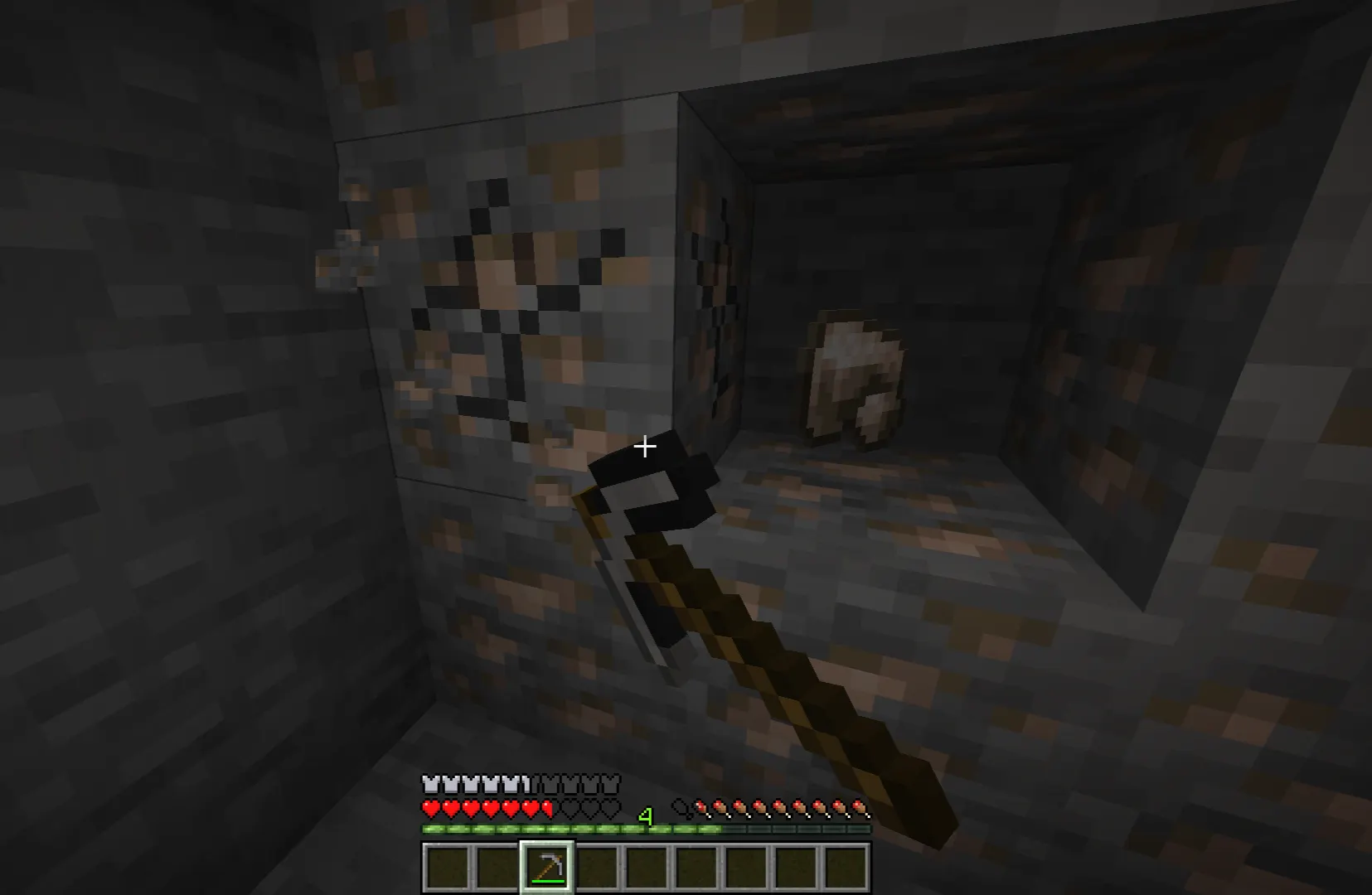
You can actually mine iron. This is the big one. Iron ore requires at least a stone pickaxe to mine. Without one, you can stare at iron deposits all day and never get a single ingot. Stone tools are the iron gateway, and iron is the gateway to everything else: armor, better tools, buckets, rails, shears, and more.
Faster mining means less time underground. More time underground = more exposure to mobs, cave-ins, and lava. Getting in and out of caves quickly isn't just efficient, it's survival. A stone pickaxe mines cobblestone about twice as fast as a wooden one.
Durability goes further. Stone tools last 131 hits versus wood's 59. That's more than double the lifespan for the same basic material cost. You spend less time crafting replacements and more time actually playing.
Better combat keeps you alive. The first few nights in Minecraft are the hardest. Mobs spawn before you have any real protection, and dying early means losing progress. A stone sword handles undead mobs much more cleanly than a wooden one.
Cobblestone is practically infinite. You'll generate hundreds of cobblestone just from normal mining. Stone tools cost 3 cobblestones each for the head. You will never run out of crafting material.
Stone Tools vs. Wooden Tools
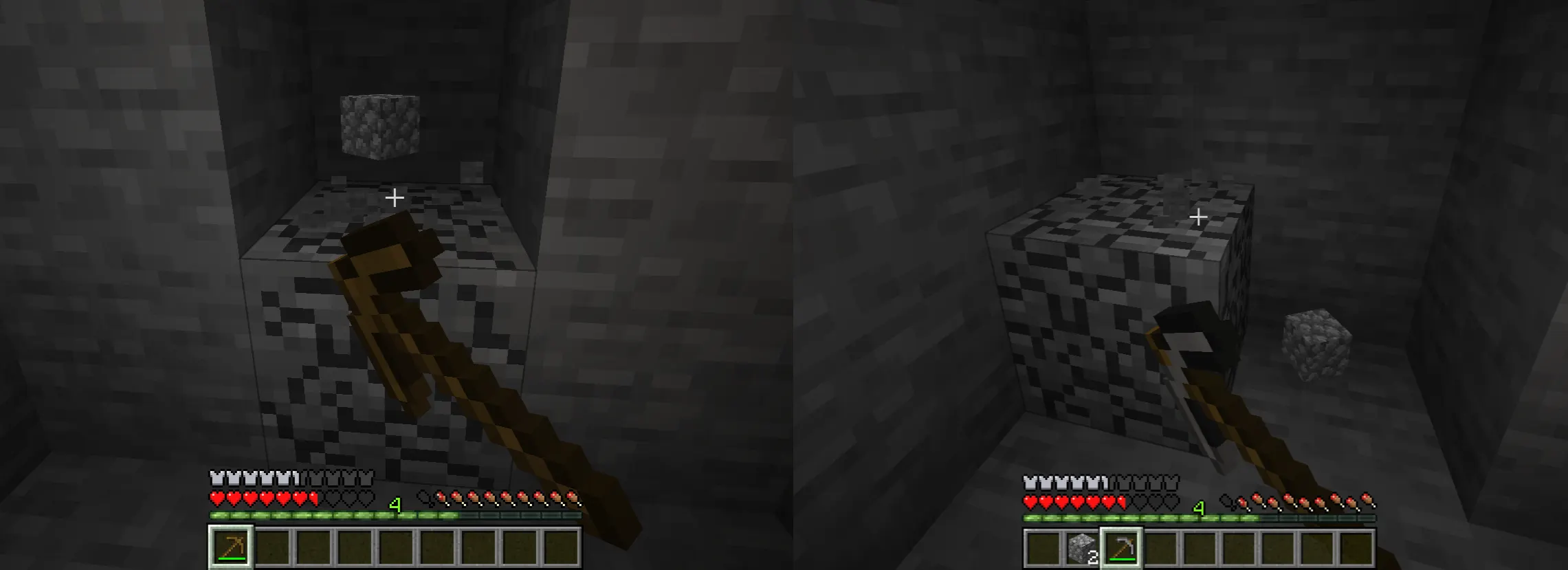
Here's a direct comparison across the stats that actually matter:
|
Stat |
Wooden Tools |
Stone Tools |
|
Durability |
59 uses |
131 uses |
|
Mining speed |
2x base |
4x base |
|
Sword damage |
4 damage |
5 damage |
|
Crafting cost |
Wood planks |
Cobblestone |
|
Iron ore mining |
❌ No |
❌ No (need iron pickaxe) |
Wait, stone pickaxes can't mine iron ore either? Correct. Stone pickaxes mine stone, coal, and iron ore... actually, let me be precise here.
Stone pickaxes can mine iron ore. The mining level for iron ore is "stone or better," meaning stone pickaxes are the minimum required. Wooden pickaxes mine stone-tier blocks only (cobblestone, stone itself); they drop nothing when used on iron ore. Stone pickaxes mine iron ore correctly and drop the raw iron.
The gap between wood and stone tools is much larger than the gap between stone and iron tools in terms of practical gameplay. Wood tools are emergency tools; you make them once to get your first cobblestone, and then you replace them as fast as possible.
Staying on wooden tools past the first few minutes is one of the most common beginner mistakes in survival Minecraft.
Stone Tools vs. Iron Tools
This comparison is more nuanced because the two tiers aren't as far apart as beginners expect.
|
Stat |
Stone Tools |
Iron Tools |
|
Durability |
131 uses |
250 uses |
|
Mining speed |
4x base |
6x base |
|
Sword damage |
5 damage |
6 damage |
|
Mining level (pickaxe) |
Mines iron |
Mines diamonds |
|
Crafting cost |
Cobblestone |
Iron ingots |
Iron tools are better across every stat, but the gap isn't dramatic. Where it really matters is the pickaxe; only iron pickaxes (and above) can mine diamond ore, gold ore, emerald ore, and redstone ore. If you want diamonds, you need an iron pickaxe. That's the same type of hard gate that stone pickaxes represent for iron.
When to upgrade from stone to iron: As soon as you have enough iron ingots. Craft an iron pickaxe first; that's the one that unlocks diamonds and deeper resources. Then craft an iron sword for better combat damage and efficiency. The iron axe and shovel can wait longer.
Where stone tools stay useful: Even after getting iron tools, there are arguments for keeping stone tools around. Stone pickaxes are great for mining out large areas of ordinary stone because you don't want to waste iron pickaxe durability on bulk cobblestone gathering. Experienced players often keep a stone pickaxe in their inventory just for clearing walls and floors.
Best Strategy for Early Game Tool Progression
This is the section that actually changes how you play.
Day 1, first 10 minutes:
-
Punch trees to get wood. Make a crafting table and a wooden pickaxe.
-
Use the wooden pickaxe to mine 15–20 cobblestone from the nearest exposed stone face.
-
Craft a stone pickaxe immediately. Then a stone sword.
-
Use the stone pickaxe to find a cave or dig a staircase mine.
-
Look for coal (black flecks in stone) and iron ore (tan/orange flecks).
-
Smelt iron ingots. Craft an iron pickaxe as soon as you have 3 ingots.
Most players who die on Day 1 do it because they spent too long on the surface gathering wood or exploring instead of going underground quickly to get torches (from coal) and iron.
Which stone tool to craft first: Stone pickaxe. No question. Everything flows from that.
Which to craft second: Stone sword if mobs are a concern, stone axe if you need more wood quickly.
Speedrunning-style tip: Don't over-mine cobblestone. You need 3 for a pickaxe head, 2 for a sword, and 3 for an axe head if you need one. That's 8 cobblestones for a nearly complete toolkit. Mine 20 to be safe and move on.
Smart resource management: Don't carry 200 cobblestones around. It fills your inventory, and you can always mine more. Keep a manageable stack and a crafting table nearby so you can replace tools as they break.
Hidden Mechanics Most Beginners Miss
These aren't secret; they're just things the game never explains directly.
Stone axes deal more damage per hit than stone swords. 9 damage vs. 5 damage. If you're in Java Edition and you land a single critical hit with a stone axe while sprinting, you can kill most common mobs in two hits. Axes also have a chance to disable shields in PvP, which swords can't do.
Mining wrong blocks wastes durability. Every tool has a primary use. Using a pickaxe to dig dirt doesn't break it faster, but it does use up durability without mining faster than a shovel would. Use the right tool for the job.
Two pickaxes in your hotbar beat one. When your pickaxe is about to break, swap to the backup. This sounds obvious, but it's surprisingly easy to break your only pickaxe while surrounded by lava, mobs, or mid-fall. Always carry a spare.
You can craft tools mid-mine. If your pickaxe breaks underground, open your crafting table and make another. Keep spare cobblestone in your inventory for this reason. Running back to the surface every time a tool breaks wastes a huge amount of time.
Stone tools can be used as fuel. Wooden tools burn as fuel in furnaces, stone tools can't, but knowing this keeps you from trying to feed cobblestone equipment into a furnace when you need a quick smelt.
Tool attack damage affects shields (Java Edition). When you hit a player holding a shield with an axe, there's a chance to disable the shield for 5 seconds. This mechanic makes stone axes situationally useful even in later-game PvP scenarios.
Gamqo Tip 💡
Always keep 1–2 extra stone pickaxes in your hotbar when mining underground. When one breaks mid-session, you swap instantly instead of scrambling to craft replacements in the dark. Two cobblestone pickaxes cost less than 10 cobblestone combined, basically free insurance.
Common Mistakes Beginners Make
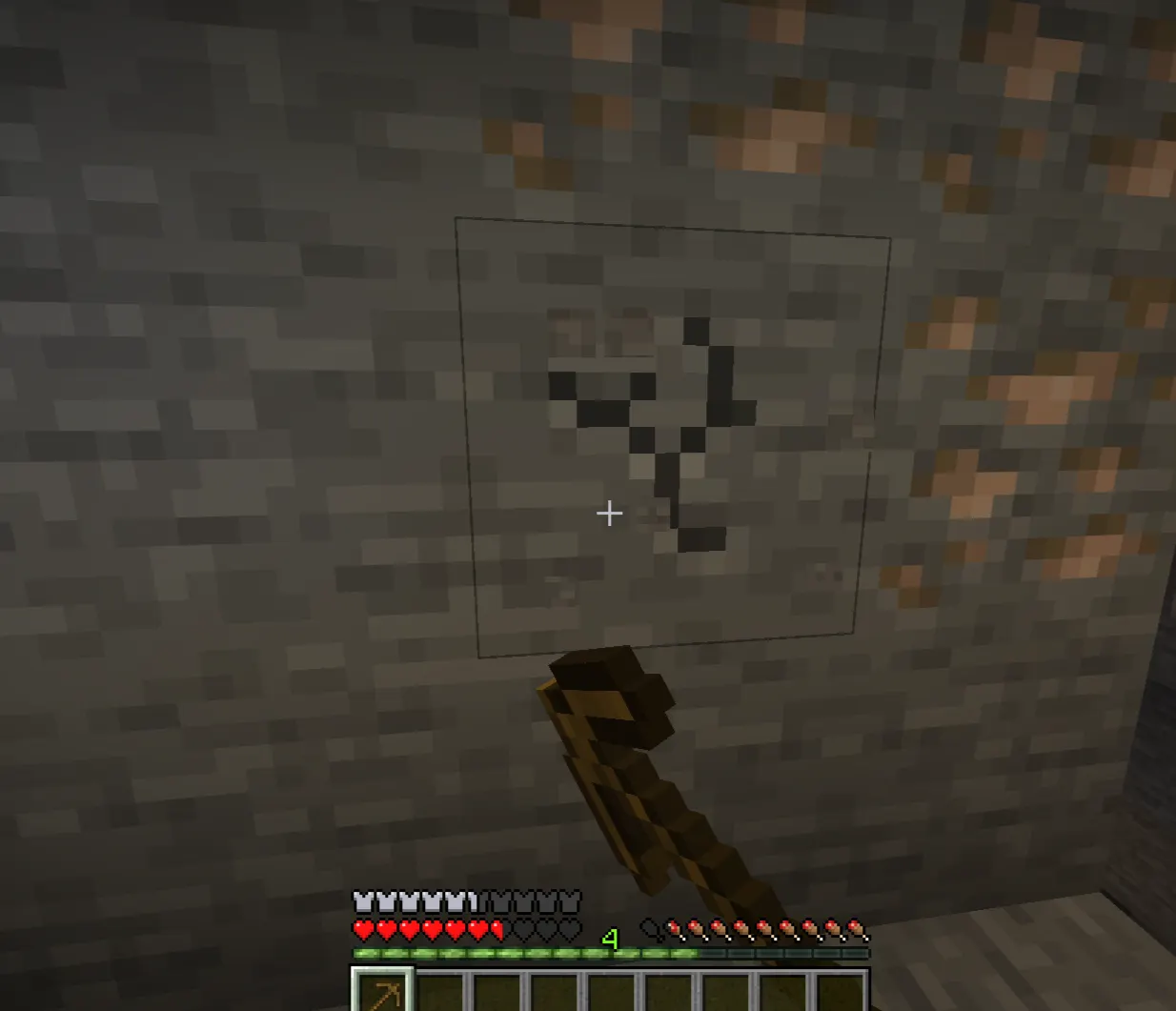
Staying on wooden tools too long. The most common and most punishing mistake. Wooden tools are placeholder tools. They cost wood, which you'll always need for other things, and they barely outlast a short mining session. Grab cobblestone and upgrade the moment you can.
Crafting a full wooden tool set before getting cobblestone. You only need a wooden pickaxe to get started. Making a wooden sword, axe, and shovel before you have stone tools is wasting planks.
Wasting cobblestone on non-essential tools. The stone hoe is fine, but you don't need it on Day 1. The stone shovel can wait. Prioritize the pickaxe and sword, then fill in the rest based on what you're doing.
Not carrying backup tools. Running into a cave with one pickaxe and no spares is how you end up stuck in the dark with empty hands, mining by hand, or dying trying to navigate back out without torches.
Forgetting to replace stone tools with iron. Some players get comfortable with stone tools and forget to upgrade. You want iron tools as soon as possible, specifically because the iron pickaxe unlocks diamonds. Don't get too comfortable.
Mining with the wrong tool. Using a pickaxe on dirt slows you down and wastes durability. Using a sword to break wood instead of an axe does the same. Matching tools to blocks is a basic efficiency habit that pays off over hundreds of hours.
Best Enchantments for Stone Tools (Mid-Game)
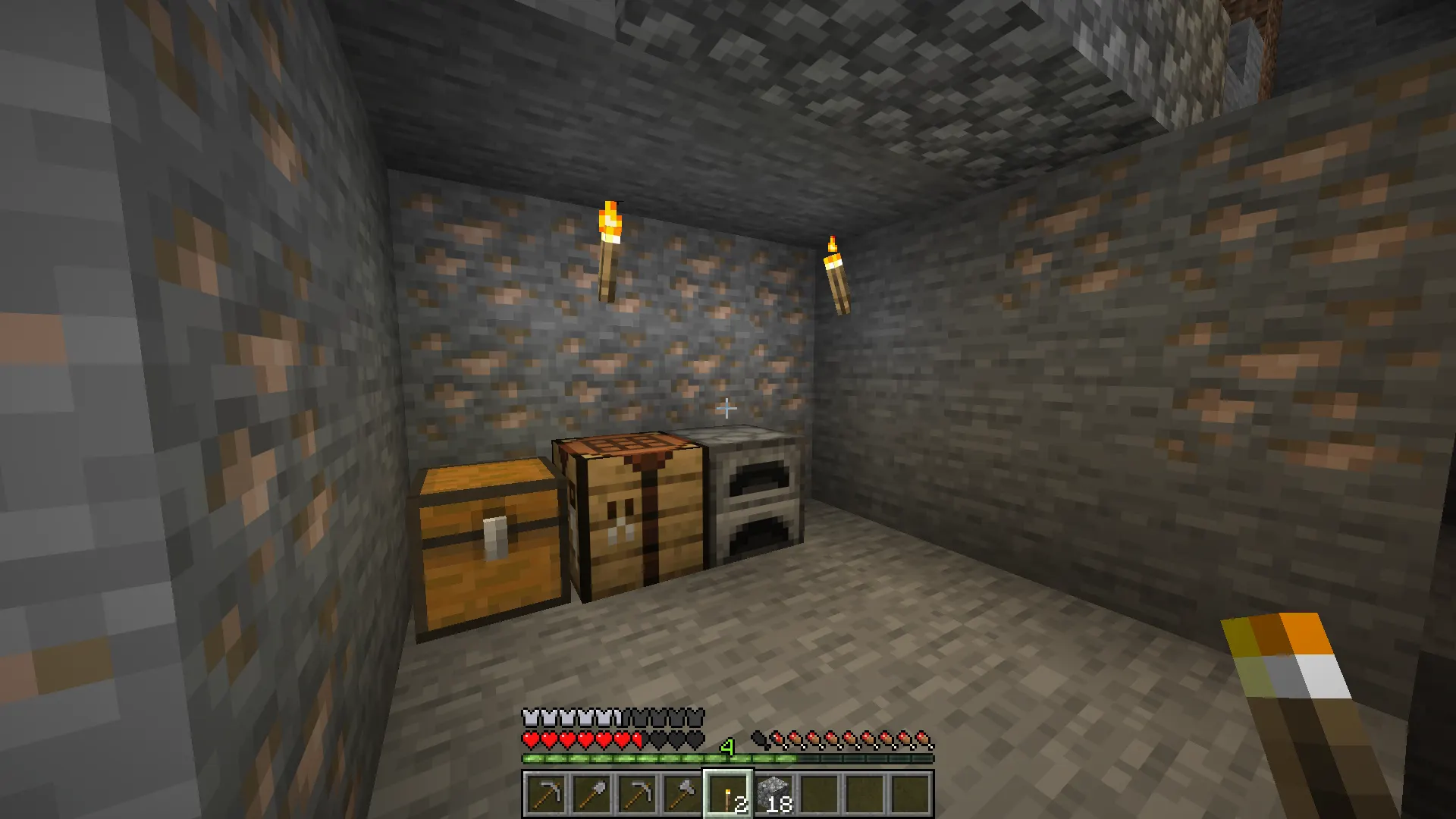
If you've set up an enchanting table and you're still using stone tools, maybe you're on a budget or doing a challenge run; these enchantments are worth knowing.
Efficiency (I–V): Boosts mining speed. Efficiency III on a stone pickaxe makes it noticeably faster than an unenchanted iron pickaxe for basic stone. It's a real upgrade for bulk mining.
Unbreaking (I–III): Reduces durability loss by a percentage per level. Unbreaking III effectively triples tool lifespan on average. A 131-use stone pickaxe becomes statistically equivalent to nearly 400 uses. This makes stone tools last long enough to be worth enchanting.
Sharpness (I–V): Applies to the sword. Each level adds 0.5 extra damage (Java Edition). Sharpness II on a stone sword gets you close to base iron sword damage. Worth it if you're stuck on stone for a while.
Fortune (I–III): Technically applicable to pickaxes, but Fortune is rare enough that you'd want it on an iron or diamond pickaxe, where it can affect diamond ore yields. Don't waste a Fortune book on stone.
Wrapping Up
Stone tools are a short chapter in Minecraft's progression, but they're one of the most important ones. You spend maybe the first 15 minutes of a survival world on them, and in that time, they unlock everything that follows: iron, better armor, deeper mining, and eventually diamonds.
The players who progress fastest aren't doing anything complicated. They make a stone pickaxe first. They don't linger on wooden tools. They carry backups. They know which tool to make next. That's it.
Once you're comfortable cycling through wood → stone → iron quickly, the rest of early-game survival starts to click into place. And if you're still learning those rhythms, that's what this guide is for.