
The Short Answer
Ancient Cities spawn exclusively in the Deep Dark biome, always centered around Y -52. They generate beneath large mountain biomes, jagged peaks, frozen peaks, and stony peaks because the terrain above needs to be tall enough to push the Deep Dark far underground.
The fastest survival method is finding mountain clusters and digging straight down to Y -52. If cheats are on, /locate structure ancient_city (Java) or /locate structure ancientcity (Bedrock) gets you there in under ten seconds.
What Is an Ancient City?
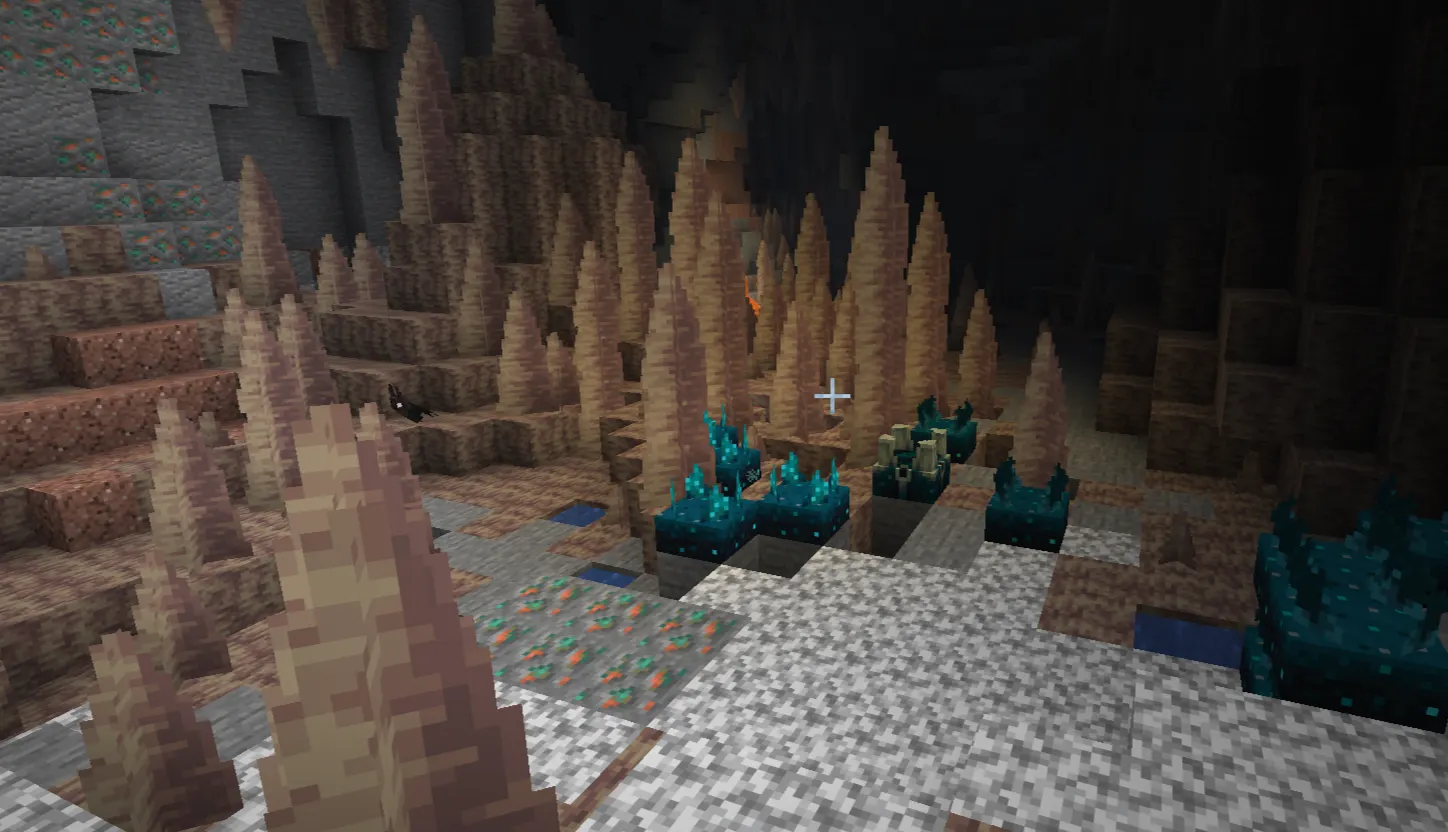
An Ancient City is a massive underground structure added in Minecraft 1.19 (the Wild Update). It generates deep underground inside the Deep Dark biome, built from deepslate, soul sand, sculk blocks, and reinforced deepslate — the last of which you cannot craft or obtain anywhere else.
The city has a central portal frame (non-functional in vanilla Minecraft as of 1.21), an echo room, multiple chest loot rooms, and a network of corridors lined with sculk sensors and sculk shriekers. One wrong step and you have roughly four seconds before a Warden climbs out of the ground.
It's also the only source of the Swift Sneak enchantment and echo shards, the Crafting ingredient for the Recovery Compass. Both are exclusive to Ancient City loot chests — there is no other way to get them in survival.
Where Do Ancient Cities Spawn?
-
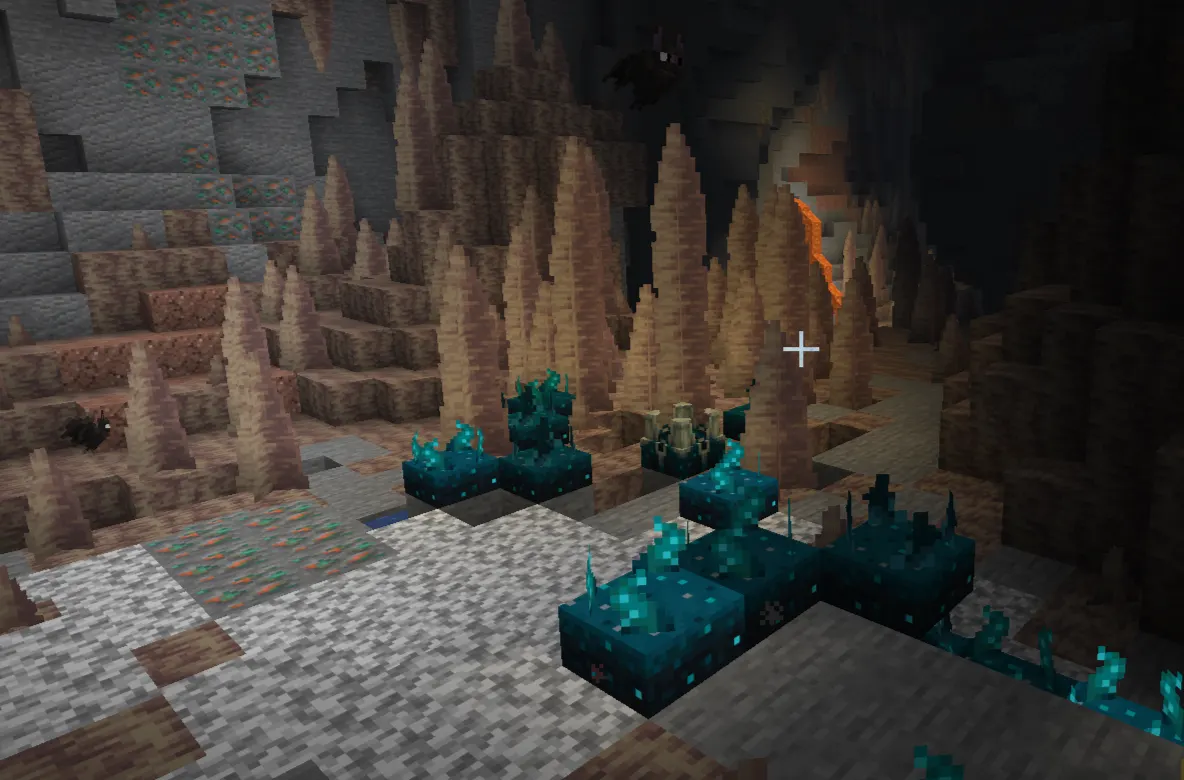
Biome: Deep Dark biome only
-
Y level: City center at approximately Y -52; floor corridors typically between Y -27 and Y -40
-
Surface above: Almost always beneath jagged peaks, frozen peaks, stony peaks, or snowy slopes
-
Spacing: Roughly one per 24×24 chunk region, but terrain constraints prevent many from actually generating
-
Cave geometry requirement: They need a large open underground cavity — cramped or flat underground areas won't produce them
This last point is the one most guides skip. Ancient Cities can technically generate under flat terrain, but they're far rarer there. The generation rules favor dramatic underground cave systems, and tall mountains create that geometry naturally.
One more thing worth knowing: Ancient Cities don't appear in every Deep Dark biome. The Deep Dark is a biome — a large underground zone — and an Ancient City is a structure within it. You can spend an hour in Deep Dark and never find a city if the structure didn't generate there.
How Rare Are Ancient Cities?
Rare enough to be genuinely frustrating. Because they only appear in the Deep Dark, which itself only generates below large mountain ranges, you can play dozens of hours in a seed where nearby terrain is flat or ocean-heavy and never run across one naturally.
The stat: one Ancient City can generate per 24×24 chunk region. The keyword is "can." In practice, expect to search a significant horizontal distance from your spawn if the landscape near you isn't mountainous.
Method 1: Find It in Survival Without Cheats
This is slower than using commands, but it's the method that actually teaches you to read the terrain — and once you understand the logic, it moves faster than most people expect.
Step 1: Find the right mountains
Head toward any large cluster of jagged peaks, frozen peaks, or stony peaks. These are the dramatic mountains that look unclimbable and have exposed stone or ice at the top. Windswept hills and regular snowy mountains are usually too short to have Ancient Cities underneath.
If you're on the surface and the mountain peaks are at Y 150 or above, you're in the right area.
Step 2: Dig to Y -52
Ancient Cities sit at -52. The fastest route is a staircase mine dug from the base of the mountain, not caving through natural tunnels. A 2×1 staircase at a 45-degree angle gets you there in 10–15 minutes of active mining.
Bring at least an iron pickaxe at a minimum. Deepslate starts around Y -8 and mines noticeably slower than stone. Efficiency III or better on diamond or netherite makes the difference.
Step 3: Explore horizontally
Once you're at -52, start mining sideways. You're hunting for the Deep Dark biome — you'll know you've hit it when the cave floor starts showing sculk blocks and sculk veins. These have a dark blue-black color with faint glowing particles and a distinctive texture that looks almost biological.
From the moment you start seeing dense sculk, the Ancient City could be anywhere from 200 to 1,500 blocks away horizontally. Keep moving.
Step 4: Listen
Sculk sensors make a clicking-hissing sound when triggered. If you start hearing them activate from your footsteps alone, the sculk density is high, and you're getting close. This is also your cue to start crouching — or at minimum, to slow down significantly.
Method 2: Use Mountain Biomes as a Surface Compass
Tall mountain biomes are the most reliable above-ground indicator of Ancient City presence. Deep Dark biomes generate in large underground spaces, and those spaces form more often when the surface terrain above is dramatic. The taller the mountain, the better the underground geometry.
Check your Y level with F3 (Java) or the coordinates display (Bedrock). If a mountain peak hits Y 180 or higher, dig down from its base. Mountains that are tall almost always have the cave structure needed to support a Deep Dark biome at depth.
Mountain biomes ranked by Ancient City probability: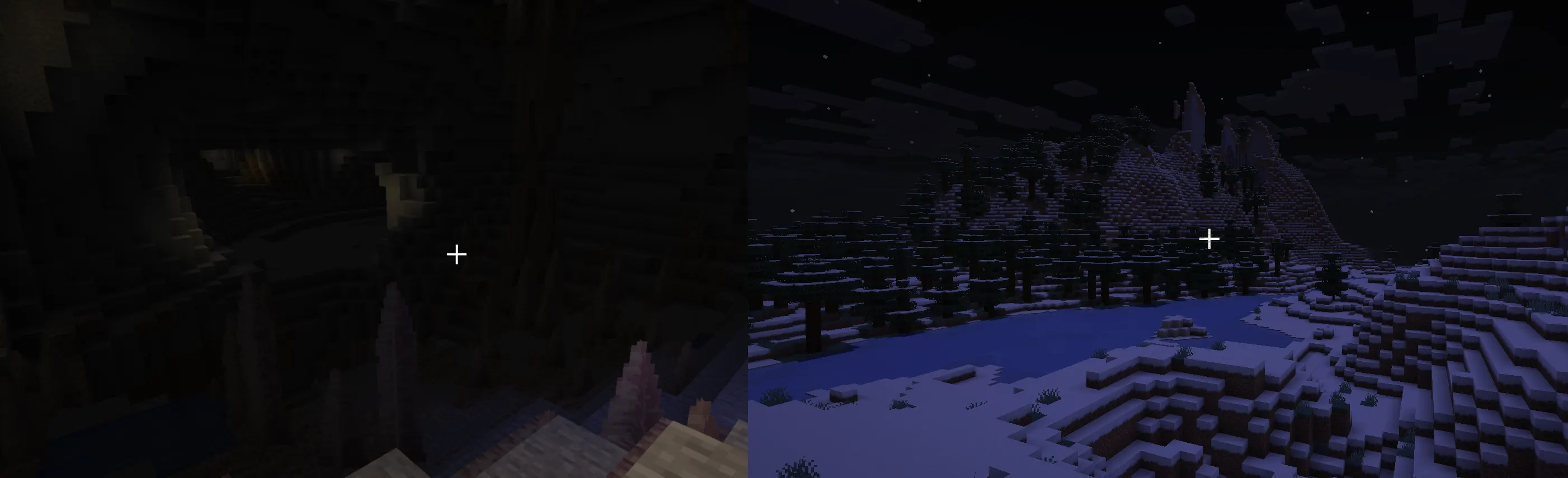
|
Mountain Biome |
Likelihood |
Why |
|
Jagged Peaks |
Highest |
Maximum elevation, the biggest underground cavities |
|
Frozen Peaks |
High |
Same height profile as jagged peaks |
|
Stony Peaks |
High |
Common alongside jagged peaks, an identical cave structure |
|
Snowy Slopes |
Medium |
Significant but lower elevation than the peaks |
|
Windswept Gravelly Hills |
Lower |
Usually not tall enough in most seeds |
Method 3: Cave Exploration (Slower, But You're Already Underground)
If you're already deep in a cave system past Y -30, you can navigate toward an Ancient City by following sculk density.
Sculk and sculk veins appear naturally in the Deep Dark biome. If you're in a large, open cave below Y -40 and start seeing these dark, tentacle-veined blocks, you're in Deep Dark territory. Sculk density increases as you approach a city — inside the city itself, nearly every surface is covered.
What to look for:
-
Sculk blocks: Dark blue-black with glowing particles
-
Sculk veins: Flat, mold-like growth spreading across other blocks
-
Sculk sensors: Have visible tendrils and click when you walk nearby
-
Sculk shriekers: White-rimmed with a raised center — these summon the Warden
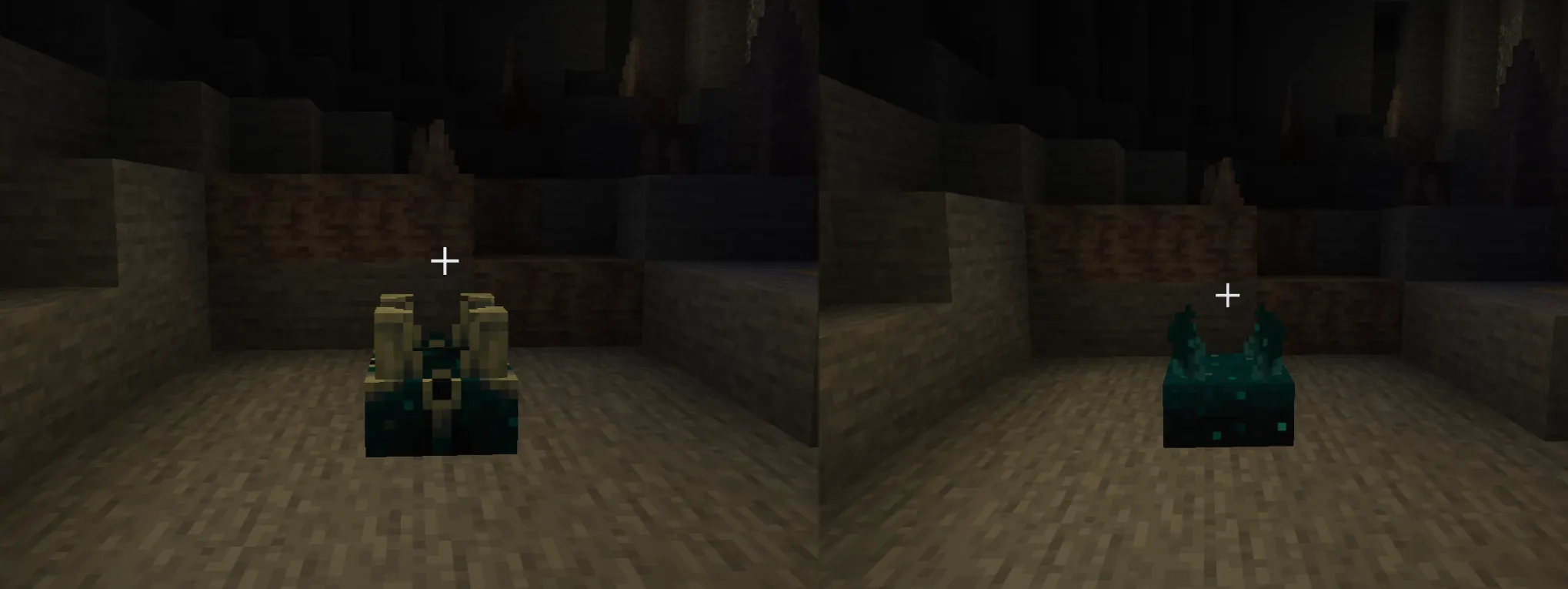
More sculk = closer to the city. Follow it.
The moment you enter high-density sculk, stop running. Stop sprinting entirely. Every vibration you create — footsteps, jumping, placing blocks — gets picked up by sensors. Crouch-walk becomes your default movement from here on.
Method 4: Commands (Java & Bedrock)
The fastest method, assuming cheats are enabled, or you have operator permissions on a server.
Java Edition:
/locate structure minecraft:ancient_city
Bedrock Edition:
/locate structure ancientcity
The command returns X and Z coordinates of the nearest Ancient City center. Y isn't included — it's always around -52 for the center.
Teleport directly:
/tp [your name] [X] -27 [Z]
Use Y -27 rather than -52. Going directly to -52 can spawn you inside blocks or on a sculk shrieker. Arriving at -27 puts you just above the city, where you can drop down safely.
Spectator mode shortcut: Switch with /gamemode spectator, fly straight down through the ground until you see the city, note the coordinates, then return to survival. No digging needed.
Method 5: Chunkbase and Seed Map Tools
If you know your world seed, Chunkbase (chunkbase.com) shows the exact coordinates of every Ancient City. Enter your seed, select your version (Java or Bedrock), and choose "Ancient City" from the structure list.
Get your seed in-game with /seed — this works in both editions and doesn't require cheats in Java single-player.
Chunkbase is accurate for most seeds but can occasionally miss structures in unusual terrain. Treat it as a reliable guide rather than a guarantee.
Signs You're Getting Close
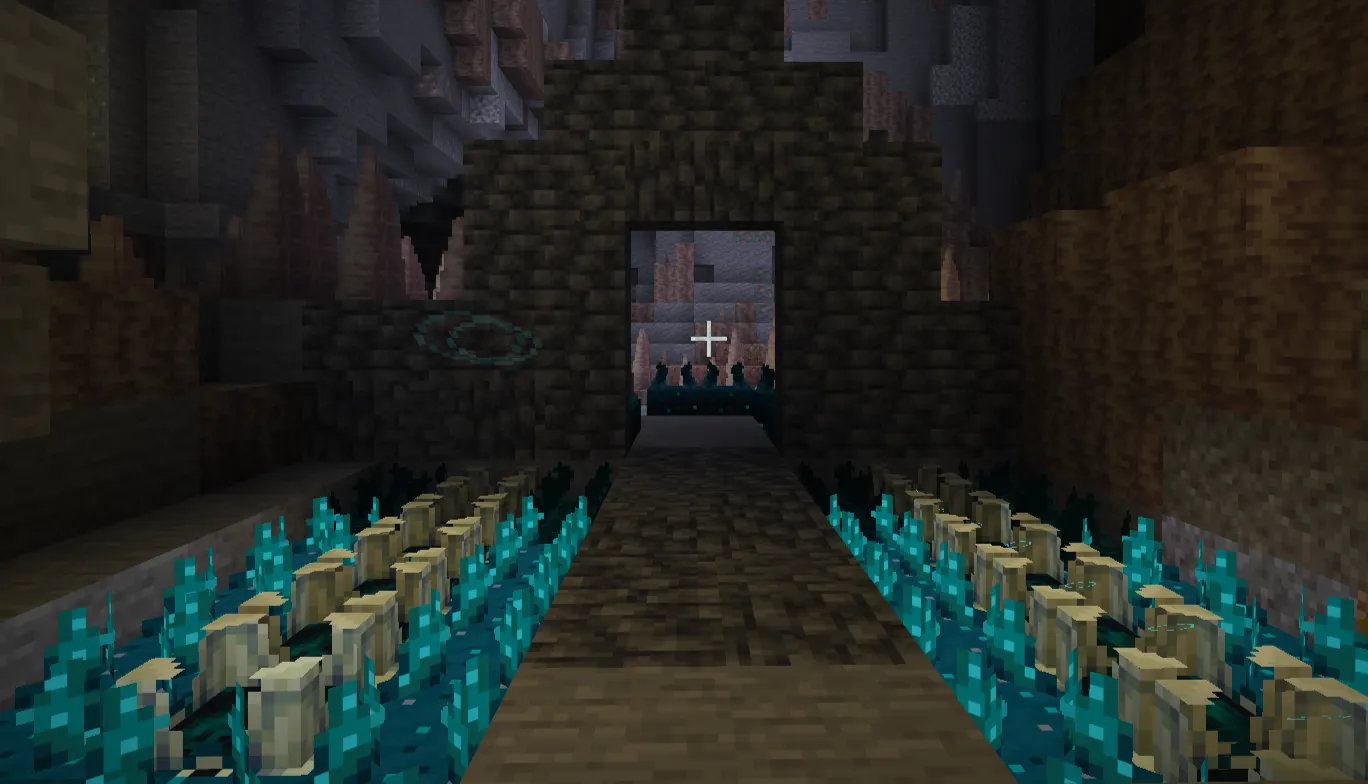
Without commands, you can read the environment to tell how close you are:
-
Sculk density jumps sharply — scattered veins turn into walls and floors covered in sculk
-
Clicking sounds increase — sculk sensors are activating just from your footsteps
-
Sculk shriekers appear — these only generate in and near Ancient Cities
-
The cave opens up — Ancient Cities need a huge open space; the ceiling rises, the floor flattens, and the space starts to feel like a cathedral
-
Soul sand and soul fire appear — Ancient Cities use these throughout their corridors as decoration
-
Deepslate brick patterns show up — the city is built from deepslate bricks and tiles, which stand out clearly against natural deepslate
When you see deepslate bricks underground at depth, you've found it.
Gear to Bring
Go in prepared. This is one of the few structures in the game where under-preparation leads to a death you can't recover from.
Required:
-
Full Protection IV diamond or netherite armor. The Warden deals 30 hearts per hit on Normal. Protection II doesn't cut it. You need Protection IV.
-
Multiple stacks of wool. This is the most important item on this list. Wool placed on the floor blocks sculk sensor vibration detection entirely — you can walk on it without triggering sensors. Bring at least 3 stacks, ideally more.
-
Night Vision potions. The city is pitch dark. Placing Torches creates vibrations; potions let you see without making noise.
-
Good food. Golden carrots or steak. You'll spend most of your time crouching, which drains hunger at a normal rate.
Also worth packing:
-
Bow with Power V (won't kill the Warden, but useful for managing a retreat)
-
Ender chest (if you die with a regular chest inventory, you lose everything; ender chest loot is safe)
-
Carved pumpkin as a spare helmet slot if you're worried about Endermen in the surrounding caves
How Not to Summon the Warden
The Warden spawns after a sculk shrieker activates three times. One trigger does nothing. Two triggers give a warning. The third spawns it.
How to keep it at one or two:
- Walk on wool. Non-negotiable if you're planning a thorough loot run. Place wool on the floor ahead of you as you move, then walk on it. This is the core technique that separates players who clear Ancient Cities from players who die in them. 2. Crouch everywhere. Sneaking drastically reduces your vibration radius. No sprinting, no jumping, no block-breaking unless necessary.
3. Don't fire projectiles. Arrow impacts trigger sculk sensors the same as footsteps. If something needs killing, sword — but the honest answer is that nothing in an Ancient City needs killing until after you've looted it.
4. Count your activations. After two shriekers trigger, stop completely. The Warden warning counter resets after about 300 game ticks (15 seconds) of silence.
5. If the Warden does spawn: Don't engage. Get 35+ blocks away, go completely silent, and wait. It despawns after 60 seconds of detecting nothing. It doesn't phase through walls, so use the city corridors to create distance between you.
6. If it's already on top of you: Sprint to your exit route. The Warden moves at 5.15 blocks per second — fast, but it's not instant teleportation. A direct path to a ladder or shaft works.
Ancient City Loot
Chests appear throughout the city corridors and in a dedicated loot room near the central structure. Each has randomized contents, but these are the notable drops:
|
Item |
Approx. Chance per Chest |
Notes |
|
Echo Shard |
~30% |
Craft 8 + compass = Recovery Compass |
|
Swift Sneak Enchanted Book (I–III) |
~8% |
Exclusive to Ancient Cities |
|
Disc Fragment 5 |
~30% |
Combine 9 for Music Disc 5 |
|
Enchanted Golden Apple |
~7% |
Also in desert temples, but reliable here |
|
Diamond Hoe (enchanted) |
~20% |
Random enchantments |
|
Damaged Netherite Pickaxe |
~30% |
Already worn, but still valuable |
|
Saddle |
High |
Common fill loot |
|
Name Tag |
High |
Common fill loot |
|
Sculk Catalyst |
Very High |
Useful for decoration or farming |
|
Lead |
High |
Common fill loot |
The items that actually matter:
Swift Sneak (I, II, or III) goes on leggings and lets you move faster while sneaking. Level III is the target. This enchantment cannot come from an enchanting table, villager trade, or any other loot pool in the game. Ancient Cities are the only source. That makes it one of the genuinely rarest items in vanilla Minecraft.
Echo Shards — you need 8 of them plus a compass to craft a Recovery Compass, which points to your last death location. Genuinely useful if you die in complex cave systems; not essential if you play carefully.
Disc Fragment 5 — 9 fragments craft into Music Disc 5, the only music disc in the game that can't be obtained any other way. If you care about collecting all the discs, you need these.
Enchanted Golden Apple — also available in other structures, but Ancient Cities reliably carry them. Worth grabbing every time.
Common Mistakes
Breaking into the city through the walls. Every block you mine is a sensor trigger. Enter through corridors and doors, not through deepslate bricks.
Assuming crouching is enough. Sneaking reduces your vibration range significantly but doesn't eliminate it. In a densely sculk-covered area, crouching and still walking across stone can trigger a sensor chain. Wool on the floor is what actually eliminates the risk.
Trying to fight the Warden. 500 health. 250 hearts. It regenerates. There is no unique loot drop for killing it. Leave it alone and wait for it to despawn.
Entering with sub-Protection IV Armor. Protection II diamond armor means the Warden kills you in two hits on Normal difficulty. Don't find that out the hard way.
Spam-placing torches to light the city. One torch placed slowly is fine. Five torches placed quickly in succession trigger multiple sensors. Place one, count to three, place the next.
Teleporting to Y -52 directly. You'll probably land inside blocks and suffocate, or land on a shrieker and instantly start the Warden sequence—Teleport to Y -27 at the Ancient City coordinates instead.
Pro Tips
Scout the surface first. Before you dig anywhere on a fresh world, spend 30 minutes exploring to locate mountain clusters. One good cluster of jagged peaks can have three to five Ancient Cities within a 2,000-block radius.
Write down every city's coordinates. Chest loot doesn't respawn, but Ancient Cities are still worth revisiting for Sculk blocks, deepslate bricks, and reinforced deepslate (which you can look at but not mine, for now). Knowing where multiple cities are is useful.
Silk Touch your pickaxe before going in. Deepslate bricks and tiles can be mined and kept with Silk Touch. They're good-looking building blocks. Reinforced deepslate cannot be obtained in survival, but regular deepslate variants can.
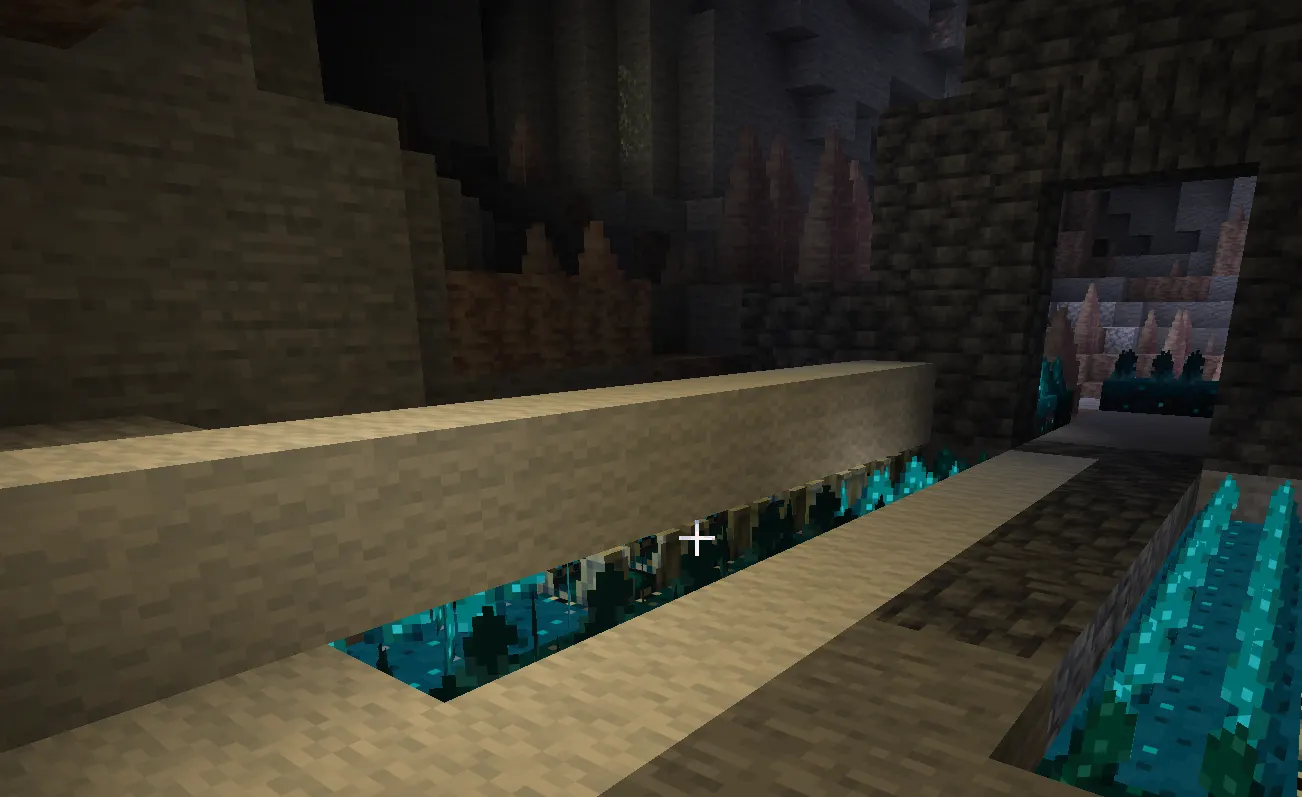
The wool bridge method. Before entering a corridor, place wool on the ground 5–6 blocks ahead of you, then advance onto it. Repeat. You're building a safe walking surface ahead of yourself rather than committing to unknown terrain.
Loot priority if detected. If you trigger the Warden and need to run, grab the Swift Sneak book first if you can see one. Everything else can come from a second run.
Java-only F3 biome check. Press F3 and look at the "Biome" field in the debug overlay. When it reads Minecraft:deep_dark, you're in the right zone. The city could still be hundreds of blocks away, but you're at least in the right biome.
Wrapping Up
Ancient Cities are the toughest structure in the game to find and the most dangerous one to explore. But the logic behind finding them is straightforward once you know it: mountains on the surface mean underground geometry that supports Deep Dark biomes, and Deep Dark biomes are where Ancient Cities live.
The mountain biome strategy works reliably. If you're in a seed with a good jagged peak cluster within a couple thousand blocks of spawn, there's almost certainly an Ancient City underneath. Dig to Y -52, walk on wool, keep count of your shrieker triggers, and don't fight the Warden.