Best Sword Enchantments in Minecraft (2026 Ranked List)
A sword with the wrong enchantments still kills things. A sword with the right ones does it faster, keeps its edge for hundreds of hours, and pays for itself in mob drops. The gap between "fine" and "actually good" comes down to about six enchantments, one decision you only get to make once per sword, and a couple of traps that look useful and aren't.
For most players building one main sword, the answer is Sharpness V, Unbreaking III, Mending, and Looting III, with Sweeping Edge III added on Java Edition. Fire Aspect and Knockback are optional and depend on how you fight. Smite and Bane of Arthropods only earn a slot on a dedicated second sword, because Sharpness already covers everything they cover and more.
Quick Answer: Best Sword Enchantments in Minecraft
|
Rank |
Enchantment |
Best For |
Why It Matters |
|
1 |
Sharpness |
Every all-purpose sword |
Flat damage boost against any mob or player, no exceptions |
|
2 |
Mending |
Any sword you plan to keep |
Repairs the sword with XP instead of anvil materials |
|
3 |
Unbreaking |
Any sword you plan to keep |
Stretches durability so Mending has less to catch up on |
|
4 |
Looting |
Farming, general survival |
More and better drops from almost everything you kill |
|
5 |
Sweeping Edge (Java only) |
Crowds, mob grinders |
Turns the sweep attack into real AoE damage |
|
6 |
Smite |
A dedicated undead/Wither sword |
Far more damage than Sharpness, but only against undead |
|
7 |
Fire Aspect |
Specific PvE setups |
Adds a burn, but the burn can ruin farm designs |
|
8 |
Knockback |
Situational safety |
Buys space, but works against you in tight spaces |
|
9 |
Bane of Arthropods |
Rarely worth it |
Only affects spiders, cave spiders, and silverfish |
|
10 |
Curse of Vanishing |
Never intentional |
Destroys the sword on death instead of dropping it |
Best Overall Sword Setup: Sharpness V, Unbreaking III, Mending, and Looting III is the sword you build first and use for almost everything. On Java, slot in Sweeping Edge III too since it doesn't compete with anything else on the list. That's five enchantments on one sword, which an anvil can handle without hitting "Too Expensive!" if you combine the books in the right order (more on that below).
Ranking Every Sword Enchantment
Sharpness
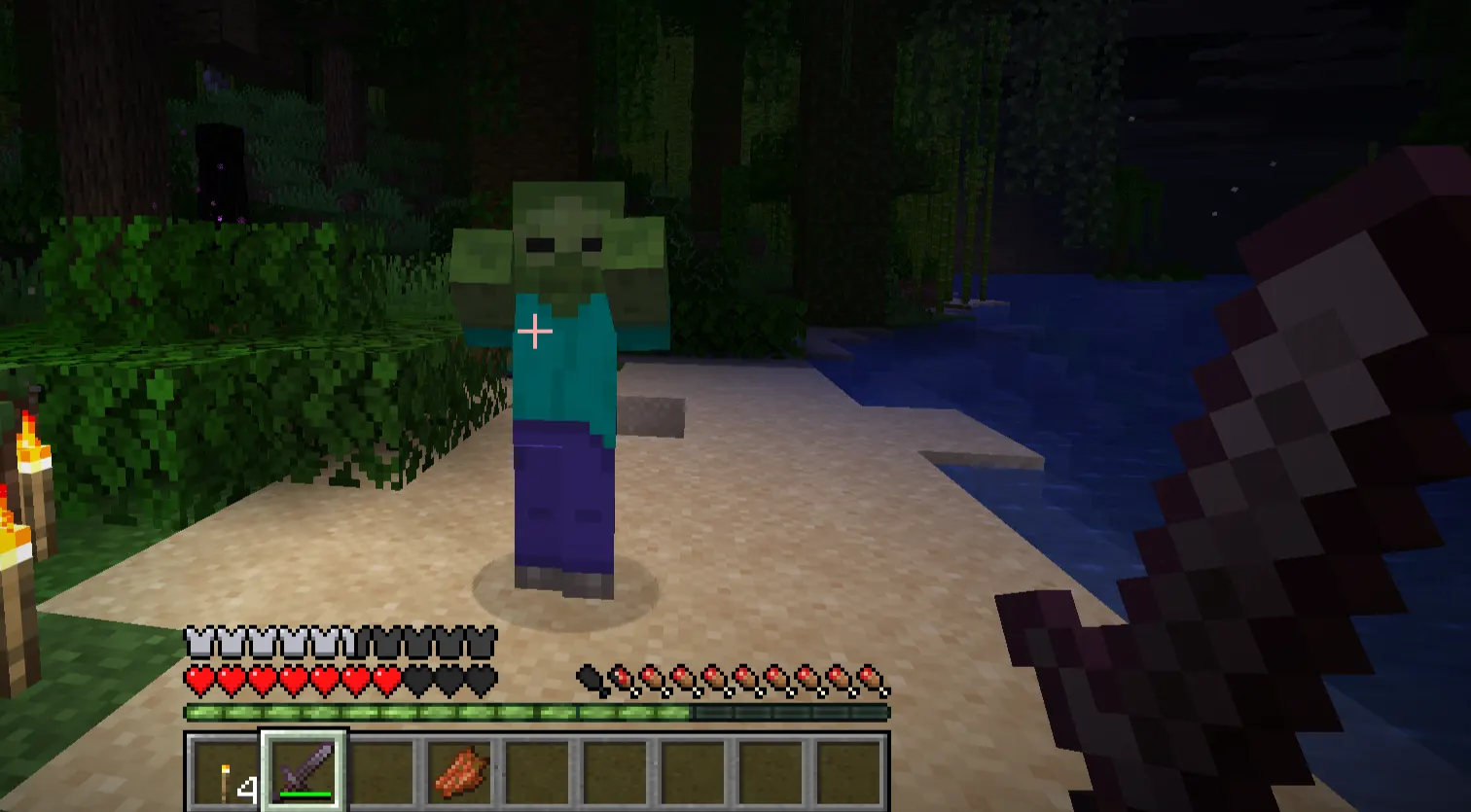
What it does: Adds flat bonus damage to every hit, against any mob or player, with no exceptions. The bonus follows a simple formula: 1 + 0.5 × (level − 1). That works out to +1 at level I and +3 at level V. Since the 1.21 combat update, Sharpness also scales your sweep attack, so it isn't just a direct-hit enchantment anymore.
How useful it is: This is the enchantment. If you only ever put one damage enchantment on one sword, it's this one.
Best use cases: General survival, exploration, mixed-mob fights, PvP, anywhere you don't know exactly what you're about to hit.
Advantages: Works on everything. Compatible with an axe if you switch weapons. No downside.
Disadvantages: Against undead specifically, Smite does more damage per hit. That's the only real trade-off.
Best combinations: Sharpness V + Unbreaking III + Mending + Looting III, with Sweeping Edge III on Java.
Smite
What it does: Adds bonus damage against undead mobs only, Zombies, skeletons, husks, Drowned, strays, phantoms, zoglins, and the Wither. The bonus is 2.5 damage per level, so Smite V hits for +12.5 damage against those targets, well above what Sharpness V manages.
How useful it is: Devastating in the right fight, dead weight in every other fight. Smite is mutually exclusive with Sharpness, so putting it on your main sword means giving up your best all-purpose weapon.
Best use cases: Zombie sieges, skeleton farms, the Wither fight specifically, any build centered on undead XP or drop farming.
Advantages: The highest per-hit damage of any sword enchantment against its target category. Makes the Wither fight noticeably shorter.
Disadvantages: Useless against Creepers, Spiders, Endermen, illagers, and every player you'll ever PvP.
Best combinations: Smite V + Unbreaking III + Mending + Looting III, kept as a second sword rather than your primary.
Bane of Arthropods
What it does: Adds 2.5 bonus damage per level against arthropods, spiders, cave spiders, and silverfish, and applies Slowness IV on hit. Max level V.
How useful it is: Weak. Spiders aren't especially dangerous, silverfish rarely show up in numbers worth building a sword around, and the mobs this enchantment targets aren't the ones that threaten a survival playthrough.
Best use cases: Silverfish infestations in old structures, if you happen to already have a book from an enchanting table roll. Not worth building toward.
Advantages: The Slowness effect is genuinely useful for crowd control if you're swarmed.
Disadvantages: Narrow target list, mutually exclusive with Sharpness and Smite, and most players never fight enough arthropods to justify the slot.
Best combinations: Not recommended as a deliberate build. If you get a book from a librarian or enchanting table, sell it or trade it rather than committing a sword to it.
Looting
What it does: Raises the maximum number of common drops by 1 per level (up to +3 at Looting III) and increases the chance of rare and equipment drops by 1 percentage point per level. It doesn't touch experience.
How useful it is: High. Looting doesn't hit harder, but it's the difference between farming a mob for hours and farming it efficiently. Ender pearls, wither skulls, gunpowder, and shulker shells all become far less painful to collect.
Best use cases: Mob farms, gunpowder and ender pearl grinding, anything where the drop matters more than the kill speed.
Advantages: No downside to having it. Stacks with any damage enchantment.
Disadvantages: None, beyond the anvil cost of adding a fifth enchantment.
Best combinations: Pairs with either Sharpness or Smite depending on what you're farming.
Sweeping Edge
What it does: Boosts the damage of the sword's sweep attack against secondary targets standing near your main target. The direct-hit damage on the mob you're aiming at doesn't change. At level III, the sweep hits for up to 75% of your full attack damage, up from 50% at level I and roughly 67% at level II.
How useful it is: Strong for anyone fighting groups, and it costs nothing on the primary target. The catch: it's Java Edition only. Bedrock's combat doesn't use the same attack-cooldown system, so sweep attacks and the enchantment that boosts them don't exist there.
Best use cases: Zombie sieges, mob grinders, any fight where more than one enemy is standing next to your target.
Advantages: Free damage against groups, stacks with Sharpness, no drawback on single-target fights.
Disadvantages: Bedrock players can't use it at all. On Java, it does nothing if you're fighting one mob at a time.
Best combinations: Sharpness V + Sweeping Edge III is the standard Java crowd-control pairing.
Fire Aspect
What it does: Sets the target on fire on hit. Level II adds roughly 8 seconds of burning, dealing damage over time after the hit lands.
How useful it is: Situational. The burn adds real damage over time, but it also keeps mobs alive longer while they burn, which can mess up farm designs that rely on fast, clean kills, and it can ignite drops or nearby flammable blocks in the wrong setup.
Best use cases: General combat where you don't mind a lingering burn, some PvE setups, and situations where you want a mob dead a few seconds after you've already moved on.
Advantages: Extra damage that doesn't require a direct hit to keep working.
Disadvantages: Burning mobs can ignite grass, wood, or item drops. Not ideal for farms designed around instant kills or specific drop collection.
Best combinations: Sharpness V + Fire Aspect II works fine as a general PvP or exploration sword, less so for optimized farms.
Knockback
What it does: Pushes the target back on hit, scaling with level. Max level II.
How useful it is: A defensive Tool more than an offensive one. It buys distance from creepers, skeletons, and swarms, but it also knocks mobs off ledges, into lava, or out of your attack range, which can slow down a fight you were trying to finish quickly.
Best use cases: Fighting near ledges or lava where you want distance, dealing with creepers without triggering an explosion at melee range, general safety in open areas.
Disadvantages: In tight corridors or farms, it scatters mobs you're trying to keep in a kill zone. Annoying rather than dangerous in most PvP.
Best combinations: Sharpness V + Knockback II if you value spacing over tight control. Skip it on farm-dedicated swords.
Unbreaking
What it does: Gives the sword a chance to ignore a durability hit each time it's used. Max level III meaningfully stretches how long the sword lasts between repairs.
How useful it is: Close to mandatory. It's cheap to add and it means fewer trips to an anvil.
Best use cases: Every sword you intend to keep using.
Best combinations: Always paired with Mending where possible.
Mending
What it does: Repairs the sword using experience orbs instead of anvil materials. It's a treasure enchantment, so it can't be rolled at the enchanting table, only from villager trades, fishing, or structure loot.
How useful it is: Extremely. A sword with Mending and a steady source of XP effectively never breaks.
Best use cases: Every sword you plan to use long-term.
Disadvantages: You need to actually collect XP for it to matter. A sword sitting in a chest doesn't repair itself.
Best combinations: Mending and Unbreaking together on the same sword is the standard, they don't compete with each other or with any damage enchantment.
Curse of Vanishing
What it does: Destroys the item on death instead of letting it drop for recovery.
How useful it is: Actively bad on a sword you enchanted yourself. It shows up as an unwanted extra on some trades and loot, not something to add on purpose.
Best use cases: None, unless you're deliberately building a hardcore or PvP-with-stakes rule set where losing gear on death is the point.
Sharpness vs Smite
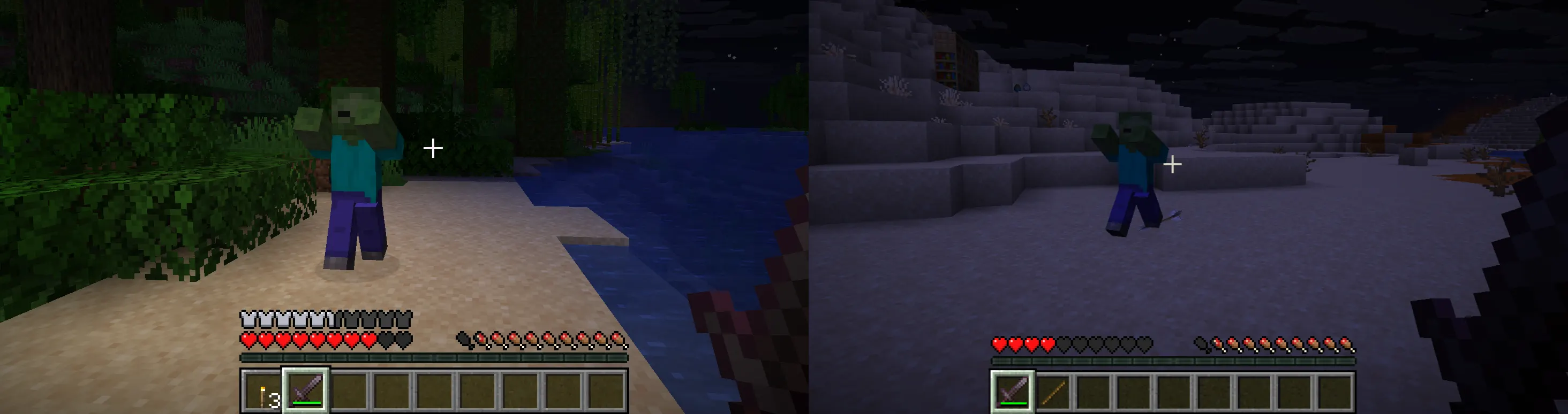
Sharpness works on everything at a flat rate. Smite works only on undead, but hits noticeably harder in that specific matchup, 12.5 bonus damage at level V against 3 for Sharpness V.
For general survival, exploration, and any fight where you don't know what's coming, Sharpness is the better choice because it never wastes its bonus. Against undead specifically, especially a dedicated zombie or skeleton farm, Smite pulls ahead. Against the Wither, Smite is the clear pick since the fight is entirely undead damage from start to finish.
They can't be combined; Sharpness and Smite are mutually exclusive on the same item. Most players end up keeping two swords: Sharpness as the main weapon, Smite as a specialist tool for undead-heavy fights.
Fire Aspect vs Knockback
Both are combat utility enchantments rather than damage boosts, and both come with a real cost.
Fire Aspect adds sustained damage after the hit, which is good in open combat but bad in farms where you want a clean, immediate kill before the mob can wander off burning. It also risks setting nearby blocks or drops alight.
Knockback buys space, which matters in PvP and against dangerous single targets like creepers, but it actively works against you in any situation where you're trying to keep mobs bunched up, mob grinders and sieges included.
Neither is a default pick the way Sharpness or Mending is. Add Fire Aspect if you fight mostly in open areas and don't mind the burn. Add Knockback if spacing matters more to you than keeping enemies close. Players optimizing a farm typically skip both.
Looting: Is It Worth It?
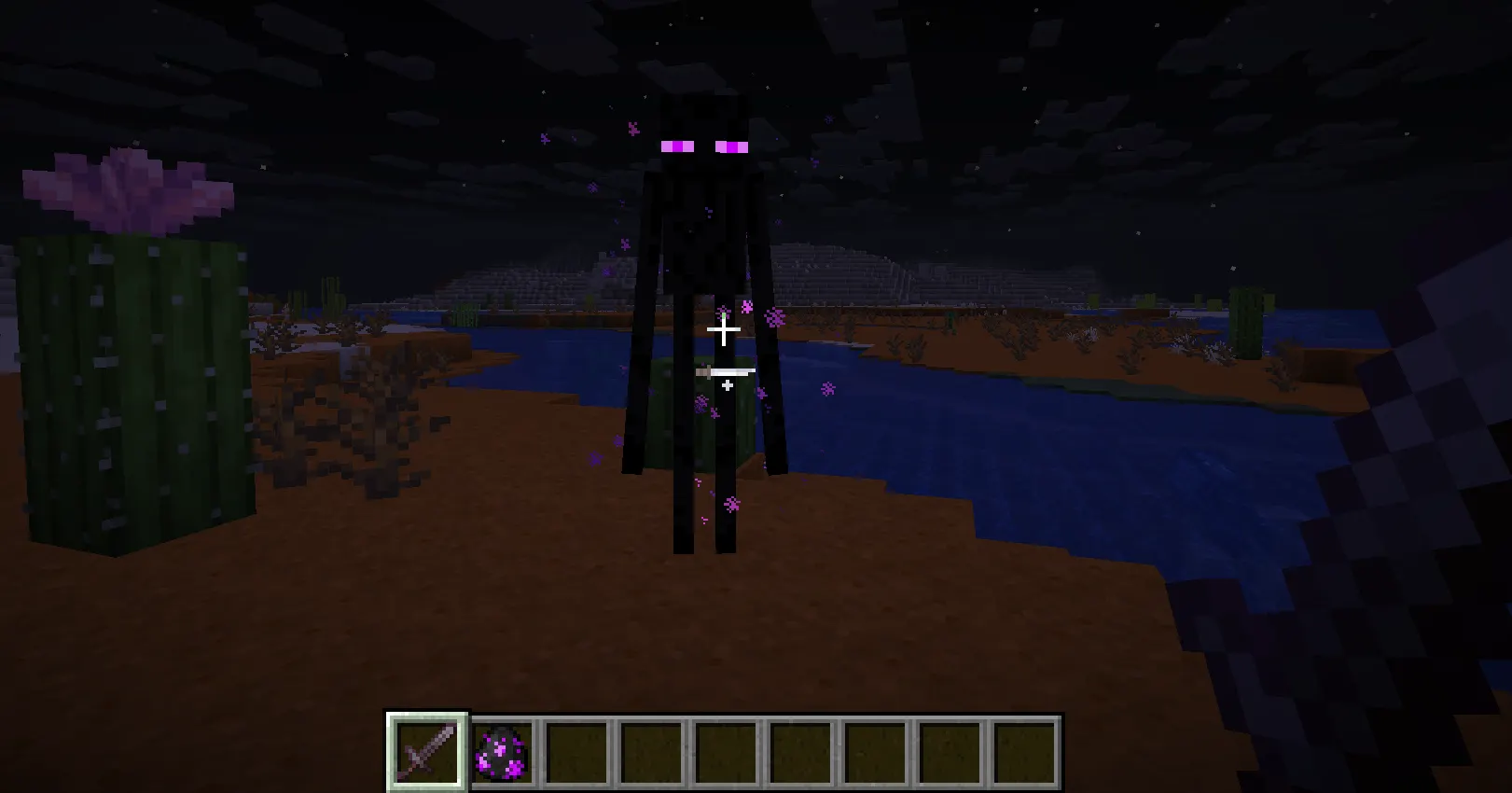
Yes, and it's one of the few enchantments with essentially no downside. Looting doesn't increase damage, so it looks skippable next to Sharpness or Smite, but the drop increase compounds over time. A zombie farm without Looting trickles rotten flesh. The same farm with Looting III starts producing iron and rare drops at a rate that actually matters. For anyone grinding gunpowder, ender pearls, or wither skulls, Looting III isn't optional, it's the entire point of the sword.
Sweeping Edge: Java vs Bedrock
This is the biggest edition gap on this list, and it's worth being direct about it: Sweeping Edge does not exist on Bedrock Edition. Bedrock's combat system doesn't use the attack-cooldown mechanic that Java's sweep attack depends on, so there's no sweep attack to enhance in the first place. Bedrock players fighting groups of mobs rely on positioning, Knockback, and area weapons instead.
On Java, Sweeping Edge III turns the sweep attack into a real secondary damage source, up to 75% of your full hit against everything standing near your target. It costs nothing against a single enemy and adds real value against groups, which is why it's a standard slot on the Java crowd-control build and simply absent from the Bedrock equivalent.
Best Sword Builds
Best All-Purpose Sword
Sharpness V, Unbreaking III, Mending, Looting III. Add Sweeping Edge III on Java. This is the sword you use for 90% of survival: exploring, general mob fighting, caves, and casual combat. Every enchantment on it earns its place, no dead weight.
Best Netherite Sword
Same enchantment list as the all-purpose build, upgraded to a netherite blade at a smithing table once you have the ingot and a diamond sword. Netherite doesn't change which enchantments are worth having, it adds base damage and fire resistance to items carrying an already-good enchantment set. Enchantments carry over through the upgrade automatically.
Best PvE Sword
Sharpness V, Looting III, Sweeping Edge III (Java), Unbreaking III, Mending. This is the mob-farming and general-PvE version of the all-purpose build, with Sweeping Edge treated as required rather than optional since PvE usually means fighting more than one thing at a time.
Best PvP Sword
Sharpness V, Unbreaking III, Mending, and either Fire Aspect II or Knockback II depending on your playstyle, not both. PvP rewards consistent damage and durability over drop farming, so Looting is the enchantment most PvP builds skip. Knockback suits players who fight defensively and want distance; Fire Aspect suits aggressive players who can land a hit and disengage.
Best Sword for Mob Farms
Depends on the farm. Undead farms want Smite V over Sharpness. Non-undead farms (spiders, general mixed spawners) want Sharpness V. Looting III is close to mandatory on any drop-focused farm, and Sweeping Edge III on Java pays for itself the moment more than one mob is in range at once.
Best Sword for Wither Fights
Smite V, Unbreaking III, Mending. The Wither is entirely undead damage, so Smite's bonus applies for the whole fight, and the fight is short and dangerous enough that Looting is rarely worth the enchantment slot here, the goal is speed, not drops.
Minimal Enchantment Sword
Sharpness V and Mending. Two enchantments, low anvil cost, and it covers almost every combat situation a new or resource-conscious player runs into. Add Unbreaking later once you have spare levels.
Enchantment Compatibility
|
Enchantment |
Compatible With Sharpness |
Compatible With Smite |
Recommended? |
|
Smite |
No |
— |
Only on a dedicated undead sword |
|
Bane of Arthropods |
No |
No |
Rarely |
|
Looting |
Yes |
Yes |
Yes |
|
Sweeping Edge (Java) |
Yes |
Yes |
Yes |
|
Fire Aspect |
Yes |
Yes |
Situational |
|
Knockback |
Yes |
Yes |
Situational |
|
Unbreaking |
Yes |
Yes |
Yes |
|
Mending |
Yes |
Yes |
Yes |
|
Curse of Vanishing |
Yes (unwanted) |
Yes (unwanted) |
No |
Sharpness, Smite, and Bane of Arthropods form one exclusive group, pick exactly one per sword. Everything else on this list stacks freely with whichever damage enchantment you choose.
How to Get the Best Sword Enchantments
Enchanting Table: Offers enchantments up to level 30 when surrounded by 15 bookshelves, at the cost of lapis lazuli and experience. Most non-treasure enchantments, including Sharpness, Smite, Looting, and Sweeping Edge, can roll here, though not always at max level on the first try.
Enchanted Books: Found in structure loot chests, sold by librarians, or caught while fishing. Books let you apply an enchantment via anvil to an item that already has other enchantments, which is how most players build a fully-loaded sword rather than relying on a single lucky table roll.
Villagers: A librarian working near a lectern sells random enchanted books at each trading tier. Treasure enchantments like Mending cost roughly double the emeralds of a comparable non-treasure enchantment, and every book trade also costs one regular book. Curing a zombie villager first cuts the emerald price substantially.
Loot: Chests in Strongholds, dungeons, ancient cities, and other structures occasionally contain pre-enchanted swords or enchanted books, including combinations that would be hard to roll deliberately.
Anvils: Combine two items of the same enchantment to bump it up a level (two Sharpness IV books make a Sharpness V book), or apply a book directly to your sword to add a new enchantment.
Repairing and Upgrading: Combine two damaged swords with the same enchantments on an anvil to restore durability, or use Mending for ongoing repair without spending materials at all.
The efficient path for most survival worlds: get Sharpness and Looting from the enchanting table early, then fill in Mending, Unbreaking, and Sweeping Edge from villager trades and loot as you find them, combining everything on an anvil once you have all the pieces.
Enchantment Order and Anvil Cost
Order matters because every anvil operation on an item increases a hidden "prior work" penalty, and that penalty compounds. Combine two enchanted books together first to merge them into one higher-level or multi-enchantment book, then apply that merged book to your sword in as few separate anvil operations as possible. Applying five books to a sword one at a time in five separate trips costs far more experience than merging books in pairs first and finishing with two or three applications to the sword itself.
The practical order for a five-enchantment Java sword: merge Sharpness IV + Sharpness IV into Sharpness V, merge Looting III with Unbreaking III into one book, merge Mending with Sweeping Edge III into another, then apply both merged books to the sword. That's two operations on the sword instead of four, which keeps the level cost well under the 39-level "Too Expensive!" ceiling that stops further combining.
Common Mistakes
-
Putting Smite on a main sword and then getting frustrated it does nothing against creepers, spiders, or other players.
-
Assuming every enchantment stacks. Sharpness, Smite, and Bane of Arthropods don't; you get one.
-
Skipping Mending and Unbreaking because they don't add damage, then losing a fully-enchanted sword to durability loss mid-fight.
-
Adding Fire Aspect to a farm sword without realizing the burn keeps mobs alive longer and can ignite drops.
-
Treating Knockback as a pure upgrade when it actively scatters mobs you're trying to kill in a tight space.
-
Building toward Bane of Arthropods because a book showed up in a trade, instead of trading it away for something that actually matters.
-
Assuming Sweeping Edge works on Bedrock. It doesn't, and there's no equivalent to substitute in.