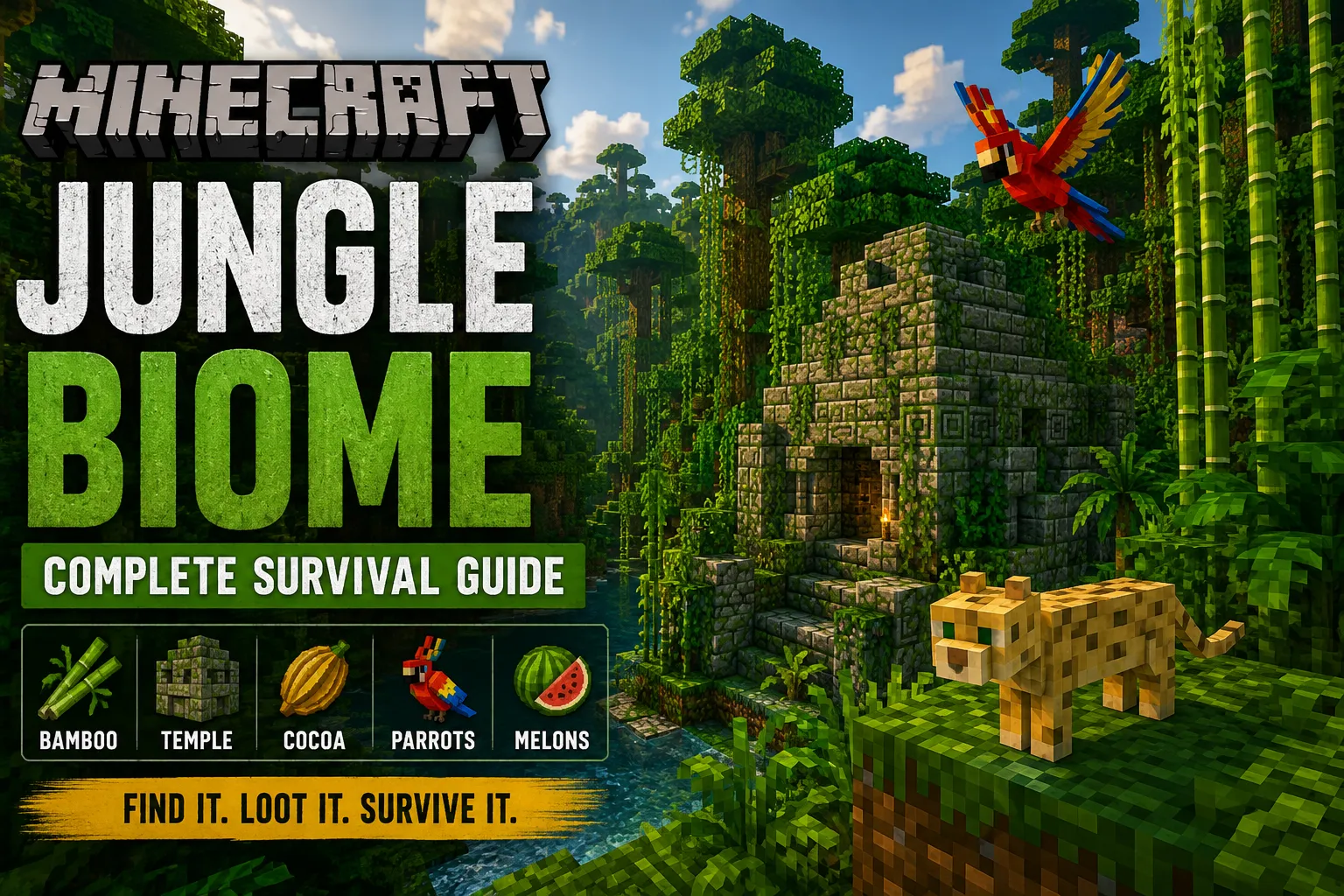
Jungle Biome in Minecraft: Complete Survival Guide
Most Biomes in Minecraft let you see what's coming. The Jungle isn't one of them. Vines block your view, leaves stack three and four deep over your head, and it's entirely possible to walk off a cliff you never saw because you were standing on a canopy the whole time. That's exactly why it's worth learning properly instead of stumbling through it once and never going back.
The jungle biome also happens to hold some of the best early-to-mid-game rewards in the entire Overworld: emeralds and enchanted books from Jungle Temples, the only source of ocelots and parrots, dense wood for building, and bamboo for one of the fastest XP farms in the game. This guide covers how to find one, what each variant offers, how the temple traps actually work, and how to get in, gather what matters, and get back out in one piece.
What Is the Jungle Biome in Minecraft?
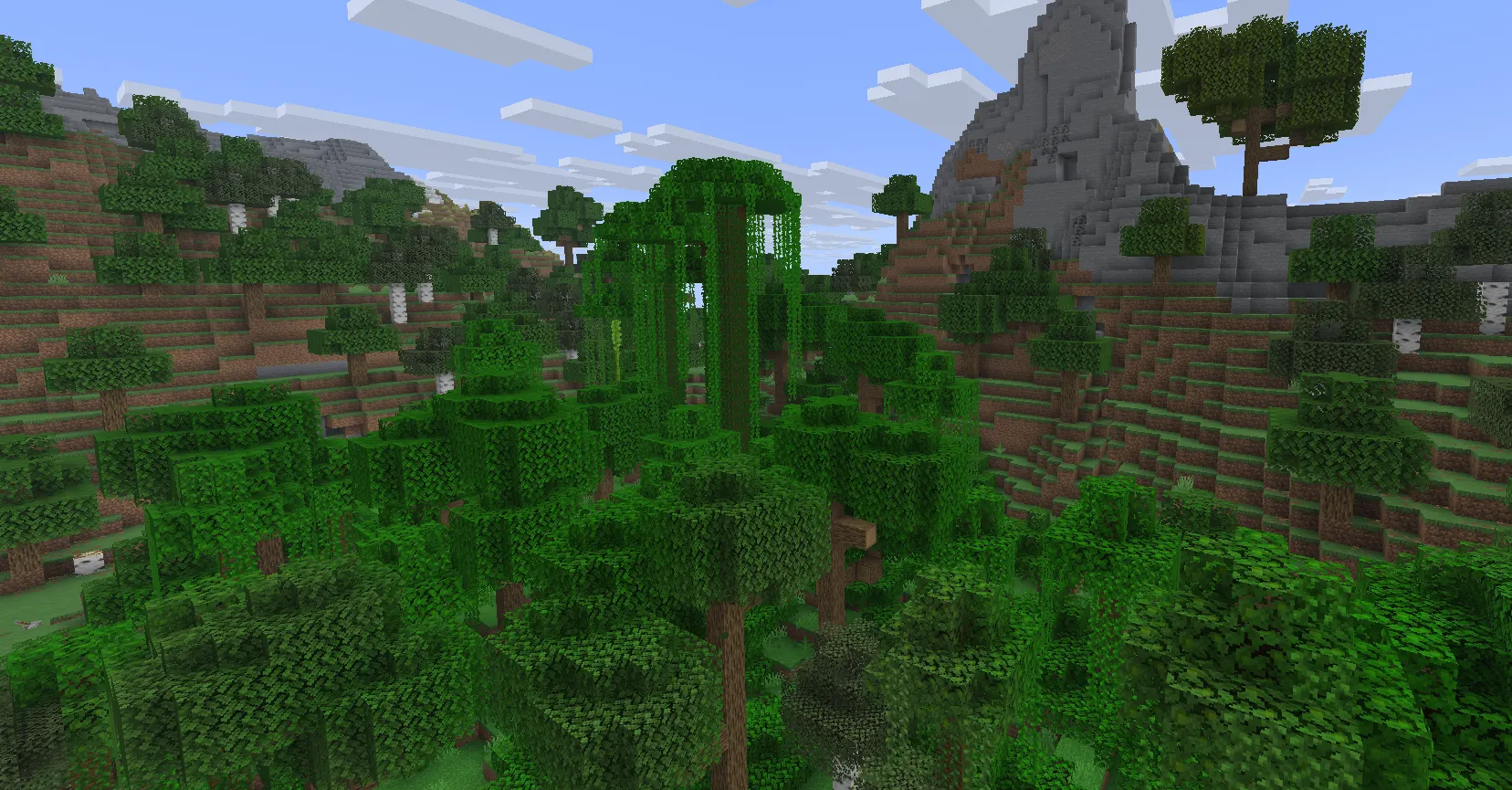
The Jungle is a warm, wet Overworld biome defined by dense vegetation and unusually tall trees. Jungle trees can grow past 30 blocks in height, making them the tallest natural trees in the game, and the big 2×2 trunks branch out into wide canopies wrapped in vines. Underneath all that, the ground is a mess of ferns, short grass, jungle bushes, cocoa-covered logs, and single bamboo stalks poking up between everything else.
The biome runs high on both temperature and humidity, which is why it rains often and why melon patches, which are exclusive to jungles, generate so frequently there. Dandelions and poppies show up roughly twice as often as they do in most other biomes, and parrots, ocelots, and pandas spawn nowhere else in the game.
Jungles usually border forests, plains, deserts, birch forests, dark forests, or wooded badlands, and they often sit on top of lush caves, since both biomes need the same high humidity to generate. If you're mining under a jungle and start seeing moss and dripping vines in a cave wall, you're probably close to a lush cave pocket.
The trade-off for all those resources is visibility. You'll frequently walk across a leaf canopy without realizing you've left the ground, and mobs can be standing three feet away, fully hidden by foliage.
How to Find a Jungle Biome
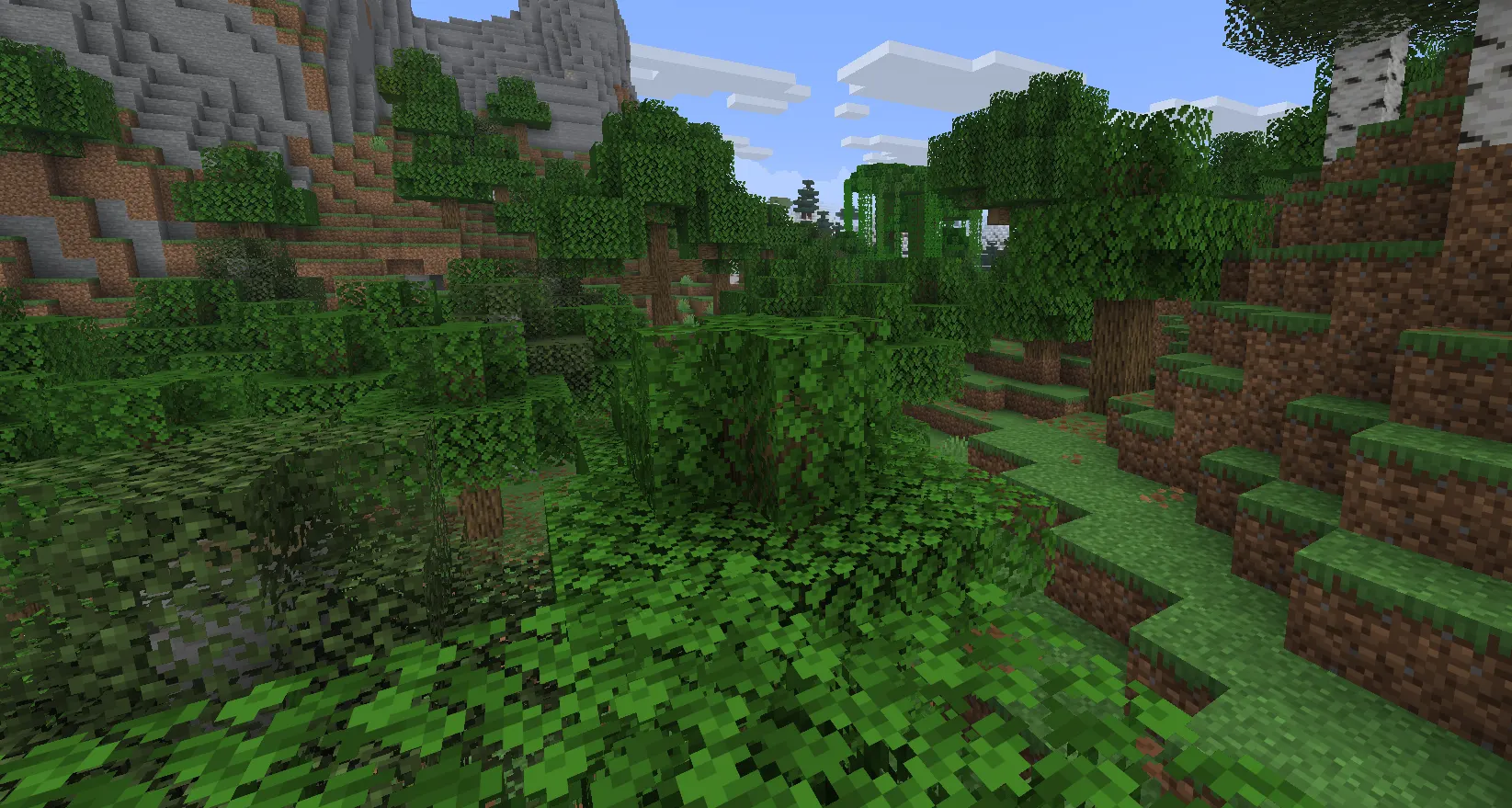
Jungles are not rare exactly, but they're less common than plains, forests, or deserts, so you'll usually need to travel a bit further from spawn to reach one.
Exploring naturally. Boats are the fastest way to scout jungle coastlines, since jungles frequently border rivers and oceans. On foot, watch your F3 debug screen (Java) or coordinates overlay (Bedrock) for the biome name, and keep an eye out for tall, branching silhouettes on the horizon; jungle canopies stick up well above the tree line of any neighboring biome.
Using in-game commands. If you're playing in creative or on a server where commands are allowed, /locate biome minecraft:jungle in Java Edition will return the coordinates of the nearest jungle. This only works with cheats enabled and isn't available in vanilla survival without activating cheats, so it's best treated as a tool for testing or creative building rather than a legitimate survival shortcut.
Reading a map or seed. Community seed databases and third-party map viewers like Chunkbase let you preview jungle locations before you even load into a world. This is useful for planning a base location in advance, especially if you specifically want to spawn near a bamboo jungle or a Jungle temple.
Visual clues from a distance. Look for a wall of unusually bright green foliage that sits taller than the surrounding trees. From far away, jungles read as a solid green mass rather than individual trees, which is a fairly reliable tell before you're close enough to confirm the biome directly.
Jungle Biome Variants

There are three jungle variants in the current game, and they differ enough that it's worth knowing which one you've landed in before you commit to building there.
| Variant | Trees | Bamboo Density | Jungle Temple | Notable Mobs |
|---|---|---|---|---|
| Jungle (regular) | Tall 2×2 mega trees and small trees | Sparse, scattered stalks | Yes | Ocelots, parrots, pandas |
| Sparse Jungle | Fewer, more spread-out trees | Sparse | No | Rusty wolves, warm animal variants |
| Bamboo Jungle | Dense mix of jungle trees and thick bamboo groves | Very dense, forms bamboo thickets | Yes (Java), no (Bedrock) | Same jungle mobs, higher panda odds |
The regular jungle is the version most players picture: mega trees, vines everywhere, and a legitimate chance of a temple. The sparse jungle thins everything out. Trees are fewer and further apart, temples never generate here, and it's home to a jungle-exclusive mob variant: rusty wolves. It's a decent transitional biome if you want jungle resources without full canopy cover, but skip it if you're hunting a temple.
The bamboo jungle is the densest of the three, with tightly packed bamboo groves running alongside the trees. In Java Edition, jungle pyramids can still generate here, tucked between the bamboo stalks and sometimes harder to spot than in a regular jungle. In Bedrock Edition, temples don't generate in bamboo jungles at all, which is one of the more meaningful platform differences to know about before you go looking for one.
Jungle Trees and Wood
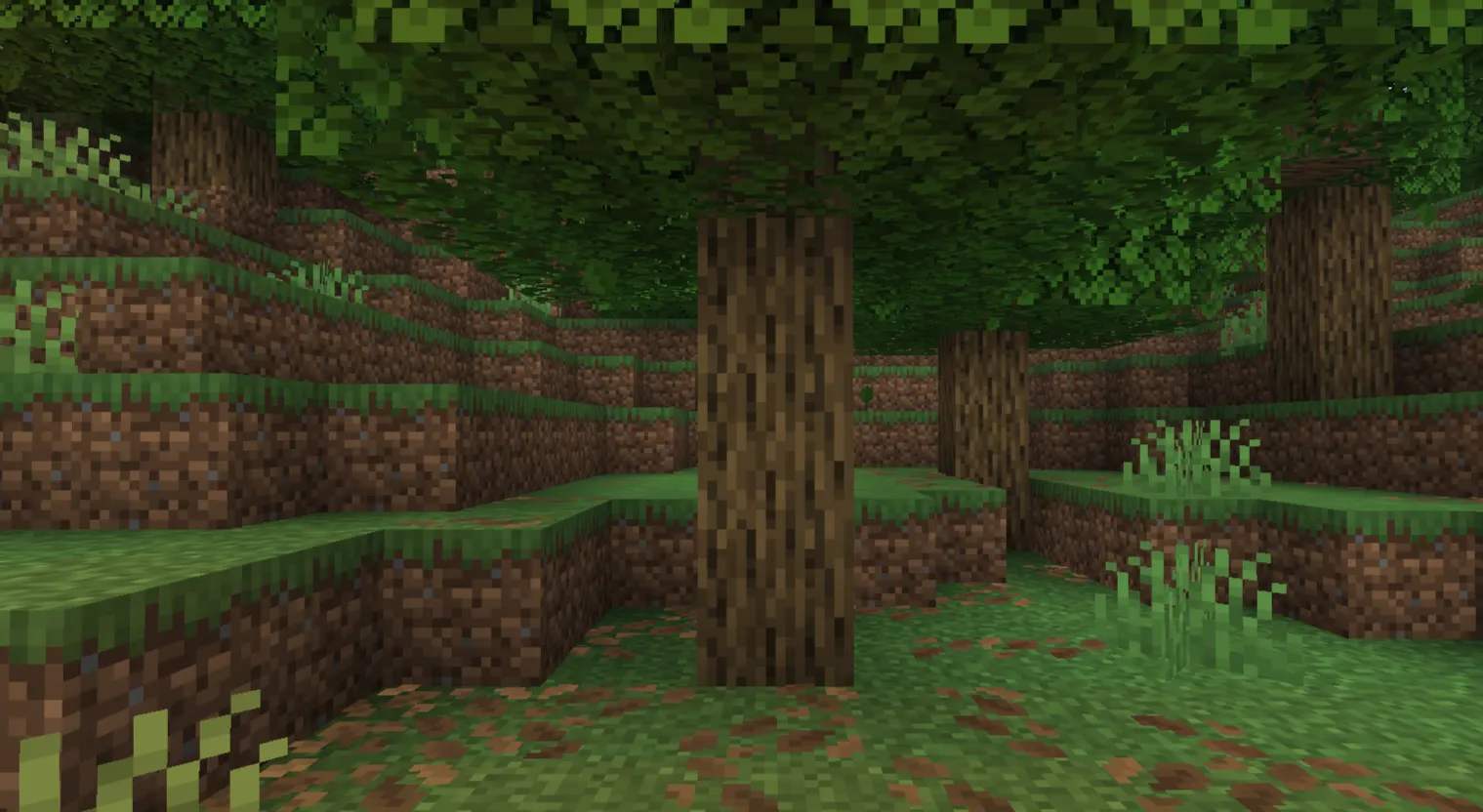
Jungle wood behaves differently from every other wood type, and it's worth understanding before you start chopping.
Large jungle trees grow in a 2×2 trunk pattern, meaning you need four saplings planted in a square to grow one; a single jungle sapling planted alone will only ever produce a thin, single-block tree. Smaller jungle trees, the single-block kind, often generate with cocoa pods attached directly to the trunk, which is currently the only reliable source of cocoa beans without trading for them.
Jungle wood itself has one unusual property worth knowing about: jungle-based wood items, including jungle fence gates, do not connect visually to wood items of a different type the way most other wood types do when placed adjacent to each other. It's a small detail, but it matters if you're planning a build that mixes jungle wood with oak or spruce.
Vines are everywhere in this biome and worth collecting with shears if you want to decorate a build elsewhere. Cocoa beans are useful both as a brown dye source and as an ingredient in cookies, and since jungles are the only natural source, it's worth stripping every cocoa pod you pass on your first visit.
Bamboo and Other Important Resources
Bamboo is the standout resource here, and it's worth prioritizing over almost everything else on a first trip.
Single bamboo stalks are scattered throughout regular and sparse jungles, but bamboo jungles generate it in dense, farmable thickets. Bamboo grows extremely fast without needing bone meal, making it one of the best renewable fuel sources in the game once processed into blocks, and it's essential for building the two most common early XP farms: panda-based and villager-based bamboo farms aside, raw bamboo smelted in a Furnace or used as fuel gives a strong return for very little setup.
Beyond bamboo, prioritize grabbing on your first visit:
- Melons, exclusive to jungle biomes and a solid renewable food and building-block source
- Cocoa beans, for dye, cookies, and eventual cocoa farms
- Vines, sheared for decoration or as a natural climbing tool over cliffs
- Sugar cane and clay, common along jungle rivers and coastlines
- Ocelots, which despawn less readily once tamed with fish and are the only way to naturally repel Creepers from your base
If you're on Bedrock Edition specifically, fishing in jungle waters returns only cod and salmon as fish, but bamboo and cocoa beans can also come up as fishing catches, which isn't the case on Java.
Animals and Mobs in the Jungle
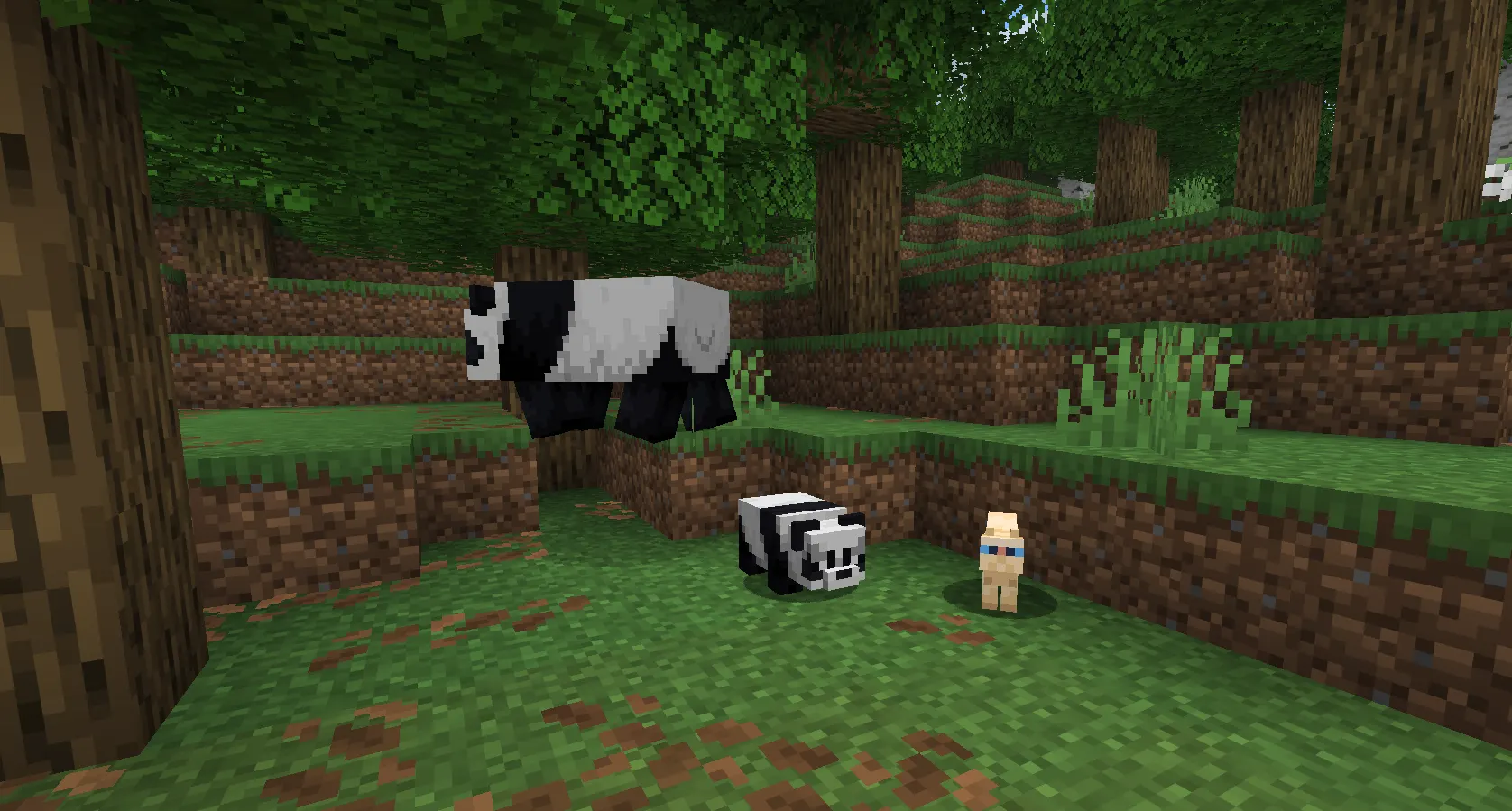
Jungles are the exclusive spawn location for three passive mobs: parrots, ocelots, and pandas. Parrots can be tamed with seeds and will perch on your shoulder, mimicking nearby mob sounds, which is genuinely useful for identifying a creeper before it gets close. Ocelots are shyer and need to be approached slowly while holding raw fish; once tamed, they'll help keep creepers and phantoms away from your base. Pandas spawn in low numbers and come in several personality variants, most of which are harmless, though aggressive pandas will fight back if provoked.
The sparse jungle variant adds rusty wolves to that list, a jungle-specific wolf coloration that behaves like any other wolf once tamed.
Standard Overworld hostiles, creepers, Zombies, Skeletons, Spiders, Endermen, and witches, all spawn in jungles at night just like anywhere else, but the dense foliage makes them far more dangerous than usual. You can walk within a few blocks of a creeper without seeing it until it's already too close, and skeletons get a clean sightline through gaps in the leaves that you don't get back. Torches placed liberally along your paths help more here than in almost any other biome, precisely because natural light doesn't reach the ground the way it does elsewhere.
Jungle Temple
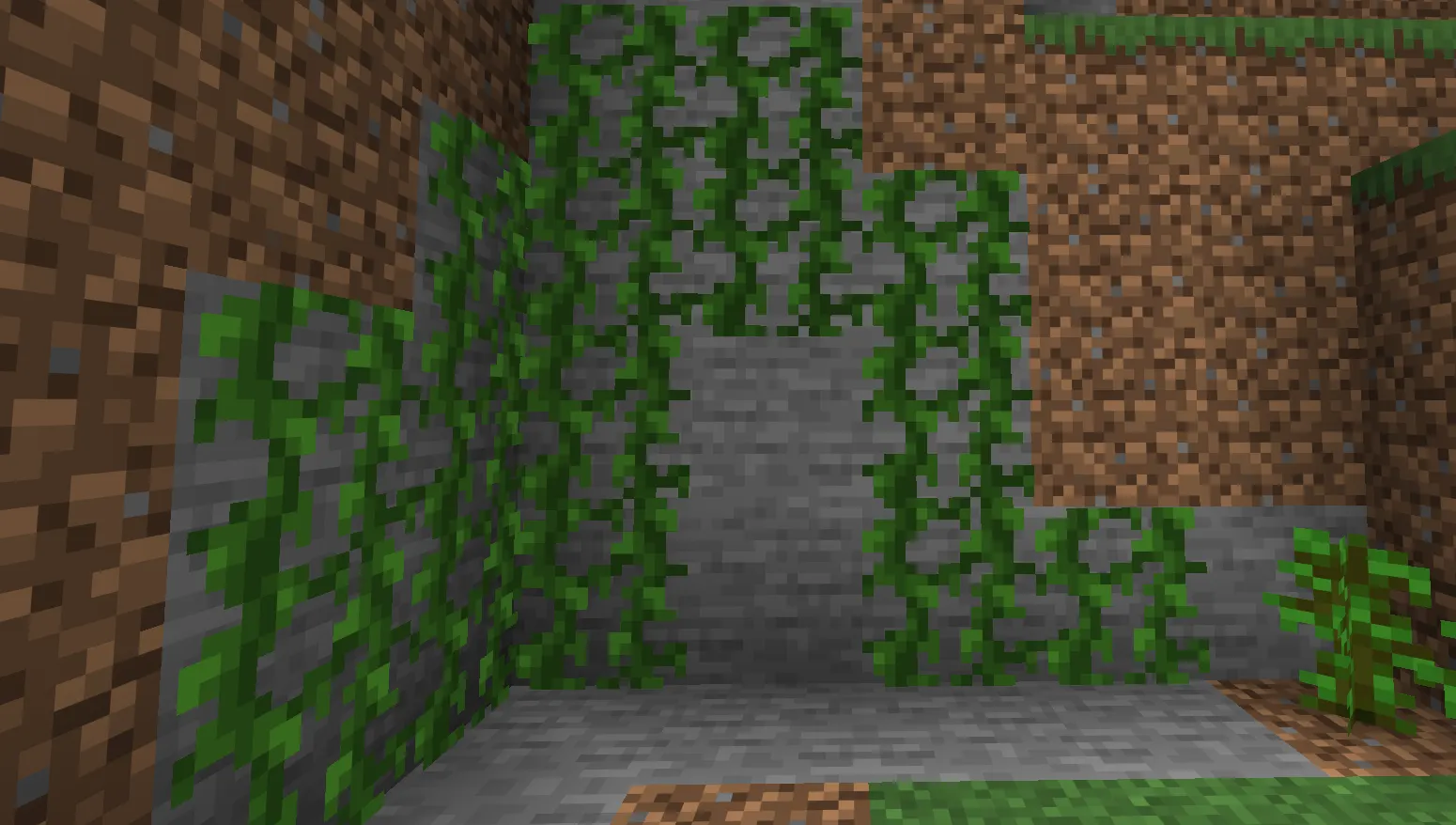
Jungle pyramids, more commonly called Jungle Temples, are the biome's signature structure. They're built mostly from cobblestone and mossy cobblestone, wrapped in vines, and often so overgrown they're hard to spot even standing right next to one.
Inside, the temple is a vertical structure with a redstone-trapped puzzle room at its center. A tripwire hidden across the floor triggers a wall of dispensers loaded with arrows if you walk through it without disarming it first. The safe way to handle this is to locate the tripwire hooks along the walls, cut the string with shears, and only then step onto the pressure-plate-free path. There's also a hidden lever puzzle behind a stone brick wall that opens a secret room, though it's optional and mostly there for players hunting completionist loot.
Two chests generate in the temple, typically containing a mix of emeralds, gunpowder, bones, rotten flesh, saddles, and occasionally an enchanted book or iron horse armor. It's not guaranteed loot in every chest, and it's worth checking a wiki loot table if you're aiming for something specific, since drop rates shift slightly between versions.
Whether it's worth raiding early-game comes down to risk tolerance. The traps are recoverable if you're careful, and emeralds this early let you trade with villagers well ahead of when most players get access to them. It's one of the better early-game structures to prioritize if you find one near your base.
Jungle Biome Survival Guide
- Secure a light source and shelter first. Dig into the base of a mega tree trunk or wall off a small clearing before nightfall; jungles are one of the worst biomes to be caught in after dark.
- Get food moving early. Melons and any nearby jungle animals are your fastest options. Warm variants of cows, pigs, and chickens spawn here just like their normal counterparts and can be farmed the same way.
- Chop a 2×2 mega tree for wood if you can find one. It'll outproduce several smaller trees combined and save you time.
- Navigate with landmarks, not compass headings. Vines and leaves make a straight line nearly impossible to hold. Mark your route with torches on tree trunks as you go.
- Avoid getting lost by tracking your entry point. Place a stack of torches or a unique block at the spot you entered the jungle, and check back on it periodically.
- Deal with mobs defensively, not aggressively. Fighting in dense foliage is a losing habit; back into a cleared area or a doorway before engaging anything.
- Prioritize bamboo and cocoa beans before wood. They're renewable and unique to this biome, unlike wood which you can get anywhere.
- Set up a temporary base near water. Jungle rivers double as an escape route from hostile mobs and a source of clay and sugar cane.
- Decide early whether you're staying. If the terrain around you is mostly cliffs and canopy, a jungle base can work but takes more terraforming than most biomes.
- Leave once your inventory is full or night falls twice. There's no reason to push your luck once you've collected the essentials; you can always return.
Best Things to Do in a Jungle Biome
Once the initial Survival pressure eases off, jungles open up a few build and farm options that don't exist anywhere else:
- Bamboo farms for fast, renewable fuel and easy access to the classic panda-based bamboo XP setup
- Cocoa farms built directly onto jungle logs for a steady dye and cookie supply
- Jungle-themed treehouse builds, using the mega trees as natural scaffolding
- Ocelot and parrot breeding areas, since both are exclusive to this biome
- Temple exploration for early emeralds, letting you start trading with villagers sooner
- Melon farms, which double as a renewable food source and a building material for jungle-themed structures
Jungle Biome: Advantages vs Disadvantages
| Advantages | Disadvantages |
|---|---|
| Exclusive access to ocelots, parrots, pandas | Extremely poor visibility from dense leaves and vines |
| Renewable bamboo for fuel and XP farms | Easy to get lost without deliberate landmarks |
| Jungle temples offer early emeralds and loot | Mobs can ambush you at close range before you notice them |
| Tallest, most resource-dense trees in the game | Uneven terrain makes building and farming layouts harder |
| Melon patches exclusive to this biome | Java Edition performance can dip due to render load |
Jungle vs Other Minecraft Biomes
Compared to plains, jungles trade open visibility and easy farmland for exclusive mobs and denser wood resources. Plains are a far easier base location; jungles are a better resource run.
Compared to forest, jungles are essentially a forest turned up to an extreme: taller trees, thicker undergrowth, and mobs unique to the biome, at the cost of navigation difficulty forests don't really have.
Compared to taiga, the two couldn't be more different climate-wise, but they serve similar roles as wood-gathering biomes. Taiga is easier to navigate and safer at night; jungle produces more wood per tree and adds bamboo and cocoa into the mix.
Compared to mangrove swamp, both biomes are wet, both generate near water, and both have visibility issues from overhanging foliage. Mangrove swamps trade jungle-exclusive mobs for frogs and mud, and tend to be a bit more forgiving to build in thanks to flatter terrain.
Java Edition vs Bedrock Edition
A few differences are worth knowing before you plan a jungle base or a temple run on either platform:
- Bamboo jungle temples: Jungle pyramids can generate inside bamboo jungles on Java Edition, but do not generate there on Bedrock Edition.
- Ocelot spawn rates: Ocelots spawn considerably more often in Bedrock jungles than in Java jungles, where the spawn weight is noticeably lower.
- Fishing loot: In Bedrock Edition, fishing in jungle waters can additionally yield bamboo and cocoa beans as junk-slot catches; this doesn't happen in Java Edition.
- Bamboo and tree density: Bedrock Edition tends to generate more large jungle trees, while Java Edition tends to generate more bamboo per jungle chunk.
- Rendering performance: Java Edition jungles are noticeably more demanding to render than other biomes, so players on lower-end hardware may want to reduce render distance or graphics settings before exploring one.
Best Jungle Biome Tips
- Carry shears before you leave for a jungle; you'll want them constantly for vines and for disarming temple tripwires.
- Build a simple dirt or wood staircase up a mega tree trunk early on. It doubles as a lookout point over the canopy and helps you get your bearings.
- Keep a stack of torches specifically for marking your path, separate from the ones you use for lighting your base.
- If you spot a river cutting through the jungle, follow it. Rivers often lead toward the biome edge faster than walking blind through the canopy.
- Don't fight mobs on top of the canopy. Falling through a gap mid-fight is one of the more common ways players take unexpected fall damage in this biome.
- Tame an ocelot near your jungle camp early. A few tamed ocelots nearby will noticeably cut down on creeper spawns while you're gathering resources.