
Deep Dark Biome in Minecraft: Warden, Ancient Cities & Loot
The Deep Dark is the one biome in Minecraft where the smart move is usually to do less. No Mobs spawn on the sculk, nothing chases you the moment you drop in, and that's exactly what makes it dangerous. The danger here comes from your own noise, not from monsters waiting around a corner. Everything below is what actually matters if you want to find one, loot the Ancient City inside it, and walk out without meeting the Warden.
What the Deep Dark Actually Is
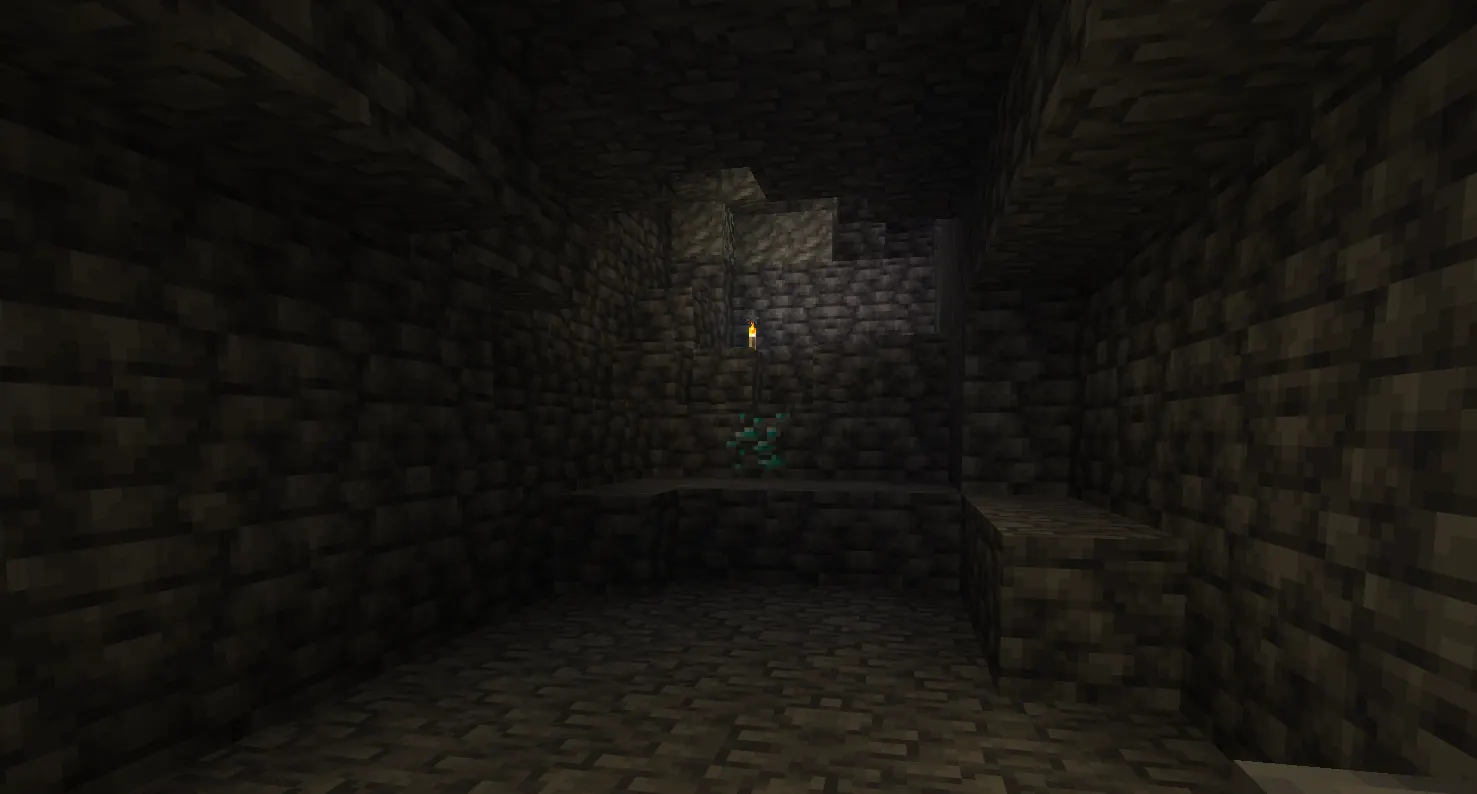
The Deep Dark is a cave biome that generates deep underground, usually in the deepslate layer below Y=0, most often beneath mountains and other areas with low terrain erosion. You'll recognize it at a glance: dark blue-black sculk blocks with glowing veins spreading across the floor and walls, almost no light sources aside from sculk catalysts and the odd pool of lava, and a silence that feels off compared to a normal cave. No hostile mobs spawn naturally here. That's not a mistake in the game's design; it's the whole point. The biome wants you to feel safe enough to relax, then punishes you for it.
Ancient Cities can only generate inside the Deep Dark. The biome's other landmarks (monster rooms, Strongholds, amethyst geodes) can occasionally overlap with it as well, since it's just cave terrain beneath everything else.
How to Find the Deep Dark
You're not going to spot a Deep Dark biome from the surface. It generates too deep and too enclosed. The most reliable approach is still old-fashioned cave exploration: dig or explore down toward the deepslate layer under mountainous terrain, since low-erosion mountain regions are where the biome tends to form. If you're tunneling blind, aim for somewhere around Y-level -30 to -50 and listen for that distinct silence. Deep Dark caves are noticeably quieter than a normal ravine or cavern, because nothing is spawning to make noise.
There's a more direct route if you'd rather skip the guesswork. Ancient City explorer maps, found in secret chests hidden in abandoned camps on the surface, point straight to a nearby Ancient City, which is by far the fastest way to locate the biome. If you're playing in Creative or just want to scout a seed before committing to a Survival world, the locate command (/locate structure ancient_city) will give you exact coordinates. That's useful for planning, but obviously not something you'll have access to in a normal survival playthrough unless cheats are on.
What Makes the Deep Dark Dangerous
It's not the terrain, and it's not a roaming mob population, because there isn't one. The danger is entirely mechanical: you make noise, sculk sensors pick it up, sensors relay that noise to sculk shriekers, and shriekers can eventually summon something you really don't want to fight. Every other cave biome in the game rewards fast movement and quick reactions. This one punishes both. Sprinting, jumping, breaking blocks, opening chests, even just walking normally: all of it creates vibrations, and vibrations are the only thing this biome is listening for.
Sculk Sensors Explained
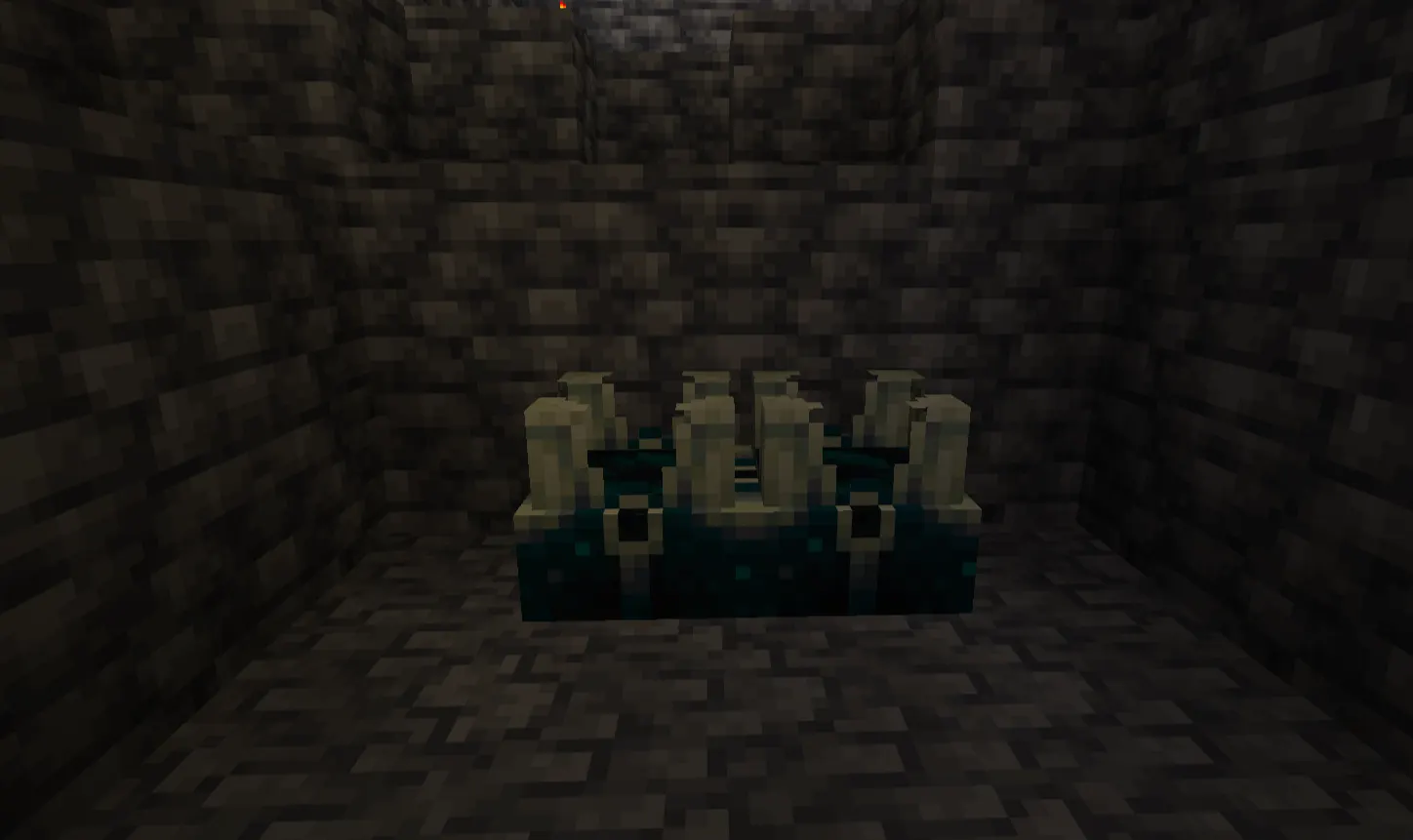
A sculk sensor detects vibrations in a radius around itself and reacts by emitting a redstone signal. That part matters more for redstone builds than survival, but the detection range is what you need to internalize. Footsteps, jumps, block breaks, item drops, opening containers, and combat all register as vibrations a sensor can pick up.
The good news is you have a real counter: wool. If a wool block sits anywhere on the straight line between a vibration's source and the sensor, the vibration gets blocked completely. Not muffled. Blocked. Sculk sensors also can't detect footsteps, item drops, or block placement happening on top of wool or carpet. That's why experienced players carry a stack of wool into an Ancient City. Placing it strategically around a sensor, or standing on it while you work, effectively makes you invisible to that specific block. Sneaking helps too, since it suppresses lower-frequency vibrations like footsteps, but it does nothing against louder actions like breaking blocks or opening a chest.
Sculk Shriekers Explained
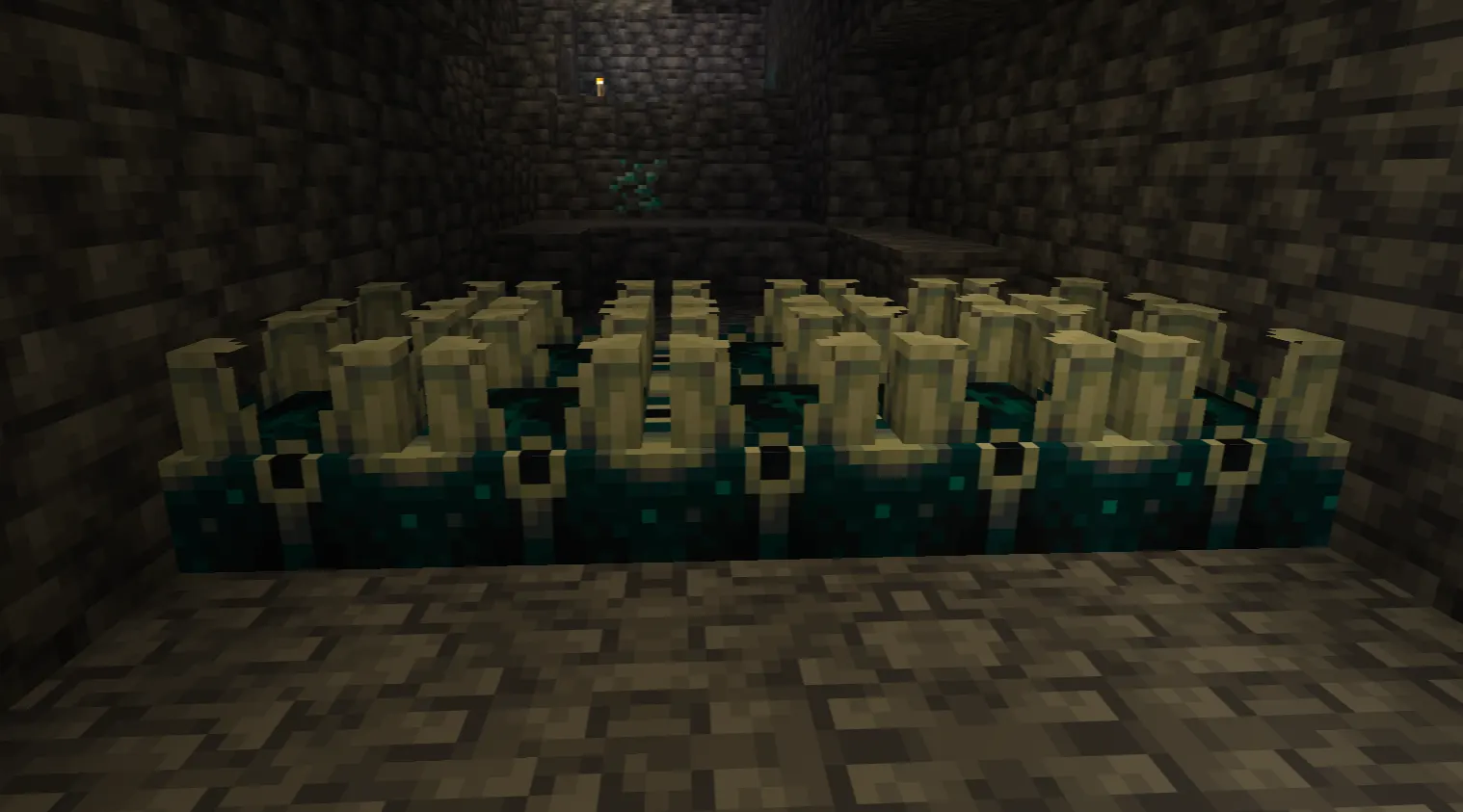
Sensors don't summon the Warden directly. They relay their detected vibration to any sculk shrieker within 8 blocks, and it's the shrieker that actually shrieks and starts the countdown toward a Warden spawn. A shrieker will also trigger directly if a player physically steps on its center; sneaking doesn't save you there.
Here's the part people get wrong: it's not one shriek, and you're dead. A Warden only spawns after a player triggers naturally generated shriekers four separate times. Each shriek gives you a warning, both visually (the screen briefly darkens) and through subtitles if you have them on. Trigger one shriek once by accident and you're fine. Back off, go quiet for a bit, and keep exploring. The mistake is treating an accidental shriek as a sign you're already doomed and panicking into your second, third, and fourth triggers in the same room. If you've already hit three, stop. There's no way to undo a shriek, and a fourth guarantees a Warden. The same wool trick that blocks sensors also works between a sensor and a shrieker, so boxing in a shrieker you can't safely avoid is a legitimate strategy if you need to work near one.
The Warden
The Warden isn't built to be fought casually, and the numbers make that clear. It has 500 health, more than any other mob in the game by a wide margin, and its melee attack deals somewhere between 8 and 22.5 hearts of damage depending on difficulty, enough to kill a fully Armored player in two or three hits on Hard. If you're out of melee range, it switches to a sonic boom: a targeted attack that travels through blocks and other mobs, can't be dodged once it starts charging, and ignores armor and Shields entirely. The only thing that reduces sonic boom damage is the Resistance effect.
It's also completely blind. The Warden has no eyes and hunts purely by vibration and smell, tracking an internal anger score between 0 and 150 for every nearby entity. Vibrations add anger, more for direct sounds than projectiles, and once a target crosses 80, the Warden locks on and charges. Left alone with nothing to detect for 60 seconds, it burrows back into the ground and despawns. That blindness is your actual advantage: sneaking, throwing something to distract it, and wool all work because none of them involve sight.
Fighting it is technically possible with full Netherite, Protection IV, and a steady supply of golden apples or potions, using hit-and-run tactics or ranged attacks from a safe elevated position. But the payoff doesn't match the risk. A Warden drops a single sculk catalyst and 5 experience points, nothing you can't get elsewhere far more easily. There's no unique loot tied to killing it. Treat the Warden as an obstacle to avoid, not a boss fight worth chasing.
How to Explore the Deep Dark Without Summoning the Warden
-
Sneak by default. It slows you down, but it also suppresses lower-frequency vibrations like footsteps, and in this biome that trade is almost always worth it.
-
Carry wool, and a lot of it. Place it around sensors and shriekers you can't route around, or lay a path of it through a room you need to work in slowly.
-
Avoid unnecessary block breaking. Mining is one of the louder actions in the game. If you don't need to dig, don't.
-
Plan your route before you commit. Look at a room, decide where the sensors and shriekers are, and figure out a path that keeps you clear of both before you start moving through it.
-
Keep a mental shriek count. One accidental trigger is recoverable. Three means stop entirely and back out. Don't gamble on a fourth.
-
Know your exit. Before you go deep into a structure, know which direction gets you out fastest. If a Warden does spawn, you're not trying to beat it. You're trying to get far enough away, quietly, that its anger score decays back to zero.
Ancient Cities
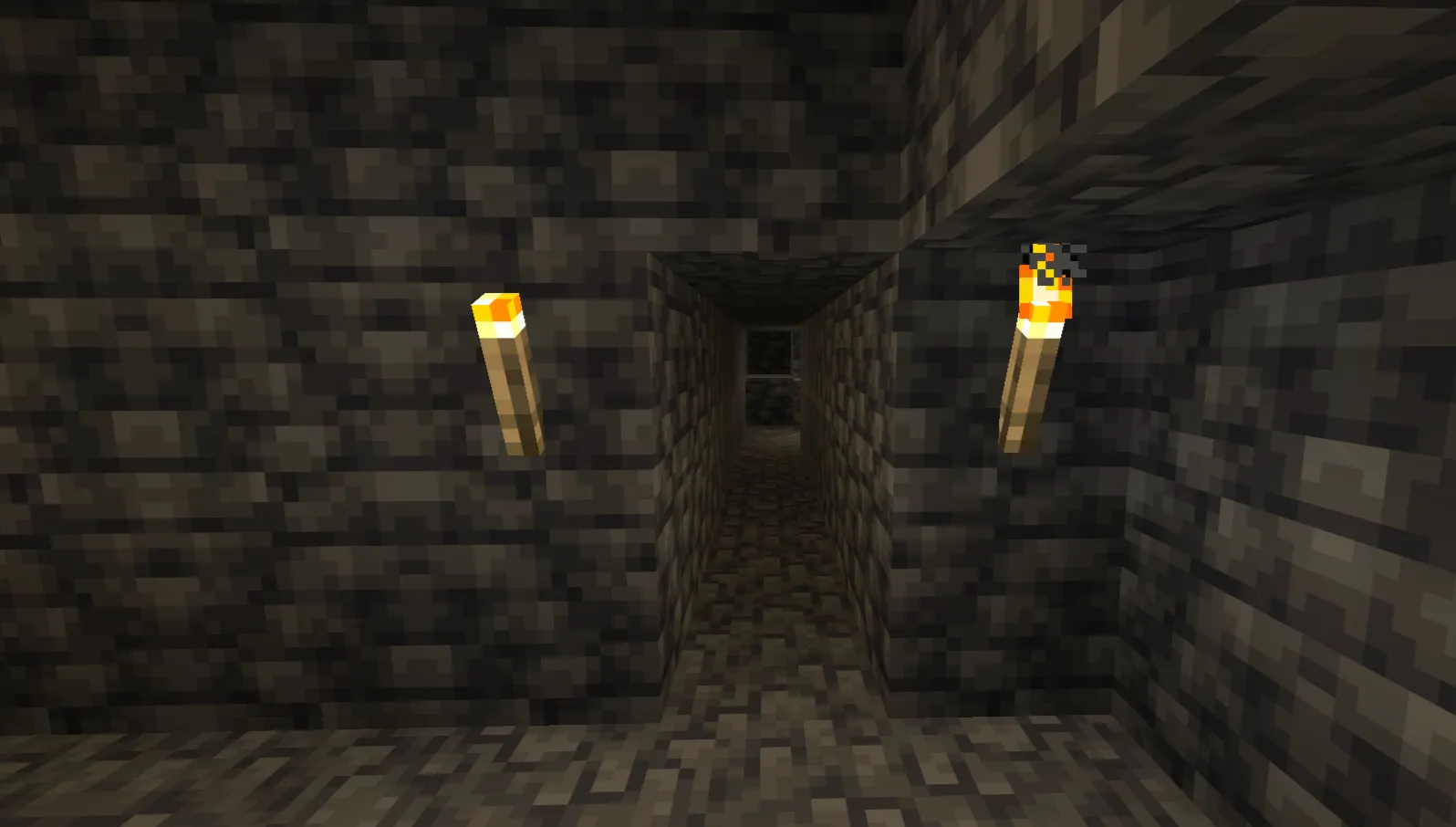
Ancient Cities are the reason people brave the Deep Dark at all. They're the largest naturally occurring structure in the game, sprawling deepslate-brick complexes that always generate at Y=-51, with the surrounding structure extending a bit further down. Because they can only form inside the Deep Dark, and the Deep Dark itself favors low-erosion terrain, cities are usually buried beneath mountains. Sculk shriekers generate far more densely inside an Ancient City than in the surrounding biome, which is exactly why most Warden encounters happen here rather than out in the open cave.
The layout branches out from a central portal-like frame made of reinforced deepslate, unbreakable in Survival, surrounded by smaller ruin structures that usually hold one or two loot chests each. Some sections echo other structures in the game: wool-lined rooms, ice rooms, defense towers, even a hidden redstone testing area tucked beneath the central bridge, left behind by whatever built the place.
Ancient City Loot
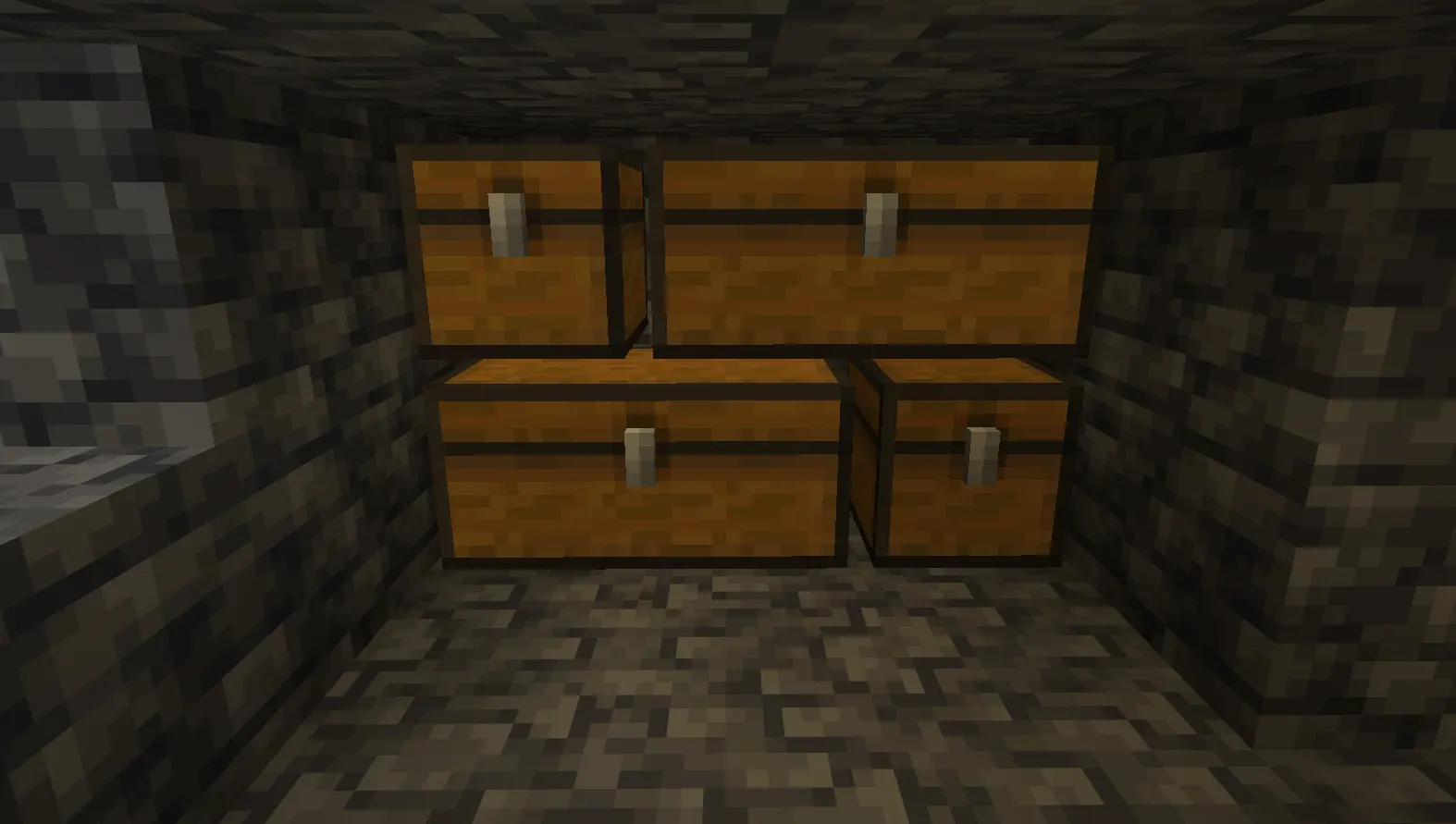
Not everything in an Ancient City chest is worth the risk of grabbing it. Some of it is genuinely exclusive; the rest is just decent loot you could find in a dozen other structures.
High-value loot:
-
Swift Sneak enchantment books — this is the single best reason to visit. Swift Sneak is leggings-only and can't be obtained any other way. It lets you sneak at close to full walking speed, which directly counters the biome's whole vibration-detection system.
-
Echo shards — used to craft a Recovery Compass, which points toward your last death location. Also exclusive to the Deep Dark.
-
Disc fragments — collect nine of them and you can craft the music disc "5" at a jukebox. A pure collector's item, but a rare one.
-
Rare armor trims — some trim patterns found here don't show up in other loot pools.
Useful but lower priority:
-
Enchanted diamond gear and books with standard enchantments
-
Iron and gold ingots, emeralds, and other general materials
-
Candles, soul lanterns, and unique deepslate variants for building
If you're low on inventory space or time, prioritize the exclusive stuff. Everything in the second list is replaceable through normal survival play; Swift Sneak and echo shards aren't.
Best Gear for Deep Dark Exploration
-
Wool, and plenty of it. Not optional. This is your primary defense against triggering sensors and shriekers.
-
Boots with Feather Falling and Soul Speed if you're near soul sand or soil, though most Ancient City floors won't have it. Not essential, but useful for general underground movement.
-
A full stack of Food. You'll be moving slowly and deliberately, which takes longer than a normal cave run.
-
A pickaxe capable of mining deepslate efficiently, since some structures are built into it.
-
Ender pearls, in case you need a fast emergency exit from a dangerous position.
-
A shield and decent armor, not for fighting the Warden, but because monster rooms can still spawn regular hostile mobs inside the biome.
-
Potions of Slow Falling or Fire Resistance if the specific city has hazards like lava pools or long drops, which some do.
How to Loot an Ancient City Safely
Walk in with a plan, not a checklist you follow blindly. Every city is laid out a little differently, so treat this as a framework rather than a script.
Start at the edges. The outer ruin structures tend to have fewer sensors and shriekers than the central area, so clear those first while you get a read on the city's layout. Move slowly and stay sneaking through anything you haven't scouted yet. When you spot a sensor or shrieker blocking your path to a chest, decide whether you can route around it entirely before reaching for wool. Avoiding it is always safer than trying to neutralize it. Loot chests as you go rather than saving them all for one big final push; if something goes wrong, you want to already have some of the good items in your inventory.
The central portal area is the most valuable part of the city and also the most heavily monitored. Save it for when you've got a full understanding of the surrounding layout and a clear escape route in mind. If you trigger a shrieker here, don't panic and start moving erratically. That just creates more vibrations. Back away calmly, in the direction you already scouted as your exit.
Common Deep Dark Mistakes
-
Running through structures like a normal cave. Sprinting and jumping are two of the loudest things you can do, and this biome is built entirely around punishing exactly that habit.
-
Breaking blocks that aren't in your way. Curiosity-mining a wall "just to check" is a common way to trigger a sensor you didn't know was nearby.
-
Triggering the same shrieker repeatedly out of frustration. Each activation counts toward the same four-shriek total, whether it's the same shrieker or four different ones.
-
Trying to fight the Warden like a normal mob. It's not tuned for that. Even a strong melee build is taking unnecessary risk for a reward that isn't there.
-
Entering without knowing your way out. Getting turned around in a sprawling deepslate structure while something is actively hunting you is how runs end badly.
-
Hoarding loot instead of banking it. If you're carrying a full inventory of rare items and things go wrong, you can lose everything in one bad encounter.
Java vs Bedrock Differences
The core mechanics (sculk detection, the four-shriek threshold, wool blocking vibrations, the Warden's anger system) work the same across both editions. The differences that actually matter are smaller: some mob interactions with the biome (like certain conditions for Phantom or Skeleton horse trap spawns) are Java-specific edge cases you're unlikely to run into during normal play. For anyone just trying to loot a city and avoid a Warden, you can treat the two editions as functionally identical.
Final Verdict
The Deep Dark isn't dangerous because of what lives there. For most of your visit, nothing does. It's dangerous because it turns your own movement into the threat, and the Warden exists as a consequence you trigger rather than a monster you stumble into. Ancient Cities are worth the trip for Swift Sneak and echo shards alone, since neither exists anywhere else in the game. Just go in slow, carry wool, keep count of your shrieks, and treat the Warden as something to avoid rather than something to farm.