Best Foods in Minecraft Ranked by Saturation (2026)
Most Food guides rank Minecraft meals by hunger points, and that's the wrong number to chase. Hunger points tell you how full your bar looks. Saturation tells you how long it stays that way. If you've ever eaten a stack of bread and still found yourself hungry twenty minutes later, saturation is the reason why.
This guide ranks foods by their actual saturation values, pulled straight from the game's data, and tells you which ones are worth farming versus which ones just look good on paper.
What Is Saturation in Minecraft?
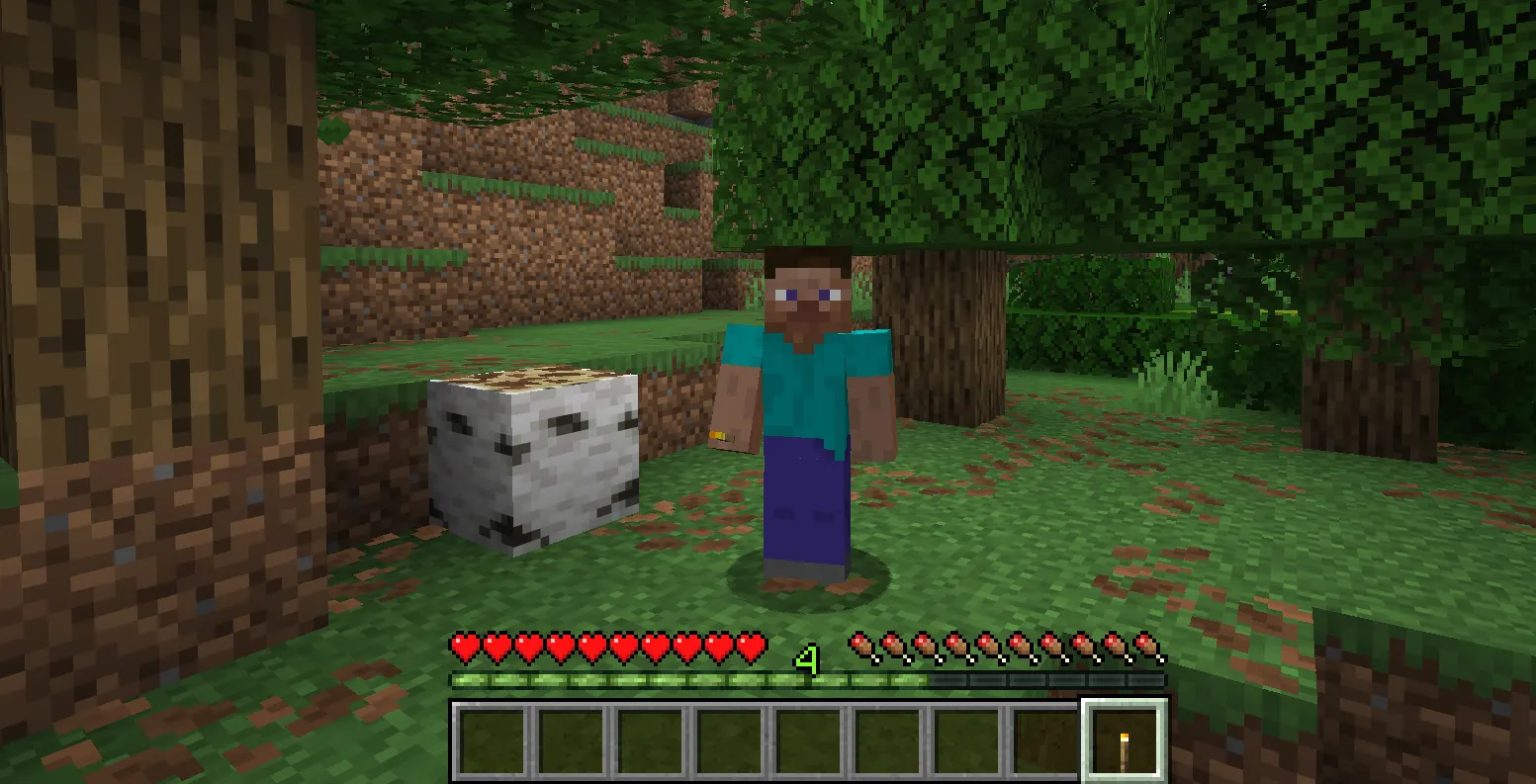
Your hunger bar shows 20 points, displayed as 10 drumsticks. Behind that bar sits a hidden number called saturation, and it never appears anywhere on your screen. Saturation acts as a buffer. Every action that costs hunger, whether that's sprinting, mining, jumping, or healing, drains saturation first. Only after saturation hits zero does your visible hunger bar start dropping.
Here's the part most players miss: saturation can never be higher than your current hunger. If your hunger sits at 10, your saturation caps at 10 too, no matter how much you've eaten. That's why topping off your hunger bar with cheap food before eating something saturation-heavy actually wastes points.
A quick example. Eat a golden carrot at full hunger and none of that 14.4 saturation goes anywhere, because there's no room for it. Eat a golden carrot after mining for twenty minutes and you'll refill hunger and pack in a saturation cushion that keeps you from needing to eat again for a long stretch. Timing matters as much as food choice.
Hunger vs Saturation: What's the Difference?
|
Food |
Hunger Restored |
Saturation |
Practical Meaning |
|
Golden Carrot |
6 |
14.4 |
Low hunger, huge staying power |
|
Steak / Cooked Porkchop |
8 |
12.8 |
Big refill, big buffer |
|
Rabbit Stew |
10 |
12 |
Fills the whole bar in one bite |
|
Pumpkin Pie |
8 |
4.8 |
Looks generous, drains fast |
|
Bread |
5 |
6 |
Solid, unremarkable |
|
Melon Slice |
2 |
1.2 |
Fine in a pinch, forgettable otherwise |
Notice pumpkin pie: it restores as much hunger as steak but less than half the saturation. Two foods can refill your bar by the same amount and leave you in completely different positions five minutes later.
How Minecraft Food Saturation Works
The system runs on four hidden values: hunger level, saturation level, exhaustion level, and the saturation cap tied to your current hunger.
Every time you sprint, jump, swim, mine a block, or land a hit, you build up exhaustion. Once exhaustion crosses a threshold, the game drains one point from saturation. If saturation is already at zero, it takes that point from hunger instead, and that's when your hunger bar visibly starts shrinking.
Sprinting is the biggest drain among normal survival actions, followed by jumping while sprinting and landing attacks. Mining costs very little per block on its own, but chain-mining for half an hour adds up. None of this matters much if your saturation buffer is deep. It matters a lot if you're running on empty.
One Java-only bonus worth knowing: once your hunger bar is full, any leftover saturation gets converted into free healing at a rate of 1 health point per 1.5 saturation. This is why some players top off their hunger with a small snack, then eat a high-saturation food right after, to fully stack the healing.
Best Foods in Minecraft Ranked by Saturation
These are ranked by saturation value first, since that's what actually keeps you fed longer. Hunger restoration and practicality are covered for each.
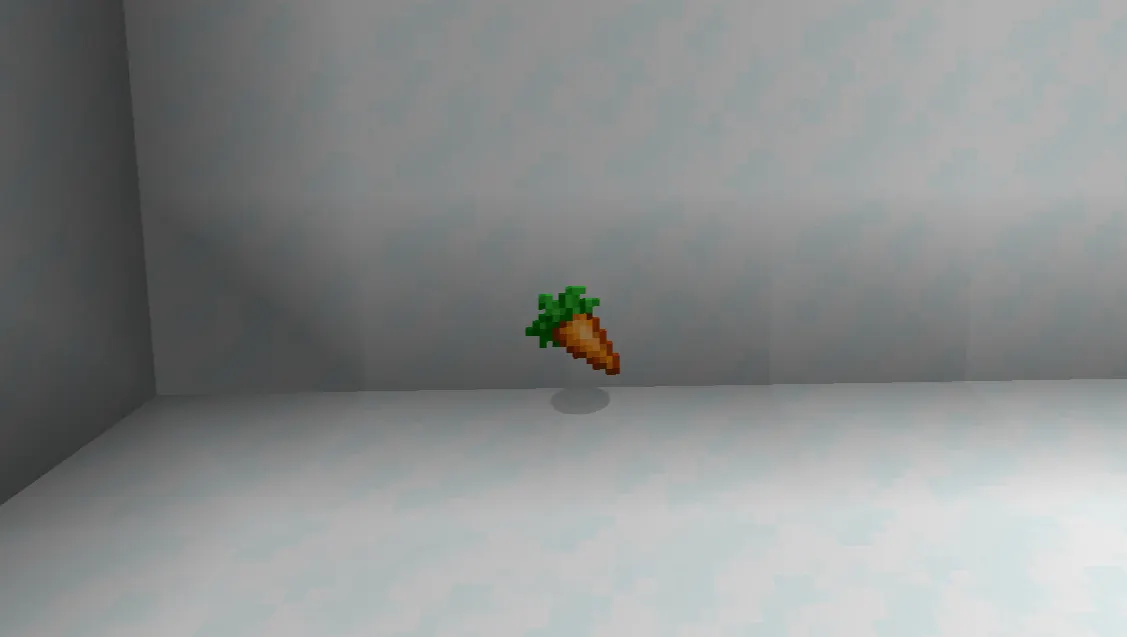
1. Golden Carrot
-
Hunger restored: 6
-
Saturation restored: 14.4
-
Acquisition difficulty: Moderate (needs gold)
-
Renewable: Yes
-
Best use: Long-term staple once you have a gold source
-
Why it ranks here: Highest saturation of any stackable food in the game, by a wide margin
Craft one from a carrot surrounded by 8 gold nuggets. The catch is obvious: gold isn't free. But once you've got a gold farm or a piglin bartering setup running, golden carrots basically remove hunger as a concern for the rest of your playthrough.
2. Steak / Cooked Porkchop

-
Hunger restored: 8
-
Saturation restored: 12.8
-
Acquisition difficulty: Easy
-
Renewable: Yes
-
Best use: Everyday food from early game onward
-
Why it ranks here: Close to golden carrot's saturation with none of the gold cost
Cows and pigs breed fast on wheat and carrots. Once a small pen is running, you'll never run short. This is the food most Survival worlds should be built around before gold farming becomes practical.
3. Rabbit Stew
-
Hunger restored: 10
-
Saturation restored: 12
-
Acquisition difficulty: Moderate (needs multiple ingredients)
-
Renewable: Yes, but fiddly
-
Best use: One-shot full refill when your bar is nearly empty
-
Why it ranks here: Restores more hunger in a single bite than anything else, with strong saturation to match
The Crafting recipe needs a bowl, a carrot, a baked potato, a mushroom, and cooked rabbit, which makes it annoying to mass-produce. Great when you have the ingredients, not something to farm as a primary food source.
4. Cooked Mutton / Cooked Salmon
-
Hunger restored: 6
-
Saturation restored: 9.6
-
Acquisition difficulty: Easy
-
Renewable: Yes
-
Best use: Backup staple if you're already farming sheep or fishing
-
Why it ranks here: Solid saturation-to-hunger ratio, easy to stock up on
Sheep farms produce mutton as a byproduct of wool collection, so this is often free food you're already generating.
5. Cooked Chicken / Mushroom Stew / Beetroot Soup
-
Hunger restored: 6
-
Saturation restored: 7.2
-
Acquisition difficulty: Easy
-
Renewable: Yes
-
Best use: Mid-tier filler food
-
Why it ranks here: Decent numbers, easy to produce in bulk
Chicken farms are some of the simplest automatic farms in the game, which makes cooked chicken a practical staple even though its saturation trails behind red meat.
6. Bread / Baked Potato / Cooked Cod / Cooked Rabbit
-
Hunger restored: 5
-
Saturation restored: 6
-
Acquisition difficulty: Very easy
-
Renewable: Yes
-
Best use: Early-game bridge food
-
Why it ranks here: The best numbers you can get before you have any animal farms running
Wheat farms are the first renewable food source most players set up, and bread from that wheat will carry you through the opening hours of a world.
Foods below this tier, apples, melon, carrots, cookies, and similar, restore too little of either stat to build a survival diet around. They're fine as emergency snacks or crafting ingredients, not as your main food.
Best Minecraft Foods: Quick Comparison Table
|
Rank |
Food |
Hunger |
Saturation |
Renewable? |
Difficulty |
Best For |
|
1 |
Golden Carrot |
6 |
14.4 |
Yes |
Moderate |
Late-game staple |
|
2 |
Steak / Porkchop |
8 |
12.8 |
Yes |
Easy |
Everyday food |
|
3 |
Rabbit Stew |
10 |
12 |
Yes |
Moderate |
Emergency full refill |
|
4 |
Cooked Mutton / Salmon |
6 |
9.6 |
Yes |
Easy |
Backup staple |
|
5 |
Cooked Chicken / Stews |
6 |
7.2 |
Yes |
Easy |
Mid-game filler |
|
6 |
Bread / Baked Potato |
5 |
6 |
Yes |
Very easy |
Early game |
Why Golden Carrots Are So Good
A golden carrot restores 6 hunger points but 14.4 saturation, giving it the best saturation-per-hunger ratio of any regular food. Compare that to steak, which restores more hunger overall (8) but less saturation (12.8). Golden carrots keep you fuller for longer relative to how much they visibly fill your bar.
The trade-off is the gold cost. Each golden carrot needs 8 gold nuggets, which is a full gold ingot's worth. Farming that at scale means either a gold farm in the Nether or a steady stream of piglin bartering, both of which take real setup time. Early game, this isn't worth chasing. Once you've got a working gold source, golden carrots become the obvious default.
They're also a brewing ingredient for Potion of Night Vision, so keeping a stack around has uses beyond eating them.
Steak vs Golden Carrot
Steak wins on hunger restored (8 vs 6) and costs nothing but a basic cow farm. Golden carrot wins on saturation (14.4 vs 12.8) and stacking efficiency, since you'll refill your bar less often. Neither food is renewable in a way the other isn't; both are fully sustainable long-term.
For inventory space, golden carrots edge ahead because a single carrot lasts you longer between meals. For raw accessibility, steak wins easily since cow farms are trivial to build in the first hour of a world.
Verdict by stage: early and mid game, farm steak. Late game, once gold is flowing, switch your hotbar over to golden carrots and keep steak as backup.
Cooked Porkchop vs Steak
These are functionally identical: 8 hunger, 12.8 saturation, same consumption time. The only real difference is which animal you're farming. Pigs are slightly easier to Breed in tight spaces since they don't need grass to graze, while cows produce leather as a bonus. Pick whichever animal you already have nearby. The stat difference is zero, so this comparison mostly comes down to convenience.
Best Early-Game Foods
Right after spawning, you won't have a gold source or an established animal farm. Bread from an early wheat patch and baked potatoes from foraged or farmed potatoes are the realistic options, both sitting at 6 saturation for a modest hunger cost. Raw meat from the first animals you kill works too, though cooking it first roughly doubles the saturation value, so a Furnace should be an early priority.
Don't chase golden carrots or rabbit stew this early. The ingredient cost isn't worth the detour when bread keeps you alive just fine.
Best Foods for Mining
Mining trips mean long stretches away from your base with steady, low-grade exhaustion from block breaking. What you want here is saturation density: food that packs a large buffer into a small number of inventory slots. Steak and golden carrots both fit this well, since a single stack covers hours of digging. Rabbit stew works too but takes up a whole slot per meal since stews aren't stackable, which makes it a poor pick for extended trips.
Best Foods for Combat
Fighting drains saturation fast. Landing hits, taking hits, and sprinting between engagements all cost exhaustion, and losing your saturation buffer mid-fight means your hunger bar starts ticking down while you're trying to survive. High-saturation food before combat matters more than what you eat during it, since most foods can't be eaten quickly enough to help mid-fight anyway.
Golden apples deserve a separate mention here. They restore 9.6 saturation and grant Regeneration II plus Absorption I, which makes them a combat-specific pickup rather than a daily food. Save these for boss fights, raids, or PvP rather than eating them as routine meals.
Best Foods for Exploration
Long-distance travel, Nether runs, and End exploration all favor the same thing mining does: high saturation per inventory slot. Golden carrots are the standard pick here since a single stack of 64 covers an enormous amount of ground. For Nether trips specifically, cooked porkchop makes sense if you're already there for a piglin bartering run, since gold nuggets from bartering can go straight into more golden carrots.
Best Renewable Food Sources
Every food on the top tier of this list is renewable. Cow, pig, and sheep farms cover steak, porkchop, and mutton. Chicken farms cover cooked chicken and, indirectly, eggs for cake. Wheat farms feed both bread and animal breeding. Gold farms or piglin bartering keep golden carrots flowing.
For a large-scale base, a small automatic cow or pig farm paired with a simple wheat field covers food needs indefinitely with almost no player input. Gold-based food is the upgrade path once your base economy can support it.
Foods That Look Good but Aren't Always Practical
Pumpkin pie is the clearest example. It restores 8 hunger, matching steak, but only 4.8 saturation, well under half of what steak gives. It fills the bar and then drains fast. Good food and good high-saturation food aren't the same thing, and pumpkin pie is squarely the former.
Suspicious stew has a similar issue outside its special-effect use cases. Its base hunger and saturation values sit in the mid tier, and it isn't stackable, so it takes up inventory space without earning it back in raw stats. It's worth crafting for the status effects it can apply, not as a food source.
Foods With Special Effects
Golden apple and enchanted golden apple aren't primarily food, they're emergency items. Golden apple gives short Regeneration and two minutes of Absorption on top of solid saturation. Enchanted golden apple is far stronger, with longer Regeneration, four minutes of Absorption IV, and temporary Resistance and Fire Resistance, but it's rare enough that most players save it for genuine emergencies rather than eating it casually.
Suspicious stew's effects depend entirely on which flower crafted it, ranging from brief Night Vision to Poison, so it's situational rather than a reliable pick.
None of these should be ranked against everyday staples like steak or bread. They serve a different purpose.
Best Food by Survival Stage
Early Game: Bread and baked potatoes from your first wheat and potato crops. Raw meat cooked over a furnace fills gaps.
Mid Game: Steak, cooked porkchop, or cooked mutton from an established animal farm. This is where most of a survival world's food needs get solved for good.
Late Game: Golden carrots once a gold source is running, kept alongside steak as backup for when gold supply dips.
Endgame: Golden carrots as the default, with golden apples and enchanted golden apples stocked separately for boss fights and emergencies rather than regular eating.
Java Edition vs Bedrock Edition
Hunger and saturation values are identical across both editions for the foods covered in this guide. The one meaningful difference is saturation boost, the mechanic that converts leftover saturation into free healing once your hunger bar is full. That mechanic exists only in Java Edition. In Bedrock, extra saturation still shortens how long until your hunger bar starts dropping, but it doesn't directly heal you the way it does in Java.
Dried kelp also differs slightly: it restores 0.6 saturation in Java and 0.2 in Bedrock, though its hunger value stays the same in both.