
Jungle Temple in Minecraft: How to Find & Loot It Safely
What is a Jungle Temple in Minecraft? A jungle temple, officially called a jungle pyramid in Java Edition, is a stone structure that generates naturally in jungle biomes. It has three floors, a hidden chest behind a lever puzzle, and a second chest guarded by an arrow-dispenser trap triggered by tripwires. It's one of the few early-game structures that can genuinely hurt you if you walk in carelessly.
I've cleared enough of these to lose count, and I still remember the first one that shot me off a ledge because I didn't know the tripwire ran the length of the hallway. This guide covers where they spawn, how to find one without wasting an afternoon, how the trap and puzzle actually work, and what's worth grabbing once you're inside.
What Is a Jungle Temple?
A jungle temple is built almost entirely from cobblestone, mossy cobblestone, and vines, with a few chiseled stone bricks used for the puzzle mechanism. <cite index="12-1">The structure is above ground and holds two loot chests: one at the end of a hallway guarded by arrow booby traps, and one hidden behind a lever puzzle.</cite> It was added back in Java Edition 1.3.1, and for a long time it was the only place in the game where you could find chiseled stone bricks without Crafting them yourself.
Dense jungle foliage usually swallows the whole thing. You'll walk right past a temple without noticing it if the vines and leaves are thick enough, which is half the reason people struggle to find them in the first place.
They're worth the trip mostly for what's cheap to get and awkward to Farm otherwise: gold, Iron, a shot at diamonds or emeralds, and occasionally an enchanted book or a smithing template you'd otherwise need to hunt down elsewhere.
Where Do Jungle Temples Spawn?

<cite index="12-1">Jungle pyramids generate in jungle biomes, but not in sparse jungles. In Java Edition, they can also generate in bamboo jungles.</cite> Bedrock uses jungle hills as an additional valid biome alongside standard jungle.
That "not in sparse jungle" rule trips people up constantly. Sparse jungle looks almost identical to regular jungle from a distance, just with fewer trees, and a lot of players wander through one for ten minutes wondering why they can't find anything. If the trees thin out and it starts looking more like a savanna with jungle trees scattered in, you're probably in the wrong biome.
<cite index="12-1">Jungle pyramids historically could generate on top of water, but as of Java Edition 1.18 that no longer happens</cite> in current world generation. Older worlds that already had one floating over a lake or river keep it, but new generation won't produce that anymore.
Java vs. Bedrock generation:
|
Detail |
Java Edition |
Bedrock Edition |
|
Structure name |
Jungle pyramid |
Jungle temple |
|
Valid biomes |
Jungle, bamboo jungle |
Jungle, jungle hills |
|
Can generate over water |
No (since 1.18) |
Rarely, still possible |
|
Locate command target |
jungle_pyramid |
temple |
How to Find a Jungle Temple Fast
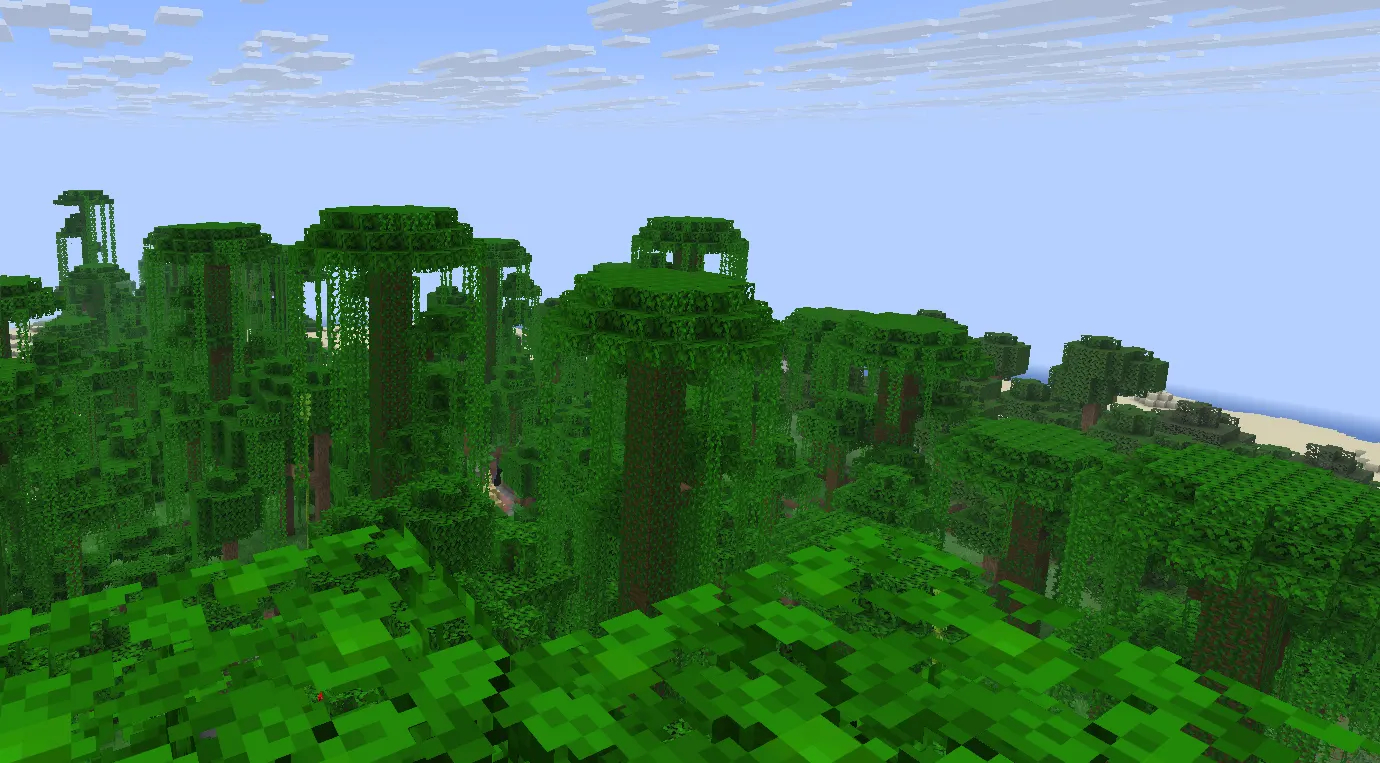
Explore jungles on foot or by boat
The slow but reliable method. Jungles are dense and hilly, so walking is rough going. If there's a river running through the jungle, take a boat along it. Temples often sit near water even though they no longer generate directly on top of it, and rivers give you a fast, clear sightline through terrain that would otherwise block your view.
Buy a jungle explorer map
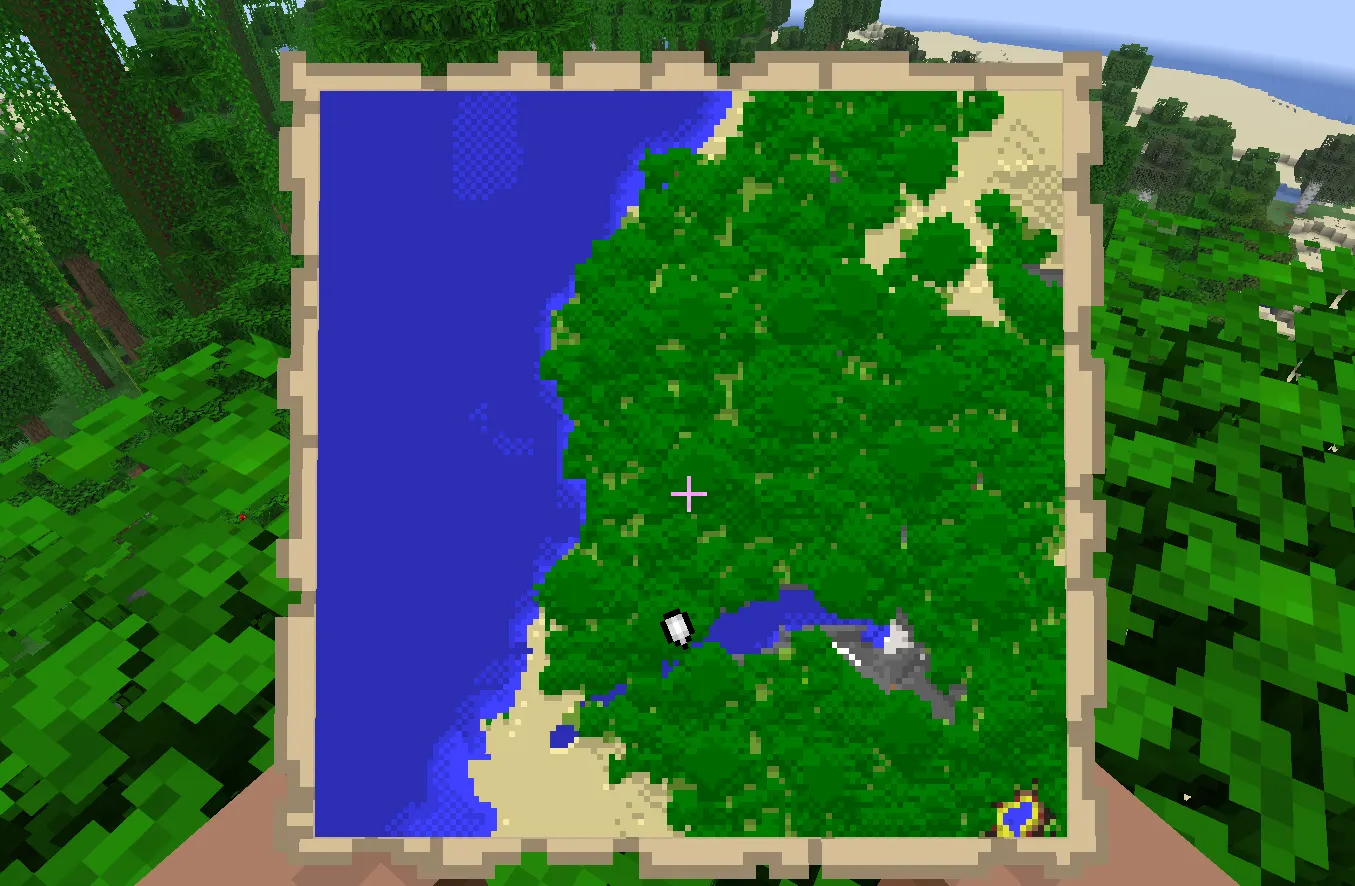
<cite index="12-1">Jungle explorer maps lead to jungle pyramids and are sold by desert, savanna, and swamp cartographers</cite>, not jungle cartographers, which surprises a lot of players. If you've got a village nearby with any of those three professions, check their trades before you go wandering. It's the closest thing the game gives you to a built-in "find structure" tool without commands.
Use the /locate command
In Creative mode, on a server where you have permission, or just to confirm you're not wasting time chasing the wrong biome, run:
/locate structure jungle_pyramid
On Bedrock, the equivalent structure ID is temple. This won't work in vanilla survival unless cheats are enabled, so treat it as a planning tool rather than something you lean on mid-playthrough.
Use a seed-lookup site
Sites like Chunkbase let you paste your world seed and see every jungle temple coordinate on the map before you even load the world. Great for pre-planning a base location or a speedrun route, less useful if you're already deep into a survival world and don't want to alt-tab constantly.
Fly with an Elytra or use high render distance
If you've already got an Elytra, gliding over jungle canopy at height makes temples easier to spot than walking underneath the trees. Bumping your render distance up a notch or two before you head into jungle terrain also helps, since the structure can blend into the canopy from a distance.
Exploration maps you get from cartography tables (the plain kind, not the jungle-specific ones from cartographers) mark general points of interest on a zoomed-out map, but they aren't guaranteed to lead you to a temple specifically. Don't rely on them the way you would a jungle explorer map.
Jungle Temple Layout Explained
<cite index="12-1">There are three floors inside</cite>. Here's how they break down:
Top floor: Mostly empty. A couple of window openings look out over the jungle canopy. Nothing dangerous, nothing worth grabbing.
Main floor: The entrance level. Two staircases lead up to the top floor, and one central staircase drops down to the basement. This is also where the hidden chest opens up once you've solved the lever puzzle correctly.
Basement: This is where the actual content lives. <cite index="12-1">On one side there's a puzzle of three levers set into three chiseled stone bricks, wired to a hidden piston mechanism. Get the combination right and a block on the main floor slides away, revealing the first chest.</cite> On the other side of the basement is the trap hallway, ending in the second chest.
The Lever Puzzle
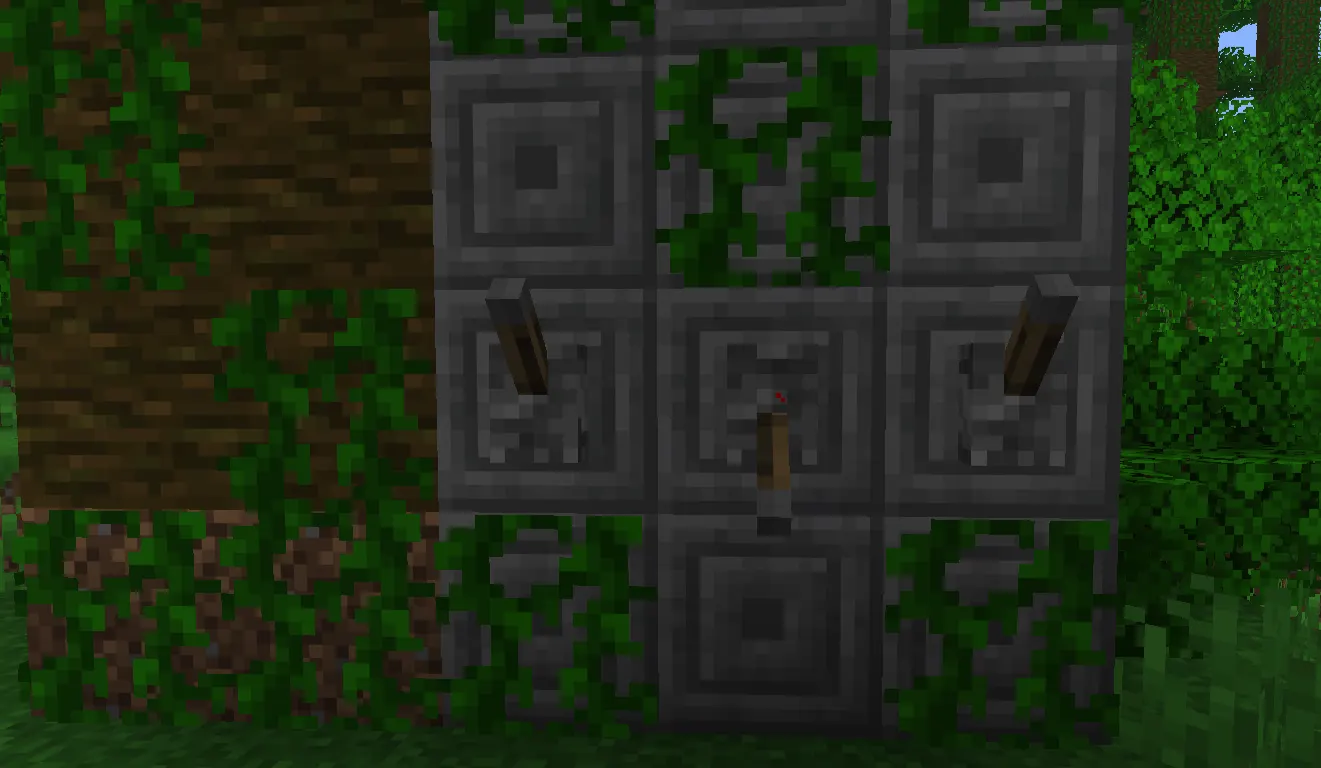
Three levers, eight possible combinations, one of them correct. The game doesn't tell you which one. You're meant to figure it out by trial and error or just flip all three, since there's no damage risk from getting it wrong. Flip them one at a time, or all at once, and listen for the piston sound. If nothing happens, try a different combination. Once you hear the piston fire, head back up to the main floor and look for the section of floor that's slid open near the entrance.
How the Redstone Mechanism Actually Works
The puzzle looks like magic the first time you see it, but it's a straightforward hidden-piston setup once you know what's going on. The three levers sit on chiseled stone bricks and wire into a sticky piston tucked inside the wall between the basement and the main floor. Only one specific on/off combination completes the circuit correctly. Every other combination either does nothing or, in some layouts, retracts a piston that was already extended, which is why flipping levers randomly sometimes seems to "undo" progress you thought you'd made.
There's no need to map out the exact wiring to loot the temple. Since wrong combinations carry no penalty, the practical approach is just to flip one lever, listen for a piston sound, and if nothing happens, flip a second one while leaving the first alone. Repeat until you hear the click. If you're the type who wants to understand the circuit rather than brute-force it, breaking into the basement wall with a pickaxe after looting will expose the piston and repeater setup, which is a decent reference for building your own hidden-door mechanism later.
Jungle Temple Traps
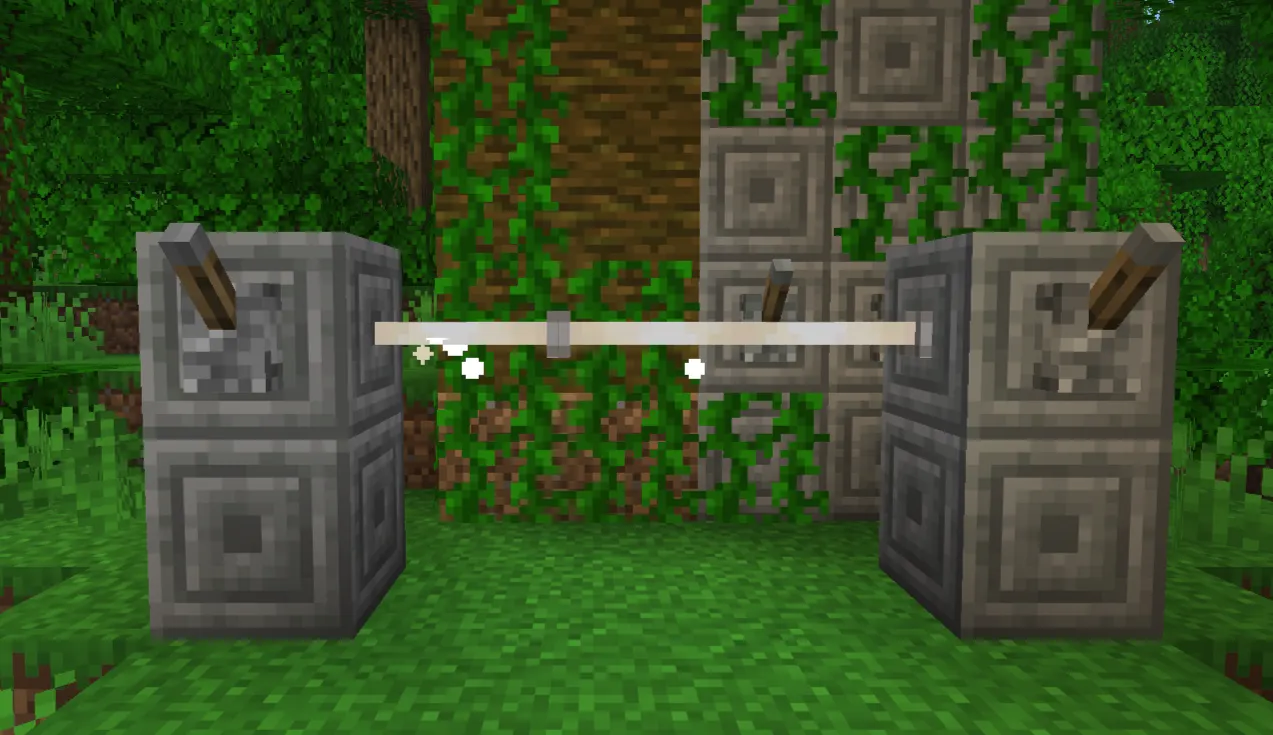
<cite index="12-1">The trap sits down the hall from the puzzle. Two tripwire lines connect to dispensers loaded with 2–7 arrows each, hidden behind vines.</cite> <cite index="12-1">The first tripwire crosses the middle of the hallway, and the second sits around the corner right in front of the chest.</cite>
Here's the part that catches new players out: <cite index="12-1">walking over the tripwire fires the dispenser, and breaking the tripwire with anything other than shears also sets it off.</cite> Swinging a sword or pickaxe at it like you would any other block triggers the exact trap you were trying to avoid.
Each dispenser can fire multiple times if you keep tripping it, and getting caught in the crossfire of both at once in the corner section can genuinely kill an unarmored player. It's rarely lethal if you've got any Armor on, but it's enough to ruin an early-game run if you're still in leather.
How to Loot a Jungle Temple Safely
-
Light the entrance and main floor first. Jungle temples are dim inside, and the basement in particular has almost no natural light. That darkness is exactly why mobs can spawn down there even after the structure generates. A few Torches on your way in solves this before it becomes a problem.

-
Solve the puzzle before touching the trap hallway. There's no time pressure or wrong-answer penalty on the levers, so clear that chest first while your hunger and health are both full.
-
Pull out shears before the hallway. This is the single most important step. Right-click the tripwire with shears and it breaks cleanly without firing the dispensers.
-
If you don't have shears, block the dispenser line of sight instead. Place a block directly in front of each dispenser opening. They'll still fire when triggered, but the arrows hit the block you placed instead of you.
-
Watch the corner. The second tripwire sits right where the hallway bends, close enough to the chest that a lot of players trip it while reaching for the loot. Approach from the side if you can, and open the chest without stepping directly onto that tile.
-
Check for mobs before you commit. Peek into the basement with a torch in hand first. If a zombie or Skeleton spawned in the dark before you lit it up, deal with that before you're focused on tripwires.
-
Break the dispensers once the hallway is clear if you want the redstone components back. They're low-effort quartz and dropper materials you'd otherwise have to source elsewhere.
Jungle Temple Loot Table

Both temple chests draw from the same loot pool. Here's what you can actually pull, with current drop rates:
|
Item |
Chance per Chest |
Worth Taking? |
|
Diamond (1–3) |
~12.7% |
Yes, always |
|
Emerald (1–3) |
~8.6% |
Yes, good trading material |
|
Gold Ingot (2–7) |
~50.6% |
Yes, common and useful |
|
Iron Ingot (1–5) |
~37% |
Yes |
|
Bone (4–6) |
~61.5% |
Situational, good for taming/bonemeal |
|
Rotten Flesh (3–7) |
~52.9% |
Skip unless you need composting/leather trading fodder |
|
Bamboo (1–3) |
~50.6% |
Handy if you're not near a bamboo jungle already |
|
Leather (1–5) |
~12.7% |
Yes, useful early on |
|
Enchanted Book (1) |
~4.4% |
Yes, always worth grabbing |
|
Wild Armor Trim Template |
~33.3% |
Yes, this trim is hard to get elsewhere |
|
Iron/Golden/Diamond/Copper Horse Armor |
~4.4% each |
Only if you're building a horse setup |
A quick note on what's changed: earlier versions of this loot table included saddles, but <cite index="12-1">Java Edition 1.21.6 removed saddles from jungle pyramid chests and replaced them with 1–5 leather instead</cite>. If you're reading an older guide that mentions saddle drops here, that information is outdated. <cite index="12-1">Copper horse armor was also added to the loot table as of Java 1.21.9</cite>, so it's a newer addition than the other horse armor tiers.
The dispensers themselves aren't loot chests, but if you break them open you'll pull 2–7 arrows per dispenser. Not exciting, but free ammo is free ammo.
Are Jungle Temples Worth Looting?
Pros:
-
Reliable early access to gold and iron without mining
-
One of the few sources of the wild armor trim template
-
Small but real chance at Diamonds and emeralds before you've set foot underground
-
Redstone components (dispensers, tripwire hooks) you can reuse
Cons:
-
The trap can genuinely kill you if you're under-armored and careless
-
Jungle terrain slows down travel and makes the temple itself hard to spot
-
Total loot volume across two chests is modest compared to a full Ancient city or woodland mansion haul
For early survival, they're worth a detour, especially if one shows up on your explorer map or near your spawn jungle. For speedrunning, most routes skip them entirely, since the detour time rarely pays for itself compared to just mining for the same materials. For hardcore survival, the trap is the real consideration: bring shears and don't rush the hallway, and there's very little actual risk.
Jungle Temple Tips & Tricks
-
Always carry shears in. This single item turns the trap hallway from dangerous into a non-event.
-
Bring torches, since the basement is dark enough for mobs to spawn even inside the finished structure.
-
A Shield helps if you do end up triggering the dispensers. Block the arrows and keep moving.
-
Mark the coordinates even if you don't fully loot it right away. Temples make decent jungle base sites later since the shell is already built.
-
Save the mossy cobblestone and chiseled stone bricks if you're breaking any part of the structure down. Both are mildly annoying to source in bulk otherwise.
-
Don't ignore the top floor entirely. It's usually empty, but it's a good vantage point to scan the surrounding jungle for a second temple or a village.
-
If you're farming vines nearby, jungle temples are often surrounded by exactly the kind of dense jungle canopy that produces the most vine growth.
What to Bring Before You Go In
None of this is expensive gear, but showing up without it is how a five-minute loot run turns into a death.
|
Item |
Why You Need It |
|
Shears |
Breaks tripwire without firing the dispensers |
|
4–6 torches |
Lights the dark basement so mobs can't spawn or ambush you |
|
Any armor |
Reduces arrow damage if the trap does go off |
|
A shield |
Blocks arrow volleys if you get caught in the crossfire |
|
Full hunger bar |
You'll be sprinting and fighting if things go wrong |
|
An empty inventory slot or two |
For the loot itself, plus any redstone parts you salvage |
Java vs. Bedrock Differences
|
Category |
Java Edition |
Bedrock Edition |
|
Name |
Jungle Pyramid |
Jungle Temple |
|
Biome list |
Jungle, Bamboo Jungle |
Jungle, Jungle Hills |
|
Dispenser arrows |
2–7 per stack, 1–2 stacks |
2–7 per stack, 2 stacks (slightly more arrows on average) |
|
/locate ID |
jungle_pyramid |
temple |
|
Water generation |
No longer generates over water |
Can still rarely generate over water |
|
Loot table |
Saddle replaced by leather (1.21.6+), copper horse armor added (1.21.9+) |
Generally mirrors Java's current table |
<cite index="12-2">Bedrock dispensers hold 2 item stacks per roll compared to Java's 1–2</cite>, so on average you'll eat slightly more arrow damage per trigger on Bedrock if you set the trap off carelessly. The trap mechanics and puzzle logic are otherwise functionally identical across both versions.
Common Mistakes Players Make
-
Swinging a tool at the tripwire instead of shearing it. This is the single most common way players trigger the trap by accident.
-
Rushing straight to the trap hallway before solving the lever puzzle, then having to backtrack through a dark basement with less health than they started with.
-
Missing the hidden chest entirely because they didn't realize the lever puzzle opens a section of the main floor, not the basement.
-
Entering with no light source and getting jumped by a mob that spawned in the dark basement before the player even knew it was there.
-
Ignoring the second tripwire near the chest, since it's easy to focus on the first one and forget there's another right where you're about to loot.
-
Ignoring hunger before entering. It's a short trip, but getting caught by multiple arrow volleys while already low on food is how a routine loot run turns into a death.
Final Thoughts
Jungle temples aren't the biggest structure in the game, but they punish carelessness in a way a lot of early-game exploration doesn't. Bring shears, light your path, solve the puzzle before you touch the trap hallway, and there's almost no risk left. Skip any of those steps and you'll find out exactly how many arrows two loaded dispensers can put into one hallway.
If you've got a jungle biome anywhere near your spawn, it's worth the walk at least once: free iron, a shot at diamonds, and a wild armor trim template you'd otherwise have to hunt down some other way.