Crafting Armor in Minecraft: Every Recipe, Material, and Upgrade Explained
Your First night in Minecraft is genuinely terrifying without protection. Creepers find you. Skeletons shoot through walls. You fall into a ravine, holding nothing but a wooden pickaxe. Getting armor fast isn't just small, it's the difference between keeping your first Iron tools and respawning empty-handed.
This guide covers every armor type from leather scraps to Netherite, full crafting table layouts, material costs, durability numbers, upgrade paths, and the mistakes that get new players killed when they think they're already protected.
How to Craft Armor in Minecraft
“To craft armor in Minecraft, place materials in armor-shaped patterns on a Crafting table. A full set requires 24 materials. Iron, diamond, gold, leather, and Netherite all use the same Crafting layouts.”
What Armor Actually Does
Armor reduces incoming damage by a percentage based on your total armor points, shown as the row of chestplate icons above your health bar. Each full icon is 2 armor points.
But raw armor points aren't the whole story. Diamond and Netherite armor also provide armor toughness, which reduces how many strong hits bypass your protection. A Creeper's point-blank explosion ignores a bigger chunk of leather armor than diamond because toughness specifically softens high-damage hits.
Knockback Resistance is exclusive to Netherite. It reduces how far you get launched when hit. Useful against Ravagers, TNT, and PvP situations.
The math for damage reduction:
-
Damage Reduction (%) = Armor Points × 4 (capped at 80%)
-
Toughness further reduces how many heavy hits cut through that cap
A full iron set gives you 60% damage reduction. Full diamond hits 80%. That cap is why enchantments become so critical late-game; you can't stack armor points forever.
All Armor Types in Minecraft
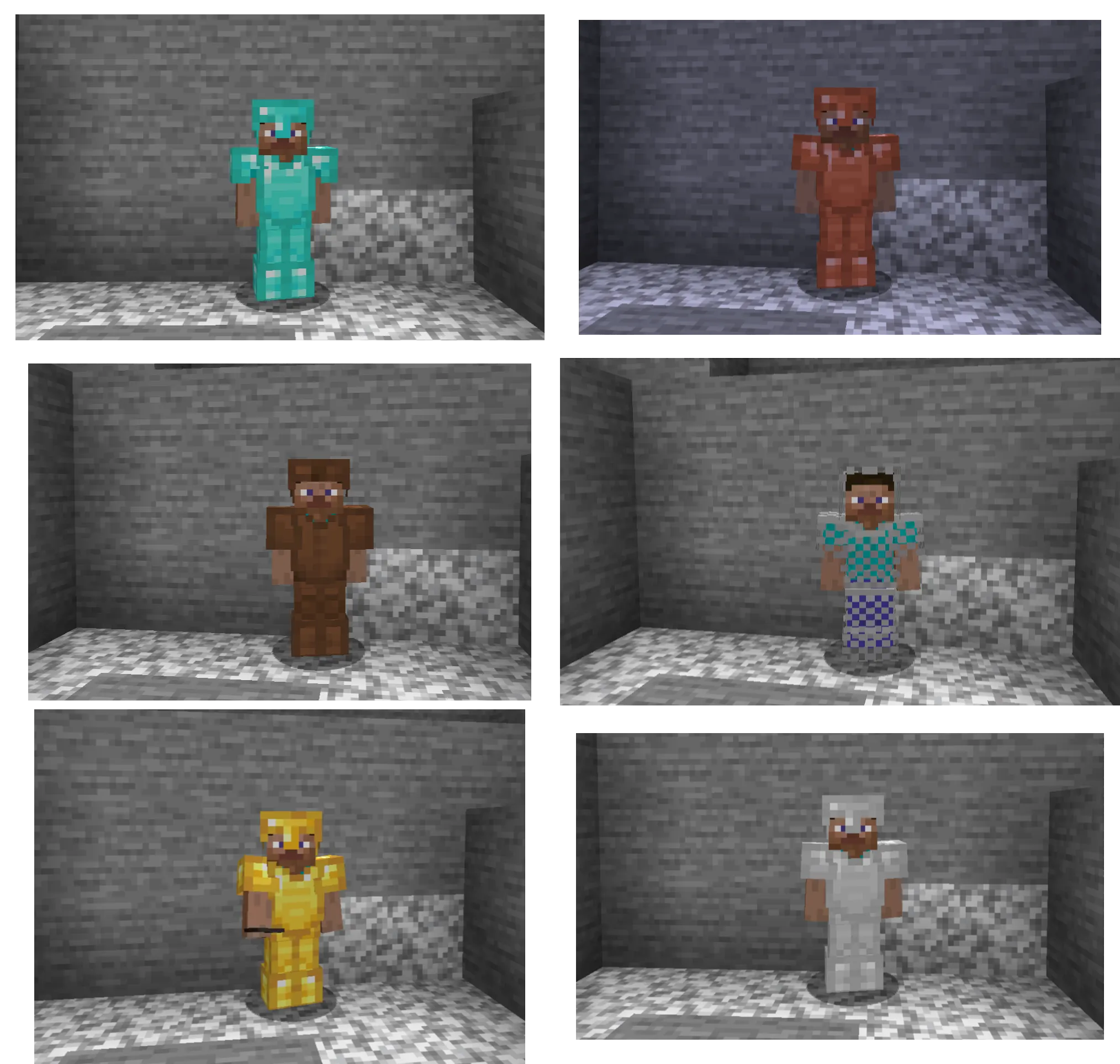
Leather Armor
Crafted from leather dropped by cows, horses, donkeys, llamas, rabbits (rabbit hide), and hoglins. Leather is the weakest armor in the game, but it's often the fastest to get on early survival days.
One underused fact: leather armor is the only type you can dye. Every piece can be colored with any dye combination, including custom hex colors in Java Edition using cauldrons. If you're doing a themed build or roleplay server, leather is the only option that gives you color control.
The rabbit-hide variant, the Turtle Shell, is technically its own category (more on that below).
Iron Armor
The real first milestone. Iron armor is where Minecraft survival stops feeling like desperate scrambling and starts feeling like an actual game. Six iron armor points per chestplate, five per leggings, that's a substantial jump from leather.
Getting a full iron set early requires 24 iron ingots, which means strip mining or finding a village blacksmith. Villages often spawn with iron armor pieces already in chests, which can shortcut the whole early game significantly.
Golden Armor
Here's the trap most new players fall into: gold armor looks impressive but has the lowest durability in the game, worse than leather on a point-per-durability basis. It also provides fewer armor points than iron.
The one legitimate use case for gold armor is in the Nether. Piglins won't attack you if you're wearing at least one piece of gold armor. That's it. That's the whole reason to wear gold. For overworld survival, it's genuinely not worth the gold ingots.
Gold's saving grace is its enchantability, the highest of any armor material at 25. If you're somehow flush with gold and want to fish for enchantments, it accepts powerful enchants more readily. Still not practical, but interesting.
Diamond Armor
Diamond armor is the goal for the vast majority of Minecraft survival playthroughs. 20 armor points, 8 armor toughness, and durability numbers that make iron look disposable. A diamond chestplate has 528 durability points, more than triple iron's 240.
The grind for a full diamond set (24 diamonds) is intentionally brutal. Strip mining at Y-level -58 to -59 in Java 1.18+ (or Y 11 in older versions) is the most reliable method. Bastions and End Cities also contain diamond armor as loot.
Netherite Armor

Netherite is the endgame. The numbers don't sound dramatically different on paper — 20 armor points, same as diamond, but the toughness (3 per piece vs diamond's 2) and knockback resistance (0.1 per piece, 0.4 full set) add up in real fights.
What actually makes Netherite worth the effort:
-
Fire-immune Netherite items don't burn in lava or fire
-
Sinks in lava instead of floating away
-
1.3× the durability of diamond
-
Knockback resistance means you don't get launched off cliffs in PvP
Getting Netherite requires Ancient Debris, found in the Nether at Y 15 (most common). You smelt it into Netherite Scrap. Combine 4 scrap + 4 gold ingots = 1 Netherite Ingot. As of 1.20 (Java/Bedrock), you also need a Netherite Upgrade Smithing Template to use the Smithing Table upgrade; these drop from Bastion Remnant chests.
Turtle Shell Helmet
This one gets overlooked. Crafted from 5 Scutes (dropped by baby turtles growing into adults), the Turtle Shell functions as a helmet that grants the Water Breathing status effect for 10 seconds whenever your head is above water. Combine it with a Conduit for extended underwater breathing that covers the entire area.
Armor-wise, it sits between iron and diamond (11 armor points for just a helmet, same as an iron helmet). It's not a combat priority, but for players building ocean bases or doing underwater exploration, scutes are worth farming.
Full Crafting Recipes for Every Armor Set
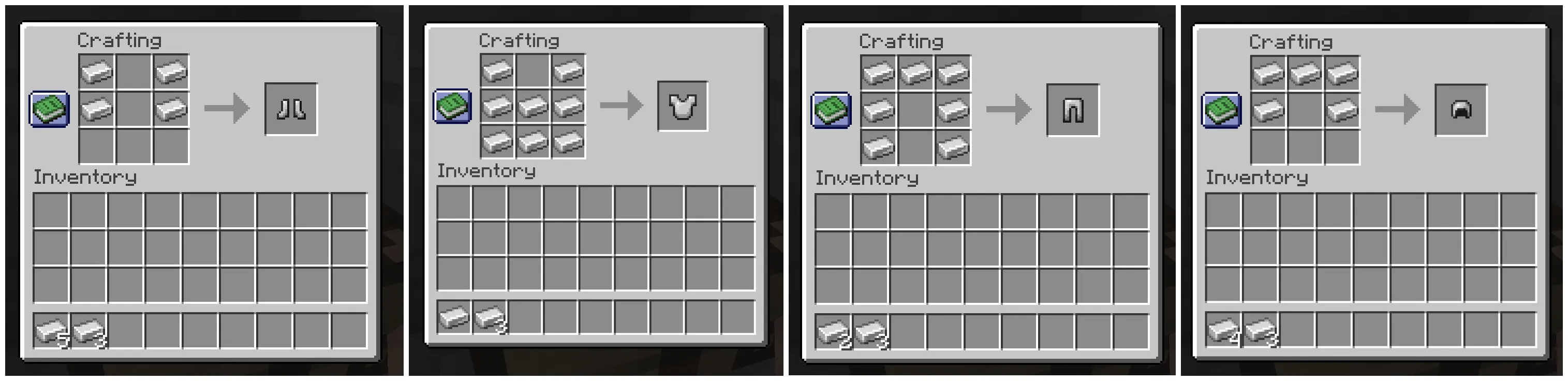
All armor is crafted on a standard Crafting Table (3×3 grid). The pattern changes by piece but uses the same material throughout each recipe.
Helmet — 5 Materials
[M][M][M]
[M][ ][M]
[ ][ ][ ]
Chestplate — 8 Materials
[M][ ][M]
[M][M][M]
[M][M][M]
Leggings — 7 Materials
[M][M][M]
[M][ ][M]
[M][ ][M]
Boots — 4 Materials
[ ][ ][ ]
[M][ ][M]
[M][ ][M]
Replace [M] with your chosen material: Leather, Iron Ingot, Gold Ingot, Diamond, or (for legacy recipes) Chain (chainmail is only obtainable through trading or mob drops; there's no craftable recipe).
Turtle Shell uses the helmet pattern with 5 Scutes.
Netherite skips crafting entirely. See the upgrade section below.
How Much Material Do You Need Per Set
|
Armor Set |
Helmet |
Chestplate |
Leggings |
Boots |
Total |
|
Leather |
5 |
8 |
7 |
4 |
24 Leather |
|
Iron |
5 |
8 |
7 |
4 |
24 Iron Ingots |
|
Gold |
5 |
8 |
7 |
4 |
24 Gold Ingots |
|
Diamond |
5 |
8 |
7 |
4 |
24 Diamonds |
|
Netherite |
— |
— |
— |
— |
4 Netherite Ingots + full diamond set + 4 Smithing Templates |
Every full armor set costs exactly 24 of its base material. The pattern is always the same. This is actually one of the cleanest bits of design in Minecraft — once you know the recipes, you know all of them.
Chainmail has no crafting recipe. You get it from:
-
Trading with Armorer villagers
-
Mob drops (rarely from Zombies and skeletons)
-
Chest loot
Armor Protection & Durability Comparison
Armor Points Per Piece
|
Material |
Helmet |
Chestplate |
Leggings |
Boots |
Full Set |
Toughness (per piece) |
|
Leather |
1 |
3 |
2 |
1 |
7 |
0 |
|
Chainmail |
2 |
5 |
4 |
1 |
12 |
0 |
|
Gold |
2 |
5 |
3 |
1 |
11 |
0 |
|
Iron |
2 |
6 |
5 |
2 |
15 |
0 |
|
Diamond |
3 |
8 |
6 |
3 |
20 |
2 |
|
Netherite |
3 |
8 |
6 |
3 |
20 |
3 |
Durability Per Piece
|
Material |
Helmet |
Chestplate |
Leggings |
Boots |
|
Leather |
55 |
80 |
75 |
65 |
|
Gold |
77 |
112 |
105 |
91 |
|
Chainmail |
165 |
240 |
225 |
195 |
|
Iron |
165 |
240 |
225 |
195 |
|
Diamond |
363 |
528 |
495 |
429 |
|
Netherite |
407 |
592 |
555 |
481 |
A few things stand out here. Gold and leather swap protection vs. durability in a weird way — gold gives slightly more protection points, but leather actually lasts longer relative to what it offers. Neither is worth your time past the first day or two.
Chainmail, matching iron's durability while offering less protection, is another oddity. Since you can't craft it, this matters mostly for understanding loot you find.
Best Armor for Beginners
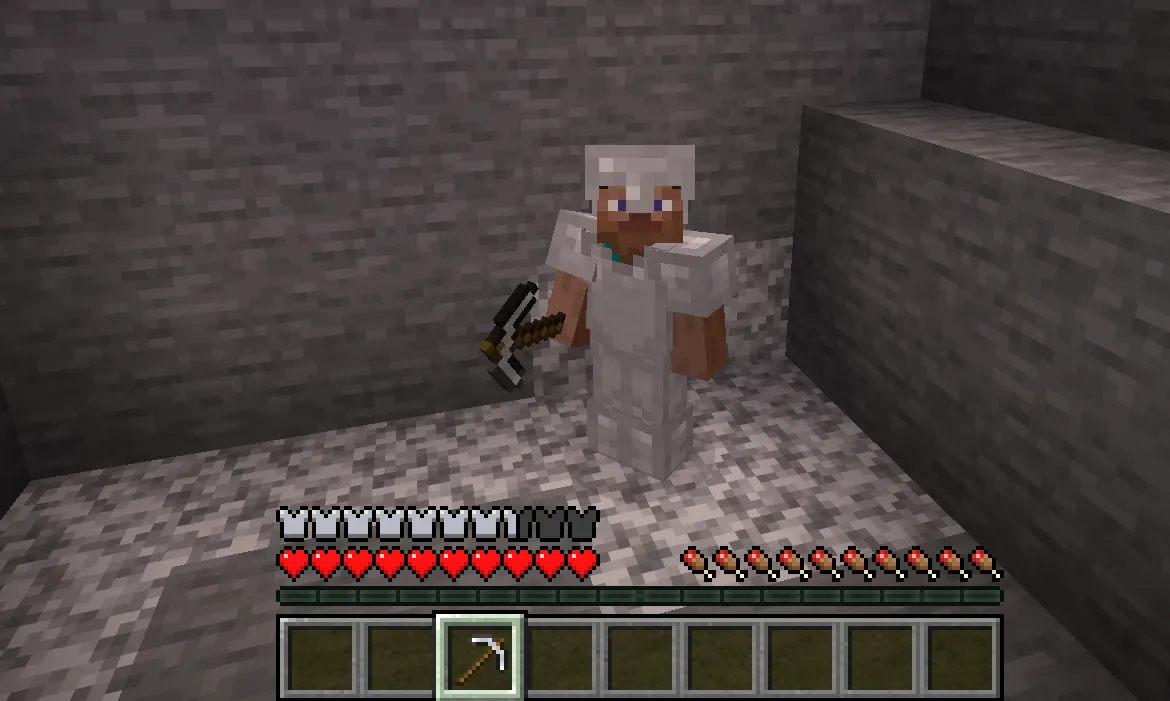
Skip leather entirely if you can. The jump from zero to iron is so significant that spending any time farming cows for a leather set usually wastes time better spent mining.
The fastest path to a usable set:
-
Day 1: Build a basic shelter, craft stone tools
-
Day 1-2: Find iron either in the trip mine at Y 15 or in the village blacksmith chests
-
Priority order for iron armor: Chestplate first (8 points alone), then Leggings (5 points), then Helmet (2 points), then Boots (2 points)
You don't need a full set immediately. An iron chestplate alone cuts a massive chunk of incoming damage. Prioritize the highest-point pieces before completing the set.
One exception: If you're near a jungle or savanna, killing some cows or horses for leather to make a leather helmet is worthwhile, specifically because the helmet slot bonus point from leather is better than nothing while you save iron for a proper chestplate.
Upgrading Diamond Armor to Netherite
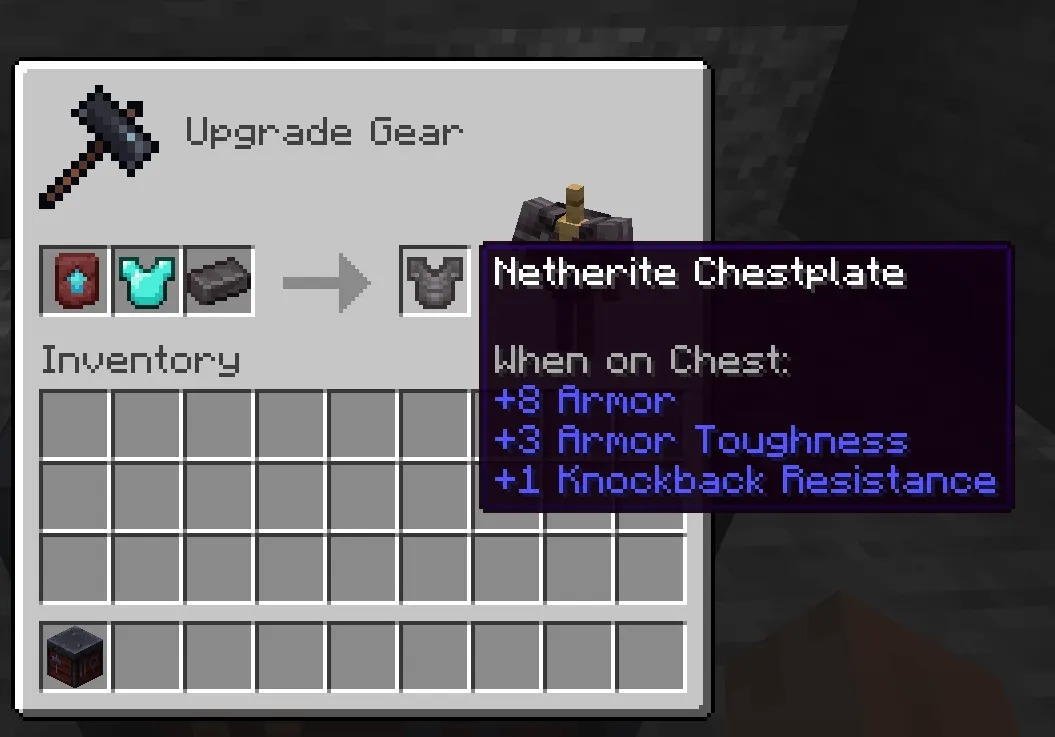
As of Java 1.20 / Bedrock 1.20, the Netherite upgrade process requires three things: a Smithing Table, a Netherite Ingot, and a Netherite Upgrade Smithing Template.
Step 1: Get Netherite Upgrade Smithing Templates
These drop from Bastion Remnant chests in the Nether. Each bastion contains a few, but you can also duplicate them:
-
Duplication recipe: 1 Netherite Upgrade Template + 7 Diamonds + Netherrack = 2 Templates (using a Smithing Table)
Step 2: Craft Netherite Ingots
4 Netherite Scrap + 4 Gold Ingots = 1 Netherite Ingot (crafting table, any arrangement)
To get Netherite Scrap:
-
Mine Ancient Debris in the Nether (Y 15 most common)
-
Smelt Ancient Debris in a furnace = Netherite Scrap
-
4 scrap per ingot
Step 3: Upgrade at the Smithing Table
Smithing Table slots:
[Netherite Upgrade Template] + [Diamond Armor Piece] + [Netherite Ingot] = Netherite Armor Piece
Critically: all enchantments transfer over. This is huge. Enchant your diamond armor fully, then upgrade. You lose nothing, and the Netherite piece keeps every enchantment.
⚠️ Warning: Before 1.20, you only needed a Netherite Ingot. If you're on an older world or version, check which process applies. The template requirement is version-specific.
Ancient Debris Mining Tips
-
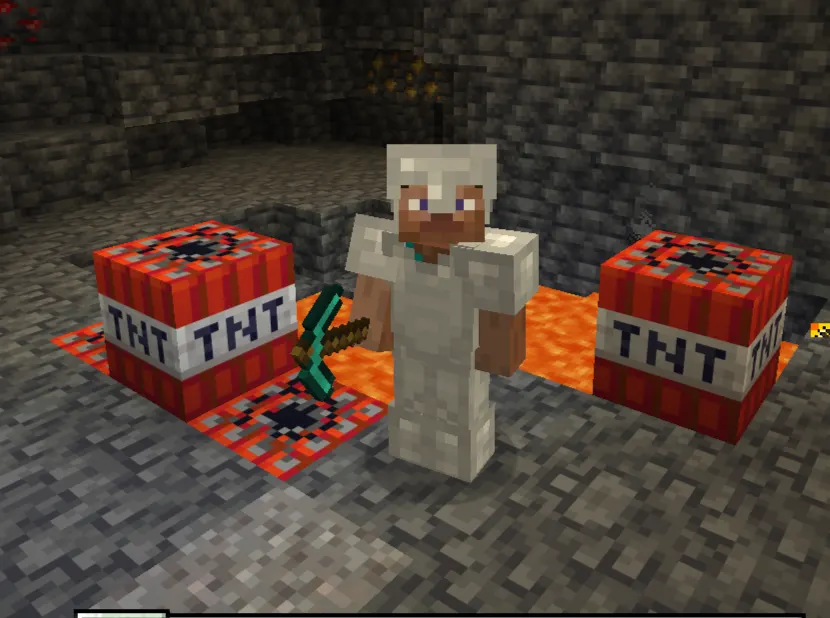
Bed mining at Y 15 is the fastest method. Place a bed in the Nether (beds explode in the Nether, that's the point), use the explosion to reveal blocks. Wear blast protection armor while doing this, or you'll die repeatedly while trying to get the materials to not die.
-
TNT mining works similarly and uses renewable gunpowder
-
Ancient Debris is blast-resistant, so explosion mining is effective — it destroys surrounding Netherrack without destroying the debris itself
Best Enchantments for Armor
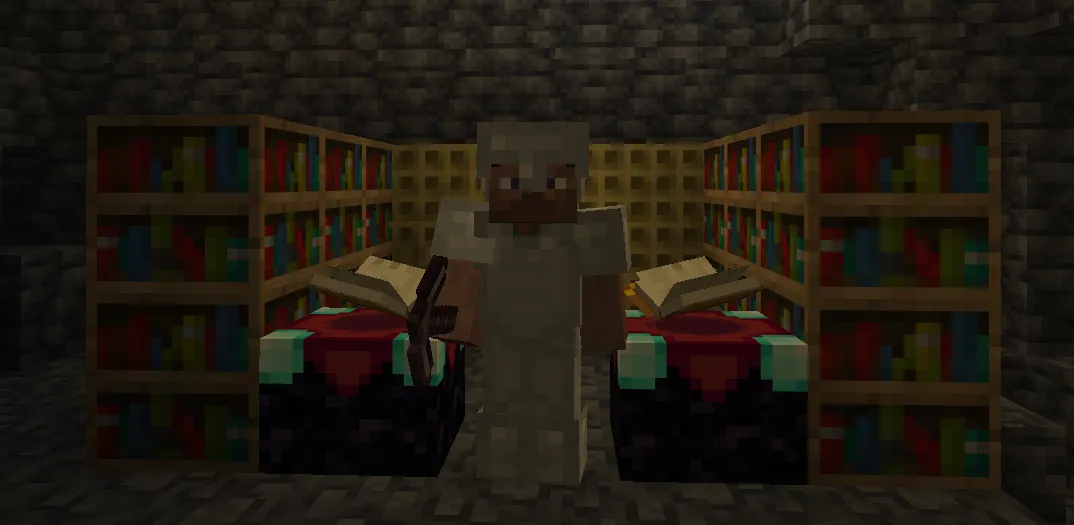
Enchanting matters as much as the armor material itself. A fully enchanted iron set genuinely competes with an unenchanted diamond in many situations.
Top Enchantments by Priority
|
Enchantment |
Max Level |
Best Piece |
Effect |
|
Protection |
IV |
All pieces |
Reduces all damage by 4% per level per piece |
|
Unbreaking |
III |
All pieces |
Reduces durability loss (effectively multiplies durability) |
|
Mending |
I |
All pieces |
Repairs armor using XP orbs |
|
Feather Falling |
IV |
Boots |
Reduces fall damage — critical for any survival world |
|
Blast Protection |
IV |
Chestplate |
Reduces explosion damage and knockback |
|
Fire Protection |
IV |
Any |
Reduces fire damage, shortens burn time |
|
Aqua Affinity |
I |
Helmet |
Normal mining speed underwater |
|
Respiration |
III |
Helmet |
Extends underwater breathing |
|
Thorns |
III |
Chestplate |
Reflects some damage to attackers (high durability cost) |
|
Soul Speed |
III |
Boots |
Faster movement on soul sand/soil (Nether travel) |
|
Depth Strider |
III |
Boots |
Faster movement in water |
|
Swift Sneak |
III |
Leggings |
Faster sneaking speed (great for builds and stealth) |
Protection vs. Specific Protection: Protection IV on all four pieces gives you a stacking 64% reduction on top of your armor value. Specific protections (Blast, Fire, Projectile) grant higher bonuses against their type but no bonuses against others. For general survival, Protection IV wins on every piece. For a Nether expedition or boss fight, switching to Blast Protection makes sense.
The Mending debate: Some players prefer using Unbreaking III without Mending to avoid the XP farming required to keep Mending armor topped up. Both are valid — Mending is better long-term, but Mending books are rarer and more expensive at anvils.
Armor Progression Guide
This is the survival roadmap that actually makes sense, rather than the vague "get good armor" advice most guides give.
Phase 1 — Days 1-3: Iron or Nothing
Goal: Full iron set, prioritized by highest-protection pieces first
-
Mine caves rather than strip mining — caves expose iron without digging costs
-
Village blacksmiths can spawn with an iron chestplate or leggings in their chest — check before crafting
-
A shield crafted from wood and one iron ingot is worth making alongside your armor — shields absorb 100% of melee and projectile damage when blocking
Phase 2 — Days 4-15: Diamond Hunting
Goal: Full diamond set
-
Strip mine at Y -58 to -59 in Java 1.18+ (bedrock layers with the highest diamond density)
-
Use Fortune III pickaxe for mining — it can turn 1 diamond ore into up to 4 diamonds.
-
Check End Cities if you've beaten the Ender Dragon — they contain diamond armor with enchantments already on it.
-
Bastions in the Nether contain diamond armor loot as well
Phase 3 — Enchanting Diamond Armor
Goal: Protection IV, Unbreaking III, Mending on all pieces + specialty enchants
-
Build a max-level enchanting setup: 15 bookshelves surrounding your enchanting table
-
Use a librarian villager trading hall for specific books if you want guaranteed enchantments
-
Enchant the pieces you plan to keep: Helmet gets Respiration III + Aqua Affinity, Boots get Feather Falling IV + Depth Strider III, Chestplate gets Protection IV, Leggings get Protection IV + Swift Sneak III
Phase 4 — Netherite Upgrade
Goal: Convert fully enchanted diamond armor to Netherite
-
Enchant first, upgrade after
-
Farm Ancient Debris at Y 15 in the Nether using bed or TNT mining
-
Get your Smithing Templates from Bastions
-
4 pieces = 4 Netherite Ingots = 16 Ancient Debris minimum (usually more due to scrap inefficiency with odd numbers)
Common Beginner Mistakes
Wearing gold armor outside the Nether. Gold looks expensive. It isn't. The durability is so low that it falls apart in one decent fight, and an iron set costing the same opportunity cost gives better protection dramatically. Save your gold for Piglin bartering in the Nether.
Crafting a full leather set when iron is close. If you have 10 iron ingots, make a chestplate and leggings. That's 13 armor points. A full leather set gives 7. The iron pieces are objectively better, even if incomplete.
Forgetting the shield. New players focus entirely on armor and ignore shields. A shield blocks all incoming damage from the front when raised, including arrows, explosions from close range, and melee hits. The recipe is 6 planks and 1 iron ingot. Make one on day one.
Not enchanting before fighting the Ender Dragon. The dragon fight is survivable in unenchanted diamond, but Feather Falling IV on your boots alone prevents most of the deaths that happen from knockback falls. Blast Protection helps,s too. Don't go in raw if you can help it.
Skipping Netherite because "diamond is enough." For casual survival, it is. But if you die in lava, which happens, a Netherite item sinks and stays there. A diamond item floats away in the lava current and burns. Upgrading even your most expensive piece (usually the chestplate) to Netherite is worthwhile just for this.
Using Thorns on multiple pieces. Thorns on all four armor pieces burn through durability at an alarming rate and don't deal enough retaliatory damage to justify it outside very specific PvP builds. Put it on one piece (chestplate) if you want it at all.
Repair spamming at an anvil without Mending. Each time you use an anvil to repair an item, the "prior work" cost increases. Eventually, it becomes "Too Expensive," and you can't repair it at all. Plan your repair and enchanting order carefully before spending levels on an item that'll hit the cap.
Pro Survival Tips
Dye your leather armor to identify yourself in multiplayer. Each piece can be individually dyed, so your full set can display team colors or personal branding.
Store a spare armor set somewhere safe. Losing your only Netherite set in lava is a game-ending disaster in a serious playthrough. Keep a backup enchanted iron or diamond set in your base.
Enchant armor in the right order. Enchant the table first (spend XP when items are new and cheap), then combine with books using an anvil. Never put two heavily enchanted pieces into an anvil that you haven't planned out; the prior work cost compounds fast.
Strider riding in the Nether with Netherite armor on is safe even if you fall into lava on dismount. Your armor won't burn. Your items will survive. This changes how confidently you can explore lava lakes.
Prioritize Feather Falling IV early. Falls kill players more than most mobs combined, especially in the early game when you're caving near ravines. Getting Feather Falling IV on iron boots can wait until you have a decent enchanting setup or trade with a Librarian.
Armor trims (added in 1.20): Java and Bedrock both support Armor Trims' aesthetic patterns you apply using Smithing Templates + the appropriate material. They don't affect stats. If you're on 1.20+, this is how you make your armor look distinct without changing protection values.
Final Verdict
The armor progression in Minecraft is one of those systems that looks simple on the surface but has real depth once you understand toughness, enchantment stacking, repair economics, and the specific use cases for each material. Gold exists for Piglins. Leather existed in the early days, and dyeing. Iron is your workhorse through most of the game. Diamond is what you're working toward. Netherite is what you're protecting.
Get your iron set fast, prioritize the chestplate and leggings first. Make a shield the same day. Work toward diamond as your primary mid-game goal. Enchant fully before upgrading to Netherite, and never go to the Nether to get Netherite in unenchanted diamond if you can avoid it.
The players who survive long Minecraft worlds aren't necessarily the ones who got Netherite fastest. They're the ones who didn't lose their stuff to lava.