Introduction
Most Minecraft players walk right past the thing that leads to a lush cave without realising what it is.
There is an azalea tree sitting on the surface, completely unremarkable, blending in with the rest of the forest. Dig straight down under it, and you will break into one of the most resource-rich biomes in the game. That is not a trick. That is by design, and it is one of the more clever mechanics introduced by the 1.18 cave update.
Lush caves are genuinely useful if you understand them, and genuinely underrated because most guides treat them like a tourist attraction rather than a functional survival tool. This guide covers the real mechanics — the ones that affect your gameplay, not just what the biome looks like.
What Is a Lush Cave in Minecraft? (Quick Answer)
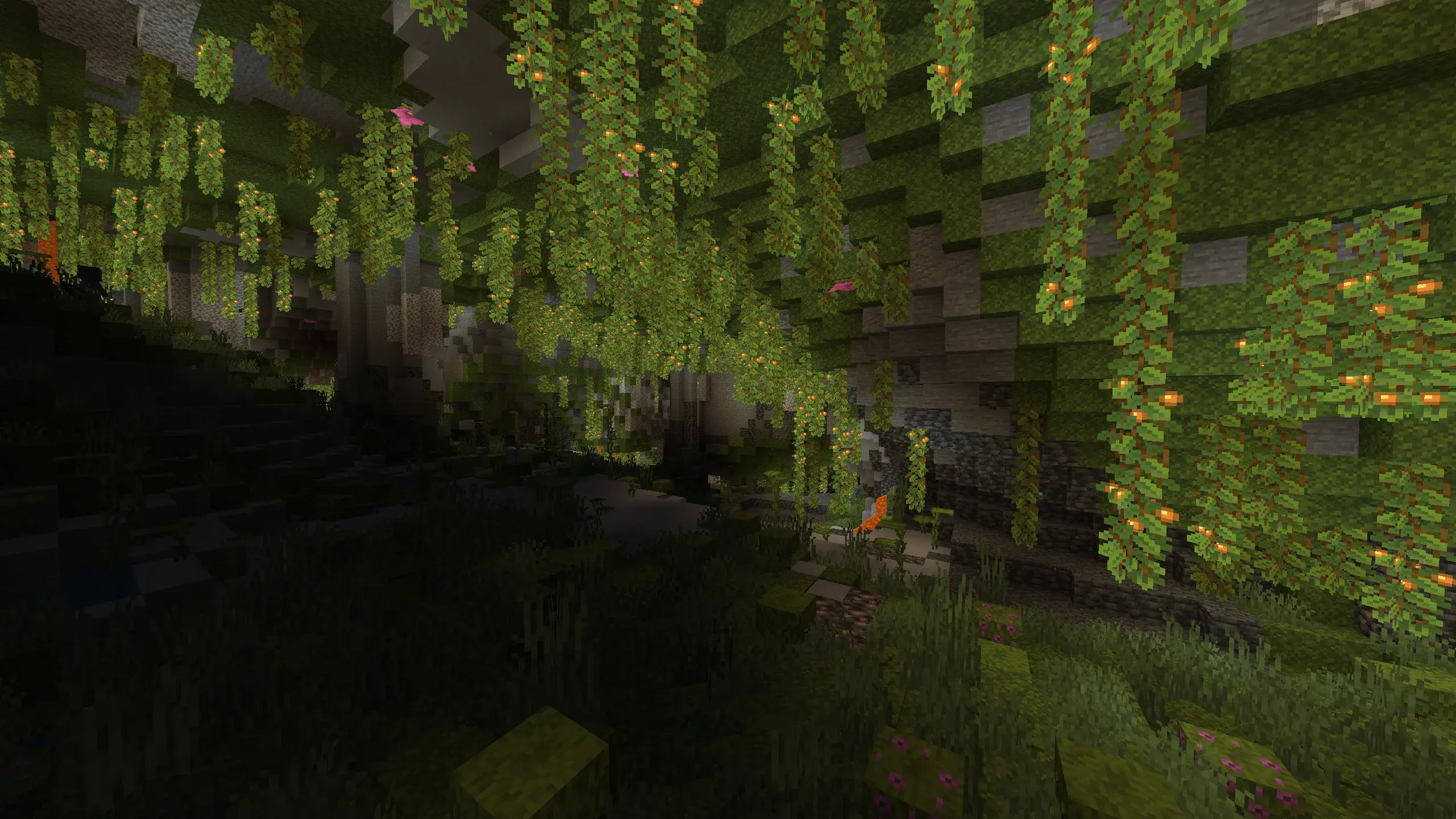
A lush cave in Minecraft is an underground biome filled with moss, glow berries, clay pools, and unique plants. It generates below forested areas and is identified by azalea trees on the surface. Lush caves are one of the most resource-rich cave biomes, offering natural light, food sources, and exclusive mobs like axolotls.
What Is the Lush Caves Biome?
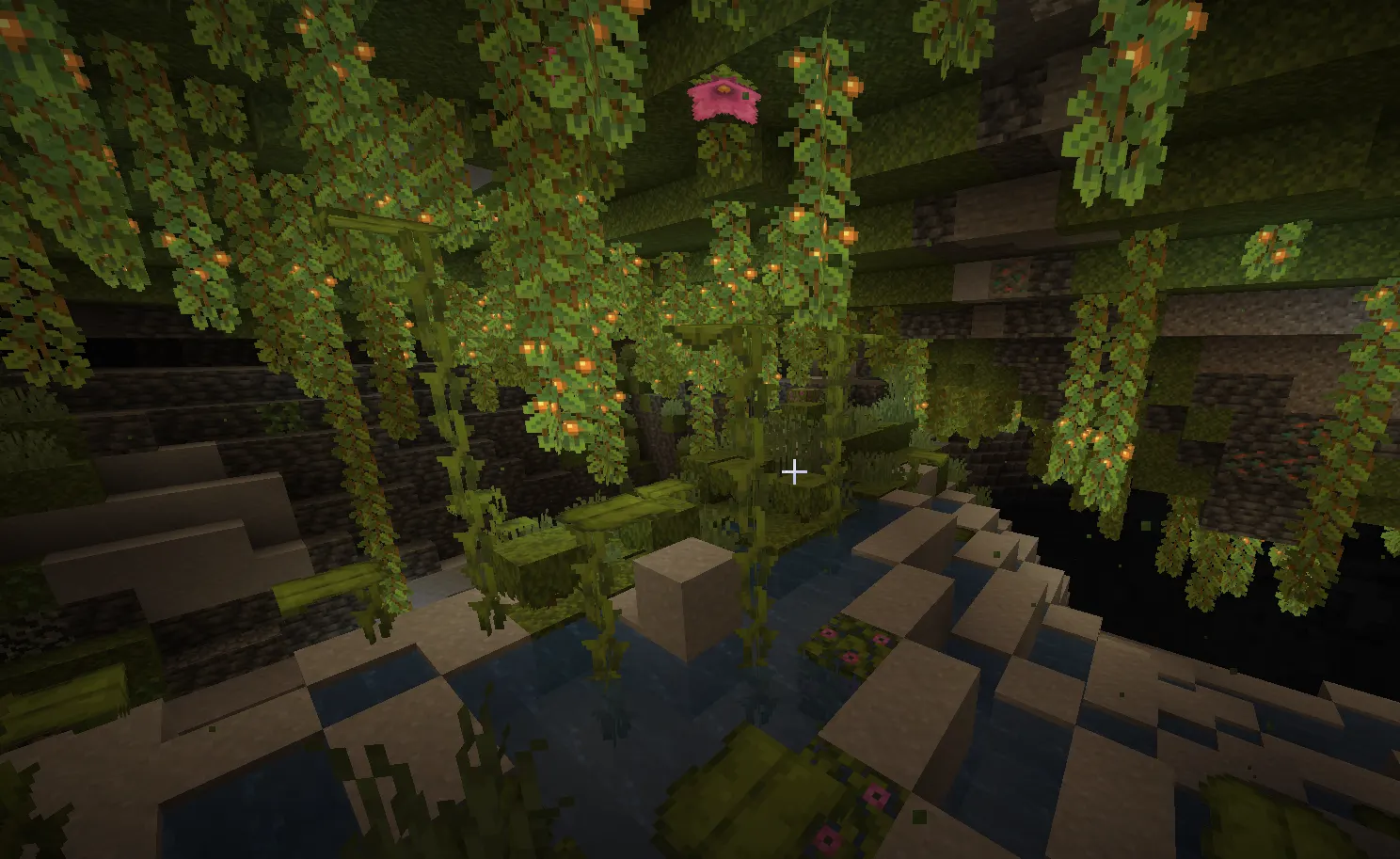
Lush caves are an underground cave biome that generates below forested and jungle surface biomes. They were added in Minecraft 1.18 as part of the Caves and Cliffs update and brought the first major underground biome diversity to the game.
The biome generates between Y=0 and Y=-64 in most cases, though it can appear slightly higher depending on terrain. Underground, it feels like a completely different world: the ceiling is covered in spore blossoms and vines, the floor is layered with moss, dripleaf plants grow out of shallow clay pools, and glow berries light the walls from the inside out.
It is not just decoration. Almost everything in a lush cave has a function.
How to Find Lush Caves in Minecraft
How to Find Lush Caves in Minecraft (Fast Answer)
To find lush caves quickly in Minecraft, locate an azalea tree on the surface and dig straight down beneath it. Azalea trees only generate above lush caves, making them the most reliable indicator. Alternatively, explore caves between Y=-40 and Y=-20 or use the /locate biome minecraft:lush_caves command in Java Edition.
The Azalea Tree Method (Fastest Way)
The most reliable method is also the one most players overlook. Azalea trees only generate on the surface directly above a lush cave. No other biome produces them. If you find one, a lush cave is directly below it.
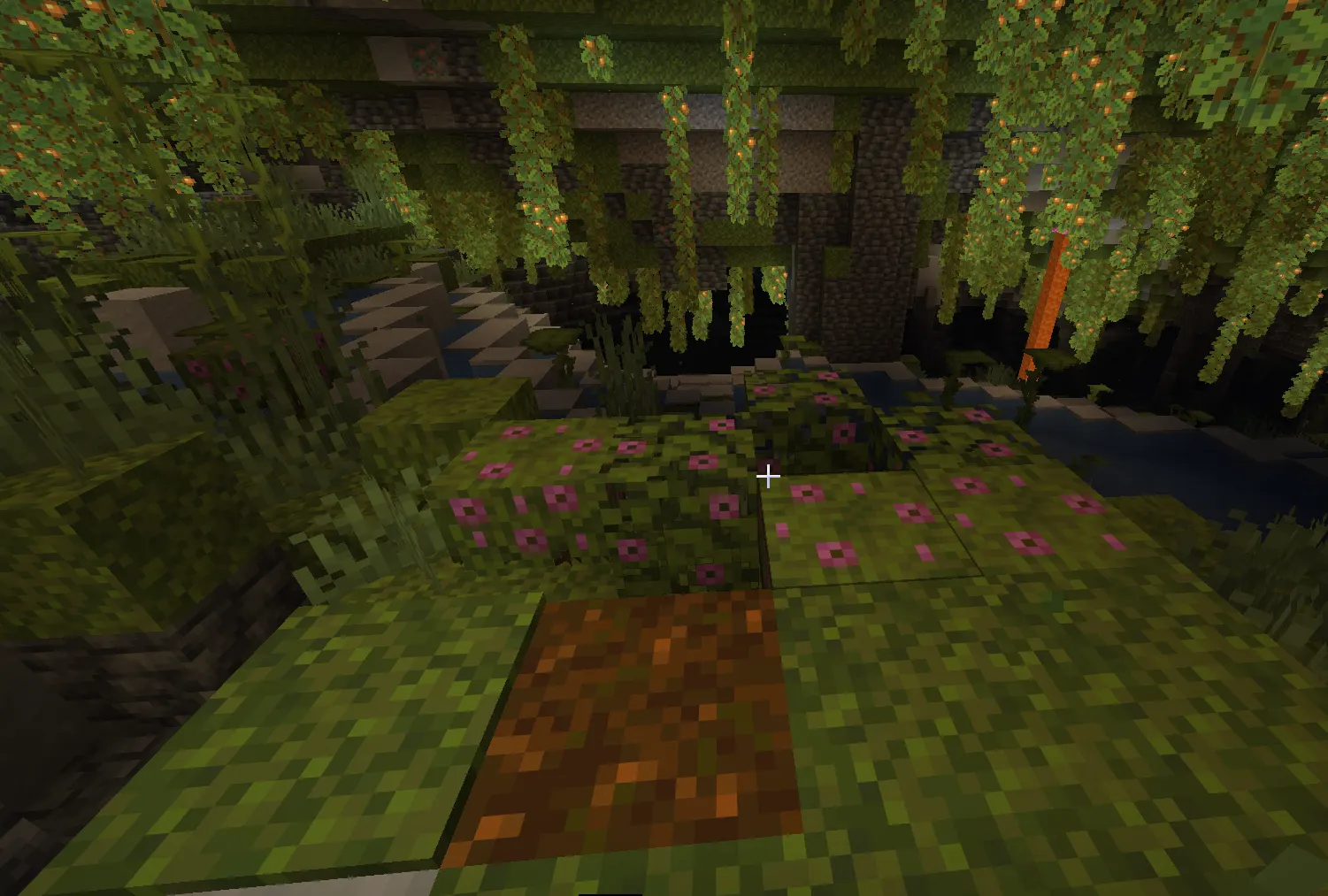
Azalea trees have distinctive dark green leaves with pink flowers. Once you spot one, dig straight down from its base. You will hit rooted dirt and then moss blocks before the cave opens up below you. This works in both Java and Bedrock editions.
Exploration Tips
If you are caving without a surface reference point, listen for the sound of dripping water. Lush caves have small water pools built into their clay floors, and the ambient audio is noticeably different from a standard cave.
You can also use the /locate biome command in Java Edition:
/locate biome minecraft:lush_caves
This gives you coordinates directly. On Bedrock, the equivalent is:
/locate biome lush_caves
In survival without commands, look for jungle or forest biomes on the surface. These are the biome types that most commonly have lush caves beneath them. Old-growth taigas also generate them occasionally.
Coordinate range to target during caving: Y=-40 to Y=-20. That is the depth range where lush caves appear most frequently.
Key Features of Lush Caves
Moss Blocks and Moss Carpet
Moss is the defining floor material of lush caves. It covers large portions of the ground and ceiling, and it spreads. If you use bone meal on a moss block, it converts nearby stone into more moss and generates small vegetation on top of it. This is actually a useful farming mechanic covered in more detail below.
Moss blocks have a Silk Touch requirement for collection. Without it, they drop nothing. Bring Silk Touch if you want to collect them for building.
Glow Berries
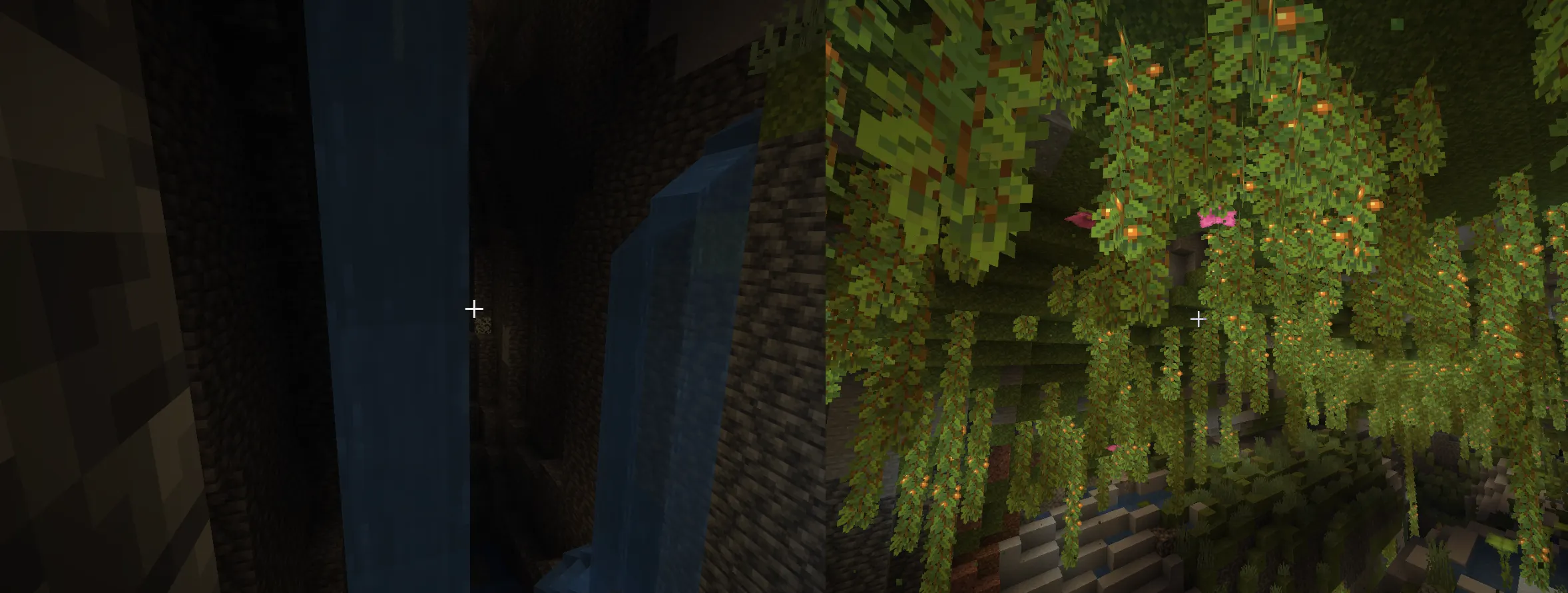
Glow berries grow on cave vines that hang from the ceiling. They emit a light level of 14, which is high enough to prevent Mob spawning. They are also edible — each one restores 2 hunger points (1 hunger bar segment) — and they can be planted on the underside of any block to grow new vines.
More importantly, glow berries are the only source of cave vine plants, which means lush caves are the only place to get them in survival without trading.
Spore Blossoms
Spore blossoms attach to ceilings and release a constant particle effect of falling green spores. They cannot be replanted or grown, so collect them carefully. They drop as an item when broken with any tool or by hand.
They are primarily used in decoration builds, but are also used in certain Crafting and composter recipes.
Clay and Water Pools
Lush caves are generated with small, shallow pools of water that sit in clay deposits. The clay itself is a reliable source for building and for crafting terracotta. The water pools attract axolotls, which is why you will almost always find them there.
Dripleaf Plants
Small dripleaf and big dripleaf plants grow in and around the water pools. Big dripleaf plants tilt when a player stands on them, which is more of a novelty than a hazard. Both types are collectable with Silk Touch and useful for jump-based obstacle builds.
Mobs in Lush Caves
Axolotls
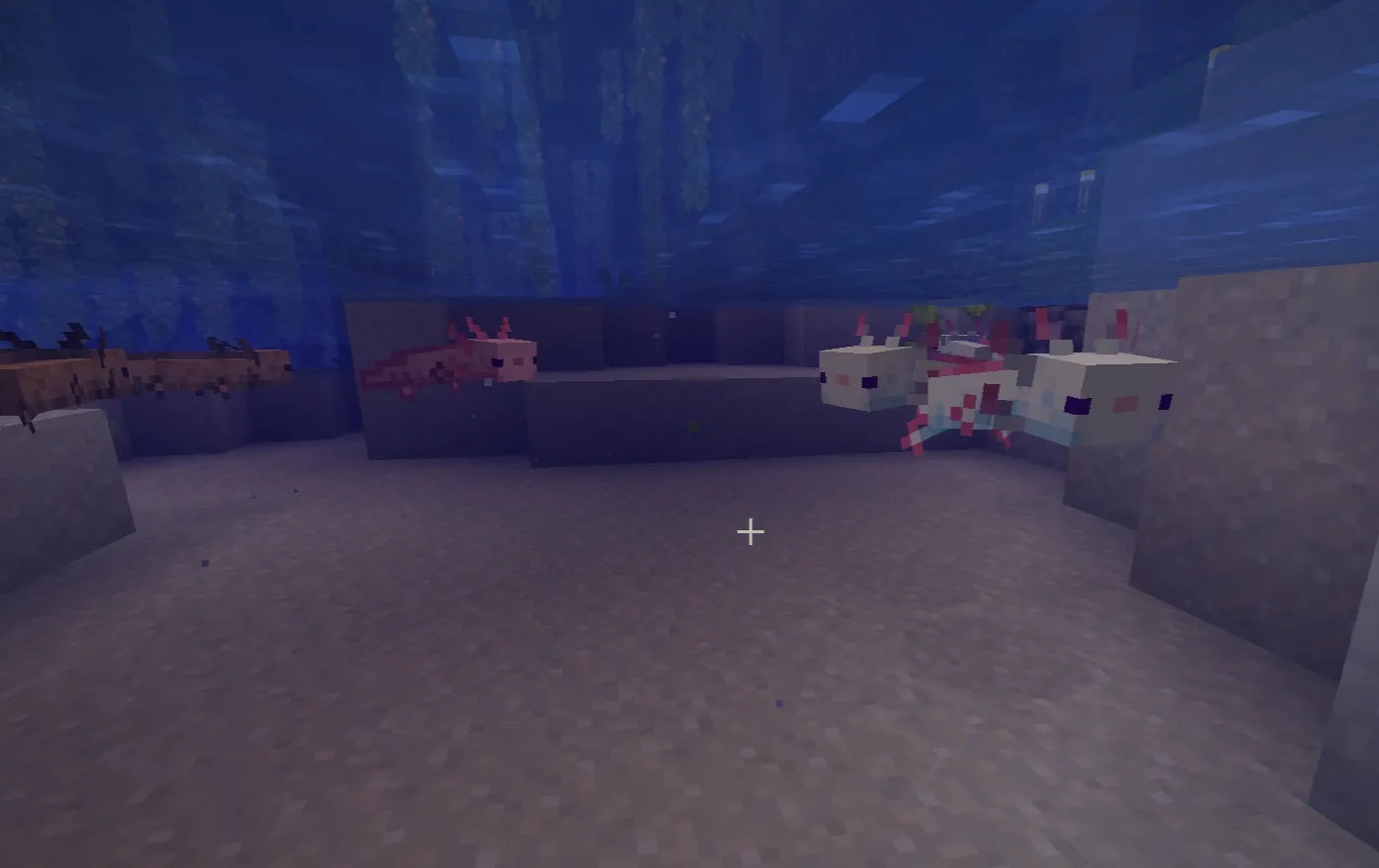
Axolotls are the only mob exclusive to lush caves, and they are more interesting mechanically than most players realise.
They spawn in water, specifically in water source blocks that are above clay, at Y=-63 or below, in complete darkness (light level 0). They come in five colour variants: leucistic (pink), brown, gold, cyan, and blue. Blue axolotls are extremely rare — roughly 1 in 1,200 chance per spawn.
Axolotls are passive toward players and hostile toward most aquatic mobs: fish, squid, guardians, Drowned, and elder guardians. They are allies in underwater combat.
Hidden mechanic most players miss: When an axolotl takes enough damage during combat, it plays dead. It flips upside down, becomes temporarily invulnerable, and regenerates health over a few seconds before resuming the fight. This is not a bug. The game intentionally grants the player Regeneration I for 100 game ticks each time an axolotl kills a mob. If multiple axolotls are in a fight, these regeneration buffs stack in duration.
Axolotls can be picked up in a water bucket and transported anywhere. They do not need lush caves to survive once placed in water. This makes them easy to relocate to a fish farm or guardian farm for combat assistance.
They also have a natural predator mechanic worth knowing: if you take an axolotl out of water, it survives for about 6000 game ticks (5 minutes) before taking suffocation damage. Keep this in mind when moving them.
Other Mobs
Outside of axolotls, lush caves follow the same Mob spawning rules as the rest of the underground. Zombies, Skeletons, Spiders, Creepers, and cave spiders all spawn in dark areas with light level 0 (post-1.18 rules). The natural glow of berry lighting helps, but it does not fully protect you. Unlit areas of the cave will still spawn Hostile mobs at night or at deep enough depths.
Bats also spawn in lush caves and are otherwise harmless.
Hidden Mechanics Most Players Miss
Moss Spreading as a Farm
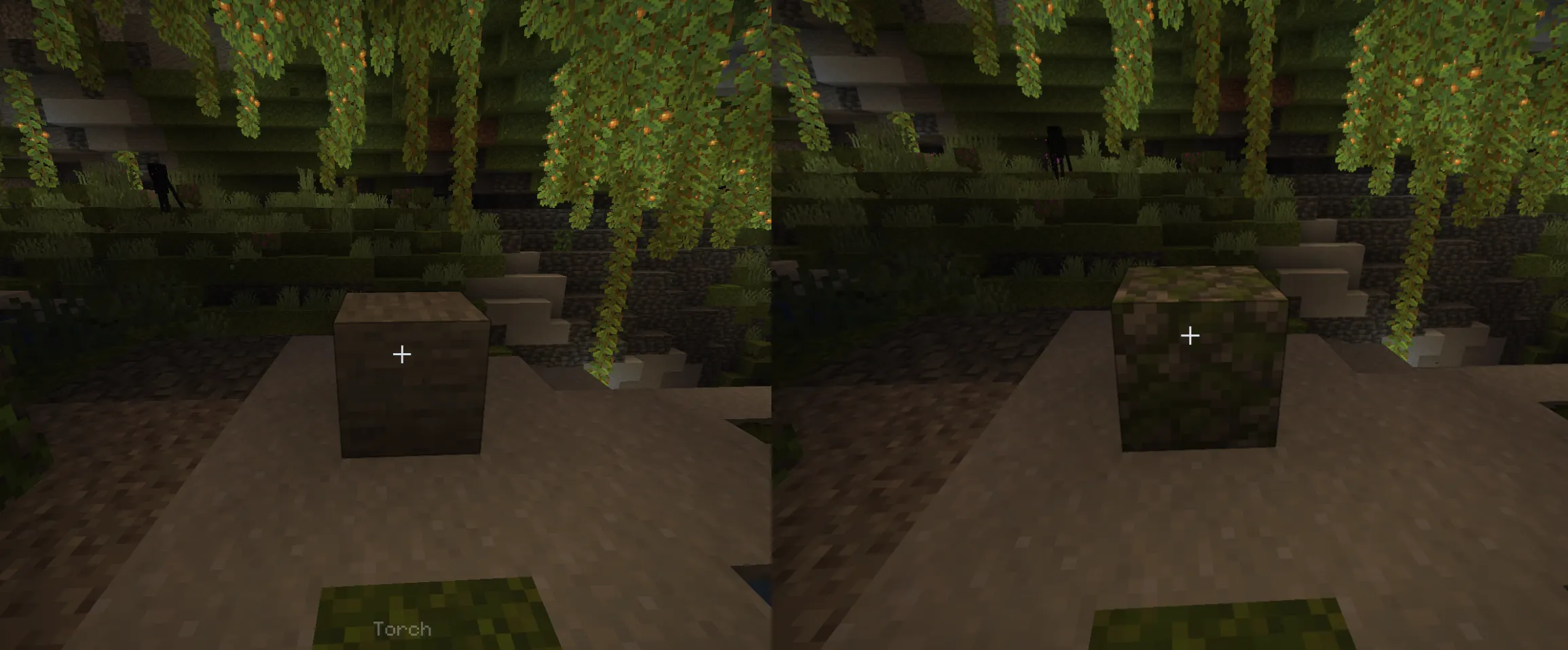
Using bone meal on moss blocks does two things: it converts nearby stone, deepslate, and dirt into moss, and it generates moss carpet, azalea bushes, and small vegetation on top. This is repeatable indefinitely.
If you set up a bone meal farm (from a skeleton farm or composter), you can use it to generate an automated or semi-automated moss supply. Moss blocks sell well in villager economies and are useful for large-scale building projects.
The spreading range is roughly 7 blocks in any direction from the source block. A single bone meal application converts 4 to 8 blocks on average.
Glow Berry Farming and Automation
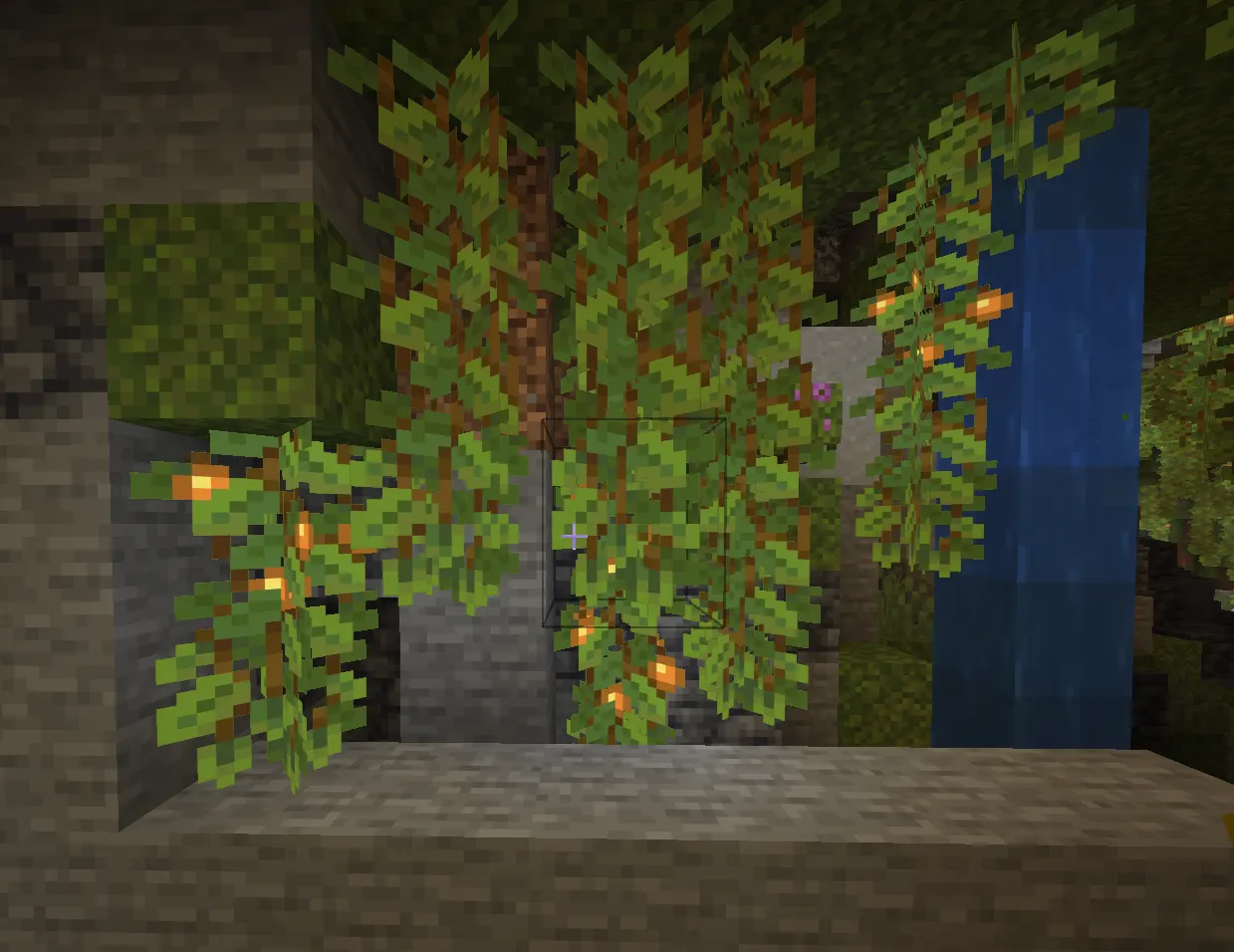
Glow berries drop from cave vines when broken or when harvested with bone meal. You can accelerate production with bone meal applied directly to the vine tips.
In Java Edition, this can be automated with dispensers holding bone meal, pointed at the vine tips, on a clock circuit. The berries drop as items and can be collected with hoppers below. It is not the most efficient farm in the game, but it is a reliable source of food and light sources if you want to avoid Torches aesthetically.
On Bedrock, automated bone meal dispensing works through similar redstone logic but with slight timing differences.
Light Level Spawning Post-1.18
Before 1.18, mobs spawned at light level 7 or below. Since 1.18, mobs only spawn at light level 0. This changes how you need to light a lush cave.
Glow berries produce light level 14. That is bright enough to prevent spawning directly around them, but the light falls off fast. Any area more than 7 blocks from a glow berry vine can still be dark enough for mob spawning, depending on the surrounding terrain. Do not assume the whole cave is safe just because it looks bright.
Use a light level overlay (Java Edition F3 screen, or the Mob Spawning option on Bedrock) to identify zero-light areas before assuming a space is safe.
Rooted Dirt and Hanging Roots
Rooted dirt generates above lush caves and is attached to hanging roots that dangle into the cave from above. These are collectable and compostable. Rooted dirt also has a unique property: water poured on it drains through it as if it were air, which makes it useful for specific water management builds.
Survival Value and Use Cases
Lush caves are among the best starting bases in the game for players who know how to use them. Here is the practical breakdown.
Food: Glow berries are immediately available as a food source when you first enter. Two hunger points each is not impressive, but when you are exploring with an empty inventory, they are free food on the walls.
Light without Torches: Glow berries and spore blossoms provide ambient lighting that keeps large sections of the cave lit without burning through your torch supply.
Clay deposits: Clay is available in the floor pools, which give you access to brick, terracotta, and flower pots early in the game.
Water access: The built-in water pools give you a water source immediately, which is useful for both farming and navigation.
Axolotl utility: If you plan on building near an ocean monument or doing guardian farming, having a lush cave nearby is a significant advantage. You can source your axolotls directly and relocate them.
Aesthetic base building: The biome itself provides a ready-made interior. A base built inside a lush cave looks genuinely impressive with minimal effort, because the terrain does most of the visual work for you.
Challenges and Risks
Lush caves are safer than dripstone caves and the deep dark, but they are not safe zones.
The main hazard is the irregular terrain. Lush caves generate with plenty of open vertical space, which means fall damage is a real concern. The moss and vegetation cover the floor unevenly, and holes can be hidden under carpet or dripleaf plants.
At the cave's deeper edges, the biome often borders the deep dark, where warden spawning becomes a risk if you trigger sculk sensors. Keep your sound-producing actions minimal if you notice sculk blocks appearing.
Mob spawning in unlit sections is the other consistent danger, especially in larger cave systems. Clear and light the whole space before treating it as a base.
Pro Exploration Tips
Mark your azalea tree. When you find the surface azalea tree, place a waypoint or marker. You will want to return to the surface from inside the cave, and having a reference point saves time.
Bring Silk Touch early. You cannot collect moss blocks without it. If you find a lush cave before you have Silk Touch, collect what you can (glow berries, spore blossoms, dripleaf) and come back for the moss later.
Use the water pools for navigation. The pools are generally toward the centre of the cave's lower areas. If you get turned around, moving toward water sounds usually brings you back toward the main chamber.
Collect cave vines from the ceiling, not just the berries. The vines themselves are replantable and allow you to grow berries anywhere you want. One vine collected is a permanent glow berry farm starter.
Do not mine straight down through rooted dirt. You will fall into the cave with no warning. Either dig at an angle or use a water bucket to cushion the drop.
Lush Caves vs Other Cave Biomes
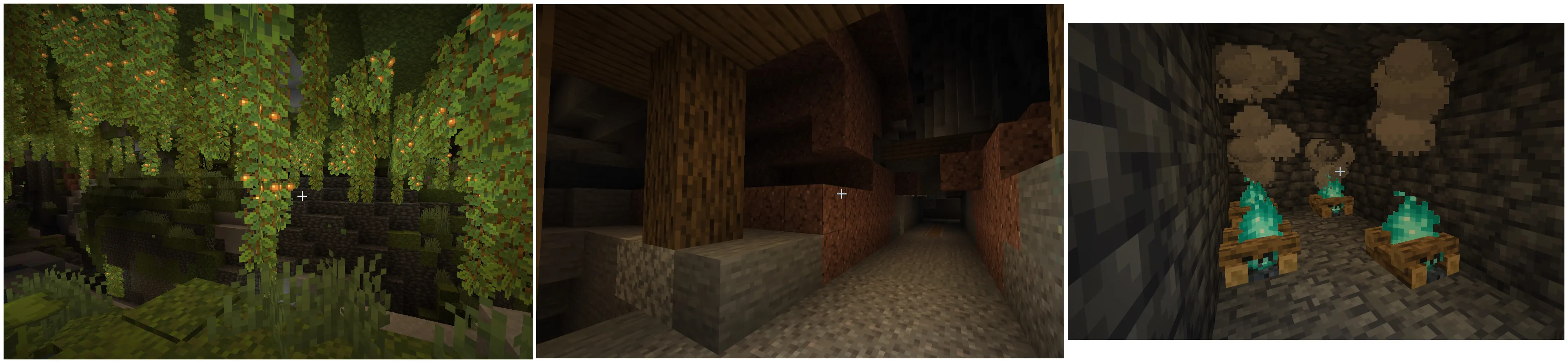
|
Feature |
Lush Caves |
Dripstone Caves |
Deep Dark |
|
Light Level |
Moderate (glow berries) |
Low |
Very low |
|
Hostile Mob Risk |
Low to moderate |
Moderate |
Extreme (warden) |
|
Unique Resources |
Moss, glow berries, axolotls |
Dripstone, copper |
Sculk, ancient cities |
|
Food Available |
Yes (glow berries) |
No |
No |
|
Water Sources |
Yes (clay pools) |
Limited |
No |
|
Base Building |
Excellent |
Poor |
Not recommended |
|
Best For |
Early to mid-game bases |
Copper farming |
Ancient city loot |
Dripstone caves generate large copper and pointed dripstone deposits, which are useful but not safe to navigate. They have no natural lighting, and the pointed dripstone deals fall damage.
The deep dark is a late-game location. It has the highest loot potential in the game through ancient cities, but it also has the warden, which cannot be killed by most players efficiently. It is a raid-and-retreat biome, not a base biome.
Lush caves sit in a middle ground where the risk-to-reward ratio makes them genuinely useful for extended stays, especially early in a Survival world.
Best Building Ideas in Lush Caves
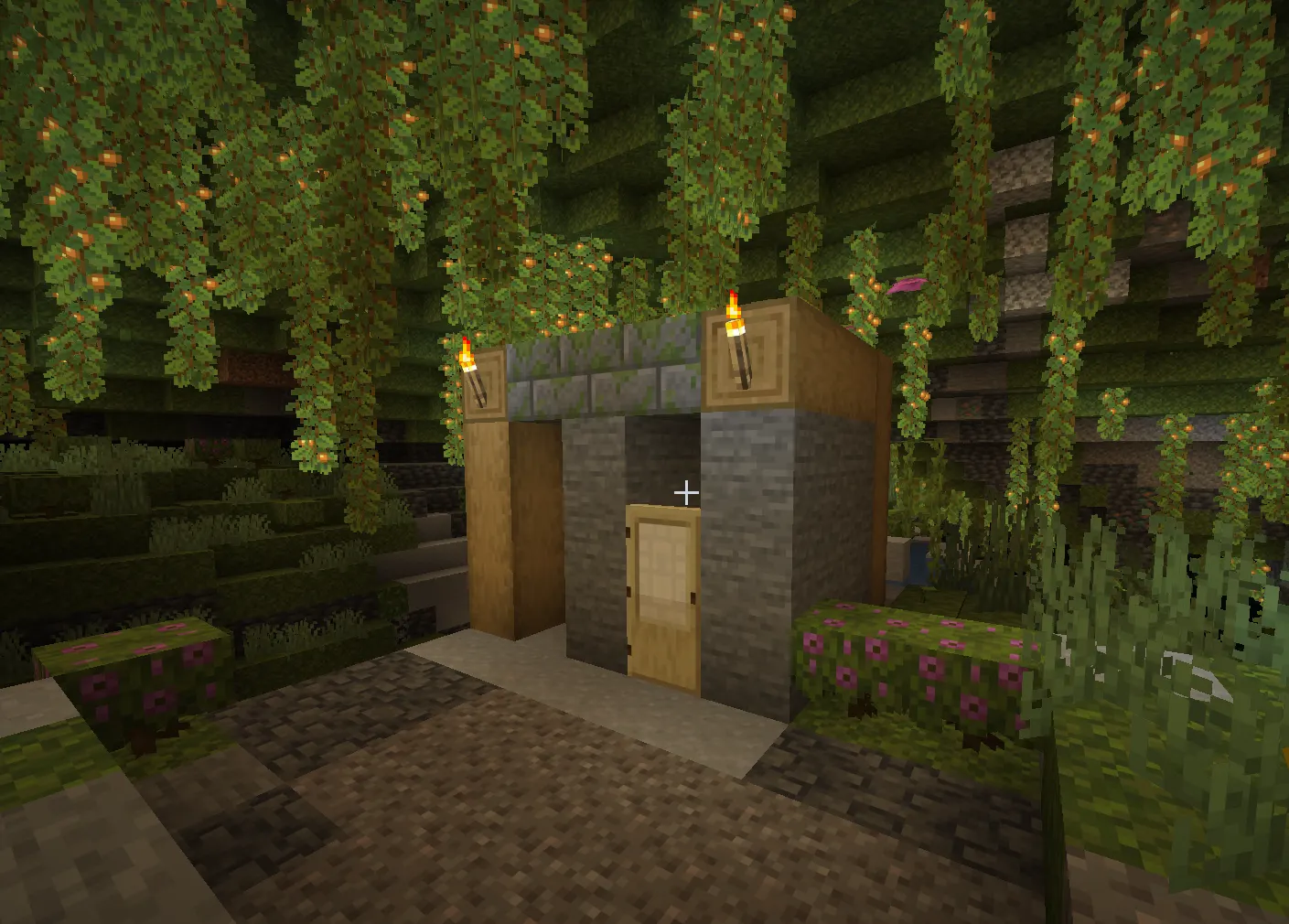
Natural integration base: Do not clear everything out. Build walls and floors that work with the existing moss and vine structure. Use dark oak or spruce wood to complement the green palette. The cave itself provides natural ceiling decoration.
Underground greenhouse: The combination of moss floors, natural lighting, and water access makes lush caves ideal for crop farms built inside the caves. Add wheat, carrots, and potatoes using the natural water pools as irrigation sources.
Axolotl sanctuary: Build a transparent glass enclosure around a water pool and keep multiple axolotl variants inside. Blue axolotls, especially, are worth preserving and displaying.
Glow berry corridor: Lush caves are dark at their edges. String cave vines along corridors connecting your base to the main cave entrance. They provide ambient lighting without torch clutter.
Composter and bone meal station: Since lush caves generate vegetation naturally, setting up a composter loop near the cave entrance gives you a steady bone meal supply for the moss farm.
Quick Summary
-
Lush caves generate underground, most commonly below forest and jungle biomes
-
Find them by locating azalea trees on the surface and digging straight down
-
The biome runs from roughly Y=0 to Y=-64 at most
-
Key resources: moss blocks, glow berries, spore blossoms, clay, cave vines, dripleaf
-
Axolotls spawn in dark water above clay at Y=-63 or below, and play dead when damaged
-
Glow berries provide light level 14 and can be farmed with bone meal
-
Moss spreads up to 7 blocks when bone meal is applied and can be semi-automated
-
Mob spawning still occurs in areas with light level 0, even inside the biome
-
Silk Touch is required to collect moss blocks
-
Best overall cave biome for early-game base building