
XP is the backbone of Minecraft's progression system. Without it, you can't enchant your gear, Repair tools on an anvil, or get the most out of the Mending enchantment. If you've ever died and watched those green orbs scatter across the ground, you already know how frustrating it is to lose progress you worked hard for.
This guide breaks down everything about how XP works, where to get it, how to keep it, and how to farm it efficiently.
What Is XP in Minecraft?
XP stands for experience points. In Minecraft, it's a resource you collect by doing things in the world, killing mobs, mining ores, smelting items, fishing, trading with villagers, and more.
When you collect experience, it fills a green bar at the bottom of your screen. Once that bar fills up, you gain a level. Your current level is displayed as a number above the bar.
XP is represented visually as glowing green and yellow orbs that float toward you when you're nearby. They have a small magnetic pull, so you don't need to stand directly on top of them.
What Does XP Do?
XP serves three primary functions in Minecraft survival:
-
Enchanting — Spending XP levels to enchant weapons, tools, and armor at an enchanting table
-
Anvil repairs and combining — Using XP to repair items, combine enchantments, or rename gear
-
Mending enchantment — Automatically converting collected XP orbs into durability on equipped Mending items
Without XP, your progression in Minecraft effectively stalls. You can build and farm indefinitely, but your gear stays weak, and your tools keep breaking.
How XP Levels Work
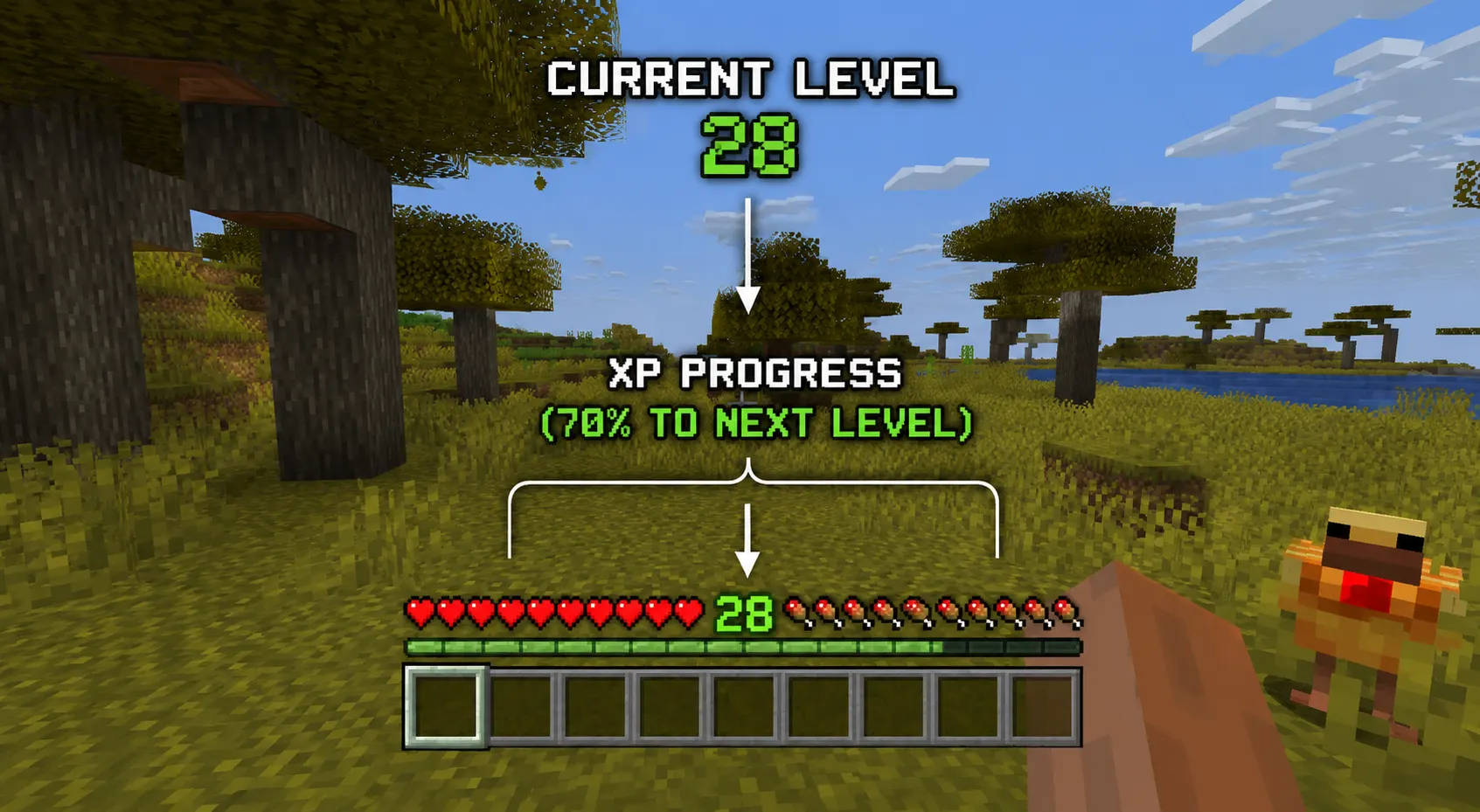
XP levels aren't a simple straight line. Each level requires progressively more XP points to reach.
|
Level Range |
XP Required Per Level |
|
Levels 0–15 |
17 XP per level |
|
Levels 16–30 |
3 × Level + 17 XP |
|
Levels 31+ |
7 × Level − 14 XP |
This means getting from level 0 to level 30 requires 1,395 XP points total — and it gets steeper after that.
Why level 30 matters: The enchanting table caps at level 30 for maximum enchantments. Going higher doesn't improve enchanting table results, but higher levels are used for expensive anvil operations.
Best Ways to Get XP in Minecraft
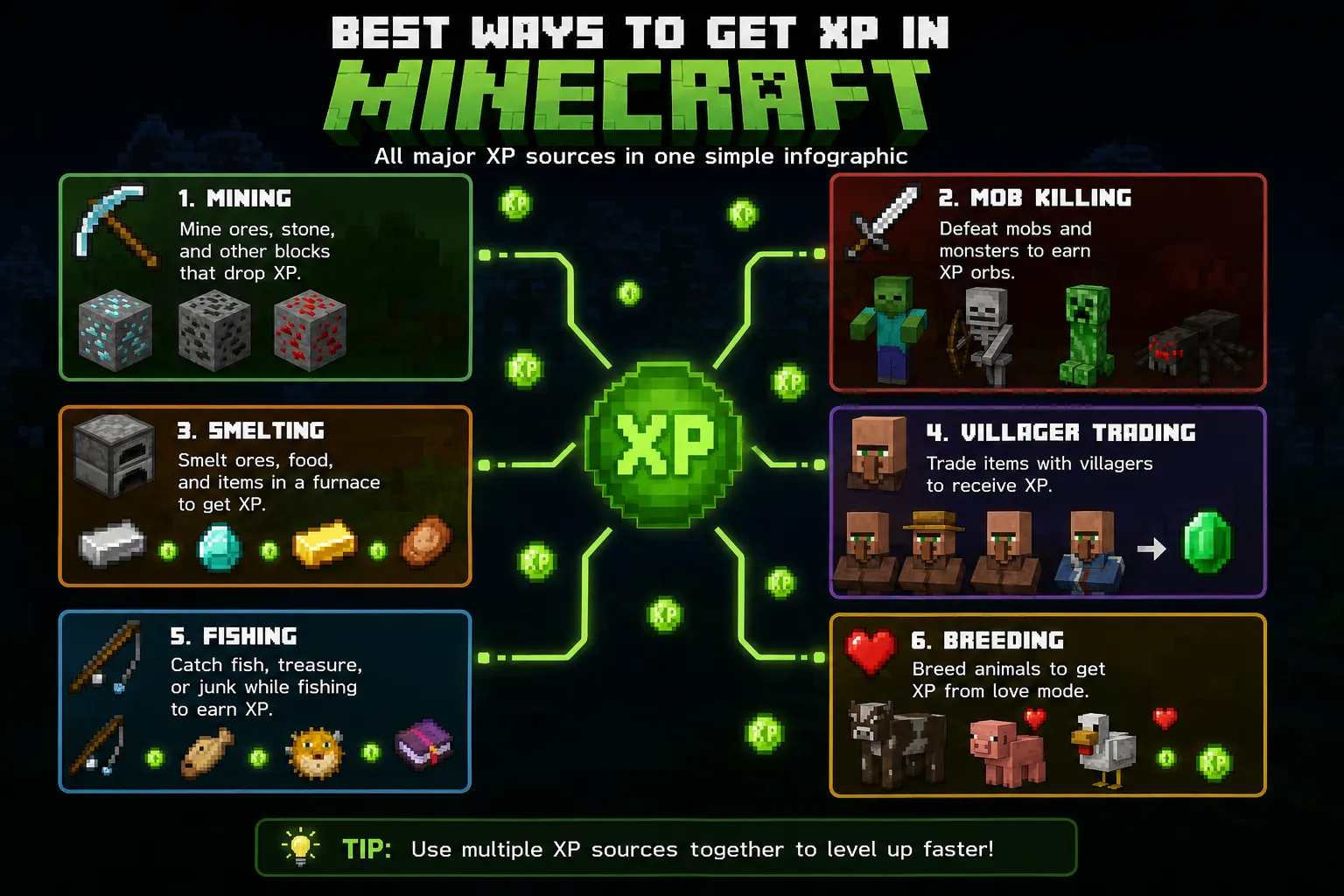
There are many XP sources in Minecraft, and they vary wildly in efficiency. Here's a breakdown of each.
XP From Mining
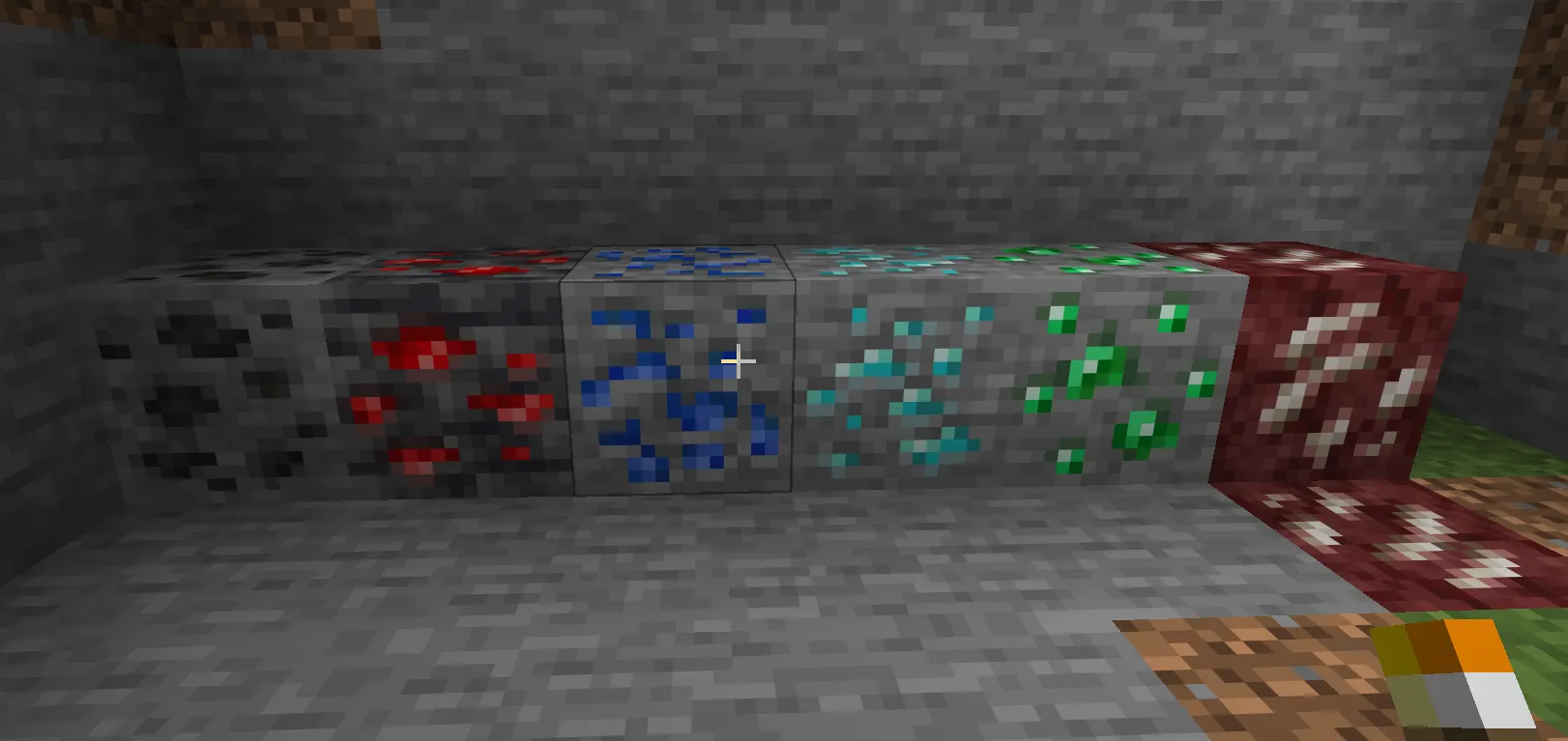
Mining is one of the first XP sources you'll encounter. Certain ores drop experience orbs when broken with a non-Silk Touch pickaxe.
|
Ore |
XP Dropped |
|
Coal Ore |
0–2 XP |
|
Lapis Lazuli Ore |
2–5 XP |
|
Redstone Ore |
1–5 XP |
|
Diamond Ore |
3–7 XP |
|
Emerald Ore |
3–7 XP |
|
Nether Quartz Ore |
2–5 XP |
|
Nether Gold Ore |
0–1 XP |
|
Ancient Debris |
0 XP |
Pro tip: Nether quartz is one of the most underrated early XP sources. The Nether has enormous veins of quartz ore, and mining it gives consistent XP drops. Players regularly go from level 0 to 30 in a few minutes of quartz mining.
Note that Ancient Debris drops no XP, and Fortune does not increase XP drops from any ore.
XP From Mobs
Killing mobs is the most common way players gain XP, especially in early survival.
|
Mob Type |
XP Dropped |
|
Standard hostile mobs (Zombies, Skeletons, etc.) |
5 XP |
|
5 XP |
|
|
5 XP |
|
|
5 XP |
|
|
Blazes |
10 XP |
|
Witches |
5 XP |
|
Elder Guardians |
10 XP |
|
Bosses (Wither, Ender Dragon) |
50 / 12,000 XP |
|
Baby mobs |
12 XP (higher than adults) |
|
Breeding animals |
1–7 XP |
The Ender Dragon drops 12,000 XP on its first death, by far the largest single XP drop in the game. On respawn and re-kill, it drops 500 XP.
Warning: Endermen killed by other means (falling, fire) don't always drop XP. You need to land the killing blow.
XP From Smelting
Every item you smelt in a furnace, smoker, or blast Furnace rewards XP when you collect the output.
|
Smelted Item |
XP Per Item |
|
Raw Iron / Gold / Copper |
0.7 XP |
|
Raw Pork Chop / Beef / Chicken |
0.35 XP |
|
Cactus |
1.0 XP |
|
Kelp (dried) |
0.1 XP |
|
Sand → Glass |
0.1 XP |
|
Clay → Bricks |
0.3 XP |
|
Stone (from cobblestone) |
0.1 XP |
XP from smelting is stored in the furnace and only released when you manually collect items. This creates a powerful mechanic: you can bank XP in a furnace and collect it all at once when you need a level boost.
Strategy: Set up a kelp or cactus smelting operation, leave it running, and collect everything in bulk when you're low on levels. Auto-smelting farms combined with hoppers can generate thousands of XP passively.
XP From Villager Trading
Trading with villagers gives XP orbs on every successful trade. The amount varies by trade type and profession.
Each trade rewards roughly 3–6 XP per transaction. Librarian villagers offering books are particularly valuable here because you're already spending emeralds to get enchanted books and collecting XP at the same time.
Villager trading isn't the fastest raw XP source, but if you're building a trading hall anyway, the passive XP adds up quickly over time.
XP From Fishing and Breeding
Fishing rewards 1–6 XP per catch. With a Luck of the Sea and Lure enchanted fishing rod, you can fish quickly and steadily. It's not the most efficient method, but it's AFK-friendly and doubles as a loot source.
Breeding animals gives 1–7 XP per successful breed. This is minor XP, but worth knowing if you're breeding a large number of animals for food or resources, you're collecting XP on the side.
How Enchanting Uses XP
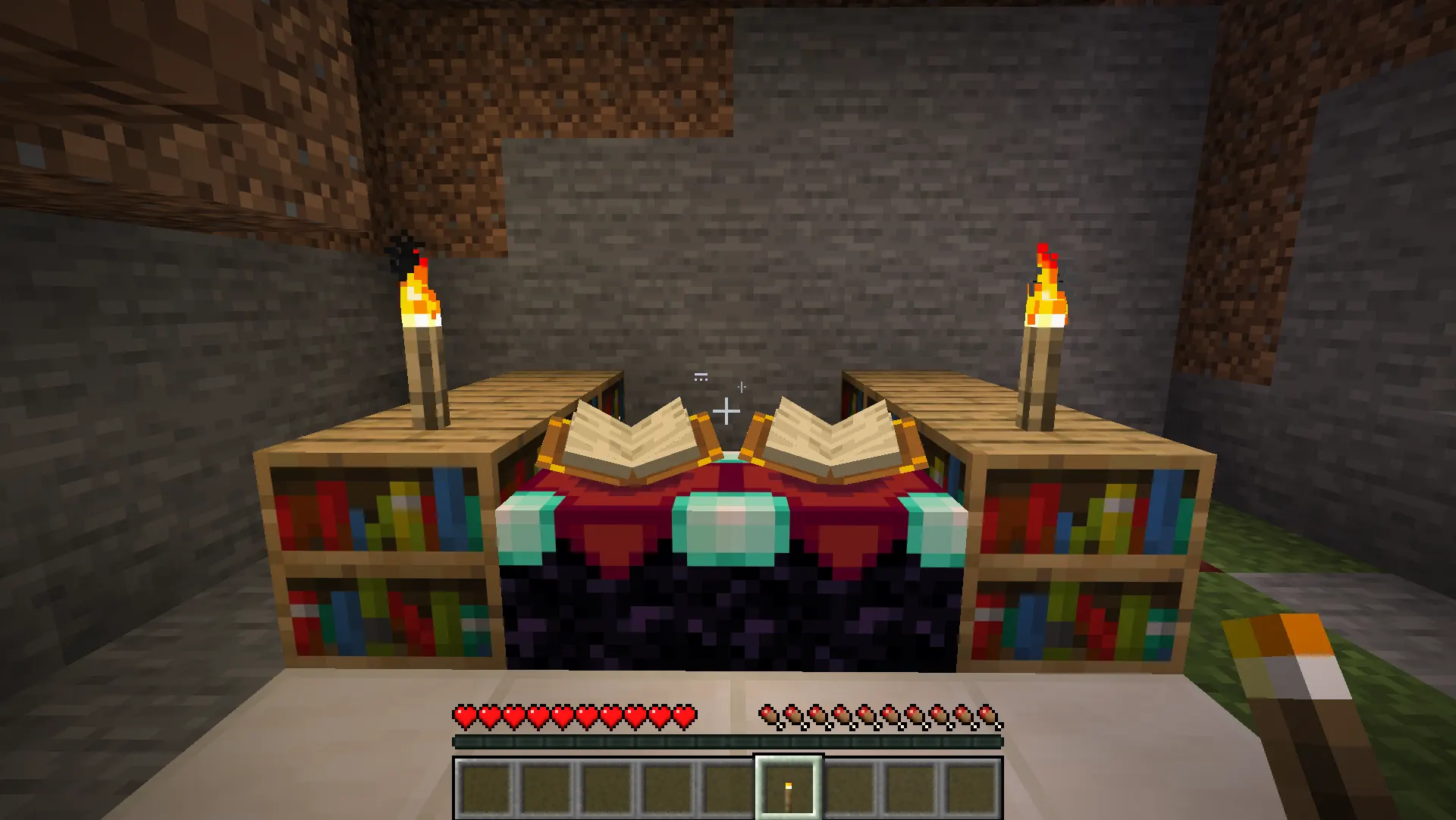
The enchanting table is the primary reason players chase XP in survival mode.
To enchant an item, you need:
-
An enchanting table surrounded by bookshelves (up to 15 bookshelves for maximum enchants)
-
Lapis lazuli
-
XP levels
The three enchantment options shown always cost 1, 2, or 3 lapis lazuli, but the level requirement scales with enchantment quality. A level 30 enchant costs 3 lapis and 3 XP levels.
Important: You only spend levels at the enchanting table, not raw XP points. If you're at level 32, spending 3 levels drops you to 29, but you keep your banked XP above level 29.
Anvils work differently. They consume raw XP based on the operation cost. Expensive operations (combining high-level enchantments, repairing over-enchanted gear) can cost dozens of levels. If a repair shows "Too Expensive," the XP cost has exceeded 39 levels, and the anvil will refuse the operation.
What Happens to XP When You Die?
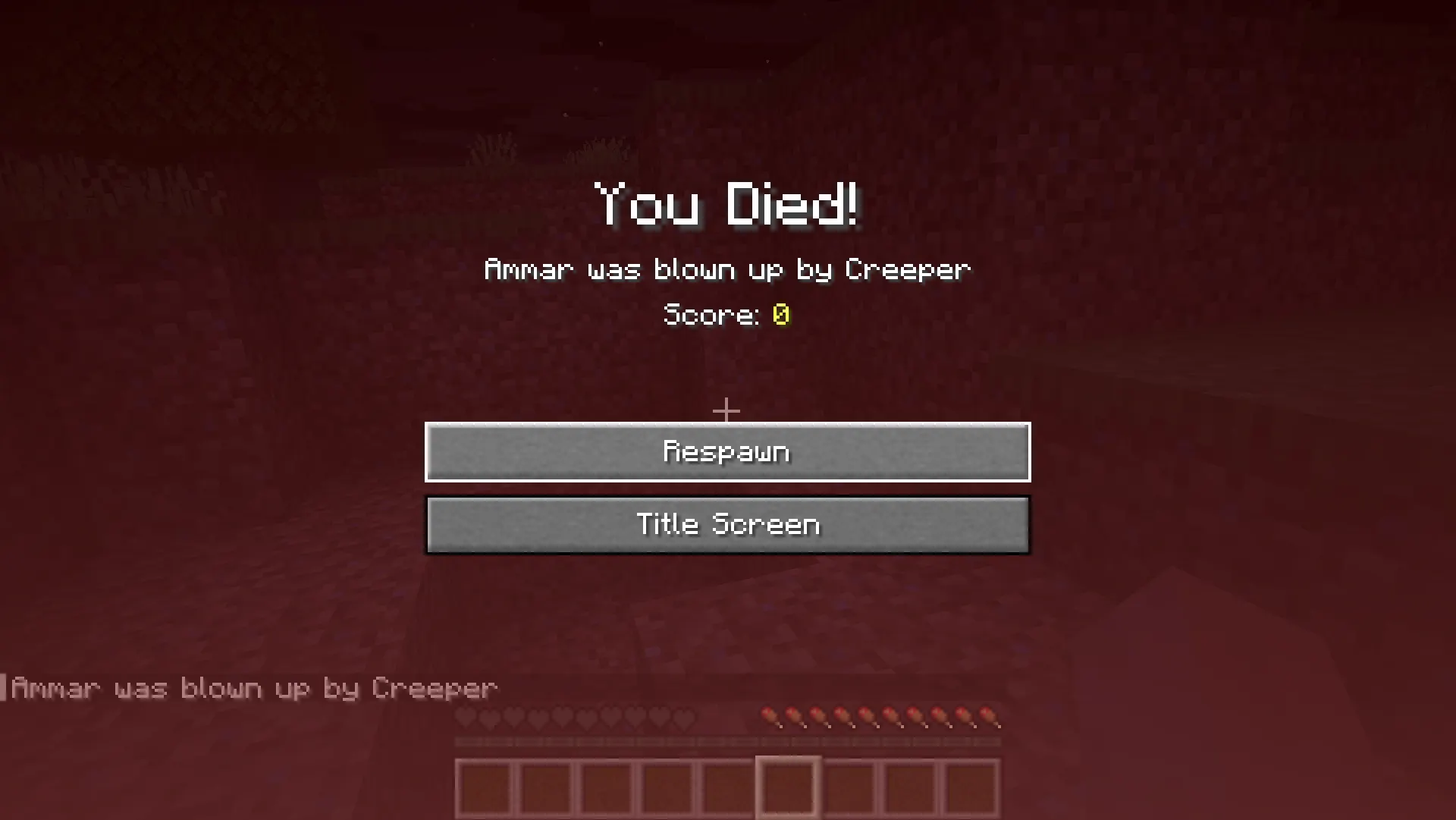
When you die in Minecraft, you drop all your XP as orbs at the location of death.
-
You drop several XP orbs equal to 7 × your current level, capped at 100 XP points dropped per death.
-
You return to level 0 on respawn
-
The orbs despawn after 5 minutes if not collected
This means: At high levels, you lose the vast majority of your stored XP on death. A player at level 100 drops the same 100 XP as a player at level 1; everything above that threshold is gone.
This is exactly why the Mending enchantment is so valuable. Items with Mending absorb XP orbs to repair themselves, which keeps your gear maintained without anvil costs and reduces the total XP you need to carry.
Tip: If you die somewhere dangerous, rush back immediately. The 5-minute despawn timer is shorter than players expect, especially if you need to respawn and navigate back.
Best XP Farms in Minecraft

XP farms automate or semi-automate experience collection so you can level up fast without active grinding.
Mob Spawner Farms
Find a dungeon with a zombie or skeleton spawner. Build a simple water flushing system that channels mobs into a killing chamber. You land the final hit to collect XP. Reliable, relatively easy to build early, and gives drops alongside XP.
Enderman Farm (End Dimension)
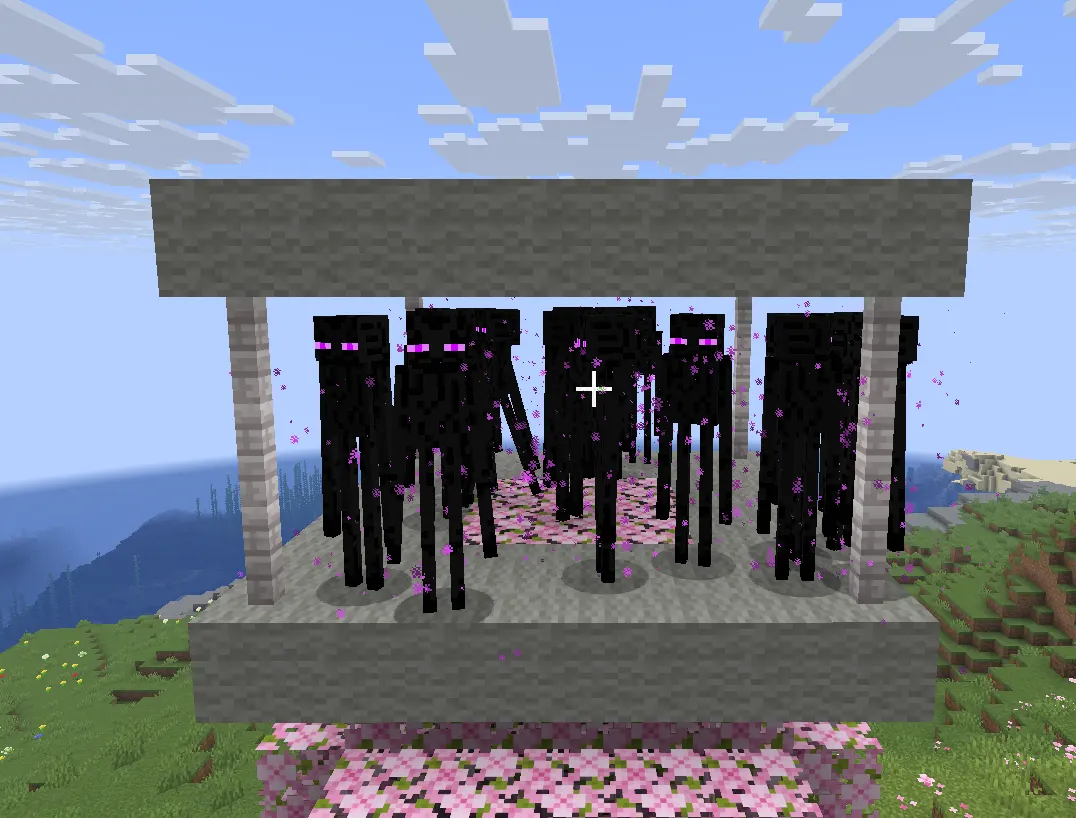
Build a platform at Y=0 in The End. Endermen that fall from the main island pathfind toward you and can be killed in one hit. This is one of the highest XP-per-hour farms in the game once you're established.
Blaze Farm (Nether Fortress)
Blazes drop 10 XP each, double most mobs, and also drop blaze rods for potion-making. A blaze farm built around a spawner is a top-tier XP source.
Cactus or Kelp Smelting Farm
Fully automatic, works while AFK. Kelp farms combined with a dryer furnace array can bank enormous amounts of XP over time. Collect it all at once.
Guardian Farm (Ocean Monument)
One of the highest-volume XP farms, but complex to build. Draining and setting up a guardian farm takes time, but the XP and prismarine drop rates are exceptional.
Piglin Trading / Bartering (Nether)
Not a traditional XP farm, but automatic gold farms feeding piglins generate XP from gold smelting. Pairs well with other Nether operations.
Fastest Ways to Gain XP in the Early Game
If you're just starting a survival world, here's the fastest path to level 30:
-
Mine Nether quartz — As soon as you have a Nether portal, spend 10–15 minutes mining quartz. You'll hit level 30 quickly and come back with a stack of quartz blocks.
-
Kill mobs at night — Don't hide at night early on. Fight back. Hostile mobs drop, and XP accelerates early progression.
-
Smelt your ores in bulk — Don't collect from furnaces one item at a time. Let it accumulate and collect everything at once.
-
Find a dungeon spawner — Even a basic zombie spawner farm produces enough XP to keep you stocked if you visit it regularly.
-
Cook food — Smelting raw meat gives XP. It's small, but you're doing it anyway.
Common XP Mistakes Beginners Make
1. Carrying high levels into dangerous situations.s Walking into a cave at level 45 is risky. You'll lose almost everything if you die. Spend down to level 30 before exploring dangerous areas.
2. Collecting furnace output one item at a time.e Grabbing items from a furnace resets the XP counter. Always let smelting complete fully, then collect everything in one pull to receive all stored XP at once.
3. Not prioritizing Mending early enough. Many players spend levels on Sharpness and Protection first and ignore Mending. Getting mending on your main tools early makes everything downstream easier.
4. Using Silk Touch on diamond ore when you need XP, Silk Touch prevents ore from dropping XP. If you're XP-starved, mine ores directly. Save Silk Touch for relocating spawners or collecting fragile blocks.
5. Ignoring baby mobs. Baby zombies, baby piglins, and other baby variants drop more XP than their adult versions. If you're grinding a mob farm, this is a minor but real difference.
6. Burning XP on costly anvil repair.s Anvils have a penalty system — every time you use an anvil on an item, the future cost increases. Repair items sparingly and use Mending to offset wear instead.
Java vs Bedrock XP Differences
The core XP system is largely the same between Java and Bedrock editions, but there are a few practical differences:
|
Mechanic |
Java Edition |
Bedrock Edition |
|
XP cap on death |
100 XP points |
100 XP points |
|
Mending behavior |
Repairs equipped item randomly |
Same behavior |
|
Furnace XP storage |
Stored until collection |
Same behavior |
|
Mob XP values |
Standard values |
Generally same |
|
XP bottle (Bottle o' Enchanting) |
Throws, drops 3–11 XP |
Same |
|
Enderman farm efficiency |
Very high |
High, minor differences due to pathfinding |
The biggest practical difference is in farm design. Some Java farms exploit specific mob AI or spawn mechanics that don't translate identically to Bedrock. If you're following a farm tutorial, check whether it was built for your version.
Advanced XP Tips
Use Bottle o' Enchanting strategically. Bottles o' Enchanting (experience bottles) drop 3–11 XP each and can be purchased from Cleric villagers. They're not efficient for grinding from 0, but throwing a stack when you're a few thousand XP short of level 30 saves time.
Sculk blocks and the Warden Sculk catalysts (generated in the Deep Dark) convert nearby mob death XP into sculk growth. This is purely a building mechanic and doesn't help XP farming, but understanding it prevents confusion when mobs die near sculk without dropping orbs.
The Ender Dragon re-kill strategy Respawning and killing the Ender Dragon again drops 500 XP plus End Crystal XP. It's repeatable, gives access to the outer End islands, and is worth doing if you need a quick injection of levels.
Level up before dangerous boss fights. Clear your levels by enchanting before taking on the Wither or Elder Guardian. Win or lose, you won't drop what you've already spent.
Book + quill trick for level banking.g This is a Java-specific quirk: some players use specific storage mods or mechanics to defer XP collection. In vanilla, the furnace banking method is the cleanest equivalent.
Conclusion
XP in Minecraft isn't just a number; it's the resource that separates basic survival from fully geared, enchanted dominance. Understanding how levels work, where XP comes from, and how to avoid losing it gives you a huge advantage in any survival world.
The key takeaways: mine Nether quartz early, build even a basic mob farm as soon as possible, prioritize Mending on your main gear, and spend your levels on enchanting before doing anything risky. Once XP stops being a bottleneck, the rest of the progression opens up fast.