Introduction
The desert looks simple. Sand everywhere, a few dead bushes, maybe a cactus. You spawn there, thinking it'll be easy flat terrain, clear sightlines, no dense forests blocking your vision.
Then you die of thirst at noon, get hit by a husk that slows you with the hunger effect right as your food bar runs out, and you realize the desert was never simple. It just looks that way.
This guide covers everything: early-game survival mistakes, mid-game resource building, how desert temples actually work (including the trap most players spring once), the mob behaviors specific to this biome, and a handful of mechanics that even experienced players overlook. Whether you just spawned into your first desert world or you're doing a hardcore desert-only challenge run, there's something useful here.
What Is the Desert Biome in Minecraft?
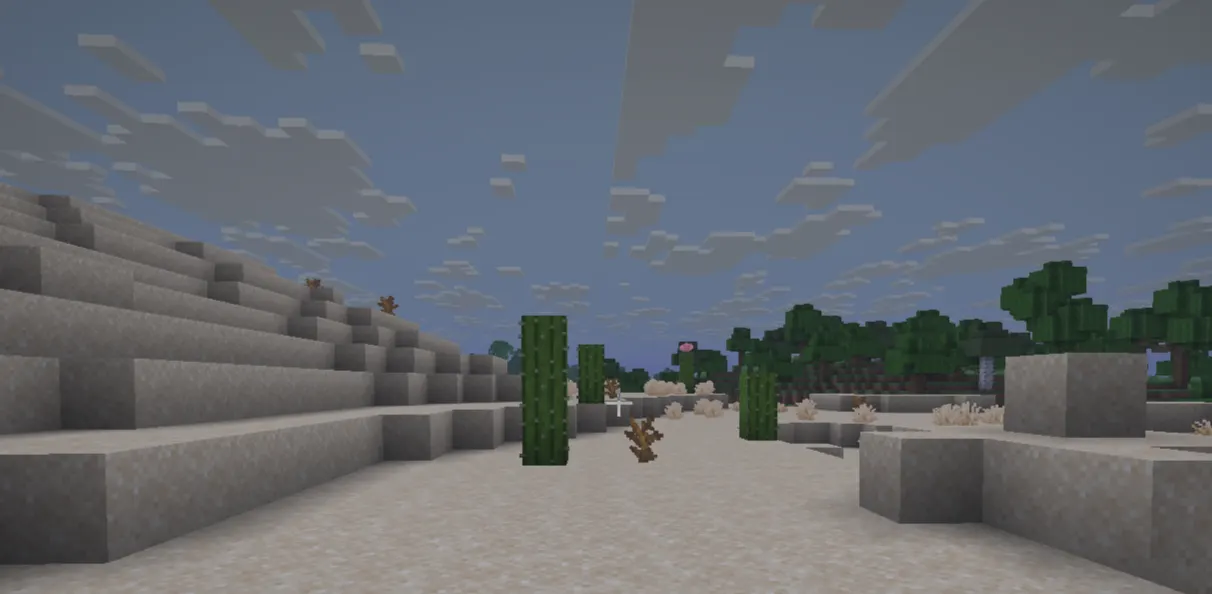
The Desert biome is one of Minecraft's most recognizable environments. The surface is almost entirely sand, with occasional sandstone underneath. You won't find passive mobs spawning naturally here: no cows, no sheep, no pigs. The only animals that are found in deserts are rabbits and sometimes horses at the edges near the savanna borders.
What you will find:
-
Terrain: Flat to gently rolling, made of sand (top layer) and sandstone beneath. Occasional dunes.
-
Vegetation: Dead bushes and cacti. That's it. No trees, no grass, no flowers.
-
Temperature: The desert has a warmth value of 2.0 in Minecraft's biome system, which means snow never falls here and ice won't form in water sources.
-
Structures: Desert temples (also called desert pyramids), desert villages, desert wells, and, rarely, pillager outposts.
-
Underground: Standard cave systems and ore distribution. The surface biome doesn't affect what's underground, so mining here is no different from anywhere else.
The real challenge isn't what the desert contains. It's what it lacks wood, water, passive mobs, and natural shelter.
Why Survival Is Difficult in the Desert Biome
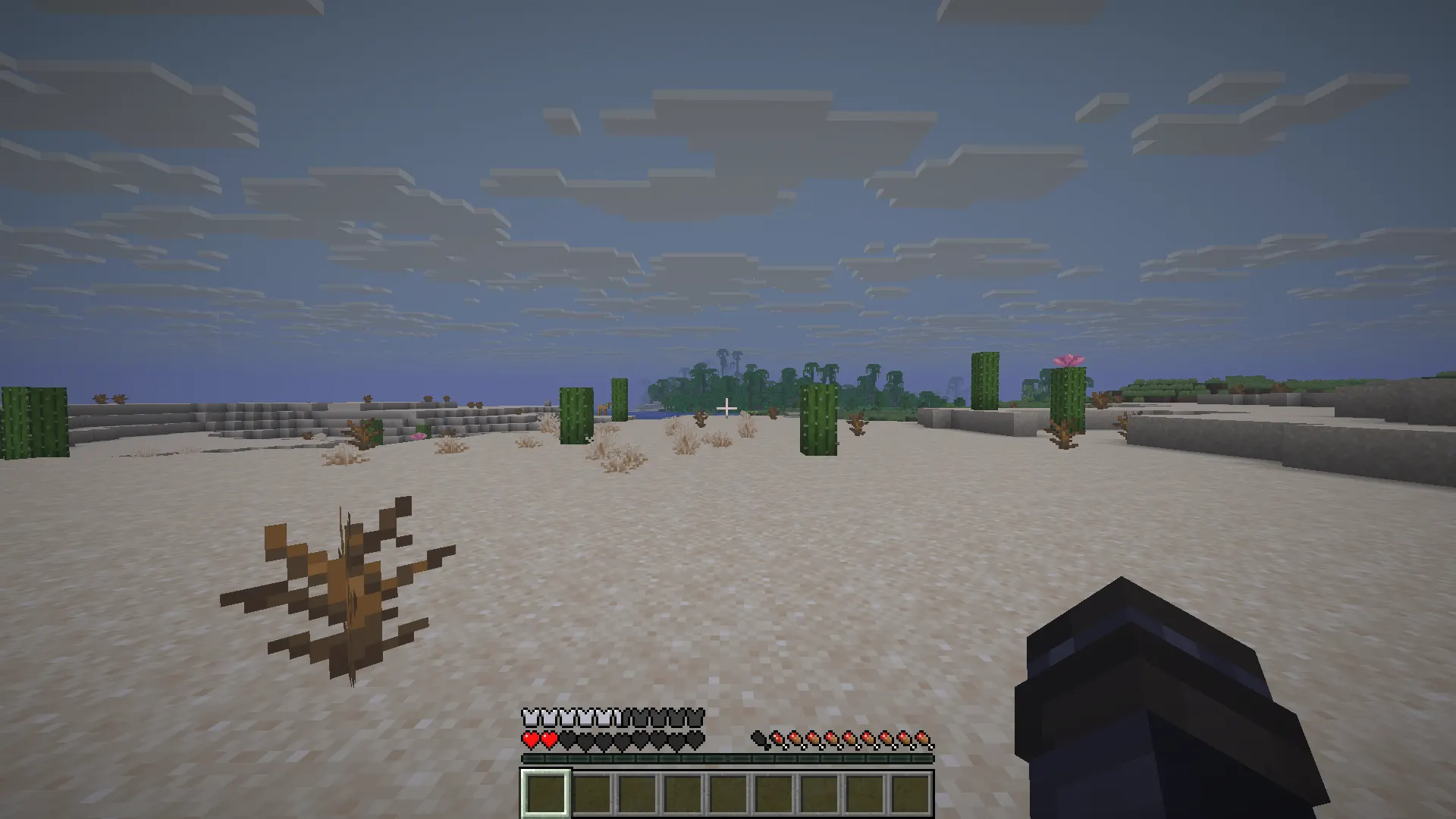
Most biomes give you a few freebies. Forests hand you wood immediately. Plains have animals grazing in the open. Even the taiga gives you rabbits and spruce trees. The desert gives you almost nothing to work with at the surface level.
No trees. Wood is the foundation of Minecraft's early game. Without it, you can't make tools, a Crafting table, a chest, a bed, or torches. Spawning in a desert with no nearby forest edge is one of the most punishing starts in the game.
No passive mobs. Cows, pigs, and sheep are your main food sources in early survival. The desert has none. Rabbits spawn here, but they're fast, skittish, and only drop 1–2 pieces of raw rabbit. Not exactly a feast.
No surface water. Lakes and rivers can appear in deserts, but they're far less common than in other biomes. No water means no fishing, no hydrating farmland, and no quick way to break a fall or escape fire.
Husks instead of zombies. Husks are the desert-exclusive zombie variant, and they're strictly worse to fight than regular Zombies. They don't burn in sunlight, and their hits apply the Hunger status effect, draining your food bar faster right when you need it most.
Heat and visual fatigue. This isn't a game mechanic, but it's real. The uniform sand landscape makes navigation genuinely hard. Getting lost in a desert is easy because every direction looks the same.
Step-by-Step Survival Strategy
Early Game: The First Three Nights
Day 1 priorities, in order:
Find wood first. Before anything else, scan the horizon for a forest, jungle, or any tree biome. In a large desert, this could mean running for 500–1,000 blocks. It's worth it. Without wood, your options are severely limited.
If you absolutely cannot find trees, sand, and sandstone can be used as building materials. You can construct a shelter from these, but you still need wood for tools. Look for any desert village; they contain crafting tables, beds, and often chests with basic supplies.
Craft in this order: Wooden pickaxe → stone pickaxe → Furnace → stone sword. Get to stone tools as fast as possible. Wooden tools break so quickly in a survival scenario that they're almost a waste.
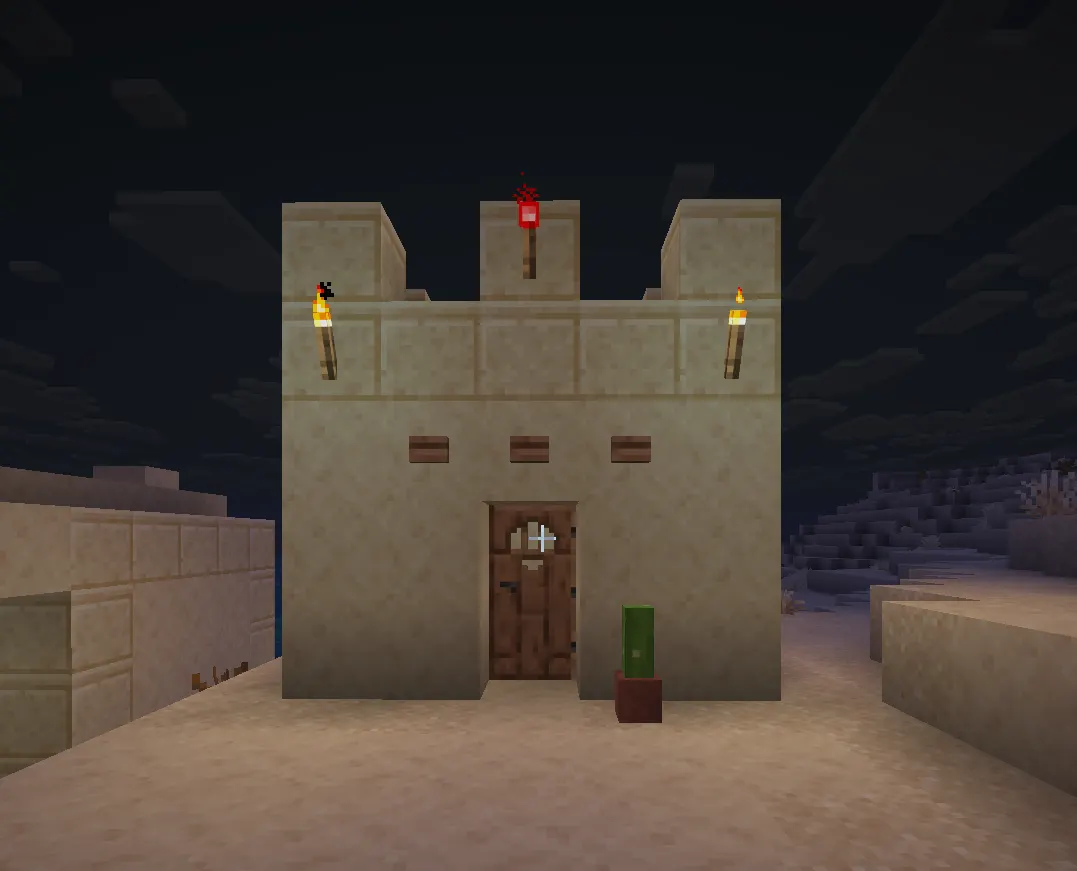
Build a shelter before dark. In a desert, this is even more important than in other biomes because husks don't burn at sunrise. A regular zombie disappears at dawn. Husks patrol indefinitely. Your shelter doesn't need to be pretty, just enclosed, lit, and with a door.
Collect sand and sandstone. You'll need these. Sandstone is your primary building block when wood is scarce, and sand is used for glass (useful for windows and later for sand farms).
Getting food on Day 1:
Rabbits are your best early option in the desert. Chase them down or use the sprint-and-hit method. A bow makes this much easier, but you won't have one immediately.
If you find a desert village, check every house. Villages generate with bread in chests, and the farms (usually wheat, carrots, or potatoes) can be harvested immediately. Don't destroy the village crops; leave some to replant.
Desert wells sometimes generate near villages. The water in a desert well is a full source block. This is critical for early farming. Mark its location.
Mid Game: Establishing a Base
Once you have stone tools, a shelter, and a food source, shift focus to:
Establishing a real food supply. Wheat farming is reliable in the desert if you have water access. One water source block irrigates a 9×9 area of farmland. Pumpkin and melon farms also work well and are more food-efficient per harvest once you have seeds.
Cactus farming. Cacti grow naturally in deserts and can be farmed automatically without any redstone. Plant a cactus on sand with a block at a diagonal to break the growth. This creates a simple auto-farm. Cactus has limited food value (only used to make green dye), but it's extremely useful as a mob barrier and later for XP grinders.
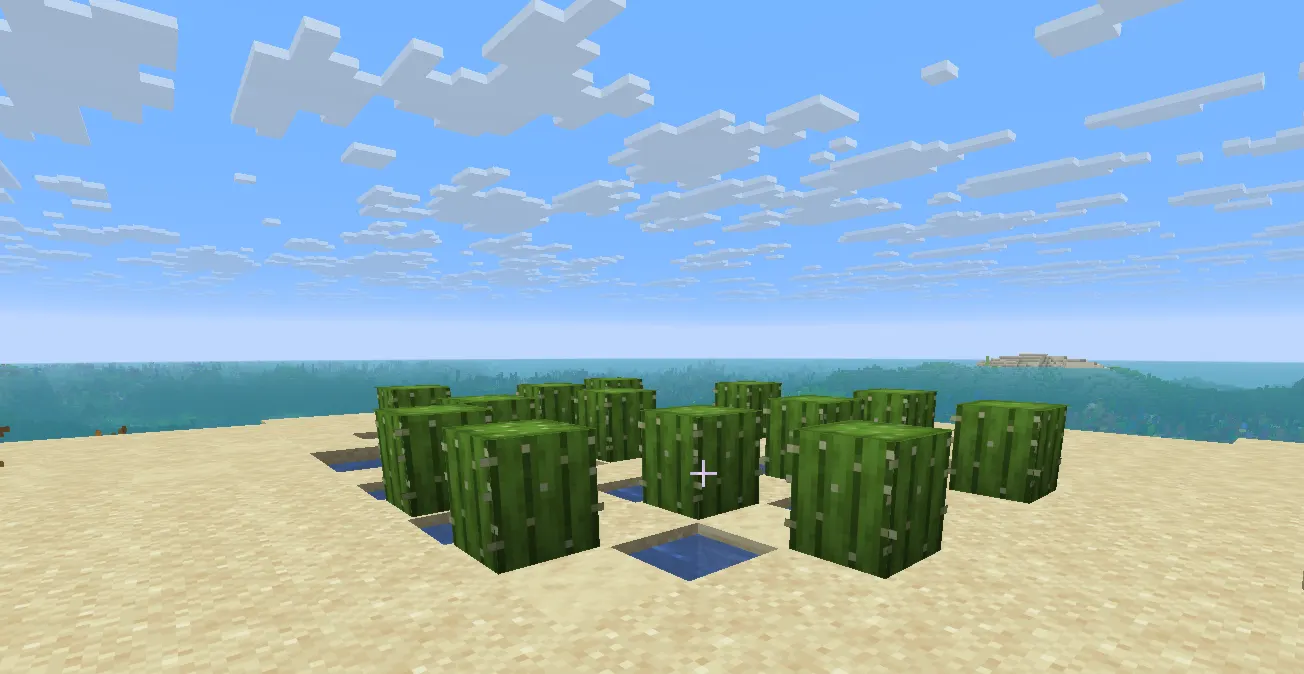
Glass production. The desert gives you unlimited sand. A furnace and wood fuel mean unlimited glass. Glass lets you seal your base with light-transmitting windows, build greenhouses, and later create beacon structures or Nether portals more efficiently.
Find iron. Your stone tools need to be replaced. Head underground. Desert cave systems are the same as everywhere else. Iron ore is your priority, then coal for torches and smelting.
Get a bed. This requires wool, which means finding sheep. You may need to travel to the edge of the desert for this. Alternatively, killing three spiders for string and crafting a bed from wood and string (via the wool Crafting recipe) works if sheep are nowhere to be found. A bed is arguably the most important item in early survival; resetting your spawn point can save hours of progress.
Late Game: Thriving in the Desert
By late game, the desert's drawbacks become advantages:
-
The flat terrain makes it ideal for large farms, mob grinders, and base expansions.
-
Sand is infinite for glass, concrete, and TNT production.
-
Desert temples and villages become loot sources rather than dangers.
-
The lack of trees means you have open sky for solar panels (if playing with tech mods) or just unobstructed building space.
Late-game priorities:
Set up a villager trading hall. Desert villages spawn with specific villagers, including farmers, librarians, and blacksmiths. Curing a zombie villager (which drops from husks when they drown, more on that later) unlocks massive price discounts. A librarian can trade enchanted books, and a farmer will buy your surplus wheat and crops.
Build an XP farm. A cactus-based XP farm is relatively simple and scales well. More efficiently, a Mob spawner (if you find one) or a raid farm built near a village gives enormous XP and drops.
Explore the Nether and End from your desert base. By this point, the biome is just a backdrop. The desert has given you glass, sand, and flat land, all useful for the endgame.
How to Find Water and Food in the Desert
Water Sources
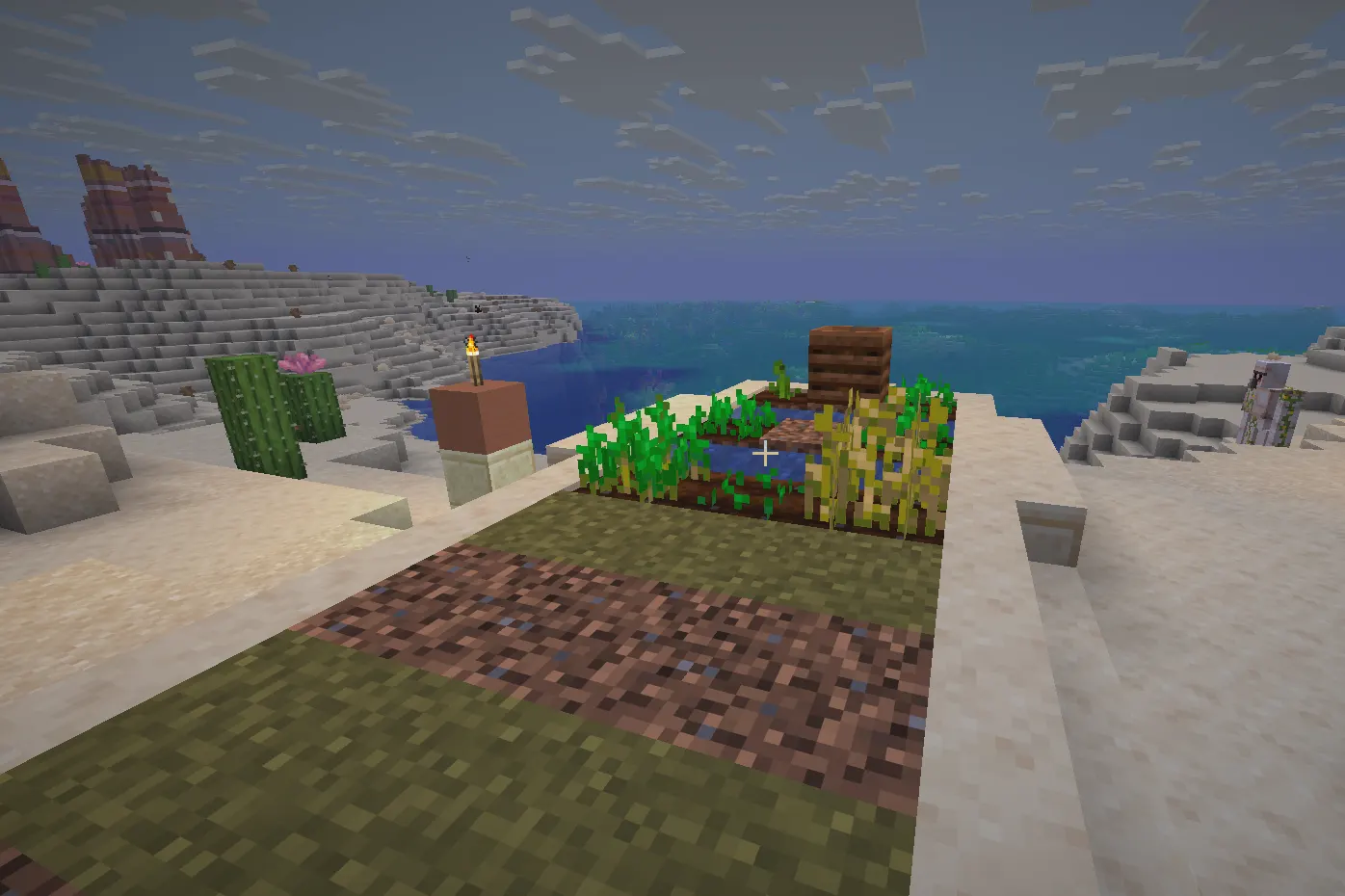
Desert wells are the most reliable water source, and they generate more often than most players realize, usually near villages. One well contains a single water source block. This is enough to irrigate a 4×4 farmland area if placed centrally.
Rivers. Rivers cut through deserts occasionally. They look slightly different from regular rivers (they generate at the same level but are surrounded by sand). Check your minimap or just explore in one direction for a few hundred blocks.
Oceans and beaches. Deserts sometimes border warm oceans. Ocean water is infinite and serves all the same purposes as freshwater for farming.
Lush caves. After 1.18, cave biomes generate independently of surface biomes. You might be standing in a desert and have a lush cave directly beneath you, complete with water, glow berries, and axolotls. Worth checking if you hear water underground.
Bringing water to you. Once you have buckets, carry water with you. Two water buckets placed diagonally create an infinite water source anywhere. This is the cleanest solution for base building: find water once, bring it home, replicate it indefinitely.
Food Sources
Rabbits. Fast and annoying to catch, but they drop raw rabbit and rabbit hide. A few cooked rabbit pieces will keep you going early.
Cacti. Not directly edible, but you can trade cactus with villagers or use it to farm XP that lets you enchant better tools for hunting.
Village farms. Wheat, carrots, potatoes, and beetroot all spawn in desert village farms. These are your best early food sources. Harvest them, replant, and you have a sustainable food supply within minutes of finding a village.
Fishing. If you find a river or ocean, fishing is actually a top-tier food strategy. Fish cook over a campfire or furnace,e and salmon in particular gives decent saturation. You also catch enchanted books, saddles, and other loot from fishing; it's underused as a desert survival method.
Trading with farmers. Once you have a villager economy running, farmers buy crops and sell food. Bread, pumpkin pie, and cookies are all available through trading.
Desert Structures: Temples, Villages, and Wells
Desert Temples (Pyramids)
Desert temples are the most visually distinctive structures in the biome, a large sandstone pyramid with an orange and blue wool pattern on the exterior. They look impressive, and they are, mostly because of what's underneath.
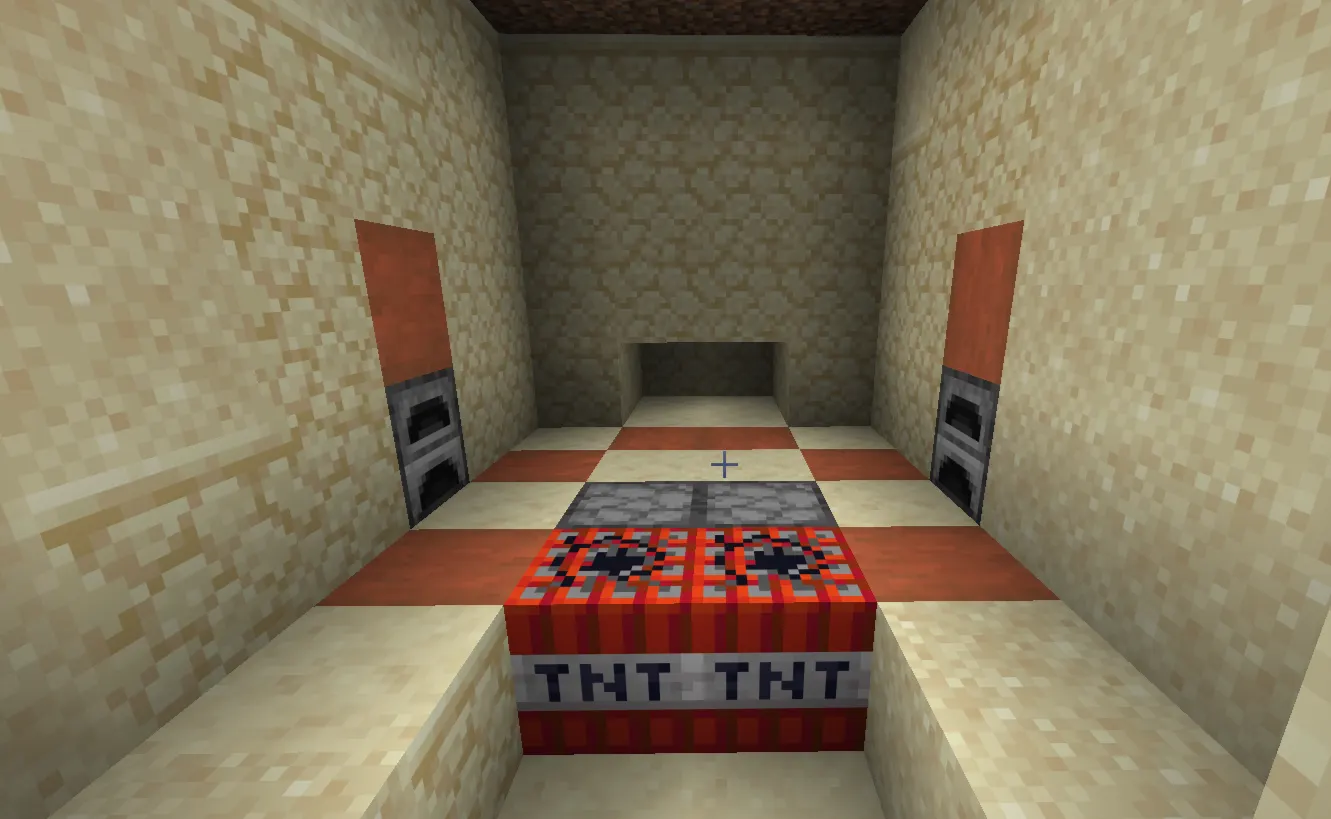
The layout: Four chests in a lower chamber, arranged around a pressure plate connected to TNT. If you step on that plate, nine TNT blocks detonate simultaneously. This is a design flaw that many players discover the hard way once.
How to safely loot a temple:
-
Enter through the front door and find the colored wool pattern in the center of the floor.
-
Dig around (not through) the center block to reach the lower chamber.
-
Before touching anything, look directly at the pressure plate. It's in the middle of the room.
-
Break the pressure plate or the stone beneath it to defuse the trap.
-
Loot all four chests safely.
What you'll find: Desert temple chests contain some of the best early-game loot in the game: enchanted books, diamonds (up to 3), gold, iron, emeralds, horse armor, saddles, and gunpowder. The loot table has good variance but averages better than a dungeon chest. Always loot every temple you find.
There are also two hidden chests in the upper section of the pyramid, one on each side. These are smaller but still worth grabbing.
Desert Villages
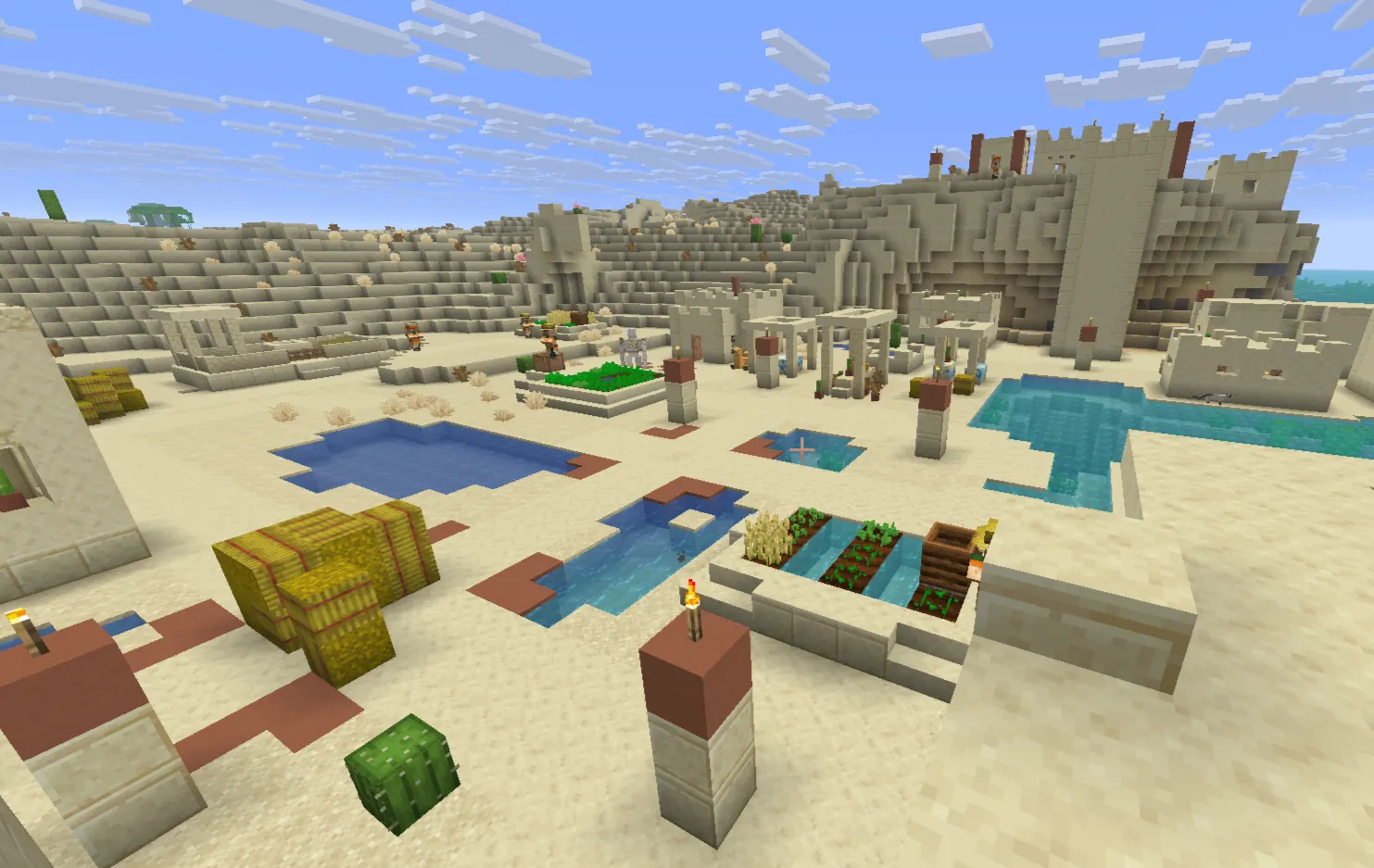
Desert villages are generated with sandstone and smooth sandstone architecture, making them blend into the surrounding terrain better than plains villages. They're easy to miss.
What villages provide:
-
Crafting tables in certain houses useful if you've spawned with no wood.
-
Beds critical for setting your spawn point.
-
Chests with food, tools, and occasionally emeralds.
-
Farms for immediate food.
-
Villagers for trading.
-
Iron golems that protect the village and can be killed for iron (though this is better done late-game after you've established trading relationships).
Pillager outposts near villages. These sometimes generate close to villages. Don't fight the pillager captain unless you're prepared for a raid. The Bad Omen effect triggered by killing a captain will start a village raid the next time you enter a village, which is a significant combat challenge early in a playthrough.
Desert Wells
Small and easy to miss, desert wells are sandstone structures containing a single water source block. Their value is completely disproportionate to their size in a water-scarce biome; this one block can be the difference between building a real base and constantly traveling to find water.
Mark every well you find. If you're playing with a map or coordinates, note the location immediately.
Mobs in the Desert: What You're Fighting
Husks
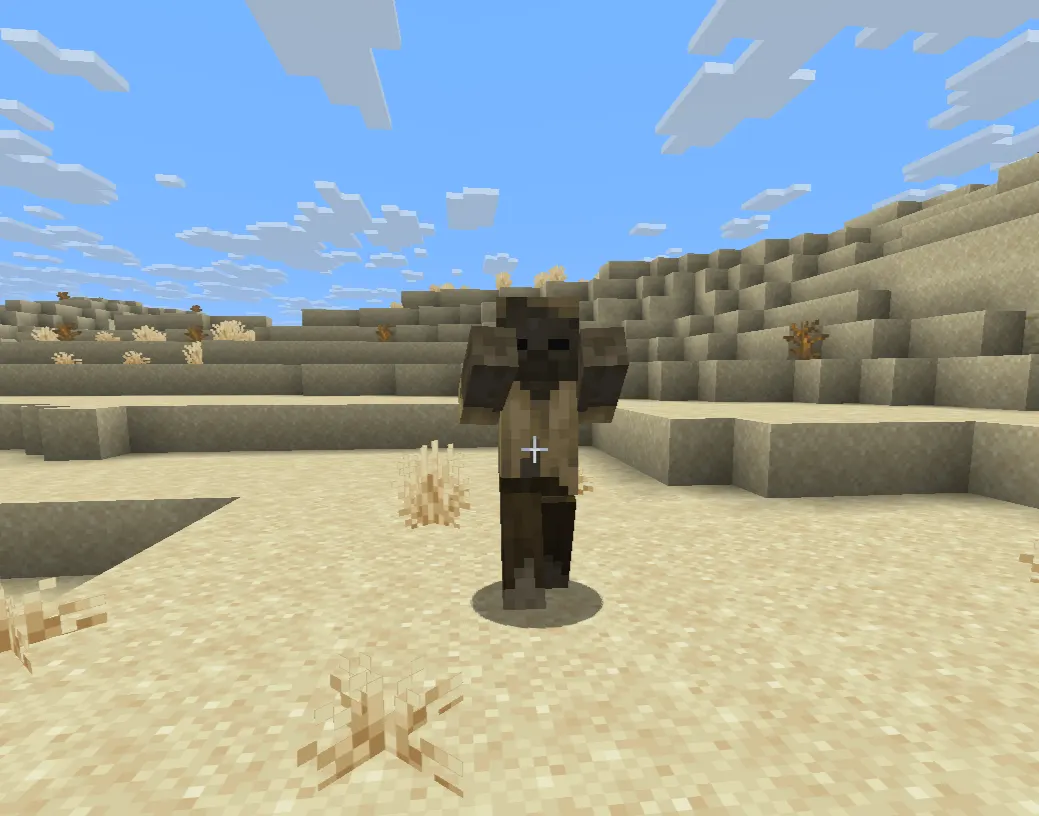
Husks are the primary hostile mob of the desert biome, and they replace regular zombies entirely in this environment. They look like sun-bleached zombies in tattered clothes.
What makes them dangerous:
-
They don't burn in sunlight. Regular zombies are only a threat at night and in shade. Husks are a threat all day.
-
Their attacks apply the Hunger status effect for 7 seconds (10 seconds on Hard difficulty). Every hit drains your food bar faster.
-
They have the same health pool as regular zombies (20 HP) and the same damage, but the Hunger debuff stacks the challenge significantly.
How to deal with husks:
Keep your food bar at maximum before fighting. A full food bar regenerates health, and you'll need that regeneration because Hunger interrupts it. Fight husks at range when possible. A bow or crossbow eliminates the Hunger risk.
Husks that are submerged in water for 30+ seconds convert into regular zombies. This is actually relevant for mob farming: if you're building a water-based mob flusher in the desert, your husks will convert mid-transit, and you'll end up with regular zombie drops (including rotten flesh, which is less useful than the husk-specific drops).
Husk drowning → zombie → zombie villager chain. If a husk kills a villager, the villager becomes a zombie villager (not a husk villager). You can cure zombie villagers with a golden apple and weakness potion to get discounted trades. This happens naturally in desert villages and is worth knowing.
Spiders and Cave Spiders
Standard spawning rules apply. Spiders are neutral in daylight and hostile at night. Cave spiders only spawn from spawners in abandoned mineshafts underground. In both cases, ranged combat or a sword with the Knockback enchantment works well.
Skeletons
Skeletons spawn at night and in dark areas. No desert-specific variants, but the open terrain means skeletons at range have clear sightlines to shoot you. Don't stand still. Use terrain (dunes, cacti, temple walls) to break the line of sight.
Phantoms
Three in-game days without sleeping, and phantoms start spawning at night. In the desert, where you might be exploring for days without finding wool for a bed, this becomes a real threat. Phantoms dive-bomb you repeatedly and are difficult to hit in the dark. Prioritize getting a bed or a cat (which deters phantoms naturally) before your third sleepless night.
Pillagers
Pillager outposts generate in desert biomes. Pillagers patrol the area around their outpost with crossbows. Avoid engaging until you have decent armor and weapons. The loot (crossbows, arrows, and some food) is decent but not worth dying over early in a playthrough.
Rabbits (Killer Bunny Java Edition Only)
There's a 1 in 1,000 chance that a rabbit spawning in the desert is the Killer Bunny, a white rabbit with red eyes that actively attacks players and wolves. It deals significant damage (5 hearts on Normal, 8 on Hard) and moves extremely fast. This is rare enough that most players never encounter one, but it exists.
Best Building Ideas in the Desert Biome
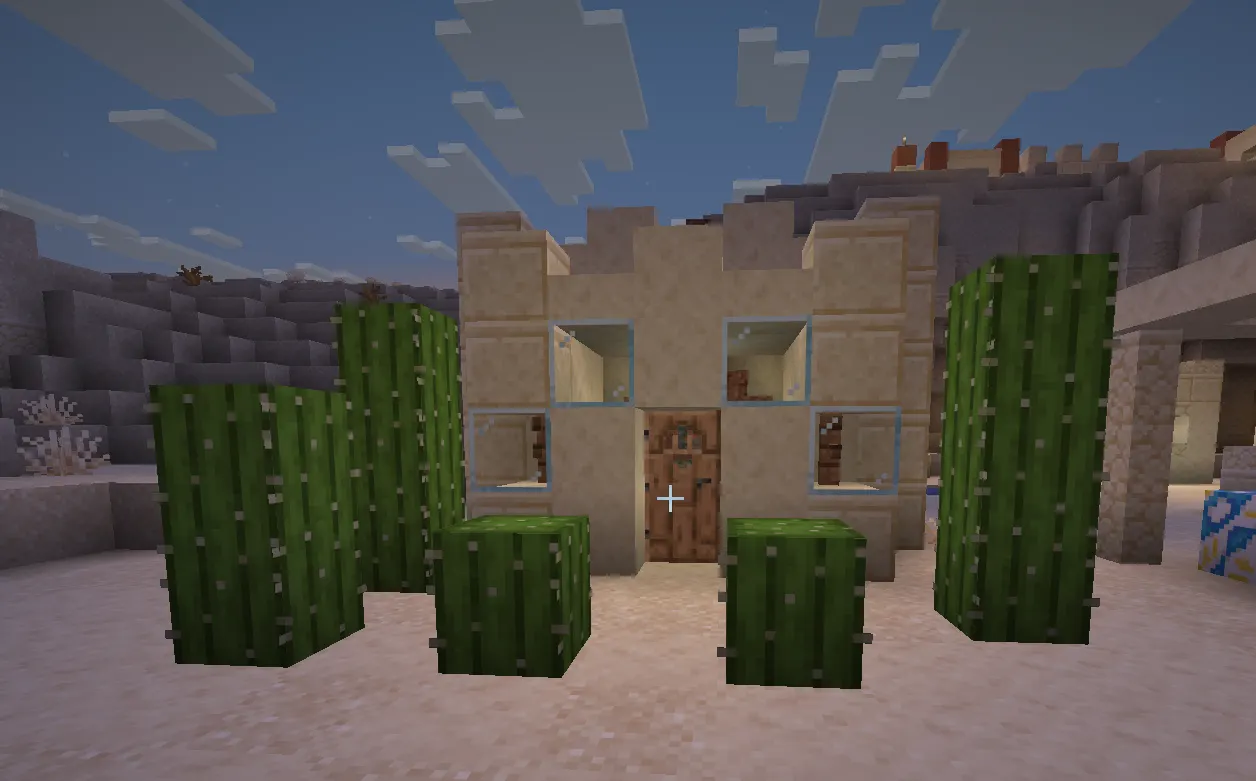
The desert is actually one of the better biomes for building because of the abundance of sandstone and sand.
Sandstone Desert Base. A base built from sandstone and smooth sandstone blends naturally into the environment while looking clean and professional. Smooth sandstone crafted from 4 regular sandstone gives a polished stone-like appearance without the drab grey of cobblestone.
Underground Base. Dig into the sandstone layer and build below the surface. This gives you natural insulation, easy access to mining, and a defensible position with a covered entrance. Add windows using glass (free in the desert) to bring in light without exposing yourself.
Cactus Wall Perimeter. Cacti placed in a checkerboard pattern around your base create a passive mob deterrent. Mobs that walk into cacti take damage, making them an effective barrier against husks and spiders. They also double as a cactus farm if you collect the drops.
Desert Trading Post. Build around a desert village rather than from scratch. Upgrade the village houses, add walls and lighting, and establish a proper villager trading hall. A zombie-villager curing station inside the trading hall lets you maintain discounted prices indefinitely.
Glass Greenhouse. Sand gives you unlimited glass. Build a greenhouse for your crops; it keeps mobs out, keeps farmland hydrated if you have water inside, and looks striking against the sand backdrop.
GAMQO Pro Tips Most Players Don't Know
1. Sandstone doesn't fall. Sand and gravel obey gravity and fall when unsupported. Sandstone doesn't. This is important for building with sandstone for floors and ceilings, where you don't want gravity to cause structural issues.
2. Rabbit stew has the highest saturation of any food item in the game. It restores 10 hunger points and 12 saturation. If you're farming rabbits anyway, carry a bowl and a mushroom and make the stew. It's an underrated food item that most players ignore.
3. The desert temple always faces the same direction. The entrance with the decorated door frame always faces north. If you're navigating by structures, temples are reliable orientation tools.
4. You can grow trees in the desert. Plant a sapling on dirt, sand, or grass (dirt placed by you counts), and trees will grow normally. Bring a few saplings from outside the desert and plant them near your base. Bone meal from skeleton drops speeds this up significantly.
5. Cacti break arrows. Arrows shot at cacti (or mobs standing near cacti) are destroyed on contact. Don't use ranged attacks when mobs are near cacti, or you'll waste ammunition.
6. Sugar cane spawns near water in deserts. It generates at the edges of rivers and ponds that cut through deserts. Sugar cane gives you paper (for maps, books, and enchanting tables) and is one of the fastest-growing crops in the game. If you find it, collect and replant it near your water source.
7. TNT from temple traps is free. Don't destroy the pressure plate and TNT chambers without collecting the TNT first. Nine TNT blocks per temple adds up quickly if you're clearing multiple temples. TNT is expensive to craft (gunpowder + sand) but free to collect here.
8. The desert well generates sand around it. The well structure naturally clears the sand block directly around its base during world generation. This creates a small stone/sandstone exposed layer near the well that can hint at the well's presence from a distance.
Common Mistakes to Avoid
Sprinting everywhere in the early game. Sprinting drains hunger three times faster than walking. In a biome with no reliable food source yet, conserve your food bar. Walk when you're not in immediate danger.
Ignoring the trap in the desert temples. It takes 10 seconds to neutralize the pressure plate. The temple trip takes considerably longer. There's no good reason to skip this step and every reason to take it.
Building entirely out of sand. Sand falls. A base where entire walls are sand will partially collapse when you start mining nearby. Use sandstone instead for structural elements.
Not converting zombie villagers. You need a golden apple and a Weakness potion. The Weakness potion requires a water bottle, a fermented spider eye, and blaze powder — it's not trivial. But the payoff (permanent discounts from villagers) is massive for long-term play. Don't kill zombie villagers you encounter in desert villages.
Fighting husks on an empty stomach. Their Hunger effect compounds the damage you're taking. Always eat before fighting if your food bar has dropped below half.
Leaving your base unlit. Sand is a valid block for Mob spawning in Minecraft. Husks and other mobs spawn on sand surfaces just like any other block. Torch every surface within range of your base.
Not marking desert wells. You find a well, you note it mentally, you run off to explore, and you never find it again. The desert all looks the same. Use coordinates, a map, or a placed marker (a block of wool or a torch on a tall post) to mark every water source you find.