Most players sprint through the swamp on their way somewhere else. That's a mistake. The swamp biome in Minecraft is one of the most mechanically rich environments in the entire game. It produces slimes on the surface, hosts the only naturally spawning witch structure, and, with the introduction of the mangrove swamp variant, it became a legitimate resource hotspot for mid-game players.
This guide covers everything. Mob behavior, slime spawning mechanics (including the moon phase factor most guides skip entirely), witch hut farming, the mangrove swamp difference, and base-building ideas that actually work in this terrain. Whether you just stumbled into your first swamp on a new world or you're trying to set up a proper slime farm, there's something here you haven't read before.
The swamp biome in Minecraft is a waterlogged, low-elevation biome where slimes spawn on the surface at night, and witch huts generate naturally, making it one of the best mid-game farming locations.
What Is the Swamp Biome in Minecraft?
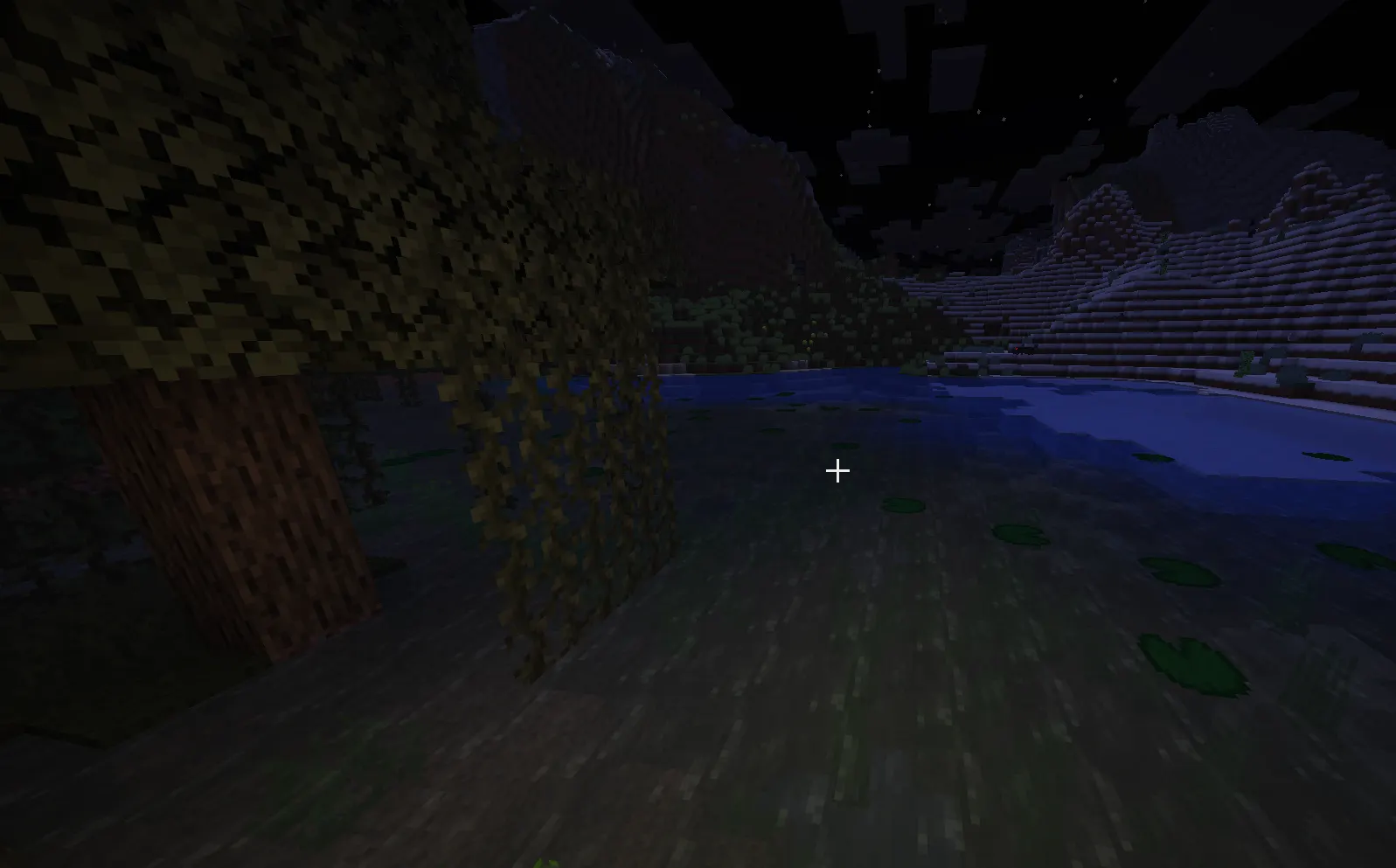
The swamp is a low-elevation biome defined by flat, waterlogged terrain, dark oak-adjacent tree shapes called swamp oaks, and shallow water cutting through dirt and clay patches. Grass color shifts to a grayish-green. Vines hang from trees. Lily pads float across the surface.
Structurally, swamps generate near sea level and are bordered by other low-lying Biomes. They tend to appear in warm continental regions and can neighbor forests, plains, and jungles.
What you find here:
-
Clay patches embedded in shallow water (a surprisingly good early resource)
-
Blue orchids the only natural source before you can bone meal farm them
-
Lily pads are useful for crossing water without a boat in the early game
-
Witch huts are the only naturally occurring witch structures in the game
-
Slime spawns on the surface at night under specific conditions
-
Frogs (in both biome variants) and their unique drop mechanics
The biome has two official variants: the regular swamp and the Mangrove swamp, added in Java 1.19 / Bedrock 1.19. They behave very differently, and conflating them is one of the most common mistakes in swamp guides.
Why Survival Is Genuinely Difficult in Swamps
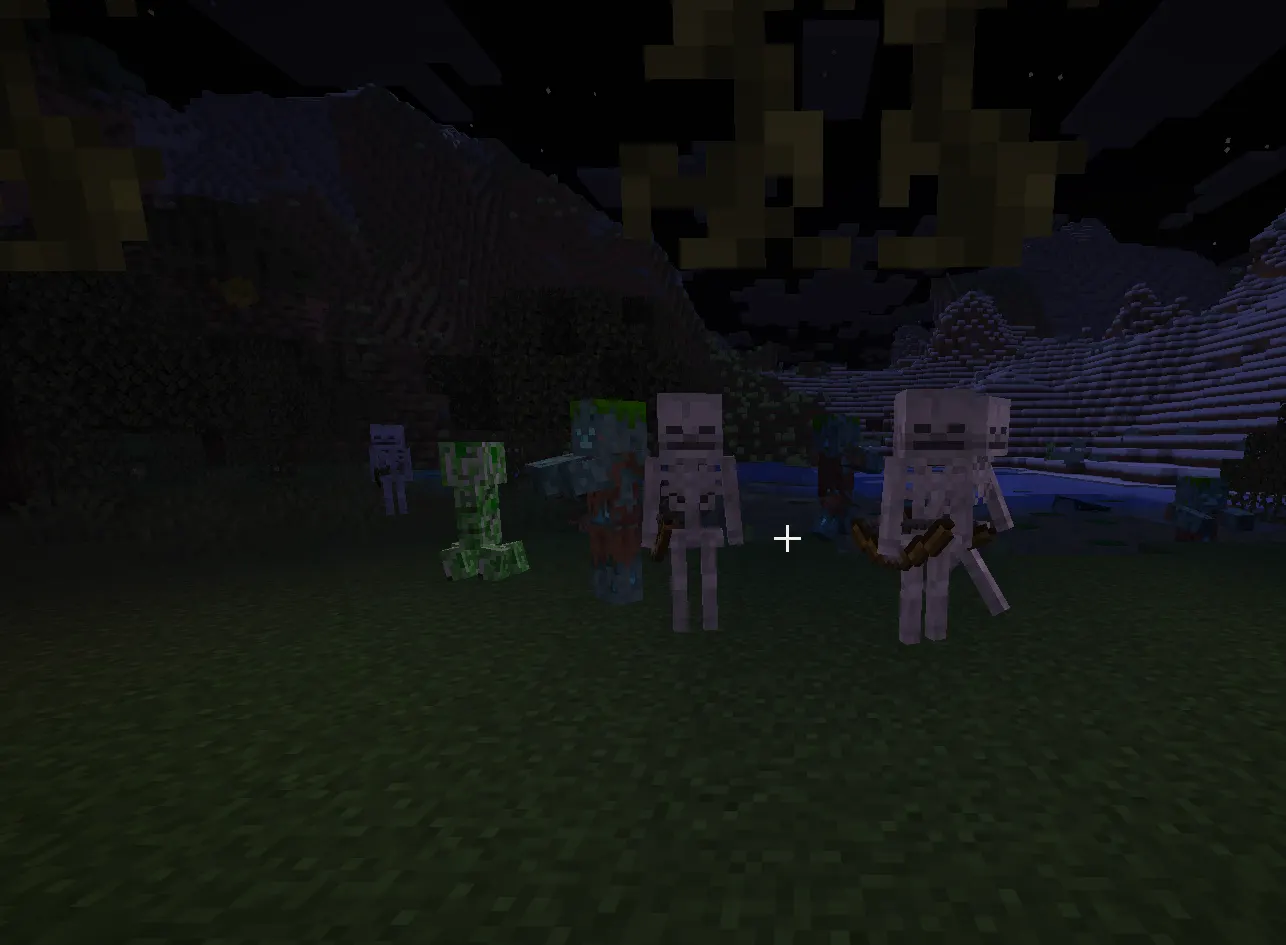
The swamp is not a beginner-friendly biome to spawn in. Here's the actual problem: the terrain is terrible for building, the mob density is high, visibility drops at night, and the waterlogged ground makes early movement awkward.
The real hazards:
1. Mob stacking. Swamps have standard Hostile Mob spawning plus slimes on the surface at night. You can get hit from a direction you didn't check because a slime split into three medium slimes behind you while you were dealing with a Skeleton.
2. Navigation. The uneven, water-cut terrain slows you down. Escaping a bad situation at night is harder here than in a plains biome.
3. Vision at night. Swamp fog is subtle but real. The dark color palette means mobs blend into the environment more effectively than on lighter biomes.
4. Which aggression? If a witch hut spawns nearby, witches have a natural tendency to throw splash potions of poison and weakness. New players regularly underestimate this.
None of this means you should avoid the swamp. It means you should come prepared.
Survival Strategy by Game Stage

Early Game (Days 1–5)
Your priority is clay. Swamps have exposed clay blocks near shallow water, which you can collect by hand, no tool required, though a shovel speeds it up. Clay is useful for bricks and terracotta, but the immediate early-game value is as a trade commodity if you find a village nearby.
Lily pads are your free bridge material. Place them across water to move without swimming. They cost nothing and cover ground fast.
The blue orchid is swamp-exclusive (in the wild). Craft it into light blue dye or save it for trading later. A composter accepts flowers, too.
Avoid the witch hut on day one. If you see it, mark it on your map and come back later. Witches have a lot of health (26 HP), and their potion throws ignore armor to some degree; they'll outlast an underprepared early-game player.
Sleep when you can. Slimes spawn on the surface at night here, and that's not something you want to deal with when your gear is still basic. They're not threatening in small numbers, but slimeballs make them worth collecting later.
Mid Game (Days 10–30)
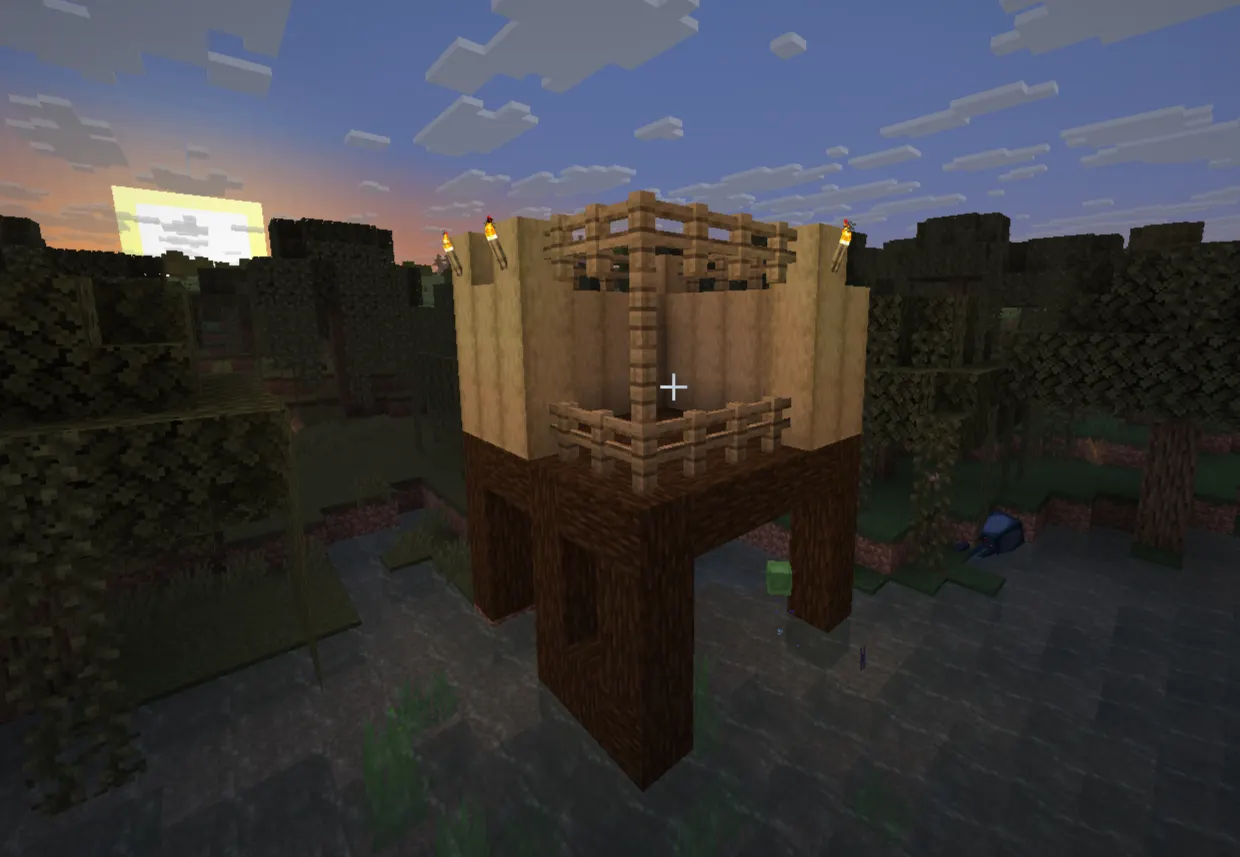
This is when the swamp starts paying dividends. You should have iron armor and a decent sword by now. Come back for the witch hut.
A witch hut contains a flower pot with a red mushroom and a small interior. The critical mechanic: the game force-spawns a witch inside this structure. If you kill it and hang around, it keeps spawning more. This is the basis for a witch farm passive XP, glass bottles, glowstone dust, sugar, redstone dust, gunpowder, and sticks.
Slimeballs should be on your collection list now. They craft sticky pistons, slime blocks (excellent for redstone contraptions and parkour), and leads. If you're playing Bedrock, they also go into magma cream with blaze powder.
Clay mining: Go deeper in the swamp shallows. Swamps have an unusually high clay generation rate compared to other biomes. You can stockpile clay fast for a brick base.
Late Game
Late game, the swamp becomes about farms. A proper witch farm and a slime farm running simultaneously turn this biome into one of your best passive resource nodes.
If you're in a mangrove swamp specifically, mud blocks and mangrove logs become a building material farm in themselves. The mangrove variant is aesthetically one of the Best biomes to build in, which we'll cover separately.
Swamp Mobs: Behavior, Drops & Threat Level
Slimes
Slimes spawn in two distinct ways in Minecraft, and most guides don't distinguish between them clearly enough.
Surface spawning in swamps: Slimes spawn on the surface of swamp biomes between Y=51 and Y=69 at night, but only when the moon is at 50% full or brighter. This is the moon phase mechanic. The fuller the moon, the higher the spawn rate. New moon = nearly zero slime spawns on the surface.
Slime chunk spawning: Separately, slimes spawn underground (Y=40 and below) in specific "slime chunks" roughly 1 in 10 chunks in any biome. This type of spawning is moon-phase independent.
If you're seeing slimes on the surface of your swamp every night, it's because the moon is bright. If the slime spawns stop, check the moon — you haven't broken anything.
Drops: Slimeballs. Small slimes drop 0–2, medium slimes drop 0–2, and large slimes drop 0–2 plus split into medium slimes. The real yield comes from farming volume.
Threat level: Low individually, moderate in groups. The split mechanic is what catches players off guard. Kill a large slime, get three medium slimes jumping at you — kill those, get nine small ones. Clear the largest first with AoE or sweeping edge.
Witches
Witches are the most dangerous mob in the swamp that players consistently underestimate.
They throw splash potions of poison (4 seconds, takes you to 1 HP), slowness, weakness, and instant damage. They also drink potions defensively. If you set them on fire, they drink a fire resistance potion. If you shoot them, they might drink a speed potion to close the distance.
Combat approach: Get in close and stay there. Witches can't throw splash potions accurately at melee range. Use a sword, not a bow. Iron armor helps significantly with the poison tick damage.
Drops: Glass bottles, glowstone dust, sugar, redstone dust, gunpowder, sticks, spider eyes. Rare drop: the potion they were drinking when killed. These drops make a witch farm extremely valuable glowstone dust and redstone alone justify the build.
Frogs
Frogs were added in Java 1.19 and are found in both swamp types. Three frog variants exist based on the temperature they hatched in: temperate (swamp), warm (jungle/desert), and cold (snowy biomes).
Frogs eat small slimes and magma cubes. When a frog eats a magma cube, it drops a froglight block, the color of which depends on the frog variant. Temperate frogs produce ochre froglights, warm produce verdant, cold produce pearlescent.
Practical use: Froglights are a decorative light source (light level 15). They're not farmable in large quantities without effort, but a frog pen near a magma cube farm is a valid late-game setup.
Frogs also drop nothing when killed; they're peaceful mobs, and there's no reason to harm them.
How Slime Spawning Actually Works (The Full Mechanics)
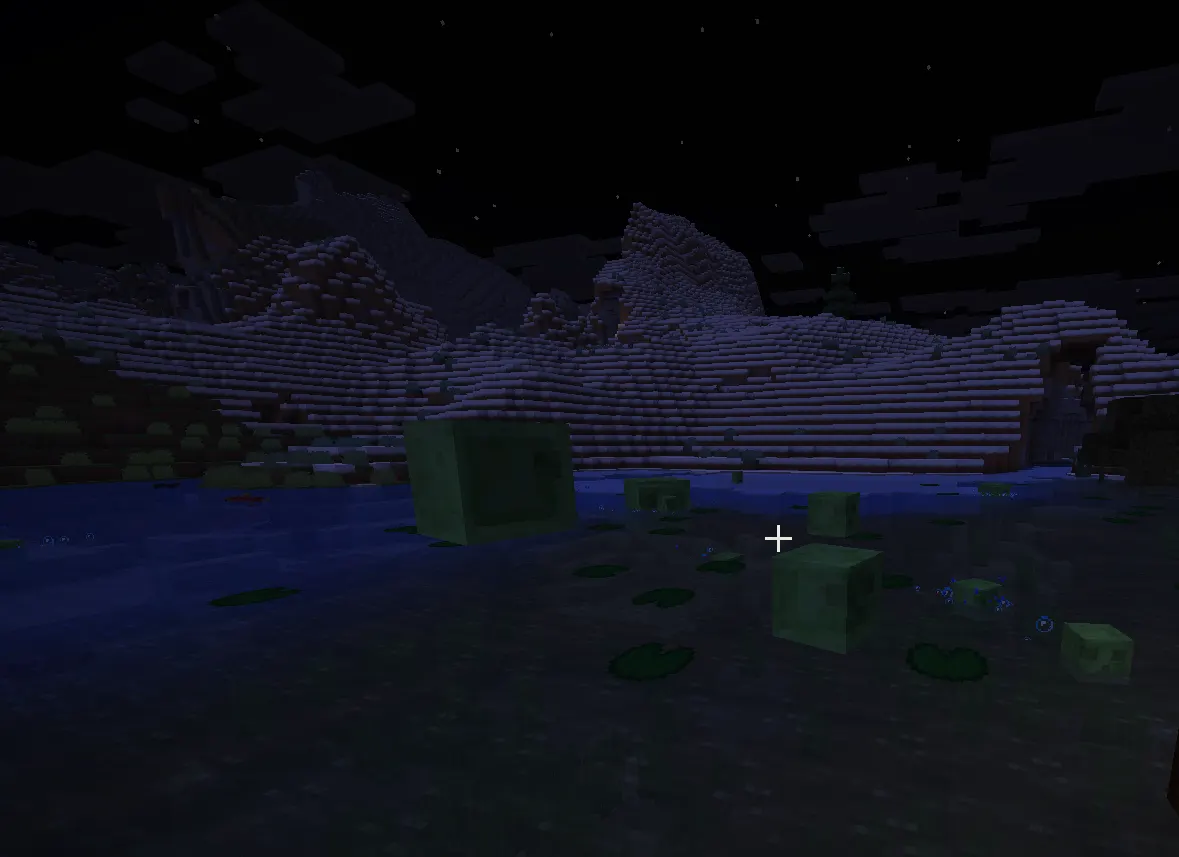
This is the section most competitors skip or get wrong. Here's the full picture.
Surface spawning rules (swamp-specific):
-
Biome must be swamp (not mangrove swamp, mangrove swamps do not spawn slimes on the surface)
-
Y-level between 51 and 69
-
Night time only
-
Moon phase matters: phase 0 (full moon) = maximum spawns, phase 4 (new moon) = zero surface spawns
-
Light level must be 7 or below
-
No opaque blocks above the spawn location
Slime chunk spawning rules (biome-independent):
-
Chunks determined by the world seed are fixed and never change
-
Spawns at Y=40 and below in valid slime chunks
-
Moon phase does not affect chunk spawning
-
Light level must be 7 or below
-
Any solid, spawnable surface works
Why this matters for farms: If you're building a slime farm in a swamp specifically because you want surface slimes, you need to account for moon phases in your yield estimates. A farm that seems to produce inconsistently isn't broken; it's running on a lunar cycle. Full moon nights produce noticeably more surface slimes than quarter moon nights.
For a reliable, moon-independent slime farm, find your slime chunks underground. Use the world seed with an online slime chunk finder (these are widely available and use the same seed-based calculation Minecraft uses). Excavate the chunk from Y=40 down to bedrock and light the ceiling.
Hybrid approach: Build in a swamp biome on confirmed slime chunks. You get surface spawns on bright moon nights and underground chunk spawns every night. This maximizes yield.
Witch Hut Mechanics and How to Farm Them
Witch huts generate on the surface in swamp biomes only. They're wooden structures on stilts, small enough that you can miss them if you're moving fast. The interior has a Crafting table and a cauldron.
The core mechanic: A 7×9×3 spawn area around the hut is hardcoded to spawn witches, and only witches, provided the normal mob cap conditions are met. No other mobs spawn in that zone. This is the basis of every witch farm design.
Basic witch farm setup:
-
Find the witch hut
-
Kill the existing witch inside
-
Build a platform above the hut at the top of the spawn box (roughly 3 blocks above the hut floor)
-
Light up the surrounding area within 128 blocks to prevent mobs from spawning elsewhere and eating your mob cap
-
Create a drop chamber, a 3–4 block fall won't kill witches, but a 22+ block fall will. Most farms use a 24-block drop
-
Add a collection point with hoppers and chests
What you collect:
-
Glowstone dust (very valuable for potion brewing)
-
Redstone dust
-
Sugar
-
Glass bottles
-
Gunpowder (useful for TNT and rockets)
-
Spider eyes (for brewing)
-
Sticks
A mid-tier witch farm running overnight can stock you with more glowstone than you'll realistically need for months of play. The glass bottles alone make it worth running if you're doing any quantity of potion brewing.
Efficiency note: Witches have a 10-second potion immunity window after spawning. They won't die immediately in your kill chamber. Factor this into your timing if you're AFK farming.
Regular Swamp vs. Mangrove Swamp: The Full Comparison
These two biomes are related but play very differently. The game treats them as separate biomes with separate spawning rules.
|
Feature |
Regular Swamp |
Mangrove Swamp |
|
Trees |
Swamp oaks with vines |
Mangrove trees with prop roots |
|
Water |
Scattered, shallow |
More extensive |
|
Surface slime spawning |
Yes |
No |
|
Witch hut generation |
Yes |
No |
|
Mud blocks |
No |
Yes (extensive) |
|
Frogs |
Temperate |
Temperate |
|
Grass color |
Gray-green |
Brighter green |
|
Clay deposits |
Yes |
Less common |
|
Building material |
Brick, clay |
Mangrove wood, mud bricks |
Mangrove swamp key resources:
Mud blocks break dirt with a water bottle in inventory (or use Dripstone caves), or find them generated naturally here. Mud combines with wheat to make packed mud, and packed mud is crafted into mud bricks. Mud brick is one of the most visually appealing building blocks in the game, and the mangrove swamp is the easiest place to get it in bulk.
Mangrove wood a distinct wood type with a deep red-orange tone. Mangrove planks, slabs, and stairs have a unique look that doesn't match any other wood. Good for accent building.
Propagules mangrove saplings that hang from the tree. You can plant them in water or on land. Mangrove trees are one of the few trees that grow with prop roots, which means they generate a root structure underground and above water. They're harder to farm efficiently than other tree types, but offer high log yield per tree.
Where to build: Regular swamp for farms (slimes, witches). Mangrove swamp for a base, if you want the aesthetic, the stilted terrain actually lends itself to elevated builds.
Food and Resources: What the Swamp Actually Provides
Players often think of the swamp as resource-poor. That's not accurate.
Food options:
-
Frogs drop nothing edible, but swamps often neighbor jungles and forests where animals spawn
-
Fishing the swamp's many water bodies makes it a solid fishing biome. Fishing in open water with a Luck of the Sea rod yields fish, enchanted books, and saddles
-
Red mushrooms appear naturally in swamps. Combine with a bowl and a second ingredient for mushroom stew (6 hunger bars)
-
Witch drops sugar and Spider eyes (raw spider eyes reduce hunger; don't eat them raw)
Non-food resources:
-
Clay → bricks, terracotta
-
Blue orchid → dye
-
Lily pads → travel, decoration
-
Vine → ladders (climbable without Crafting), composting
-
Slimeballs → sticky pistons, slime blocks, leads
-
Mud → mud bricks, packed mud, powder snow replacement (not quite, but similar building role)
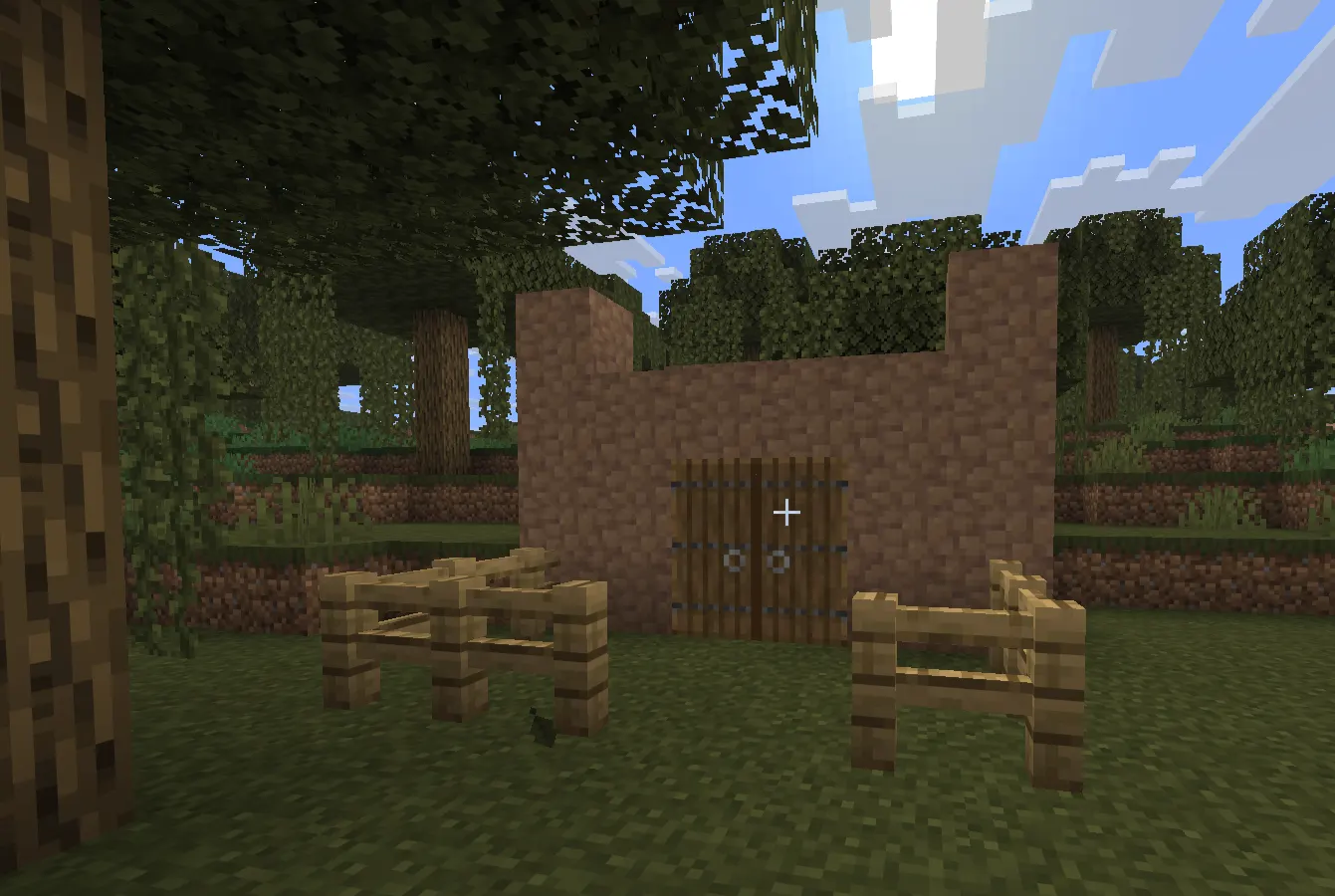
The swamp doesn't give you food directly, but it provides support items, dyes, construction materials, and farm components that make it a productive region when combined with nearby biomes.
Best Base and Building Ideas in the Swamp
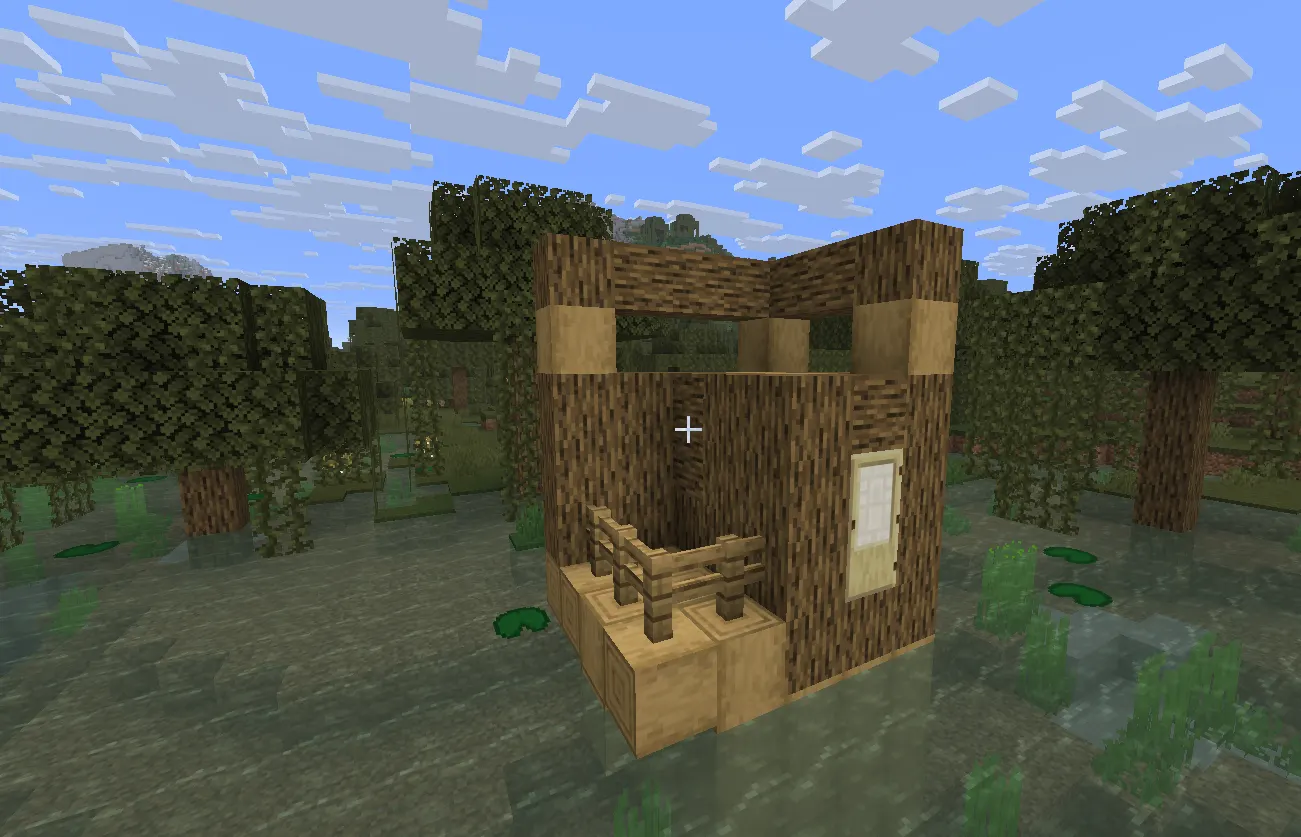
Building on swamp terrain has real constraints. The ground is uneven, often underwater, and mobs path through it constantly. Here's what actually works.
Elevated stilt houses built on oak logs above the water line, like the witch hut design. This removes the mob pathing issue entirely and gives you a clean flat floor. Use mangrove wood if you're in the mangrove variant for an authentic look.
Island base: Find or create an island in the middle of a swamp lake. Water acts as a natural mob barrier (hostile mobs don't path through water well). Light the perimeter, and you've got a low-maintenance safe zone.
Underground bunker digs straight down to Y=12 and hollows out a chamber. The swamp surface doesn't matter anymore. This also lets you monitor your slime chunks without a separate trip.
Witch hut conversion: if you've already built a witch farm, the hut structure itself can become a secondary storage room or AFK spot. It's already on stilts. Expand it outward.
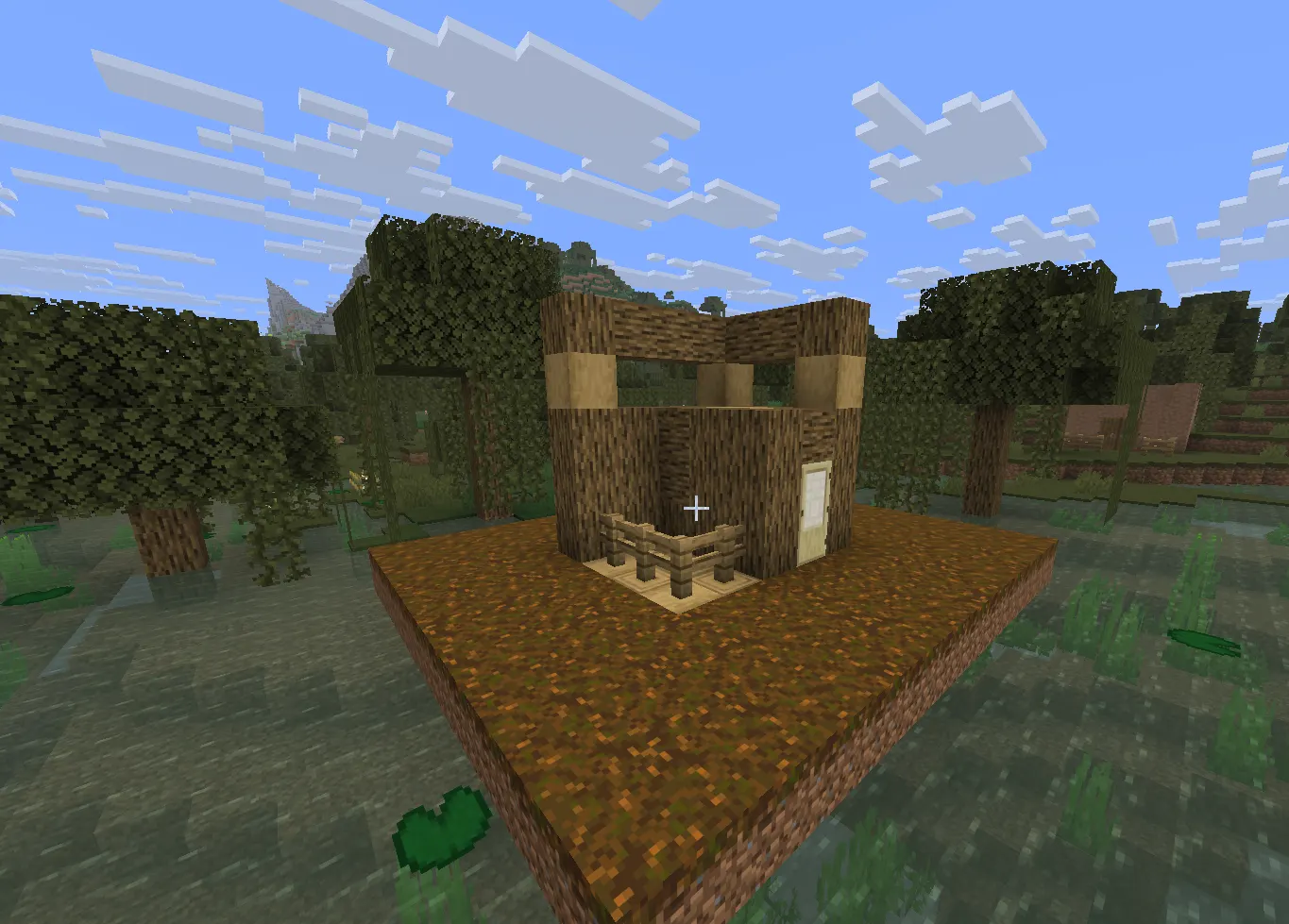
Building materials available locally:
-
Swamp oak planks (from naturally generating trees)
-
Clay and bricks (abundant)
-
Mud bricks (if mangrove swamp)
-
Mangrove planks (if mangrove swamp)
-
Stone from underground
Hidden Mechanics Most Players Miss
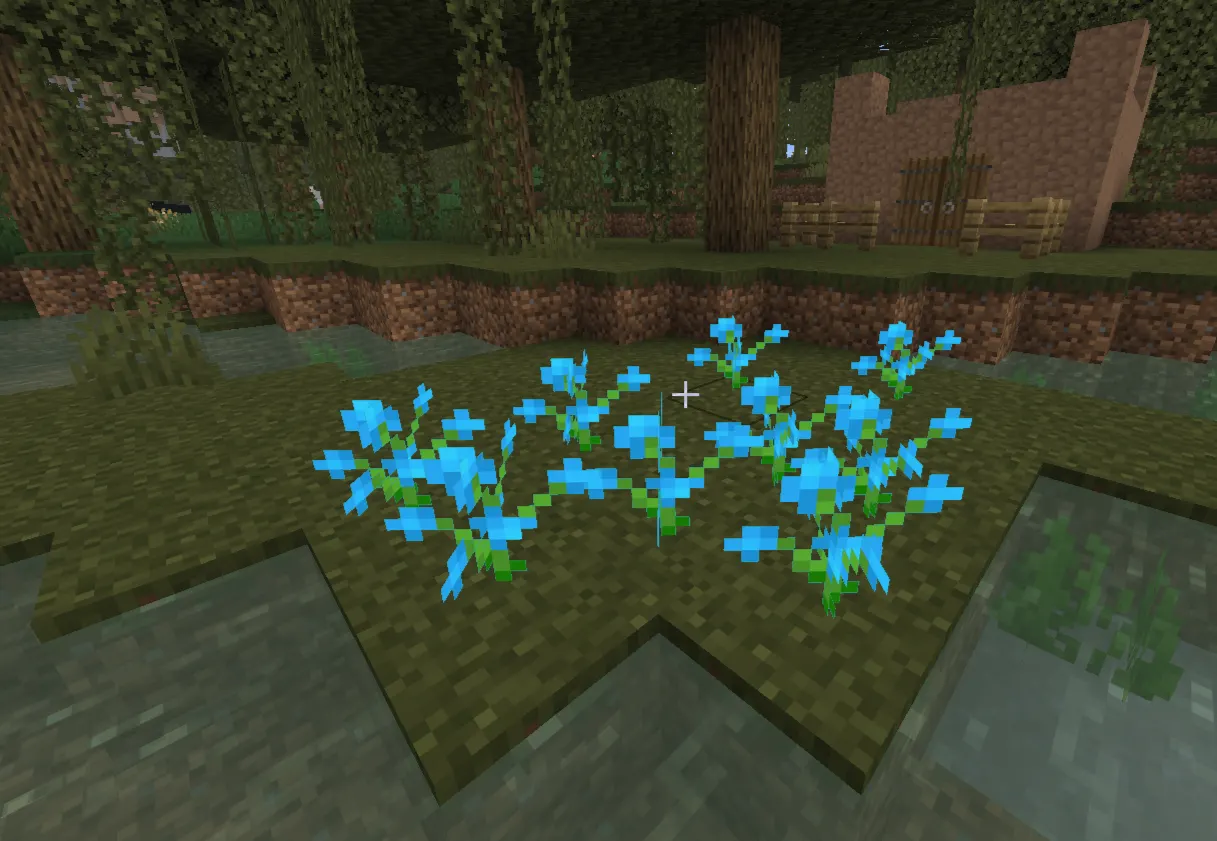
1. Blue orchids only grow here. You can bone meal a grass block in a swamp and get blue orchids to spread. This is the only biome where this works naturally. If you want light blue dye in large quantities, a bone meal farm in a swamp is the most efficient method.
2. Lily pads delete items. If you drop an item onto a lily pad from above, it can sometimes clip through and fall into the water or get stuck. This is a quirk worth knowing if you're sorting near water.
3. Slimes don't care about light level in slime chunks. On the surface in swamps, slimes need a light level of 7 or below. Underground in slime chunks, they can spawn at any light level at Y=40 and below. Some players over-light their underground slime farms, thinking it stops spawning, but it doesn't; it does prevent other mob types from competing.
4. Witches heal themselves. If you back away during a fight, a witch will drink a healing potion. This extends the fight considerably. Stay aggressive.
5. Frogs can pathfind to slimes automatically. If you have a slime near frogs, the frog will hunt it without any player input. You can build a passive froglight farm by keeping frogs in a pen adjacent to a slime spawning area with magma cube delivery.
6. Moon phase affects swamp slime spawns on an 8-day cycle. The full cycle runs: Full → Waning gibbous → First quarter → Waning crescent → New → Waxing crescent → Last quarter → Waxing gibbous → Full. Slime spawns track this cycle. Track it in a new world,d and you'll never be confused by inconsistent surface spawns again.
Common Mistakes to Avoid
Building a base at the surface level on swamp ground. The uneven, waterlogged terrain makes defending a ground-level base a constant chore. Go elevated or go underground.
Ignoring moon phases when evaluating slime spawns. If your swamp slime farm seems dead, it's probably a new moon. Wait two or three in-game days.
Fighting witches from range. Bows and tridents let witches drink potions between your shots and potentially close the gap on you. Get to melee range and stay there.
Treating mangrove swamps like regular swamps. No slimes on the surface, no witch huts. If you went to a mangrove swamp specifically for slime farming, you're in the wrong place.
Not lighting up the surrounding area for a witch farm. If mobs are spawning within 128 blocks of your farm's kill zone, they compete with witches for the mob cap. Your farm produces less. Light everything.
Cutting down all the swamp oaks immediately. The tree canopy actually reduces mob line-of-sight if you're running around at night. It's not always to your benefit to clear-cut the area before you're ready.