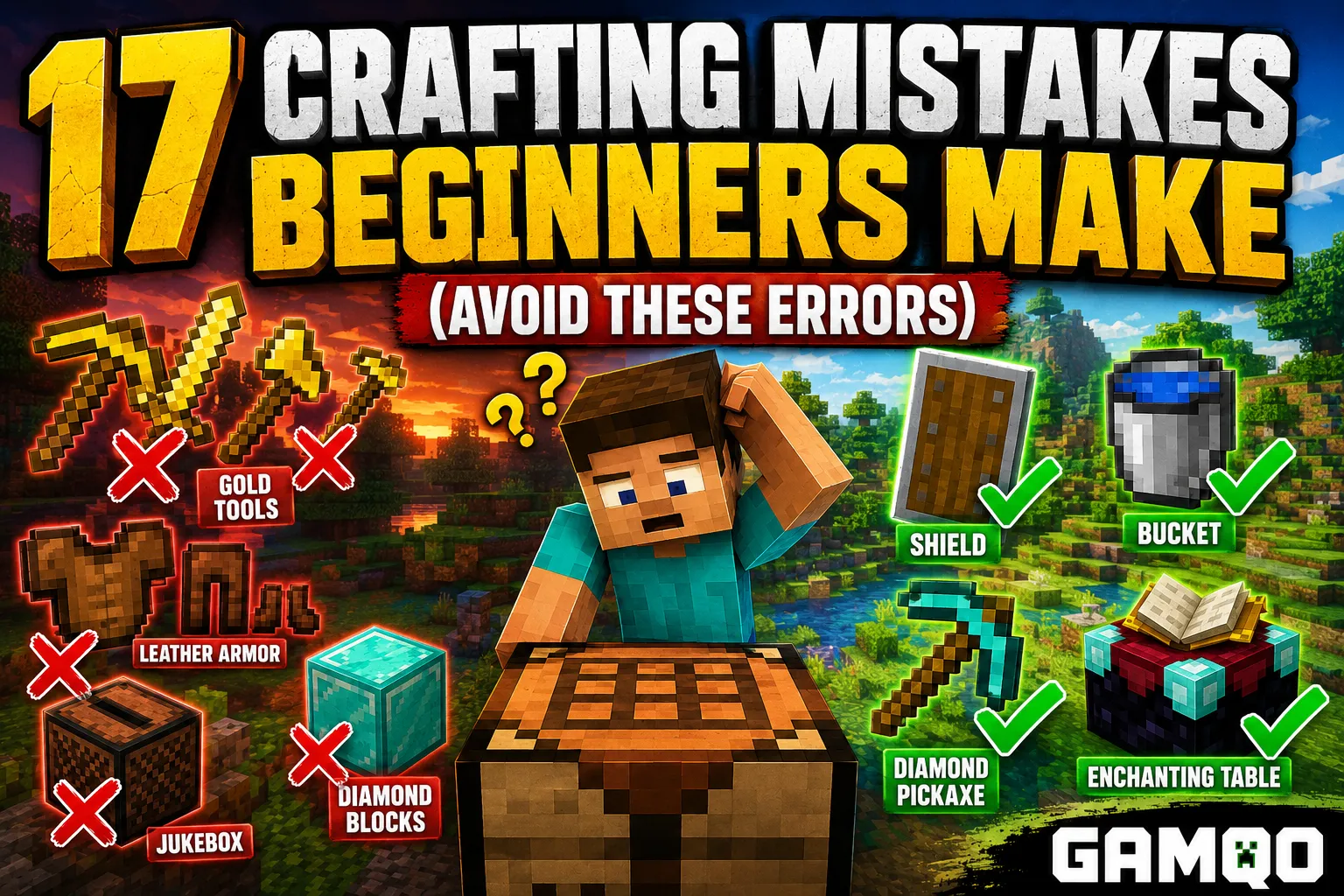
You find your first five diamonds deep in a cave. Heart hammering, you mine them, sprint back to your base — and craft a jukebox.
It happens. More than you'd think.
Or maybe yours was different. Maybe you looked at your gold supply and thought, "these mine faster," so you crafted a full set of gold tools — only to watch every single one of them break within the first hour. Maybe you spent your first thirty iron on Armor, then died trying to cross lava because you'd never had the iron for a bucket.
These are the crafting mistakes beginners make in Minecraft. Not because new players are careless, but because the game never actually teaches you how to manage resources. It puts a Crafting table in front of you, shows you the recipes, and lets you figure out the rest through trial and (a lot of) error.
This guide skips the error part. We're covering 17 common crafting mistakes — what makes each one seem like a good idea, why it backfires, and what to do instead. There's also a breakdown of resource priorities, a set of survival rules experienced players actually use, and a psychology section that explains why beginners fall into these patterns in the first place.
By the end, you'll have a clearer picture of how survival progression actually works — and your next world will be better for it.
Why Crafting Mistakes Hurt More Than You Think
Resources in early survival are scarce in a way that's easy to underestimate. Iron takes time to find and smelt. Diamonds might not show up for hours. Wood disappears faster than you'd expect when you're building, crafting, and fueling a Furnace all at once.
Every item you craft is a trade-off. When you turn iron into a full armor set on day two, that's twenty-four ingots that won't become a bucket, a Shield, or a spare pickaxe. Any one of those three items might keep you alive longer than the armor would.
The other problem is compounding. One bad crafting call doesn't ruin a world. But three or four bad calls in a row, and suddenly you're stuck — deep in a cave without a bucket, facing a lava flow you have no way to deal with, on your last torch with no coal to make more.
Minecraft doesn't tell you any of this. No tutorial explains opportunity cost, no warning message when you're about to waste diamonds on something decorative. You just do it, lose the resources, and either learn or repeat the same mistake in your next world.
The goal here is simple: know what not to craft before you're standing at the crafting table regretting it.
The Psychology Behind Beginner Crafting Mistakes
Before getting into specific mistakes, it's worth understanding why they happen. Because most of them aren't random — they follow predictable patterns.
The scarcity panic. When you Find iron for the first time, there's an urge to immediately turn it into something. Leaving raw materials sitting in a chest feels like wasting them. So you craft. Not because you need the item, but because doing something with the resource feels more secure than sitting on it. This is backwards — unprocessed iron is more flexible than a breastplate you can't un-craft.
Fear of dying empty-handed. New players often over-armor for this reason. They've died before and lost everything, so they want to be wearing as much protection as possible at all times. The problem is that armor is the last iron priority, not the first. A shield and a bucket will save you more often than an extra plate.
Curiosity Crafting. You unlock a new recipe — let's say a compass — and you immediately want to make one because it's new and interesting. Curiosity crafting isn't inherently bad, but doing it with rare materials before you understand the cost is how you end up with a jukebox and no diamond pickaxe.
No mental model of progression. Most beginner crafting mistakes come down to this. If you don't know that the Nether requires obsidian, which requires a diamond pickaxe, which requires diamonds, you might spend your diamonds on armor and wonder why you can't progress. The progression chain isn't explained anywhere in the game. You have to learn it.
Instant gratification bias. Armor and tools are visible. They're on your character. Using materials for infrastructure — a bucket for a water source, a shield for blocking, a hopper for an item sorter — feels less satisfying in the moment even though the long-term value is higher.
Recognizing these patterns in yourself is genuinely useful. When you feel the urge to immediately craft something with a rare material, that's the moment to pause and ask whether it's the scarcity panic talking or an actual need.
17 Crafting Mistakes Beginners Make in Minecraft
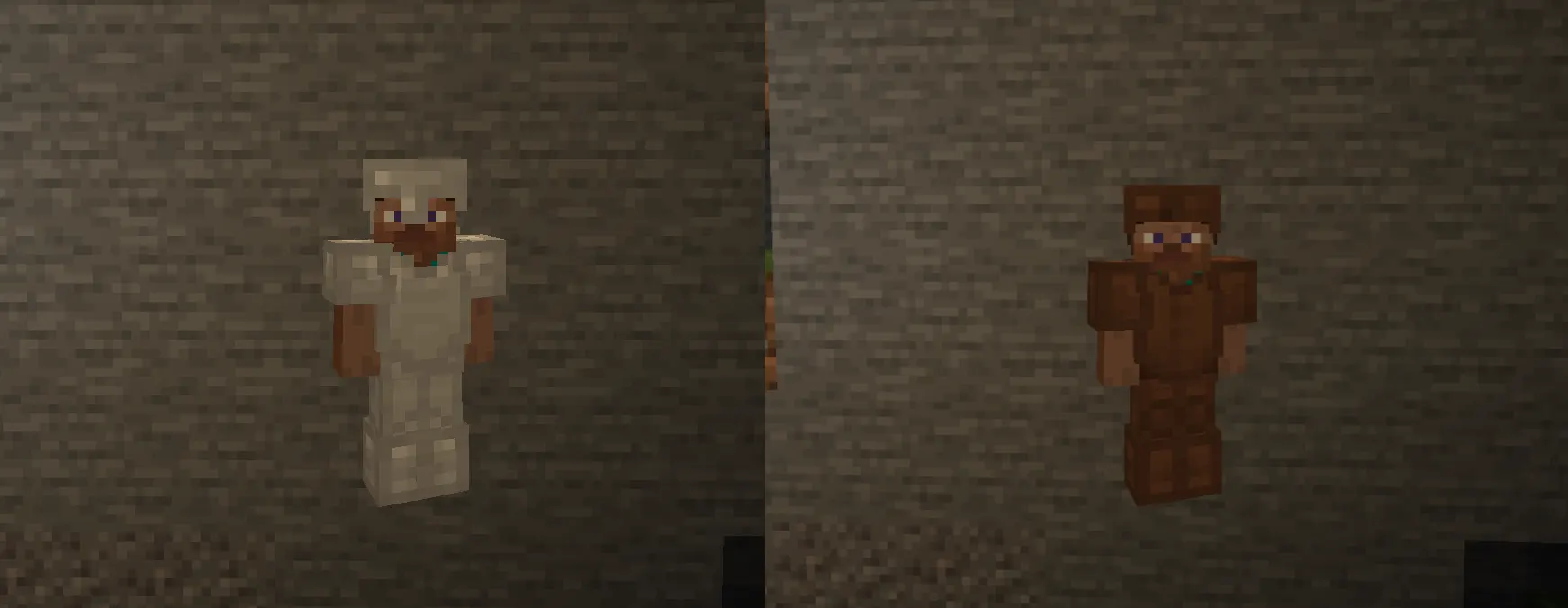
1. Crafting Full Leather Armor Immediately
What beginners think: Armor equals protection. I have leather, leather makes armor, so I should make armor.
Why it backfires: Leather armor is the weakest protection tier in the game. A full set gives you 7 armor points — about the same as a single piece of iron chest plate. It takes 24 leather to craft a full set, which means hunting a significant number of cows. By the time you actually need protection in caves or at night, leather armor barely slows the damage down. It's also not worth repairing, so it just breaks and you've spent the leather for almost nothing.
Better alternative: Skip leather armor entirely. Go straight to iron. If you're desperate for something on your head during the first night, craft the helmet — it costs only five leather and at least covers the most common hit location.
Long-term impact: Spending leather on a full armor set delays the moment you could be focusing on iron. Time spent hunting cows is time not spent mining. It's a minor delay, but it sets a bad habit — the idea that armor is always the first priority.
2. Making Every Tool Out of Gold
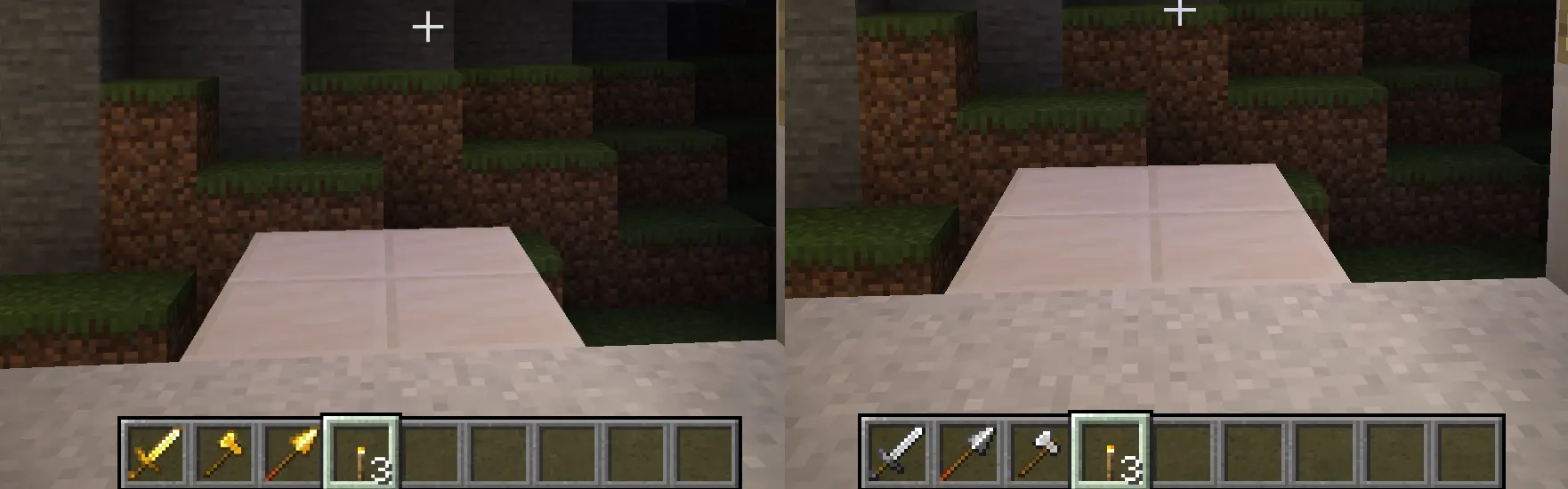
What beginners think: Gold tools have a higher mining speed than iron. Faster must mean better.
Why it backfires: Gold tools have by far the worst durability in the game. A gold pickaxe breaks after roughly 32 uses. That's so low that you'll burn through several pickaxes per mining session. The speed boost is real, but it doesn't compensate for replacing your pickaxe every few minutes.
Gold is also needed for recipes that actually matter: golden apples, powered rails (20 gold per recipe), clocks, and later, Nether progression items. Burning your entire gold supply on tools is a decision you'll regret the moment you find a mineshaft and need rails.
Better alternative: Iron tools as your standard workhorse. Diamond when you have the materials. Gold tools do have one legitimate use — they're the only tool type that Piglins won't attack you for wearing (as armor), and enchanted gold tools can be useful in specific scenarios. But as a default choice, iron wins every time.
Long-term impact: Running out of gold early limits your mid-game options significantly. Powered rails, golden apples for emergencies, and clocks all require gold. Players who waste gold on tools often hit a wall when they reach the point where those items become important.
3. Turning All Your Iron Into Armor Too Early
What beginners think: Iron armor is a major upgrade. I should gear up as fast as possible.
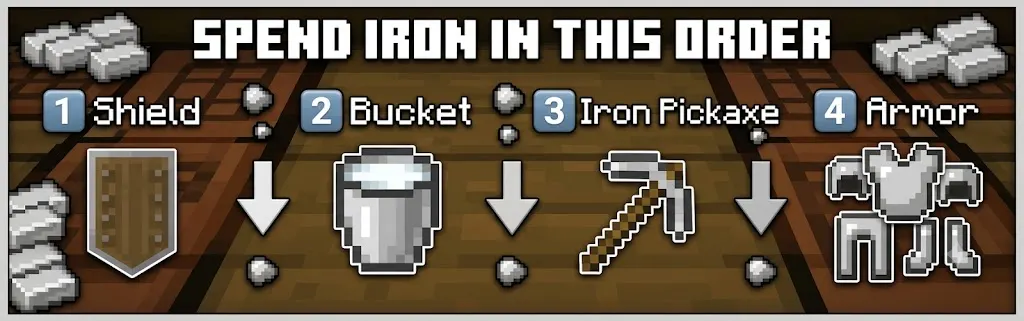
Why it backfires: A full iron armor set costs 24 iron ingots. That's a lot of iron to commit before you've covered the basics. A bucket costs 3 iron and lets you move lava, create infinite water sources, and farm more efficiently. A shield costs 1 iron and blocks the majority of incoming damage. An extra pickaxe costs 3 iron and keeps you mining when your first one breaks.
All three of those items provide more survival value per iron ingot than armor does in the early game.
Better alternative: Cover shield first (1 iron), bucket next (3 iron), then tools, then armor. By the time you've done all that, you'll usually have enough iron surplus to build armor without sacrificing anything.
Long-term impact: Players who rush iron armor often find themselves stuck at key moments — no bucket when they hit lava, no spare pickaxe when theirs breaks mid-cave. These situations force dangerous improvisation that a bit of resource discipline would have prevented.
4. Crafting a Diamond Sword Before a Diamond Pickaxe
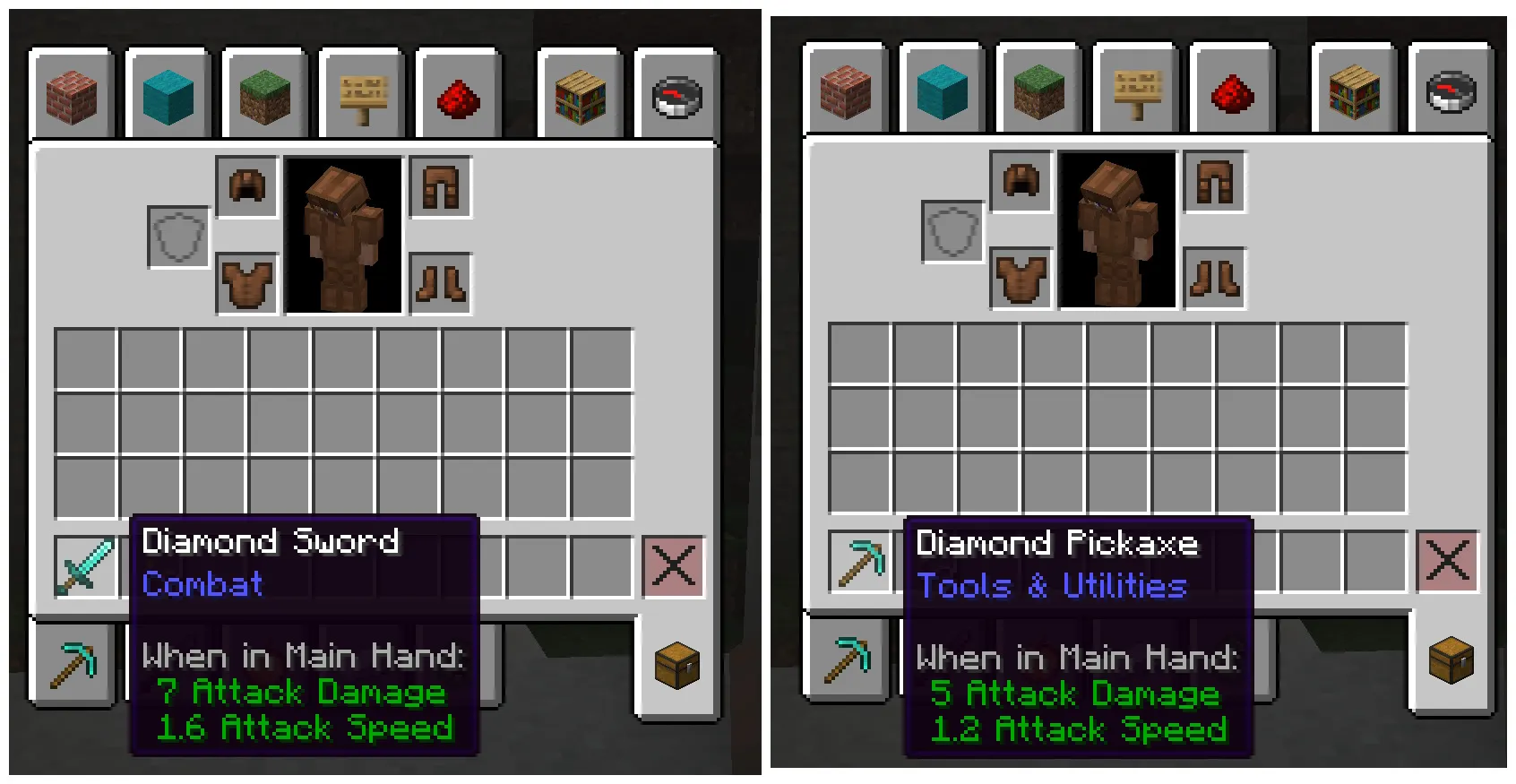
What beginners think: I need a diamond sword to fight harder mobs. Better offense means better survival.
Why it backfires: A diamond sword is a meaningful upgrade, but a diamond pickaxe does something nothing else can — it mines obsidian. Obsidian is required for a Nether portal, which is the gateway to the entire mid-game and end-game. No diamond pickaxe means no Nether, which means no blaze rods, no potions, no wither skulls, no end portal.
An enchanting table also requires obsidian. So crafting a diamond sword before a diamond pickaxe doesn't just delay your weapon upgrade — it delays your ability to enchant anything at all.
Better alternative: First diamond pickaxe, always. Then mine enough obsidian for an enchanting table (4 obsidian) and a Nether portal (10 obsidian). After that, diamond sword and armor are your next priorities.
Long-term impact: This is one of the most significant progression locks in the game. Players who spend their first diamonds on a sword often don't realize they've stalled their entire upgrade path until they've been stuck in mid-game iron gear for a long time.
5. Crafting Multiple Tool Sets "Just in Case"
What beginners think: I should bring backup tools in case mine breaks. Being prepared is smart.
Why it backfires: Inventory space in Minecraft is 36 slots. Every duplicate tool you carry takes up a slot that could hold ores, food, or materials. More importantly, tools in Minecraft can be repaired — on an anvil with materials, or by combining two worn tools in a crafting grid. You don't need a backup pickaxe if you manage your current one's durability.
Carrying duplicate tools also creates false security. Players who bring spares tend to pay less attention to durability warnings, which leads to more tool breaking and more material waste overall.
Better alternative: One set of tools, durability awareness, and a habit of heading home to repair before things get critical. Check your tool's durability regularly (hover over it in your inventory). Orange and red colors mean it's time to go home.
Long-term impact: Wasted inventory space compounds over long cave runs. Players who pack efficiently come home with more materials from the same time spent underground.
6. Using Diamonds on Decorative Items First
What beginners think: I can always get more diamonds. This looks cool in my base.
Why it backfires: Diamonds are rare — their spawn rate means your first five or ten diamonds might represent several hours of mining. A jukebox costs one diamond and plays music. A diamond block costs nine diamonds and sits there looking shiny. Neither of these does anything for your ability to survive, progress, or reach the end game.
Every diamond spent on decoration is a diamond not going toward a pickaxe that mines obsidian or a chest plate that absorbs damage.
Better alternative: Don't touch decorative diamond items until you have a full diamond gear set, an enchanting setup, and enough spare diamonds to justify the expense. At that point, decorate all you want.
Long-term impact: This is the mistake with the most dramatic visible cost. Players who waste early diamonds on jukeboxes and decorative blocks can find themselves in iron gear two or three times longer than necessary.
7. Ignoring Shields
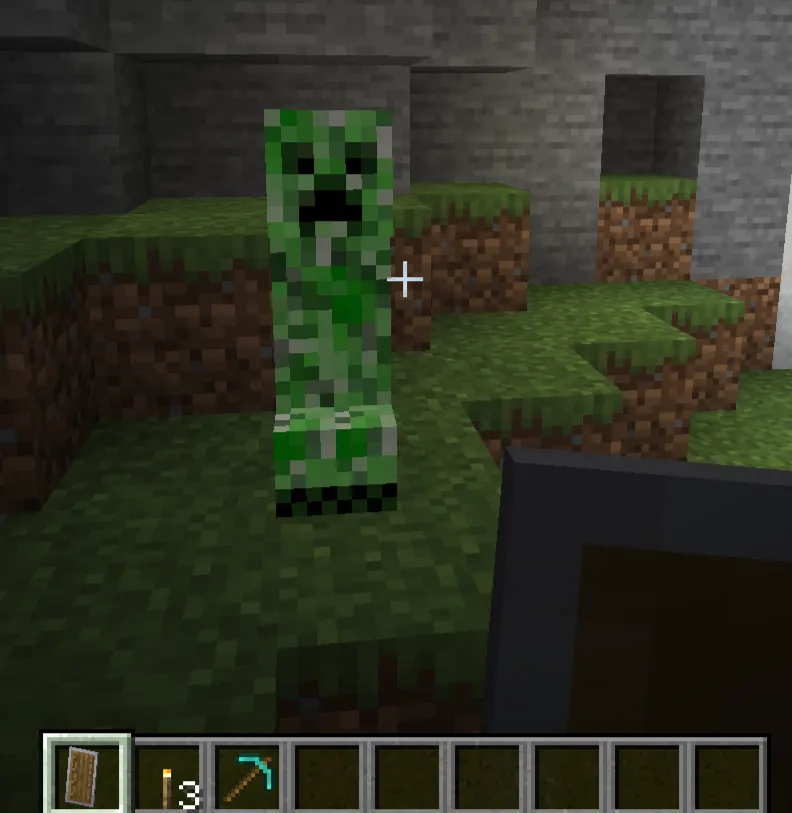
What beginners think: Armor is protection. More armor pieces means more protection.
Why it backfires: A shield costs one iron ingot and six wood planks. For that price, you get near-complete blocking of arrows, a significant reduction of melee damage, and — most importantly — blast protection from creeper explosions. A well-timed shield raise against a creeper turns a potential death into minor inconvenience.
Leather armor costs more resources and provides considerably less protection than a shield used correctly. Even compared to iron armor pieces, the shield punches well above its weight in defensive value per resource spent.
Better alternative: Craft the shield as one of your first iron items. Practice the right-click timing to raise it when you see a creeper light up or an arrow incoming. It's a skill with a short learning curve and massive payoff.
Long-term impact: Players who skip shields die more often in the early game. More deaths mean more lost resources, more time respawning and recovering gear, and slower overall progression.
8. Crafting Decorative Blocks Before Establishing Resource Farms
What beginners think: My base looks better with quartz floors and stone brick walls. Let me build it out properly.
Why it backfires: Quartz requires Nether trips. Stone bricks require stone, which requires fuel to smelt. Copper decorations require copper, which is better used for lightning rods, spyglasses, and mid-game builds. None of these are inherently wrong — the timing is the issue.
Using materials for decoration before you have sustainable farms for wood, food, and basic resources means your supply of critical items stays thin while your base looks nice.
Better alternative: Get your food farm, mob farm, and wood supply stable first. Once you have renewable resources coming in reliably, spending some on decoration doesn't hurt your progression.
Long-term impact: Players who decorate first and farm later often hit resource crunches at inconvenient moments — no food when they need to sprint, no wood when they need fuel, no coal when they need torches.
9. Wasting Coal on Torches Instead of Charcoal
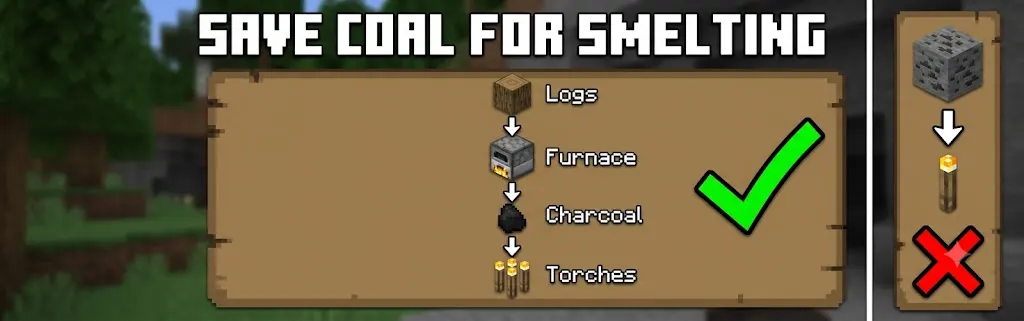
What beginners think: I need torches. Coal makes Torches. Simple.
Why it backfires: Coal is a finite resource in the early game. You mine it, you use it, it's gone. Charcoal, on the other hand, is renewable — you smelt wood logs in a furnace, which you can grow and harvest indefinitely. One log produces one charcoal, which makes eight torches (combined with a stick), the same as coal.
Using coal for torches early in the game burns through a resource that's better saved for fuel (smelting iron and cooking food) or for crafting blocks of coal for compacted Storage.
Better alternative: Establish a charcoal production setup early. Chop a few extra logs, smelt them into charcoal, use charcoal for torches. Reserve your mined coal for smelting and cooking.
Long-term impact: Players who burn coal on torches often find themselves short on smelting fuel at critical moments — standing in front of a furnace full of iron ore with nothing to smelt it.
10. Crafting Every New Item Immediately
What beginners think: I unlocked this recipe, and I have the materials, so now's the time to make it.
Why it backfires: Curiosity crafting is one of the most common ways rare materials disappear. You get enough iron for a compass, so you make one. You have the materials for a clock, so you make that too. Then you need iron for something that actually matters, and you're three ingots short.
The thrill of making something new is real. But unlocking a recipe and needing the item are two different things.
Better alternative: When you unlock a new recipe, check what it costs and what it does. If it has high immediate value (shield, bucket, furnace), make it. If it's informational or decorative (compass, clock, jukebox), note the recipe and wait until you have a material surplus.
Long-term impact: Curiosity crafting is a slow drain. Each individual item might only cost a few materials, but the habit of immediately crafting everything you can accumulates into significant waste over the course of a survival world.
11. Crafting Too Many Furnaces Early
What beginners think: More furnaces means faster smelting. I'll set up a whole smelting room.
Why it backfires: Each furnace costs 8 stone blocks. That's manageable. But more furnaces also means more fuel to run them all simultaneously. New players who set up six or eight furnaces often don't have consistent enough fuel to keep them all lit, so half of them sit empty while the other half smelt slowly.
Multiple furnaces are genuinely useful — but only once you have a reliable fuel supply (charcoal production, a bamboo farm, a kelp farm) to feed them.
Better alternative: Start with two furnaces side by side. One for smelting ores, one for cooking food. That's enough for early game. Add more furnaces once you have renewable fuel coming in consistently.
Long-term impact: Minor waste in stone, but the bigger issue is the fuel drain. Players who over-furnace early often run short on fuel at inconvenient moments, which slows down ore processing right when they need materials most.
12. Making Large Quantities of Inefficient Food
What beginners think: Bread is easy — I grow wheat, I make bread. Set it and forget it.
Why it backfires: Bread restores 5 hunger points and 6 saturation. Cooked steak restores 8 hunger and 12.8 saturation. That's a massive difference in efficiency per food item slot. Bread also requires 3 wheat per loaf, meaning your wheat farm works much harder for lower returns.
Mushroom stew is another trap — it restores 6 hunger but only stacks to 1, which means it takes up an entire inventory slot per bowl. Filling your hotbar with mushroom stew before a big cave run is a significant inventory inefficiency.
Better alternative: Get a small cow or pig farm going as early as possible. Cooked steak and cooked pork chops are among the best food items in the game. They're easy to produce and give excellent returns per slot.
Long-term impact: Bad food choices mean more frequent eating, which means more hunger management during important activities like mining, fighting, and sprinting. Cooked steak solves all of this.
13. Wasting Wood on Decorative Variants Too Early
What beginners think: My base looks better in spruce. Let me build it out right from the start.
Why it backfires: Wood is a foundational resource. It's fuel, it's tools, it's crafting tables, it's sticks for torches, it's fences and doors and chests. When you start converting wood into slabs and stairs for aesthetics early on, you reduce your usable wood supply for everything else.
A realistic first base needs walls, a roof, a door, and that's mostly it. Decorative stairs and matching wood variants are a mid-game aesthetic choice, not a day-one priority.
Better alternative: Prioritize oak or any common wood type for utility items. Save the aesthetic building for when you have a tree farm producing wood reliably and you're not spending every session chopping forests.
Long-term impact: Running short on wood mid-session is surprisingly disruptive. No wood means no torches, no fuel, no tools if your current ones break. It sounds minor until it happens at a bad moment.
14. Crafting Too Many Chests Without Organizing
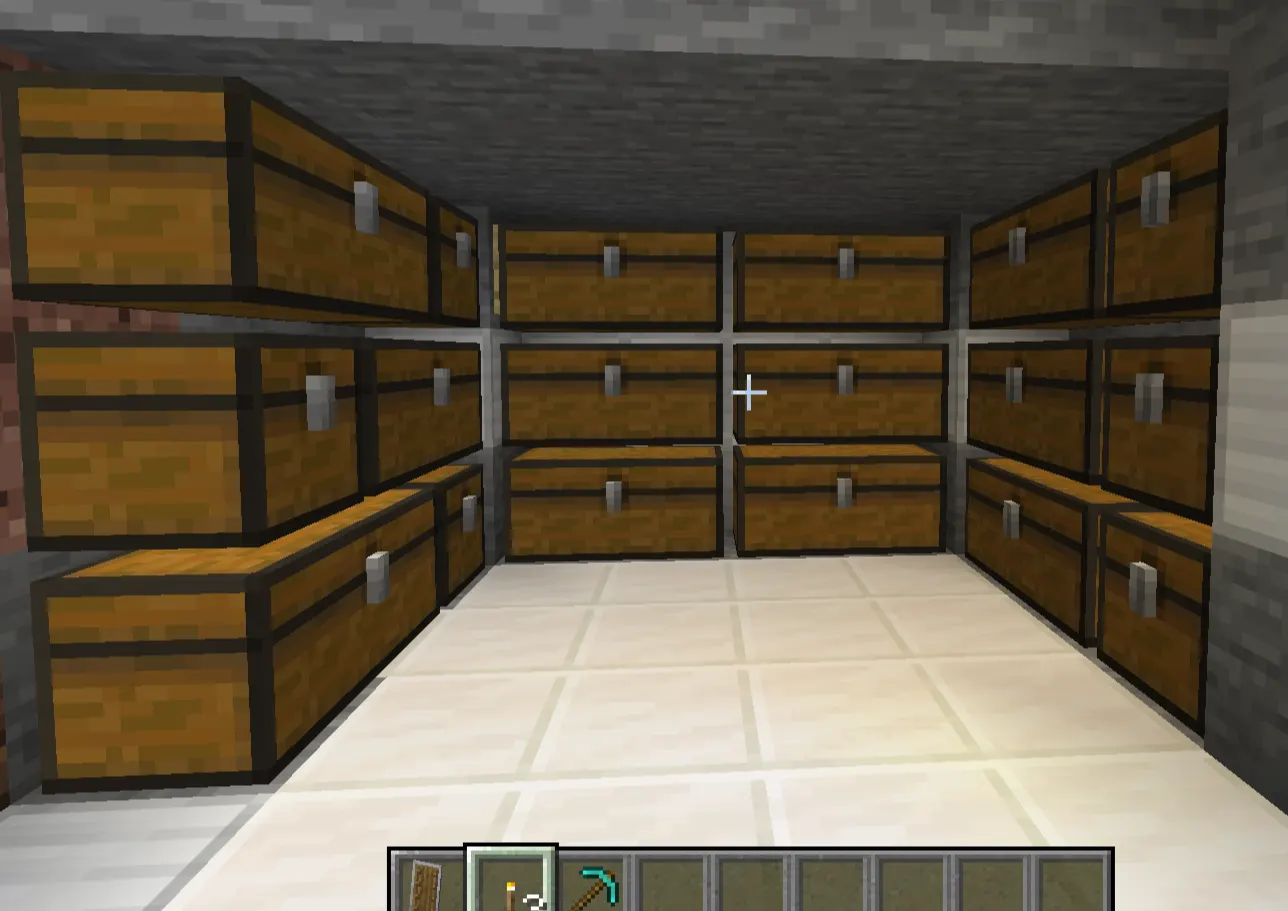
What beginners think: I need more storage. I'll just add another chest.
Why it backfires: More chests solve the capacity problem but create a navigation problem. Without organization, you spend significant time searching for specific items across dozens of unlabeled chests. Many players also craft chests compulsively whenever they have extra wood, then fill them with low-value items they never use.
Better alternative: A dedicated storage system where each double chest has a clear category — ores, food, building blocks, tools, mob drops. Use item frames on the front of each chest so you can see the category at a glance. Fewer, organized chests are more useful than many chaotic ones.
Long-term impact: Poor storage organization costs real time. Finding a specific material in twenty unlabeled chests before a cave run is frustrating enough that many players give up on organized play entirely, which makes the problem worse.
15. Forgetting That Many Crafting Recipes Are Reversible
What beginners think: Once I compress materials into blocks, they're locked.
Why it backfires: They're not. Iron blocks convert back to nine iron ingots. Gold blocks back to nine gold ingots. Bone blocks back to nine bone meal. Slime blocks back to nine slimeballs. Clay blocks back to four clay balls.
New players sometimes avoid compressing materials for fear of losing them, which means they carry stacks of loose ingots that waste inventory space. Others don't compress because they forget this mechanic exists at all.
Better alternative: Use block form for storage and inventory management freely. Compress materials to save space, convert back when you need to craft. There's no material cost for doing this — it's purely a storage strategy.
Long-term impact: Knowing which recipes are reversible eliminates a lot of anxiety around resource management. It also makes long mining trips more efficient since you can compress ores into blocks before returning home.
16. Crafting a Diamond Sword Before Armor
What beginners think: Better weapon means I take less damage overall because I kill enemies faster.
Why it backfires: While a diamond sword does deal more damage, the time-to-kill difference between iron and diamond isn't dramatic enough to justify the cost when you're still wearing iron armor. More importantly, diamond armor absorbs significantly more damage per hit than iron — particularly relevant when fighting multiple mobs or taking surprise hits.
The sword feels more impactful because you see the damage numbers. But armor prevents the hits that would kill you, which is ultimately more valuable.
Better alternative: After your diamond pickaxe, prioritize diamond armor over a diamond sword. Start with the chest plate — it covers the most hit area and gives the highest armor value of any single piece. Then sword if you still have diamonds after that.
Long-term impact: Players who rush diamond weapons over diamond armor die more often in the mid-game. Mobs in the Nether and in later biomes deal enough damage that armor tier matters significantly.
17. Crafting Without a Plan
What beginners think: I have the materials, so now's as good a time as any.
Why it backfires: Impulse crafting is how most resource waste accumulates. You open the crafting table, you see what you can make, you make it. The materials are gone before you've thought about whether you needed the item today, this week, or at all.
Every rare material you spend without intention is a resource you can't get back. And in Minecraft, getting back specific resources takes time — time mining, time farming, time smelting.
Better alternative: Before crafting anything that costs iron or better, ask one question: do I need this to survive or progress in the next few hours? If the honest answer is no, close the crafting table and come back when the answer is yes.
Long-term impact: This habit alone makes a bigger difference than any single other tip. Players who craft intentionally consistently end up with better gear, stronger progression, and less time spent recovering from resource shortages.
Resource Priority Tables
Iron Priority
|
Item |
Iron Cost |
Priority |
Why It Matters |
|
Shield |
1 ingot |
Critical |
Blocks creepers, arrows, and most melee damage |
|
Bucket |
3 ingots |
Critical |
Lava management, infinite water, mob farms |
|
Pickaxe |
3 ingots |
High |
Keep mining; never be without one |
|
Sword |
2 ingots |
High |
Better than stone for mob clearing |
|
Furnace (x2) |
8 stone |
High |
Need this before iron even matters |
|
Chest plate |
8 ingots |
Medium |
Best armor value per piece |
|
Helmet |
5 ingots |
Medium |
Solid protection for one piece |
|
Leggings |
7 ingots |
Medium |
Second best armor piece |
|
Boots |
4 ingots |
Low |
Least protection per iron spent |
|
Hopper |
5 ingots |
Late |
Wait until you're building farms |
|
Rail |
6 ingots |
Late |
Infrastructure item, not early priority |
Diamond Priority
|
Item |
Diamond Cost |
Survival Value |
Progression Value |
|
Pickaxe |
3 |
High |
Critical — unlocks obsidian and Nether |
|
Enchanting table |
2 (+ obsidian, book) |
High |
Critical — unlocks enchanting |
|
Chest plate |
8 |
Critical |
High |
|
Sword |
2 |
High |
Medium |
|
Helmet |
5 |
High |
Medium |
|
Leggings |
7 |
High |
Medium |
|
Boots |
4 |
Medium |
Low |
|
Shovel |
3 |
Low |
Low |
|
Axe |
3 |
Medium |
Low |
|
Jukebox |
1 |
None |
None |
Gold Priority
|
Best Uses |
Worst Uses |
|
Golden apples (healing, emergency) |
Full tool sets |
|
Powered rails (minecart systems) |
Gold armor early game |
|
Clock (time-checking in caves) |
Decorative gold blocks before gear |
|
Piglin trading in the Nether |
Rushing golden items before iron gear |
|
Enchanted golden apples (if found) |
Replacing Iron tools you haven't worn out |
Crafting Rules Experienced Players Follow
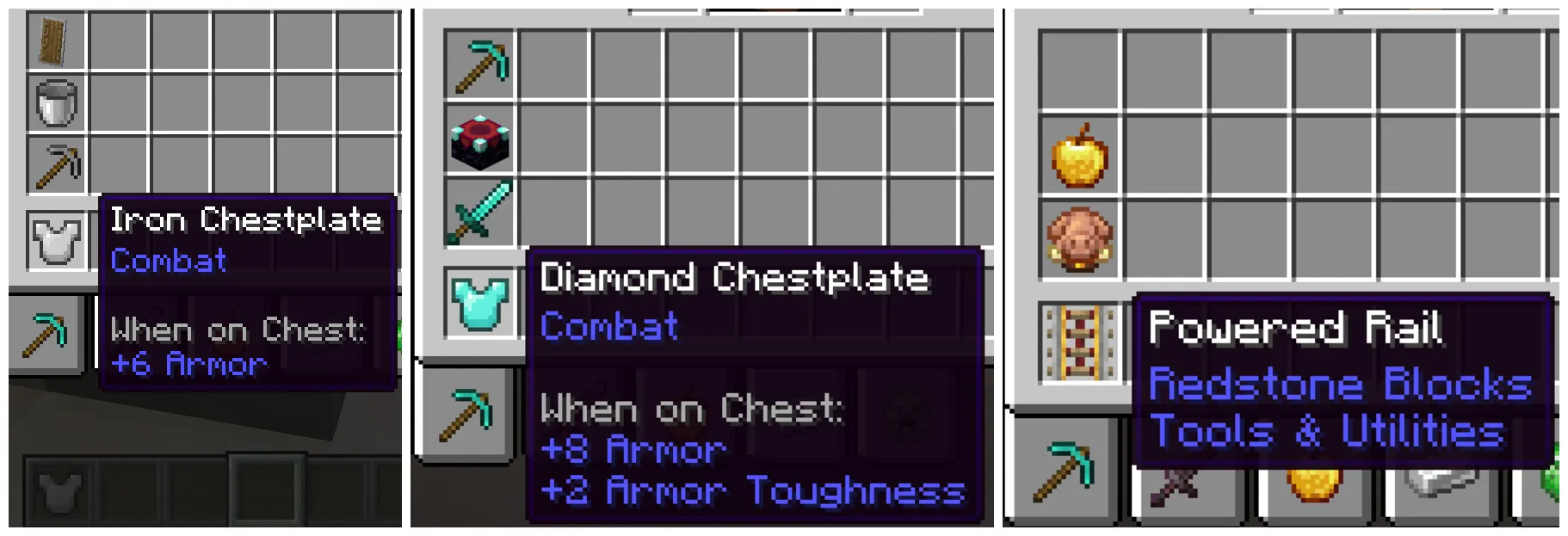
These aren't official Minecraft mechanics. They're habits that players with hundreds of survival hours converge on independently.
Rule 1: Never spend diamonds until you know your next upgrade path. Before you craft anything with diamonds, know what comes after it. Diamond pickaxe → obsidian → Nether portal and enchanting table. That's the path. Deviating from it costs you progression.
Rule 2: Always keep reserve iron. Before you finish any craft, ask if you're leaving yourself with at least a dozen iron ingots in reserve. Running completely dry on iron at the wrong moment — a broken pickaxe mid-cave, a lava lake with no bucket — is one of the most frustrating situations in the game.
Rule 3: Craft for today's problem, not tomorrow's possibility. Don't craft a compass because you might need it. Don't make a clock just in case. Craft what you need right now. Speculative crafting wastes materials.
Rule 4: Never take your last iron pickaxe underground. If you only have one iron pickaxe left, make another before you go caving. Losing your only pickaxe to a lava pool mid-trip means hand-mining or a long sprint home empty-handed.
Rule 5: Progression items beat comfort items. A shield beats leather boots. A bucket beats a decorative block. An enchanting setup beats a jukebox. When in doubt, ask: does this help me progress, or does it just make the base look nicer?
Rule 6: Food quality matters as much as quantity. Carrying 64 bread takes the same slot as 64 steak. Steak keeps you full longer. Prioritise foods that provide high satiety, not just those that are easy to make.
Rule 7: Know your reversible recipes. Iron blocks, gold blocks, bone blocks — these are all reversible. Compress freely for storage. Don't leave loose ingots wasting slots when you could stack them as blocks and convert back later.
Rule 8: Build your shield before your first cave. The first significant cave run is where most beginners die. A shield costs one iron and makes that run dramatically safer. Craft it before you go, not after you've already died once.
Rule 9: One furnace per function is enough early on. Two furnaces — one for smelting, one for cooking — is plenty until you have reliable fuel. Don't build a smelting array you can't fuel consistently.
Rule 10: If you hesitated before crafting it, you probably shouldn't have. That moment of "wait, should I?" is usually the right instinct. Trust it. Put the materials back and come back when you're certain.
Beginner Crafting Checklist
Run through this before spending diamonds, gold, or significant iron:
✓ Do I actually need this right now, or just eventually? ✓ Will crafting this block something more important? ✓ Is there a cheaper item that solves the same problem? ✓ Am I spending a resource I might need for something better? ✓ Have I covered my shield, bucket, and pickaxe already? ✓ Do I know what comes after this in my progression chain? ✓ If I reverse this decision tomorrow, can I get the materials back?
If multiple answers make you hesitate, put the materials back and come back with a clearer plan.
Conclusion
Most crafting mistakes beginners make in Minecraft aren't random — they follow patterns. The scarcity panic that makes you immediately craft with new materials. The armor-first instinct that skips past the shield and bucket. The curiosity that turns your first diamonds into a jukebox and a decorative block before you have a single piece of diamond gear.
These mistakes happen because Minecraft doesn't teach resource management. It gives you a crafting table, shows you the recipes, and lets you work it out. The learning curve is real, and most players have a survival world somewhere that ended in frustration because of a handful of early crafting decisions.
The good news: this stuff is learnable. You don't need to memorize a hundred rules. The core principles are simple — prioritize tools over armor, armor over decoration, and functional items over cosmetic ones. Know what diamonds are actually for before you spend them. Keep a reserve of iron you don't touch unless you have to. Build the shield before the first cave run.
Small crafting decisions compound throughout a survival world. The player who builds a shield on day two and saves their diamonds for a pickaxe progresses faster, dies less often, and has more fun — not because they're better at the game mechanically, but because they're spending resources on things that actually matter.
None of this means you can't build a beautiful base or craft a jukebox eventually. You absolutely should. Just do it after the diamond pickaxe.
Your next survival world is going to be a better one.